


Key Takeaways:
- Public colleges and universities have used a variety of methods to silence students and faculty whose beliefs don’t align with the prevailing campus ideology.
- When universities punish students and professors for expressing their faith or conservative views, they’re undermining the very purpose of higher education.
- Time and again, courts have ruled against universities that trample on First Amendment freedoms—and the price tag for those violations can be steep.
Colleges and universities frequently state that they want their graduates to be well-rounded in their education. The idea traces back to the classical liberal arts tradition—the notion that educated citizens should have broad competency across disciplines, not just vocational training in a single field. You would think that our constitutional rights and civic duties would be one such area of education that universities would want to instill in their graduates.
But this has been lacking. Many of today’s colleges not only fail to educate their students about the rights afforded by the First Amendment, but also about their duties as citizens of this great country. They frequently violate those rights by enacting policies to punish speech they deem contrary to the majority view. That’s the opposite of freedom and contrary to the purpose of the university and the First Amendment.
It’s a stark reality—and one that Alliance Defending Freedom has witnessed firsthand through decades of defending students and faculty whose First Amendment rights have been trampled by the very institutions entrusted to provide that education.
While much legal progress has been made in holding institutions of higher learning accountable, colleges and universities need frequent reminders about First Amendment rights. That’s why academic freedom is still important to continue defending today.
What is academic freedom?
If you visit any public college or university across the country, you quickly find that not every person at that school shares the same ideas and beliefs. Students, faculty members, and others on campus inevitably hold a variety of different views.
No matter what side of a particular issue you may fall on, we all should agree that everyone should be able to share their opinions freely and live according to their beliefs. This is the basic logic behind academic freedom.
In some court cases, the term “academic freedom” has been used to refer to a university’s right to choose who teaches its students and the way they teach. But in common parlance, academic freedom is the idea that students, faculty, and all people associated with public colleges and universities have the right to freely express their beliefs and live consistently with their religion, both on and off campus, without punishment from school officials.
How have colleges and universities threatened First Amendment rights?
Many colleges and universities use vague or misleading policies to silence people whose beliefs don’t align with those of school administrators. Here are some tactics colleges and universities have used to silence students and professors for their beliefs.
Maintaining speech zones
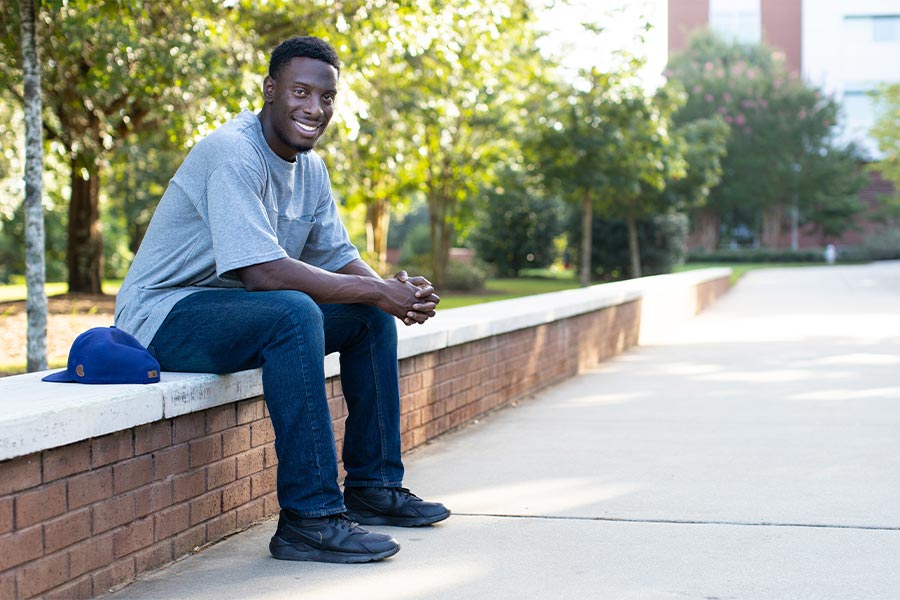
Many colleges and universities have adopted policies that restrict student speech in the outdoor areas of campus to very small areas called “speech zones.” Despite the misleading name, these areas are not meant to uphold First Amendment freedoms. In many ways, they are designed to do just the opposite—to quarantine free speech to small, often remote corners of campus.
A “speech zone” is an area established by a college or university in which students are forced to remain if they want to share their beliefs. When a college or university establishes a “speech zone,” it is often the only place where students and faculty are allowed to exercise their right to speak freely. On the rest of the campus, speech is limited or even banned.
The First Amendment applies to all Americans, and it protects freedoms on all public college and university campuses. By limiting free speech to small zones that often make up only a very small portion of campus, colleges and universities are actually fostering an anti-free speech culture. Alliance Defending Freedom has been extremely successful in challenging campus speech zones that violate the First Amendment. In fact, we have a 100 percent success rate challenging anti-free speech zones. Here are a couple of examples of our victories in speech-zone cases:
- When Chike Uzuegbunam tried to share his Christian faith at Georgia Gwinnett College in 2016, officials confined him to “speech zones” that together made up just 0.00015 percent of campus, an area smaller than a sheet of paper if the campus were a football field. ADF took his case all the way to the Supreme Court, which ruled 8-1 that officials who violate students’ rights cannot simply amend a policy and walk away. Georgia Gwinnett College paid over $800,000 to learn that lesson.
- At Fresno State University in 2017, a professor confronted Students for Life president Bernadette Tasy as her group wrote life-affirming messages on a campus sidewalk—messages the university had already approved. Citing a “free speech zone” that the university had eliminated two years earlier, he returned with students from his class to erase and deface them. ADF sued, and the professor settled for nearly $28,000 in damages and attorneys’ fees. The professor was also required to attend a free speech training led by ADF attorneys.
Implementing speech codes

Colleges and universities have also violated the First Amendment rights of students and faculty members using speech codes. Whereas speech zones limit where students can speak, speech codes restrict what students can say—censoring or punishing speech that the school or other students subjectively deem demeaning or uncivil. Here are a few examples:
- When Southern Illinois University Edwardsville graduate student Maggie DeJong shared her Christian and conservative views on social media and in conversations with classmates, the university responded by issuing three no-contact orders against her—without telling her what she had allegedly done wrong. ADF demanded the university rescind the orders, which it did, and then filed a lawsuit on Maggie’s behalf. The university tried to have the case thrown out, but a federal court allowed it to proceed, ruling that Maggie clearly had the right to express her views without fear of retaliation. SIUE ultimately settled, paying $80,000, revised its policies, and required three professors to undergo First Amendment training led by ADF attorneys.
- At the University of Idaho College of Law, members of the Christian Legal Society, including a professor, attended a campus “moment of community” event, prayed on the steps, and politely answered a fellow student’s question about their views on marriage. For that, the law school issued no-contact orders against all four of them, barring them from interacting with the student who had asked about their beliefs in the first place. A federal district court agreed to temporarily block the orders, and the university ultimately settled, permanently rescinding all four orders and paying $90,000.
Compelling students and faculty to express certain messages
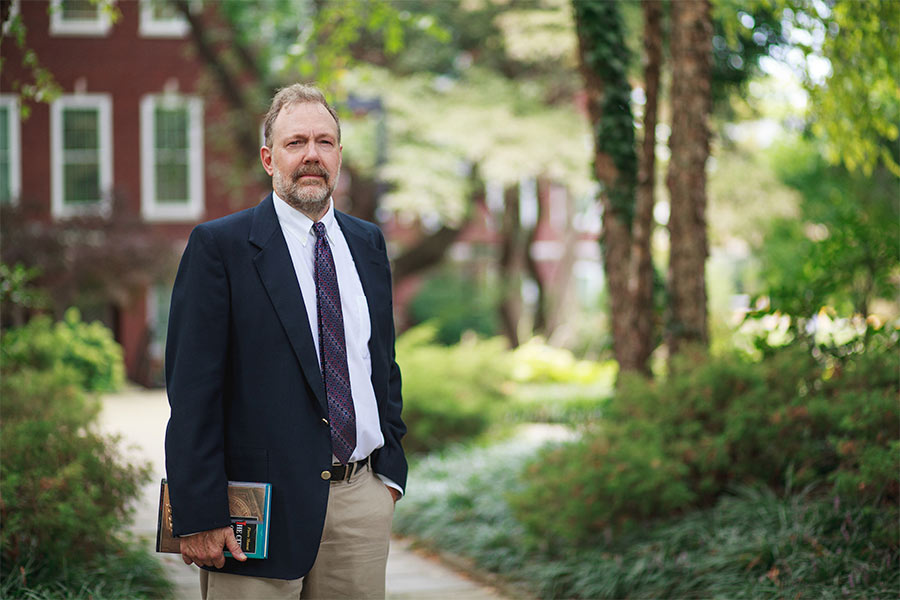
Just as important as combating censorship on campus (restricting what people can say) is combating compelled speech (forcing them to say what they don’t believe). Students and professors have a right to speak freely on campus, and universities cannot punish them for expressing their beliefs or compel them to say things that go against their beliefs. But this happens far too often.
- When a male student demanded that Shawnee State University philosophy professor Dr. Nicholas Meriwether refer to him as a woman, Dr. Meriwether—a 20-year veteran of the university with a spotless record—offered a reasonable accommodation: he would refer to the student by first or last name and avoid pronouns entirely. The university rejected the compromise, issued a formal written warning, and threatened further disciplinary action. ADF sued, and the U.S. Court of Appeals for the 6th Circuit ruled in Dr. Meriwether’s favor. Shawnee State eventually settled—rescinding the warning, affirming his right to speak freely, and paying $400,000 in damages and attorneys’ fees.
- Missouri State University School of Social Work student Emily Brooker was assigned to sign a letter to the state legislature advocating for same-sex adoption—a direct violation of her sincerely held beliefs. When she asked for an alternative assignment, her professor initially agreed, then reversed course and hit her with the highest level of disciplinary grievance available in her program. Emily was hauled before a faculty panel, interrogated about her faith, and forced to sign a contract promising her religious beliefs wouldn’t interfere with her schoolwork—or face expulsion. ADF filed a lawsuit, and Missouri State settled quickly, resolving the case in Emily’s favor and placing the professor on leave.
Restricting the ability of religious groups to organize
Some colleges and universities have tried to silence certain messages by restricting or preventing religious groups from organizing. One way colleges do this is by denying Christian groups the ability to require their leadership to agree with the groups’ mission and values.
- The University of Colorado–Colorado Springs employed this tactic, denying Ratio Christi, a Christian apologetics organization, official recognition because the group requires its leaders to agree with its values and mission. Other organizations with leadership requirements were still granted recognition. ADF sued, and UCCS settled—updating its policies to protect student groups’ right to require leaders who share their mission. The university also paid over $20,000 in damages and attorneys’ fees.
- The University of Houston–Clear Lake made the same mistake. ADF represented Ratio Christi there as well, and the university settled by adding explicit language to its handbook clarifying that student organizations may require their leaders to subscribe to the group’s beliefs. Again, this came with a price tag for the university, and they paid over $26,000 in damages and attorneys’ fees.
Curtailing the availability of student fees

Another threat to academic freedom comes from policies that allocate student activity fees in a viewpoint-discriminatory manner—denying certain student groups access to funds that all students are compelled to pay into. While colleges and universities often require all students to pay these fees, many try to pick and choose which groups can benefit from them. This undermines academic freedom by excluding or minimizing certain voices in the campus conversation.
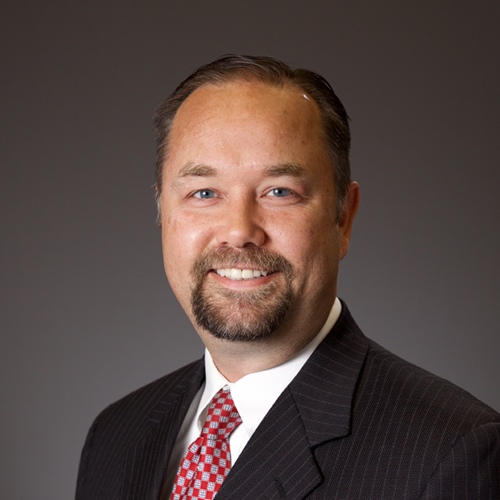
- A consequential early victory for academic freedom in this area came in Board of Regents of the University of Wisconsin System v. Southworth (2000)—one of the first Supreme Court cases ADF funded from start to finish. The University of Wisconsin was compelling all students (including Scott Southworth, pictured above) to pay mandatory fees while allowing the student government to distribute those funds at its own discretion, effectively bankrolling favored groups and denying funds to those the student government disfavored. The Supreme Court ruled 9-0 that public universities cannot collect mandatory fees unless they distribute them in a viewpoint-neutral fashion. This ruling laid the legal groundwork for every student fee case that followed.
- At California State University–San Marcos, Students for Life requested $500 to host a guest speaker on abortion and human equality. The student government denied it—while simultaneously funneling nearly $300,000 to the Gender Equity Center and the LGBTQA Pride Center. ADF filed a lawsuit on behalf of chapter president Nathan Apodaca. The district court struck down the university’s opaque funding policies. Cal State-San Marcos revised its policies and paid over $240,000 in attorneys’ fees and damages.
Punishing faculty members for speaking certain messages
Just as we saw with Dr. Meriwether above, academic freedom extends to educators and faculty. Some colleges and universities have punished professors simply for expressing their deeply held beliefs on important religious and social topics.
- When University of Illinois, Urbana-Champaign adjunct associate professor Dr. Kenneth Howell taught Catholic doctrine on homosexuality in his Introduction to Roman Catholicism course, the university fired him without even giving him a chance to respond. A single ADF demand letter was enough to reverse the decision, as the university offered Dr. Howell his job back and acknowledged it had inappropriately violated his rights when it terminated his contract.
- At the University of North Texas, mathematics professor Dr. Nathaniel Hiers spotted flyers in the faculty lounge claiming that phrases like “America is a melting pot” and “I believe the most qualified person should get the job” were harmful microaggressions. He jotted “Please don’t leave garbage lying around” on a nearby chalkboard with an arrow pointing to the flyers—the kind of lighthearted faculty lounge banter that was apparently fine until it wasn’t. The math department chair called the message “stupid” and pressured Dr. Hiers to apologize. He declined. His contract was terminated shortly after. ADF sued, and a federal district court found that university officials would likely be personally liable for damages, leading the university to settle for $165,000.
Academic freedom must be protected
These violations didn’t occur because the law is unclear. The Supreme Court has made clear, time and again, that the vigilant protection of constitutional freedoms is nowhere more vital than in the community of American schools. Every American is entitled to the freedoms laid out in the Constitution, and those freedoms extend to the campuses of colleges and universities anywhere in the country. When government officials infringe on the First Amendment rights of students and professors, they are violating the Constitution, and they must be held accountable.
The cases outlined above represent just a portion of that work. ADF has a 91 percent success rate in direct litigation against such policies, and that doesn’t even capture the full picture. Sometimes, as in the case of Dr. Howell, a single demand letter is enough to achieve meaningful change without the need for a lawsuit.
The First Amendment protects the rights of each and every American, including (perhaps especially) in academia. Whenever a university tramples on those God-given rights, it’s time to take a stand. And ADF stands ready to defend those rights.
Related Articles