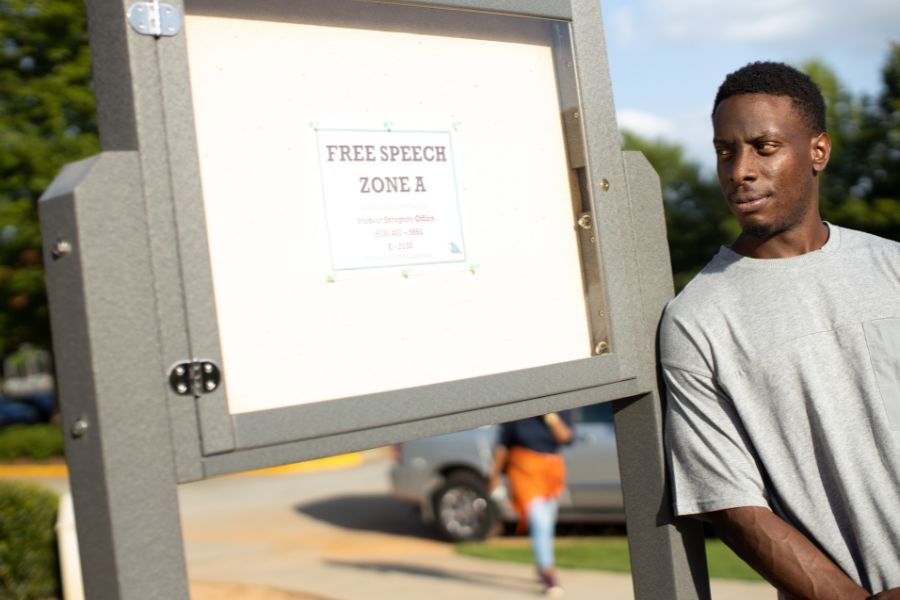
“Free speech zones” might sound harmless enough. They come off almost idyllic—little patches of campus where ideas can supposedly roam free, unbothered and unpoliced. Who could object to that?
The problem is what the term quietly smuggles in: if free expression is limited to a fenced-off corner, what does that say about the rest of campus? The implication isn’t subtle. Outside the zone, your rights become confined instead.
And that’s the real danger. These policies let universities decide where constitutional freedoms apply—and where they conveniently don’t. They flip the First Amendment from a baseline right into a privilege doled out at administrative discretion.
The freedom of speech isn’t like a virus that needs to be quarantined to prevent it from spreading. Nor is it like a piece of art that needs to be roped off in a museum and only admired, but never used.
That’s why anyone who cares about free expression should see past the branding. “Free speech zones” aren’t protecting speech. They’re containing it.
How “free speech zones” are weaponized
Despite the moniker and alleged purpose of these “free speech zones,” more often than not, we’ve seen how they are used to violate free speech.
Chike Uzuegbunam

Consistent with The Great Commission, Chike Uzuegbunam (pronounced CHEE’-kay Oo-zah-BUN’-um) is passionate about sharing the Good News with those around him. So, after Chike started attending Georgia Gwinnett College, he saw it as his new mission field.
To Chike, this is the most loving thing that you can do for someone else—to share the Good News that Jesus Christ died for our sins and rose again so that we can have eternal life with Him.
Not long after he began speaking about the Gospel in 2016, Chike was informed that he was not allowed to distribute materials or talk to other students about his beliefs unless he had reserved a time in a campus “speech zone.”
Georgia Gwinnett College had two speech zones, but don’t be fooled into thinking the college broadly encouraged free expression. These were the only designated places students could exercise their First Amendment rights. Combined, the two spaces made up about 0.0015 percent of the campus. If the entire campus were the size of a football field, these “speech zones” would be the size of a piece of notebook paper.
On top of that, they were only open for student use for 10 percent of the week—just 18 hours on weekdays and closed on the weekends.
“I had to ask for permission to exercise my First Amendment rights,” Chike said. “That’s not freedom of speech. But nonetheless, I got the permission.
“I signed documents. I indicated what time and what place I was going to be there. I indicated the content of my message. I even submitted the literature that I was going to be handing out.”
Despite going through all the proper protocols, Chike was stopped by campus police on the reserved day, as they told him that there had apparently been a complaint about his actions. Therefore, he would no longer be allowed to speak in his school’s “free speech zone.”
This blatant violation of his First Amendment rights led Chike to contact Alliance Defending Freedom. The school then tried to change its “free speech zone” policies to avoid accountability, but ADF made sure that didn’t happen. They took his case all the way to the Supreme Court. Not only did the Supreme Court rule 8-1 in Chike’s favor in March 2021, but Georgia Gwinnett College officials also agreed to settle the case a year later.
Turning Point USA at Grand Valley State University
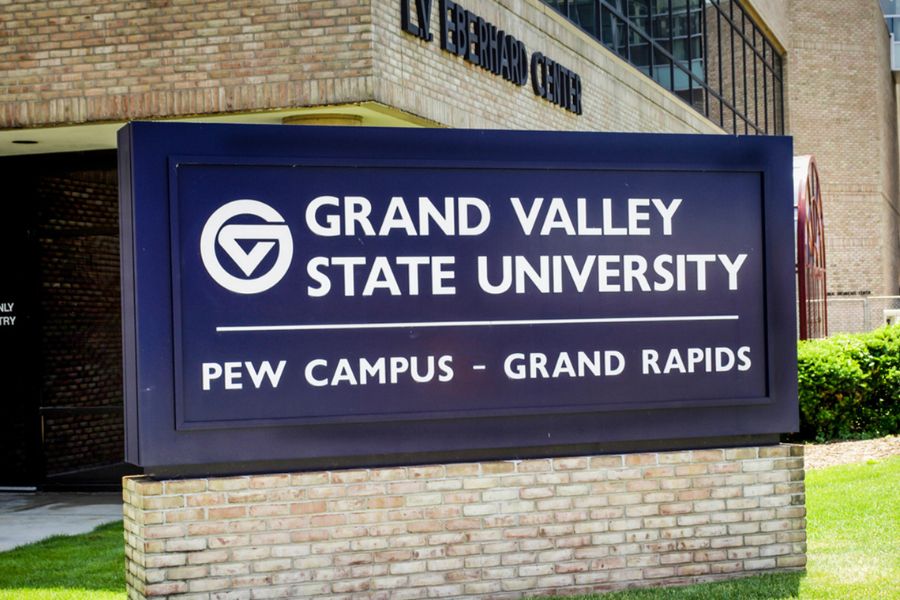
Similar to Georgia Gwinnett College, Grand Valley State University in Michigan had policies regarding “free speech zones.” And like Georgia Gwinnett, Grand Valley State’s “free speech zones” made up a laughably small part of the school campus—less than 0.03 percent of the campus.
In October 2016, the TPUSA club founder and several others were in GSVU’s Cook Carillon Tower speech zone to talk to students about the various freedoms enshrined and protected by the First Amendment. TPUSA members had properly reserved the space, and they were giving students the chance to write messages on a large beach ball, dubbed the “Free Speech Ball.”
The TPUSA members began traversing the sidewalks, using the “Free Speech Ball” to peaceably interact with students. At no point did the TPUSA members block access to school buildings or congest pedestrian traffic.
And yet, various school administrators and campus security approached the students and notified them that they were violating the Speech Zone Policy and therefore had to stop. Security officers even threatened to arrest them should they continue to use their beach ball to spark conversation—and that threat was enough to get the TPUSA members to stop.
However, just a month later, in November, one of the TPUSA members observed a large crowd of students holding signs and marching around campus, well beyond the two designated speech zones. The protestors were apparently upset with the 2016 election of President Donald Trump. The student protestors stood directly outside the Student Services Building and shouted slogans. The protestors even went inside the Student Services Building for a period of time.
Yet no GVSU administrators or campus police intervened.
GVSU would eventually settle and change its policies after ADF filed a lawsuit on behalf of the TPUSA chapter there.
Ryan Dozier
Ryan Dozier was a student at Yuba College who wanted to share his faith with his peers. When he tried to hold a Christian sign and hand out tracts on campus, a campus police officer threatened him with arrest because he was outside the school’s “free speech zone.”
In perhaps the clearest example that “free speech zones” are anything but, Yuba College required students to get permission to speak 14 days in advance, and if permission was granted, the college allowed students to speak only from 12 p.m. to 1 p.m. on Tuesdays and Thursdays in a designated speech zone.
A few weeks after the arrest threat from campus police, Ryan was hit with a letter from the school threatening expulsion if he continued to try and share biblical teachings.
That’s when Ryan reached out to ADF for help.
“I wanted to change the policies,” he explained. “I wanted to be able to freely speak on campus [about] my faith, to be able to share my faith, and I also wanted the ability for other students to do the same.”
ADF filed a lawsuit on Ryan’s behalf and negotiated a settlement with Yuba College that eliminated the speech zone, opened the campus to student speech throughout the day, and ensured that Ryan could speak freely without fear of arrest, suspension, or expulsion.
“Free speech zones” are nothing new
In addition to the 3 cases above, ADF has a proven track record of fighting free speech zone policies:
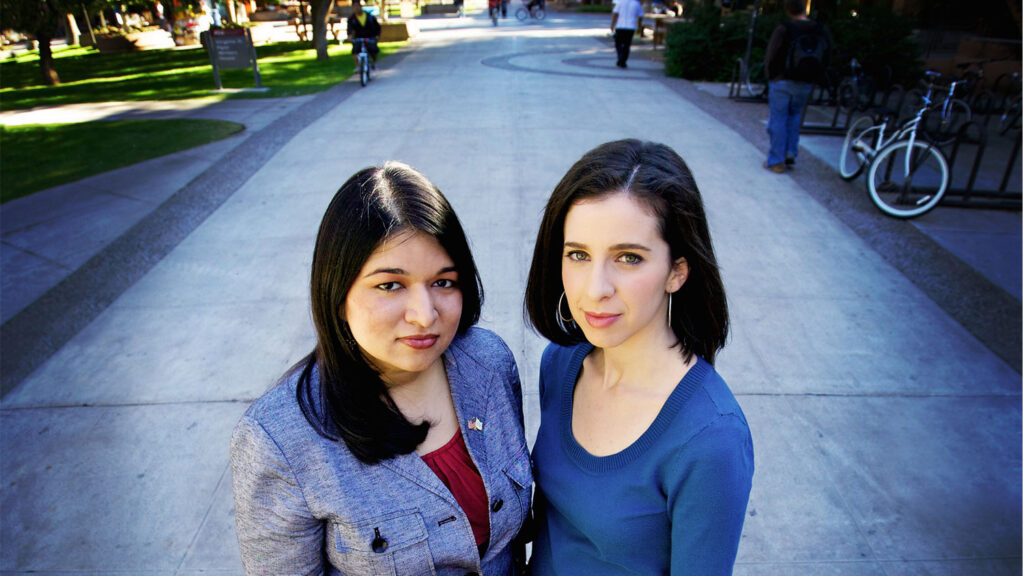
- Ruth Malhotra and Orit Sklar faced down all sorts of vitriol when they stood up in support of their faith and their conservative views on the campus of Georgia Tech. The two united in their vocal opposition to the school’s ironclad speech codes, which included “free speech zones.” ADF helped secure their First Amendment rights after suing the school in 2006.
- Jason Roberts was a law student at Texas Tech University Law School. In May 2003, he filed a grounds use request application for a speech event to discuss his views about the immorality and health risks associated with homosexuality. Texas Tech denied his request, claiming that such speech is “more appropriate” for the small, designated “free speech gazebo” on campus. After ADF attorneys filed a lawsuit, a district court permanently enjoined enforcement of the policies that required a permit before speaking and the speech code, holding them facially unconstitutional.
- Paradise Valley Community College in Arizona restricted students to one designated zone in which they could exercise their constitutionally protected freedom of speech, and only with prior permission between 9 a.m. and 4 p.m. Monday through Friday, if the zone was not already fully reserved. In 2015, ADF filed a lawsuit on behalf of student Brittany Mirelez after she was prevented from distributing copies of the U.S. Constitution. The lawsuit eventually led to the Maricopa County Community College District agreeing to eliminate unconstitutional free speech restrictions at all 10 of its campuses.
- Southern Illinois University officials restricted student expression on the university’s Edwardsville campus to a tiny speech zone that made up less than .0013 percent of the campus. In addition, all student organizations had to obtain advanced permission to use the speech zone, and university policies left approval of who can use the zone and what types of literature can be distributed on campus up to the discretion of campus officials. These policies were rescinded after ADF attorneys filed a lawsuit in 2017.
As one can see, free speech zones have not been a small or isolated issue. Thankfully, though, free speech zones are on the decline.
In 2013, the Foundation for Individual Rights and Expression (FIRE) conducted research that found that roughly 1 in 6 surveyed institutions had a free speech zone policy. As of their latest survey from 2022, that number has dropped to roughly 1 in 20.
While we hope for that number to reach zero, it is encouraging to see positive advances for free speech when numerous other threats appear to be growing, both domestically and abroad.
Free speech: It’s either truly free—or it’s not free at all
Simply put, the freedom of speech is a hallmark of what it means to live in a free society.
Freedom of speech is at the very heart of what it means to pursue truth, learn new ideas, and express one’s thoughts.
When we talk with other people, we learn, grow in understanding, and shape each other’s ideas. We work together in exploring our world and expanding our knowledge—all through speech.
Sequestering free speech to tiny campus zones or to block off entire areas where speech is banned is anathema to freedom.
Restricting “free speech” to quarantined, minuscule areas of a school campus is simply unacceptable and a complete mockery of what “free” actually means.
Truly free societies should never be subjected to “free speech zones.” And that’s why ADF will always support those who’ve been harmed by these “zones” that blatantly limit their freedom of speech.
Related Articles