Key Takeaways:
- Free speech is the right to express (or not express) an idea without fear of government punishment.
- Governments erode free speech through a handful of recurring tactics such as censorship, viewpoint discrimination, compelled speech, and hate-speech laws.
- Violations of free speech are playing out in a variety of settings: classrooms, counseling offices, pregnancy centers, artists’ studios, the public square, and many more.
For large parts of human history, saying the “wrong” thing out loud got you silenced, imprisoned, or even killed. And in much of the world, it still does. That’s what happens when a government curtails freedom of speech and decides what ideas people are allowed to express.
Thankfully, America was built on the idea of individual liberty. The First Amendment’s guarantee of freedom of speech isn’t a mere formality. It’s one of the key pillars this country was built on.
But a right on paper only endures if each generation understands its importance and is willing to defend it. That’s particularly important because there is no shortage of officials who are convinced that protections on free speech should be much weaker—or nonexistent.
Free speech is the foundation of a free society. And it continues to stand as one of the greatest bulwarks against tyranny.
What is freedom of speech?
Freedom of speech is the right to say, write, or otherwise express an idea without government punishment or retaliation. Free speech comes in many forms—spoken words, published articles, text on a shirt, a message on a license plate, a piece of art, and much more.
Free speech includes much more than the right to think or express what you want in the privacy of your own mind or home. To be able to live freely in accordance with your beliefs, you must be able to express those views in public.
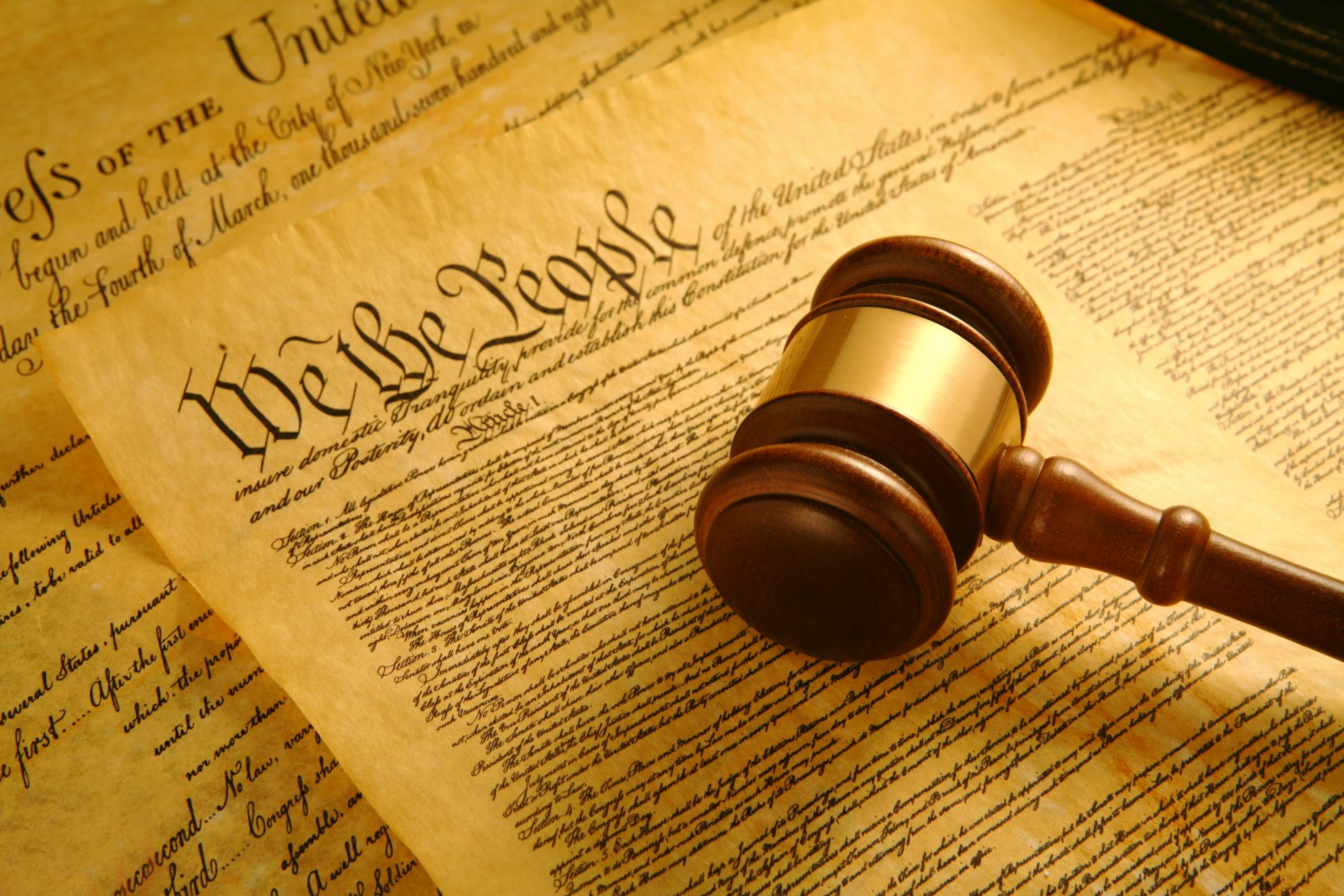
The Founding Fathers didn’t bury this right in fine print. The First Amendment to the U.S. Constitution states in part, “Congress shall make no law … abridging the freedom of speech.” The Founders understood how important it is to allow every citizen to speak freely.
Why is freedom of speech important?
Freedom of speech is at the very heart of what it means to pursue truth, learn new ideas, and express one’s thoughts. When people talk, argue, and disagree, they learn from each other and refine their own beliefs. That exchange is how a society comes to a deeper understanding of the truth. Cut off that exchange, and you cut off the ability to pursue truth and live it out.
Freedom of speech is also intertwined with freedom of conscience. Words, fundamentally, are expressions of a person’s beliefs or ideas. So when a government controls speech, it controls more than what you can or can’t say. It controls which ideas you’re allowed to hear. And it can go further still: a government with that power can even force you to say things you don’t believe.
Controlling speech, in the end, is about trying to control how people think, believe, and act. The stakes couldn’t be higher.
How is free speech threatened?
Free speech rarely dies from one dramatic law. It erodes through a series of moves —each one made as something reasonable, each one aimed at the same result: letting the government decide which ideas are allowed to exist in public.
- Censorship occurs when the government simply silences speech it doesn’t like, whether through removing content, shutting down a platform, or punishing someone for what they said. It’s one of the more easily recognizable violations of free speech, which is why governments have had to become more subtle in their censorship, such as using viewpoint discrimination. The government doesn’t always outright ban a topic. It just picks a side, offering benefits and favoring one group of ideas over others.
- Compelled speech goes a step further: Rather than stopping someone from expressing what they do believe, compelled speech forces someone to say something they don’t believe. It’s the counterpart to censorship, and it’s just as unconstitutional.
- Hate speech is a category that sounds like common sense, but operates as an excuse for violating free speech. Hate speech laws allow governments to censor certain views on the grounds that such ideas are “hateful.” There’s no legal definition of “hate speech” in American law—which means that such rules are really just a permission slip for officials to censor whatever speech they don’t agree with by labeling it “hate.”
- The idea that “speech is violence” is one of the newest entries in the censorship regime. It conflates words with physical harm—labeling disfavored speech as “violence” as an excuse to censor it (similar to how speech is censored by labeling it “hate”). At the same time, since speech is reclassified as violence, physical violence is often portrayed as an understandable response to speech. But speech is not violence, and violence is not speech. Collapsing that distinction doesn’t protect anyone. It just gives the loudest (or sometimes most violent) objector a heckler’s veto.
Threats to free speech today
When free speech is curtailed, it doesn’t merely get removed in the abstract. It gets taken from specific people, in specific places, for saying (or not saying) specific things.
Counseling rooms
Colorado told counselor Kaley Chiles that she could push minor clients toward a gender transition but could not speak to help clients regain comfort with their bodies. That’s the government picking a side and engaging in viewpoint discrimination. In March 2026, the Supreme Court agreed, ruling 8-1 that counseling conversations are speech and that states cannot silence viewpoints in the counseling room.
Washington counselor Brian Tingley has been engaged in a similar battle. His state passed a nearly identical law in 2018. After five years, his case made its way to the Supreme Court, which declined to hear his case at that time, leaving the lower courts’ dismissal of the case in place. But after the Chiles ruling, ADF asked a federal court to reopen Brian’s case.
Pro-life advocates and pregnancy centers
At various times, governments have tried to force pregnancy centers to advertise for the abortion industry, subpoena their donor information, or fence off sidewalk counselors from the people they’re trying to help.
Thankfully, the Supreme Court has repeatedly protected the free speech of pro-life advocates. The same First Amendment that protects every American protects pro-life advocates just as fully, whether they’re on a public sidewalk, inside a pregnancy center, or speaking up on a campus. Speech doesn’t have to be popular to be protected. Pro-life Americans have the same right to be heard as anyone else.
Artists and creative professionals
Three separate lawsuits tried to force cake artist Jack Phillips to create custom cakes expressing messages he didn’t believe—the first for a cake that would celebrate a same-sex wedding, then two lawsuits for a cake celebrating and reflecting a “gender transition.” Jack won the first case 7-2 at the Supreme Court in 2018, though on religious freedom grounds rather than free speech. Activists came back twice more anyway, and both times, the cases against Jack were dismissed.
The free speech question was finally answered in 2023. Graphic artist Lorie Smith faced a similar situation to Jack in Colorado. She wanted to design wedding websites—without expressing a message about marriage that she didn’t believe. In 303 Creative v. Elenis, the Supreme Court ruled in her favor: The government can’t force artists to express messages they disagree with, no matter how it dresses up the mandate.
Schools and classrooms
Georgia Gwinnett College once told student Chike Uzuegbunam he needed permission to talk about his faith. And even then, he was only allowed to do so inside two tiny “speech zones” that together covered 0.0015 percent of campus. If the school were a football field, his allotted space was the size of a sheet of notebook paper. And when he spoke in the speech zones, college officials silenced him again for violating the speech code. Though the college later changed its speech policies, the Supreme Court ruled 8-1 that the government can be held accountable for violating constitutional rights.
Pronoun mandates have hit teachers the same way speech zones and speech codes hit students—except for teachers, the message is: comply or lose your job. Professor Nicholas Meriwether was formally disciplined for declining to use pronouns inconsistent with a student’s sex. After filing a lawsuit, the U.S. Court of Appeals for the 6th Circuit ruled in Dr. Meriwether’s favor. Teacher Peter Vlaming was fired for the same reason—not for what he said, but for what he wouldn’t say. After a lengthy legal battle, culminating in a victory for Vlaming at the Virginia Supreme Court, the school district changed its policy and paid over half a million dollars to settle the case.
Online and corporate censorship
Governments have started treating satire as a threat worth punishing. California passed laws targeting political memes and deepfakes; a federal court struck them down as unconstitutional. Hawaii tried something similar and lost, too. Both suits were filed on behalf of The Babylon Bee, a satire site that had to sue two states over the right to make jokes.
Meanwhile, the EU’s Digital Services Act pressures American-owned platforms like X, Meta (Facebook), and Google to moderate content to Brussels’ standards—standards that affect what even American citizens can see and share online.
And many ministries and conservative nonprofits have simply been debanked—losing accounts not over risk or conduct but over who they are and what they believe.
The public square
Frederick Douglass called free speech “the great moral renovator of society and government”—the tool that let abolitionists say what slaveholders didn’t want said. That principle still holds true. When the town of Gilbert, Arizona, let political and ideological signs stay up far longer than a church’s directional signs, the Supreme Court struck down the city’s actions in Reed v. Town of Gilbert: The government can’t play favorites with a message based on its content.
East Lansing learned a similar lesson when East Lansing banned his family from the city farmers market over a single Facebook post about his Catholic beliefs on marriage—a decision ADF successfully challenged in Country Mill Farms v. City of East Lansing.
International
Abroad, where no First Amendment exists, violations of free speech can be more openly flagrant. British Army veteran Adam Smith-Connor was convicted and ordered to pay prosecution costs for silently praying—no words, no signs—near an abortion facility, simply for standing inside a “buffer zone.” Dr. Livia Tossici-Bolt was similarly found guilty and ordered to pay £20,000. Her crime? Holding a sign in front of an abortion facility that read, “Here to talk if you want.”
In Finland, parliamentarian Päivi Räsänen has spent seven years defending a single church booklet and a Bible-verse tweet, both about marriage and sexuality. Two lower courts unanimously acquitted her. In March 2026, Finland’s Supreme Court reversed course in a 3-2 decision, convicting her on the booklet charge while upholding her acquittal on the tweet. She has appealed to the European Court of Human Rights—still fighting, seven years in, for the right to say what her faith teaches.
How does ADF defend free speech?
Alliance Defending Freedom has been involved in hundreds of free speech victories over its 30-plus-year history, including several at the Supreme Court already mentioned above.
Free speech is where a large and growing share of legal battles are happening, at home and abroad, which is why we have defended free speech since our founding in 1994 and launched the ADF Center for Free Speech in 2024.
By God’s grace, we’ve been able to make meaningful progress in defending free speech. Wins compound—Lorie Smith’s Supreme Court victory has led to victories for other artists; Kaley Chiles’s win is now the reason Brian Tingley can ask for another chance to stand for his rights in court. Losses don’t always stay losses as long as someone keeps showing up to argue the next case.
We intend to keep showing up: for the teacher asked to use biologically inaccurate pronouns, the counselor asked to violate her conscience, the satirist asked to put disclaimers on his jokes.
Every other freedom in the First Amendment—worship, assembly, petition, the press—depends on people’s ability to say what they think without asking permission first. Take away the words, and the rest of the First Amendment is just a list of things you’re allowed to feel quietly.
That’s the throughline of everything above. Speech zones and speech codes built to suppress speech, a counselor barred from speaking freely with her clients, a cake artist sued three times for his beliefs, a veteran convicted for a silent prayer—different contexts, same instinct: Officials decided some idea shouldn’t be heard and reached for the law to make sure of it.
These threats rarely announce themselves as censorship. They arrive as reasonable-sounding rules and modest exceptions, each one small enough to wave through. That’s exactly why they have to be met early and met often. A right that isn’t exercised and slowly chipped away is a right that quietly erodes and eventually disappears. The surest way to keep speech free is to keep speaking.
Related Articles