

Key Takeaways:
- For more than a decade, Sweet Onion Christian Learning Center provided optional, free, off-campus religious instruction to students at Vidalia High School without a single substantive complaint brought to the ministry.
- After Rev. Gady Youmans criticized a proposed tax increase on his personal Facebook page, school officials canceled the released-time program—and the superintendent admitted it was because of his posts.
- The First Amendment protects every American’s right to criticize the government and to teach their faith—and a federal court reminded the school district of this.
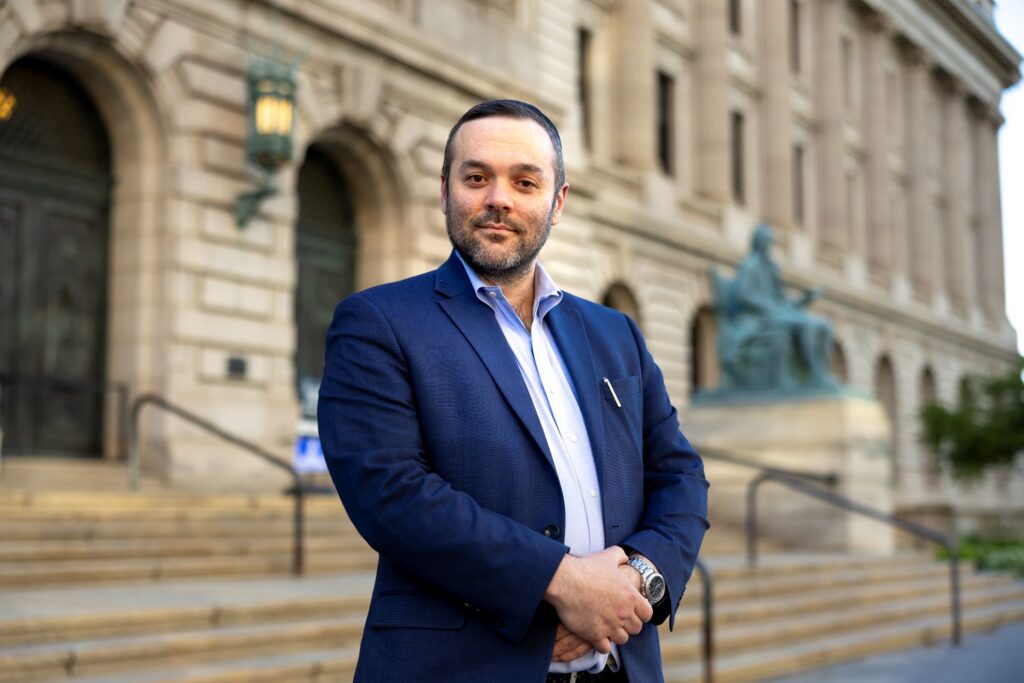
Criticizing your government is one of the most American things you can do. The First Amendment exists precisely to protect that right. But in Vidalia, Georgia, speaking out nearly cost Gady Youmans his ministry serving students.
For more than a decade, Rev. Gady Youmans and Sweet Onion Christian Learning Center faithfully served students at Vidalia High School—offering free, off-campus religious instruction that parents trusted and students valued. The program continued without problems until Gady posted his opinion about a proposed tax increase on his personal Facebook page. Soon after, school officials canceled the released-time program, harming the ministry and leaving Vidalia students without any free religious education option. When he asked why, the superintendent of Vidalia City Schools didn’t hide the fact that she and the board canceled the program because of his Facebook posts.
The First Amendment protects exactly that kind of speech. And Gady is holding officials accountable.
Ten years of faithful service
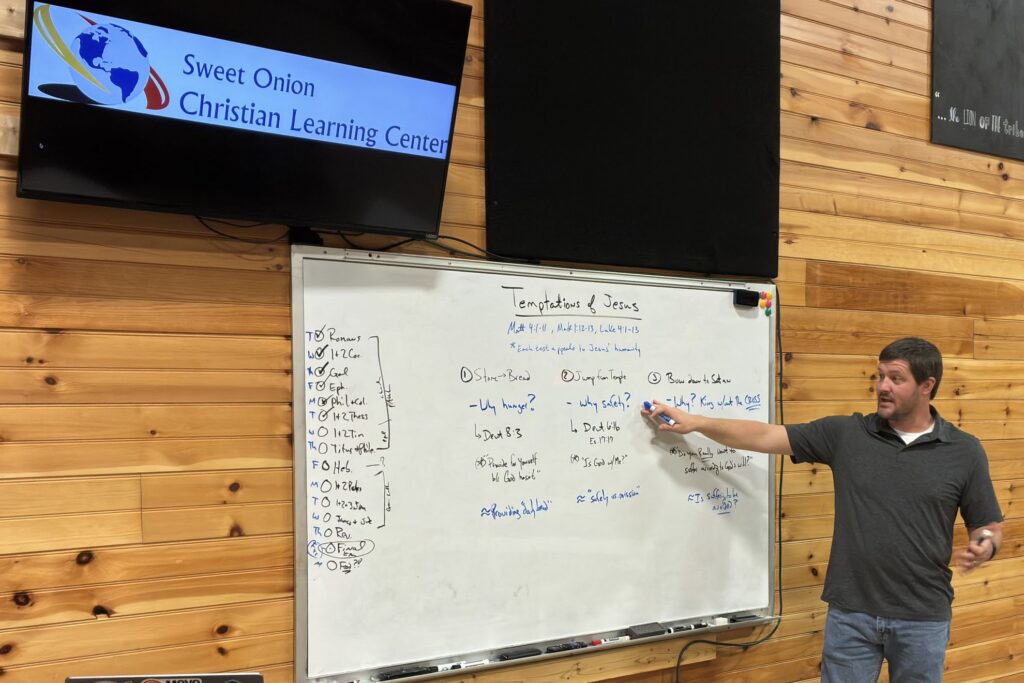
Gady is an ordained minister, pastor, and educator who has devoted his career to Christian education. He currently serves as lead pastor at Word of Life Baptist Church in Vidalia, Georgia, and holds multiple graduate degrees in Christian education, counseling, and ministry. In 2013, he founded Sweet Onion Christian Learning Center to bring faith-grounded education to public school students in his community.
The Center operates what is known as a released-time education program, a program that allows public schools to release students for part of the school day to attend religious instruction with parental approval. Released-time education is a constitutionally recognized arrangement, affirmed by the Supreme Court in Zorach v. Clauson (1952). The program costs the school nothing, receives no public funding, and participation is entirely voluntary.
In 2014, the principal of Vidalia High sought Gady out and asked the Center to serve the school’s students. Gady put together a proposal, and the school board approved it.
From Spring 2015 through the 2025–26 school year, Sweet Onion served around twenty Vidalia High students each semester across courses in biblical studies, finance, psychology, and comparative religions. Students regularly credited the financial literacy class with helping them reach goals they once thought were out of reach—attending college, launching a career, paying off debt. Many have come to regard Gady as a personal minister in their lives.
In more than ten years of operation, no parent, student, or school employee had brought a serious complaint about the ministry. The program was working exactly as it should.
Gady is punished for speaking out on a tax increase
In September 2025, Vidalia City Schools announced plans to raise property taxes. Gady, who holds deep convictions about wise stewardship of public resources, opposed the increase—and said so on his personal Facebook page.
In one post, he urged the school board to address its budget shortfall by cutting unnecessary administrative positions rather than raising taxes on residents. In a second, he shared publicly available salary data showing the district’s 20 highest-paid employees—17 of them administrators—collectively earned $2.2 million in 2024, with only one classroom teacher in the group. He also replied to a commenter, quoting his students who said that in some classes, students were largely teaching themselves.
His comments weren’t intended to denigrate any teacher at Vidalia High School but were expressions of his opinions about government spending, shared by a private citizen on his own time. That is the kind of speech the First Amendment was explicitly designed to protect.
Rather than engage with his concerns, Vidalia City Schools quietly began investigating the Center in October 2025—without ever alerting Gady that there was a problem.
The investigation turned up one incident: several years earlier, a parent from a different school had removed her child from a Sweet Onion course after learning the ministry didn’t exclusively use her preferred Bible translation. The superintendent brought this to the board alongside her concerns about his social media posts, suggesting his instruction “reflected a particular interpretation of the Bible” that wasn’t presented in a “neutral or well-balanced manner.”
In February 2026, Superintendent Sandy Reid emailed Gady to inform him that the district was ending its relationship with the Center. When he asked to meet and understand why, Reid was direct: she claimed school staff had been highly offended by his Facebook posts, and the board felt those posts created a “misalignment,” making it unwilling to continue the partnership.
She also noted that a district-employed teacher who made the same posts would not have been fired. Instead, the school would have engaged in remediation and protected the employee’s due process rights. Gady received no such consideration. His program was simply canceled.
That’s why, with the help of Alliance Defending Freedom, Gady filed suit to have the program reinstated and his rights vindicated.
Court hands down win for free speech
In a victory for free speech, the U.S. District Court for the Southern District of Georgia ruled in July 2026 that Vidalia City Schools must reinstate Sweet Onion and honor Gady’s freedom of speech while their lawsuit against school officials continues.
“Vidalia City Schools can’t punish Rev. Youmans—or his ministry providing high school students with free religious education—for simply sharing his opinion of a proposed tax hike,” said ADF Legal Counsel Mercer Martin, who argued the case for Gady. “We’re pleased the court has reinstated Sweet Onion’s released-time program and restored Rev. Youmans’ constitutionally protected freedoms while his lawsuit proceeds.”
What’s at stake?
While this is a good win, it can’t be understated that Gady’s life—and that of the students served by Sweet Onion—was turned upside down thanks to the school district’s blatant disregard for the Constitution. Gady had briefly lost his program, not because of anything that happened in his classroom, but because of what he posted on Facebook. Every American has the right to criticize their government, and every minister like Gady has the right to teach their faith from their own convictions.
The cost has also been tangible. Without the program, the donors who had funded Sweet Onion would have had little reason to keep giving; without them, the Center would have to close. For Gady’s family of five, Sweet Onion is their primary source of income.
The schools district’s decision also negatively impacted students. Without Sweet Onion, the students would have been left with an alternative that requires them to pay tuition and make an eleven-mile commute from school.
The bottom line
Vidalia City Schools can’t punish Gady for simply sharing his opinion of a proposed tax hike. The freedom to speak doesn’t disappear when a government official disagrees with what’s being said.
Sweet Onion Christian Learning Center v. Vidalia City Schools
- December 2014: The Vidalia City Board of Education approved Rev. Youmans’ proposal to provide released-time education for Vidalia High School students. Sweet Onion began teaching students the following spring.
- September 2025: The Vidalia City Board of Education announced a proposed property tax increase. Rev. Gady Youmans posted on Facebook opposing it.
- October 2025: Superintendent Reid secretly began investigating the Center and exploring alternatives, without notifying Gady.
- February 2026: Superintendent Reid emailed Gady to cancel the program. In a subsequent meeting, she confirmed that his Facebook posts drove the decision. Though Gady asked them to reconsider, the board declined to reverse course.
- May 2026: With the help of Alliance Defending Freedom, Gady filed suit to protect his constitutional rights.
- July 2026: A federal court ruled that Vidalia City Schools must reinstate Sweet Onion and honor Gady’s freedom of speech while the lawsuit against school officials proceeds.
Related Articles