

Key Takeaways:
- Washington state law prohibits licensed counselors from discussing certain topics related to gender identity and sexuality with minor clients—even when pursuing goals the clients set for themselves.
- Brian Tingley, a Christian marriage and family counselor in Washington, challenged this law as a violation of the First Amendment’s free speech protections. But federal courts dismissed Brian’s case, and the U.S. Supreme Court declined to hear it in December 2023.
- In March 2026, the Supreme Court ruled 8–1 in Chiles v. Salazar, condemning the viewpoint discrimination of a similar law in Colorado, paving the way for Brian to reopen his case.
- In August 2026, Washington state officials agreed not to enforce the counseling censorship law against Brian Tingley while his case proceeds.
Counselors often develop strong, trusting relationships with their clients. After all, their jobs involve discussing their clients’ personal thoughts, feelings, and experiences in a confidential setting.
But imagine this scenario: You sit down in your counselor’s office for your monthly appointment. Over the years, you’ve grown to trust your counselor and have gradually opened up to him more and more.
But this appointment is different. Today, there’s a third person in the room. It’s a representative of the state government. Reluctantly, you start talking with your counselor. But every time the conversation turns to a particular topic, the representative interrupts, saying, “This conversation is prohibited!” And all that trust that you’ve built with your counselor over the years is suddenly on thin ice.
This may seem like a radical hypothetical. But it is essentially what is happening under a law in the state of Washington. The law permits the government to intrude on confidential counseling sessions and dictate what counselors and clients can and can’t discuss.
This didn’t sit well with one counselor, Brian Tingley, who challenged the law in court.
A caring counselor

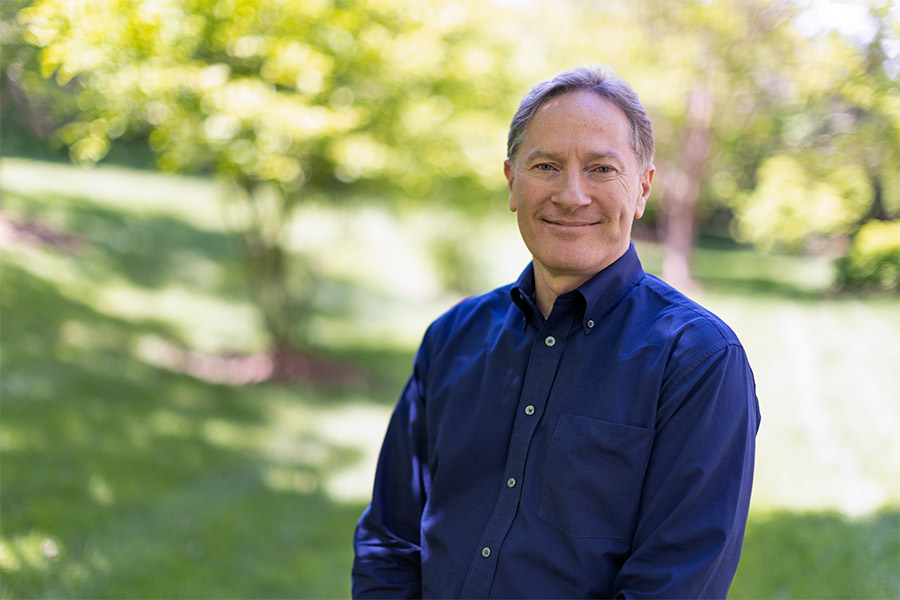
Brian Tingley has been a marriage and family counselor for over 20 years in the state of Washington. He counsels married couples, individual adults, teens, and families through the struggles they are facing in their relationships and lives. Brian cares deeply about his clients and wishes to help them in any way he can.
Brian is diligent in helping his clients achieve the goals they personally set for themselves. He carefully listens to and reasons with his clients, providing feedback and guidance.
Like many of his clients, Brian is a Christian. And his Christian beliefs inform his understanding of human nature. But Brian never tries to force his own beliefs on his clients.
Many of Brian’s clients share his Christian faith and come to Brian for counseling about issues of sexuality, gender, and family from a Christian perspective. But Washington state prevents Brian from providing this counseling.
Washington’s viewpoint discrimination
In 2018, Washington passed a law that allows government officials to decide what can be said within the confidential conversations between counselors and their clients.
Under the Washington law, Brian can’t mention or discuss anything related to gender, sexual orientation, sexual behaviors, or gender identity that is not in line with the state’s views.
If he does—even if it relates to goals that clients set for themselves—Brian would face fines up to $5,000 per violation and even the permanent loss of his license. In other words, he could lose the ability to support his family.
Brian knew this law was unjust and wasn’t in the best interest of his clients. So he decided to take a stand. And he reached out to Alliance Defending Freedom for help.
Supreme Court upholds free speech in counseling
Brian initially filed his lawsuit in 2021. Unfortunately, a federal district court and then an appellate court dismissed his case, and the U.S. Supreme Court declined to review this decision in 2023.
Thankfully, that wasn’t the end of Brian’s journey. Though the Supreme Court declined to hear Brian’s case, just two years later, it heard a case of another ADF client, Kaley Chiles. Like Brian, Kaley is a licensed counselor who is challenging a law similar to Washington’s in her home state of Colorado. Praise God, in March 2026, the Supreme Court ruled 8-1 that Colorado’s law, as applied to Kaley’s counseling conversations, is inconsistent with First Amendment principles.
In light of this ruling, Brian asked the federal court in Washington to reopen his case so that he can freely counsel minor clients struggling with gender confusion. Praise God, the court decided to do just that in July. It was a crucial first step in ensuring First Amendment rights stay protected in the counseling room.
Even better, just a month after the court decision, Washington state officials agreed not to enforce a counseling censorship law against Brian while his case proceeds, allowing the licensed family and marriage therapist to speak freely in his profession for the first time in five years.
“We’re pleased Washington has agreed that Mr. Tingley should be free to speak,” said ADF Senior Counsel Johannes Widmalm-Delphonse. “It will allow young people to get the help they desperately need while his case proceeds.”
The bottom line
For government officials to insert themselves into confidential counseling sessions—and determine which goals counselors and their clients can pursue and which topics they can discuss—is a radical violation of free speech.
It’s the client’s choice to pursue a specific goal through counseling, not the government’s. Similarly, it’s up to counselors like Brian to determine how best to help their clients achieve their counseling goals during their sessions. The government has no business telling counselors what topics they can and cannot discuss during these private conversations.
Tingley v. Brown
- May 2021: ADF filed a lawsuit against the state of Washington on Brian’s behalf.
- September 2021: A federal district court dismissed Brian’s case. ADF attorneys representing Brian appealed to the U.S. Court of Appeals for the 9th Circuit.
- May 2022: The 9th Circuit held oral argument in Brian’s case.
- September 2022: The 9th Circuit affirmed the dismissal, denying Brian the opportunity to prove his case.
- January 2023: The 9th Circuit denied Brian’s request to rehear his appeal en banc. Two judges filed strongly worded opinions objecting to that refusal.
- March 2023: ADF attorneys asked the U.S. Supreme Court to hear Brian’s case.
- December 2023: The Supreme Court declined to hear Brian’s case.
- March 2026: The U.S. Supreme Court ruled 8-1 in favor of ADF client Kaley Chiles, protecting free speech in the counseling room.
- May 2026: In light of the decision in Chiles v. Salazar, Brian filed a motion with a federal court to reopen his case.
- July 2026: The U.S. District Court for the Western District of Washington agreed to reopen Brian’s case.
- August 2026: Washington state officials agreed not to enforce the counseling censorship law against Brian as his case proceeds.
Related Articles