Key Takeaways
- The freedom of religion, speech, the press, assembly, and petition are all protected by the First Amendment to the U.S. Constitution.
- The First Amendment doesn’t create these freedoms. It merely recognizes rights every person already holds and forbids the government from taking them away.
- Ordinary Americans, from artists to college students, have stood up to defend these rights in court.
Imagine a government that could tell you where to pray, what to say, and who may join you. John Bunyan knew that world firsthand. An English preacher in the seventeenth century, he spent roughly twelve years in a Bedford jail for preaching outside the government’s approved church without a license. He could have walked free if he had simply agreed to stop preaching. But he refused. He kept writing from his cell and would go on to write one of the most well-read Christian works in the English language.
That was the world the American Founders set out to leave behind. They likewise knew what it meant to live under rulers who punished dissent, censored the press, and dictated whether or how people could worship. So, when they built a new nation, they sought to protect certain fundamental rights—and they wrote those protections into the First Amendment.
Since its ratification, the First Amendment has been essential to maintaining a free and flourishing society. It protects some of our most fundamental human rights. But in every generation, ordinary people have had to step up to defend these rights. Their stories show what the First Amendment protects, why it matters, and what we stand to lose if we take it for granted.
What does the First Amendment say?
The text of the First Amendment reads, “Congress shall make no law respecting an establishment of religion, or prohibiting the free exercise thereof; or abridging the freedom of speech, or of the press; or the right of the people peaceably to assemble, and to petition the Government for a redress of grievances.”
Those 45 words protect some of our most basic human rights. They are not privileges the government hands out and can take back. They belong to every person because of who we are: human beings made in the image of God, created to know Him, speak the truth, and gather with others. Thus, the First Amendment recognizes rights we intrinsically possess as people and forbids the government from taking them away.
While the text of the First Amendment only addresses the federal government, these protections have been applied to the states by ratification of the Fourteenth Amendment. The First Amendment’s guarantees are essential to the spirit of ordered liberty. Therefore, no government, state or federal, can ignore them.
A brief history of the First Amendment
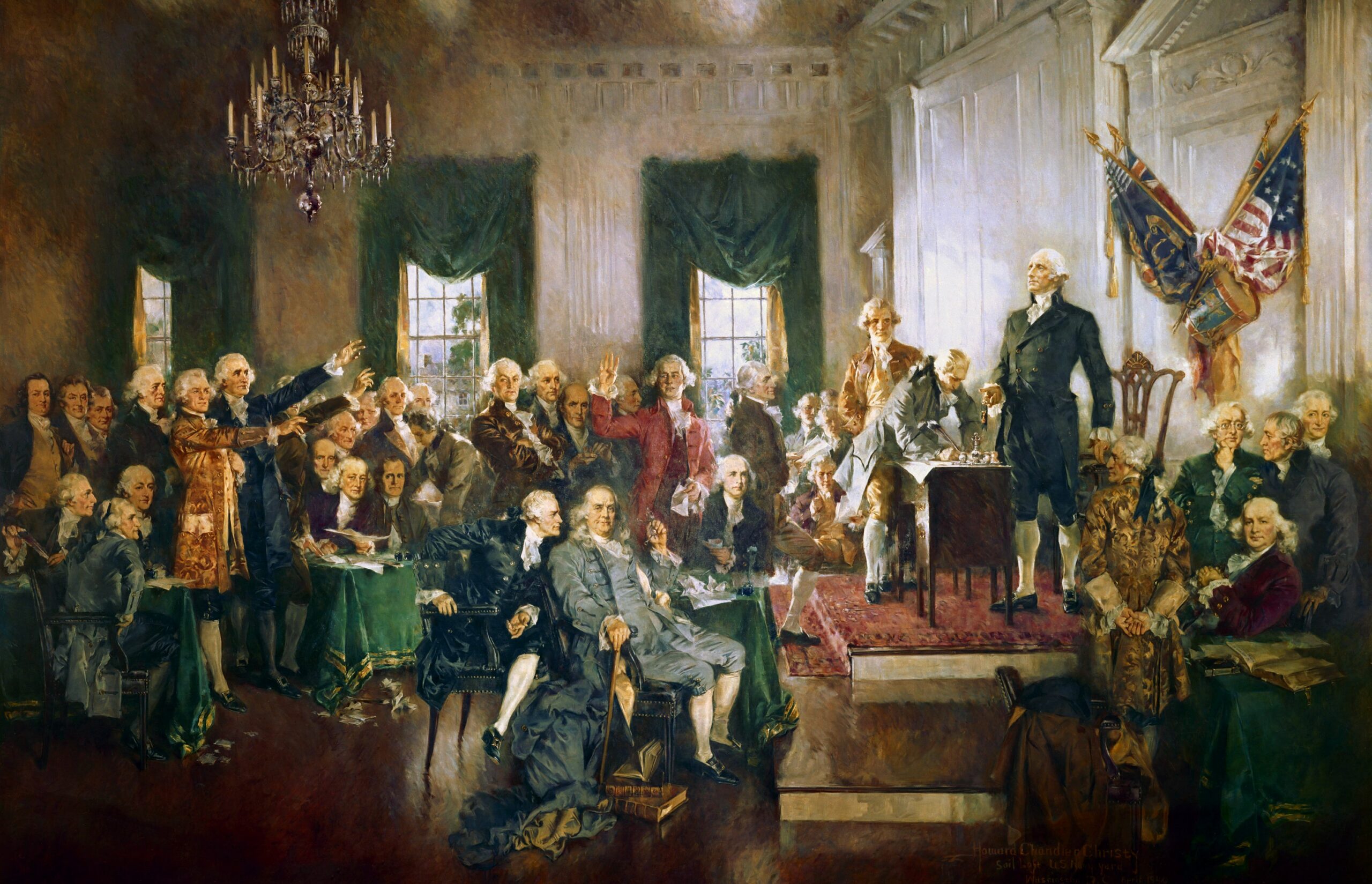
After the United States secured its independence from Great Britain in the 1783 Treaty of Paris, the fledgling nation vigorously debated which system of government to adopt. One of the most contentious issues was finding a system of government that could adequately divide power between the federal government and state governments, while also protecting the rights of states and individuals. Two groups, the Federalists and Anti-Federalists, championed opposite sides of the debate. One key topic emerged as a focal point in this dispute: whether to add a “Bill of Rights” to the Constitution, enumerating certain freedoms that the government could not violate.
Many Federalists felt that adding a Bill of Rights was unnecessary, since the Constitution granted only specific powers to the national government and didn’t purport to take any rights away. As James Wilson, the only person to sign the Declaration, Constitution, and eventually serve on the Supreme Court, put it, “every thing which is not given, is reserved.” Since the federal government was largely ineffective under the Articles of Confederation, Federalists like Wilson were wary of returning to such a system.
However, after Anti-Federalists raised concerns, James Madison emerged as a leading voice calling for a Bill of Rights. Madison explained that passing a Bill of Rights would not erode or undermine the newly formed government but would cement the rights of the people. Doing so would “extinguish from the bosom of every member of the community any apprehensions, that there are those among his countrymen who wish to deprive them of the liberty for which they valiantly fought and honorably bled.”
After a series of debates and revisions, the First Amendment was adopted as a part of the Bill of Rights in 1791.
What rights does the First Amendment protect?
The First Amendment protects five core freedoms: freedom of religion, freedom of speech, freedom of the press, freedom of assembly, and the freedom to petition the government.
For more than two centuries, our First Amendment liberties have helped America thrive as one of the freest countries on earth. And today, ordinary Americans—from artists, to college students, to moms and dads—continue to stand up for these cherished freedoms.
The Freedom of Religion
“Congress shall make no law respecting an establishment of religion, or prohibiting the free exercise thereof…”
Above all else, humanity exists to have a relationship with God. Religious freedom ensures that relationship stays between man and God, not man and the state.
The First Amendment outlines two elements of religious freedom. The first half (“respecting an establishment of religion”) is called the Establishment Clause, and the second half (“prohibiting the free exercise thereof”) is called the Free Exercise Clause. As their names suggest, the Establishment Clause was meant to protect against an “establishment” of religion, such as a government-sanctioned church like the Church of England, while the Free Exercise Clause was meant to give broad protections for people to freely practice or “exercise” their religious beliefs. Together, these are sometimes called the Religion Clauses of the First Amendment and have served to protect churches and individuals from government interference in religious affairs.
The Religion Clauses are essential in modern society and impact everything from the right to go to church, to preventing religious discrimination, to parents’ ability to raise their children in faith. Sometimes, the freedom to pray even at home with friends has been challenged.
Daniel Grand is an Orthodox Jew from a small town in Ohio. He emailed about a dozen friends and invited them to his house for Sabbath and holy day prayer. But the city mayor heard of his plans and had the city’s law director send Daniel a cease-and-desist order. The mayor told Daniel that he needed a permit to pray in his own home with his friends, subjected Daniel to an antagonistic permit hearing, and engaged in a broader pattern of harassment, such as refusing to pick up his garbage and having police regularly drive by his home.
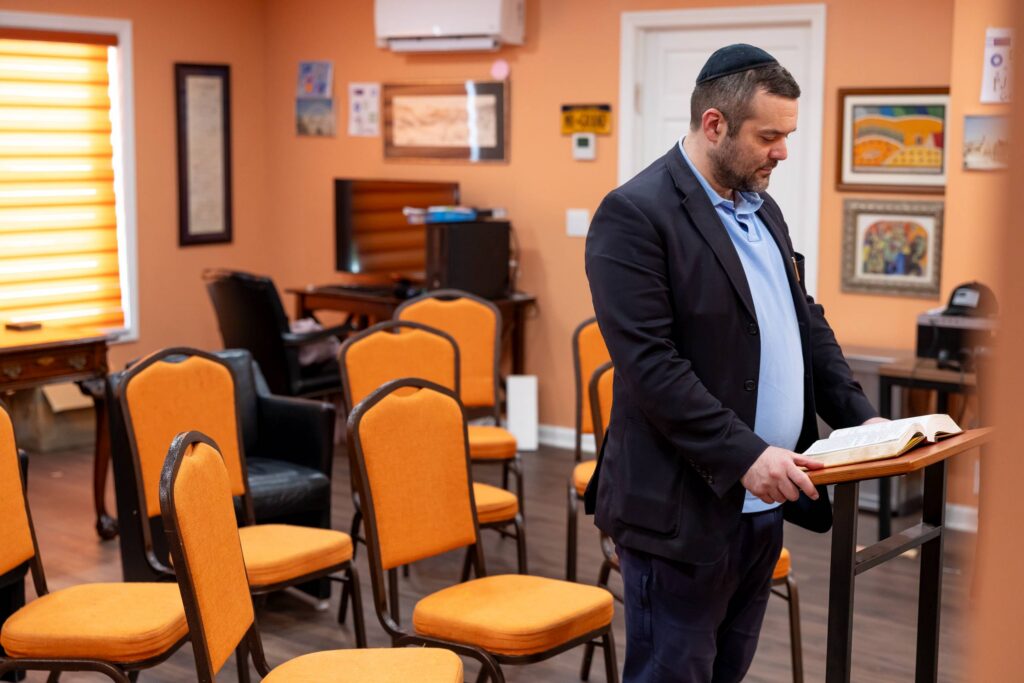
When Daniel sued to protect his rights, the courts dismissed his claim because he never completed the hostile and unnecessary permit process. But the Free Exercise Clause (and federal law) protects his ability to vindicate his right to the freedom of religion in federal court. Thankfully, the U.S. Supreme Court will hear his case this December.
Daniel is far from alone in being targeted by the government for his faith. ADF client Jack Phillips was in court for years after politely declining to create a custom cake celebrating a same-sex “wedding.” Colorado officials called his invocation of religious freedom “one of the most despicable pieces of rhetoric that people can use” and tried to force him to violate his beliefs. Jack stood firm, and the U.S. Supreme Court ruled 7-2 in his favor since state officials had demonstrated hostility toward Jack’s faith and failed to act with the neutrality that the First Amendment demands.
The Freedom of Speech
“Congress shall make no law … abridging the freedom of speech…”
Freedom of speech is at the very heart of what it means to pursue truth, learn new ideas, and express one’s thoughts. God made us in His image to do just that. When people talk, even when they disagree, they learn from each other and refine their own beliefs. That exchange is how a society comes to a deeper understanding of the truth.
Freedom of speech protects two rights at once: the right to say what you believe and the right not to say what you don’t.
For example, Kaley Chiles is a licensed counselor who challenged a Colorado law preventing her from having conversations to help kids embrace their God-given sex. The law encouraged counselors to push kids toward “gender transition” drugs and surgeries, but banned conversations that could lead young clients toward regaining comfort with their bodies. In March 2026, the Supreme Court ruled that states cannot silence viewpoints in the counseling room.

On the flip side, the First Amendment doesn’t just stop the government from censoring unfavored viewpoints; it also bars the government from forcing private citizens to become mouthpieces of the state. Kim Polk, a substitute teacher in Maryland, was not allowed to teach after she, based on her religious convictions, could not call students by the wrong pronouns. As of the fall of 2026, her case against the school district is pending before the Supreme Court.
The Freedom of the Press
“Congress shall make no law… abridging the freedom… of the press…”
Without the ability to publish freely, many public discussions would never begin in the first place. Perspectives could be silenced, truthful reporting could be banned, and public opinion could be controlled. This part of the First Amendment ensures that opinions and beliefs can be spread without needing a government stamp of approval. A group of students at Oregon State University stood up for this freedom after their university restricted their newspaper while giving a forum to others.
OSU Students Alliance (OSUSA), a student organization, published a newspaper called The Liberty. The paper gave students a way to express their political thoughts and offered an alternative to the university’s daily student newspaper. With permission, OSUSA set up bins to distribute The Liberty across campus. But one day, all seven of its outdoor bins disappeared. Assuming they had been stolen, the paper’s editor contacted the police. Only then did they learn that the university had removed their bins without warning and heaped them by a dumpster, citing an unwritten and, until then, unenforced policy.

University officials claimed that they removed the bins to “de-clutter” the campus, but only The Liberty’s seven bins were targeted. The left-leaning daily student newspaper’s 24 distribution bins were left untouched.
Because the university gave a platform for expression, it needed to set clear, viewpoint-neutral rules that protected student publications. Instead, its unwritten policy gave officials unfettered discretion to silence them. ADF attorneys represented OSUSA and won in federal court. As a result, Oregon State University paid over $100,000 in attorneys’ fees and damages. The university’s new policy, which it adopted after the lawsuit was filed, allowed The Liberty to resume distribution across campus.
The freedom of assembly
“Congress shall make no law… abridging… the right of the people peaceably to assemble…”
By our nature, people are social creatures. We speak together, worship together, and serve together. This element of the First Amendment protects our freedom to gather—whether in church, politics, or elsewhere. During the COVID-19 pandemic, that freedom came to the forefront.
Calvary Chapel Dayton Valley first opened its doors over 20 years ago in western Nevada. In March 2020, after the governor declared a state of emergency, the church took several steps to prepare for its upcoming Sunday services, such as disinfecting doors and setting out hand sanitizers. Out of an abundance of caution, it soon temporarily paused in-person services. But some congregants didn’t have internet access, and the church believed that the Bible instructs the faithful to worship communally.
However, the state’s “Church Gathering Ban” heavily restricted the ability of churches like Calvary Chapel Dayton Valley to meet in-person, even though places like casinos, amusement parks, and even mass protests had less burdensome restrictions. Calvary Chapel wasn’t permitted to open its doors widely while cannabis dispensaries and hair salons were able to reopen.
Thankfully, the 9th Circuit eventually struck down Nevada’s unconstitutional COVID-19 regulations, affirming that religious gatherings cannot be treated worse than comparable secular gatherings.
The Freedom to Petition the Government
“Congress shall make no law… abridging… the right of the people… to petition the Government for a redress of grievances.”
The closing words of the First Amendment protect the ability of the people to petition the government. While few cases argue specifically about this freedom, they all stand on its premise. If everyday people are unable to plead their case before the government, there would be no recourse for justice when their rights are violated—people like Konstantin Averkiev.

Konstantin is a Christian and a father. One day after coming home from school, his nine-year-old son talked about what he learned that day in class, including “gender change” surgery. At the start of the school year, Konstantin had met with his son’s teacher, explained that his family is Christian, and asked to be notified about LGBTQ+-related instruction so that he could opt out his son. The teacher agreed but didn’t follow through. When Konstantin asked the school district to opt out from all LGBTQ+ instruction and requirements for the next school year, the district refused most of his requests. Konstantin filed a lawsuit, asking the federal court to protect his religious freedom and fundamental parental rights.
The First Amendment is a gift to freedom
When the Constitution and Bill of Rights were ratified, the government recognized that certain freedoms are essential to human nature and lie beyond the power of the state.
Today, those freedoms still face threats. But courageous people like Daniel, Jack, Kaley, and Konstantin have taken a stand. Our nation was founded on the truth that all men are endowed by our Creator with certain unalienable rights. Through God’s grace, everyday people have stood firm in defending those rights.
Related Articles