
Key Takeaways
- Jonathan Lopez was a Christian student in a public speaking class at Los Angeles City College when California voters passed Proposition 8 in 2008.
- The day after the vote, his professor called anyone who voted for Proposition 8 a derogatory name and dismissed class.
- When Jonathan read the dictionary definition of marriage during a speech about his faith, the professor cut him off and wrote, “Ask God what your grade is.”
- ADF sued on Jonathan’s behalf, challenging both the professor’s actions and a college speech code that told students not to say anything that might offend.
- A federal court entered judgment against the professor and awarded Jonathan damages for violating his free speech rights.
Fear of public speaking is common. Despite—or perhaps because of—this common fear, many colleges require students to take public speaking classes.
Jonathan Lopez was one student who had to take such a class. But in addition to this challenge, he also faced opposition to his beliefs from his professor.
During one of his speeches, Jonathan included the definition of marriage: a legal union between one man and one woman. At that, the professor became angry and dismissed the class before Jonathan finished his speech. And in the days that followed, the professor continued to target him.
Though Jonathan faced these trials, they strengthened him. He stood firm for his faith despite the hardship.
Meet Jonathan Lopez
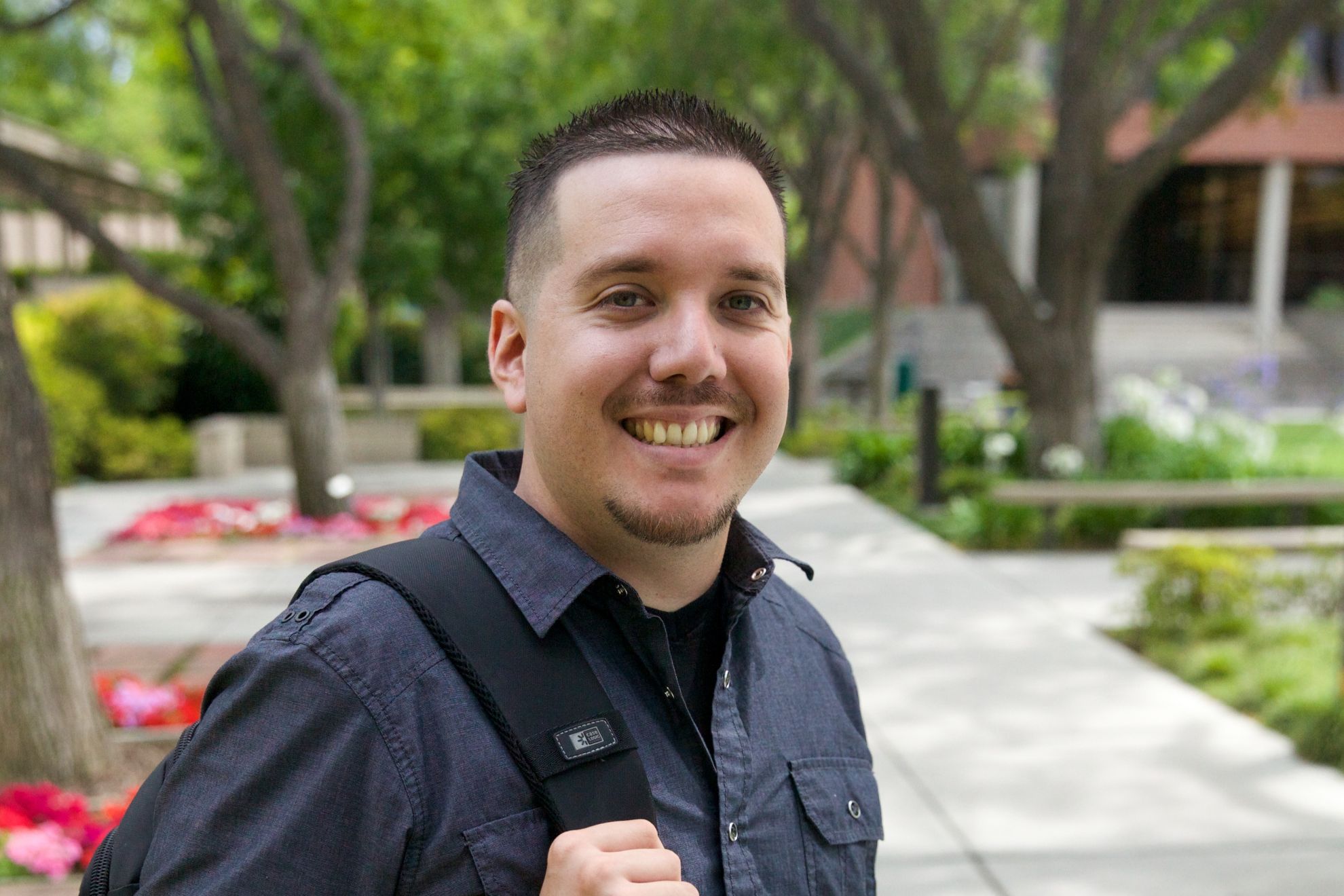
Jonathan Lopez was a student at Los Angeles City College (LACC). He was also growing in a newfound faith in Christ.
“I didn’t grow up in a Christian household,” he said. But one by one, his family members came to faith. “I was the hard-headed one. My mom prayed for me for years—years.”
And Jonathan felt a pull.
“I would just feel God speak to me, you know? Tugging on me. I was so hard-headed. Actually, my head was clear—my heart was hard.”
One year at a church camp, a friend offered to pray for Jonathan to ask Jesus into his heart. “I wouldn’t hear it,” Jonathan said.
A year later, though, the tugging was even stronger. “I prayed and told Jesus that if someone would offer to pray with me again, this time I would do it. I asked Him to send someone to ask me. He did—the same friend from a year before. This time, I prayed with him.”
Worship and the truths of the Bible increased in importance to Jonathan. They informed his view of the culture, which was changing dramatically when he went to college.
Jonathan shared his beliefs with others, including his fellow students. He often discussed how his faith guided his views on political, social, and cultural issues and events.
The professor shut down Jonathan over his views
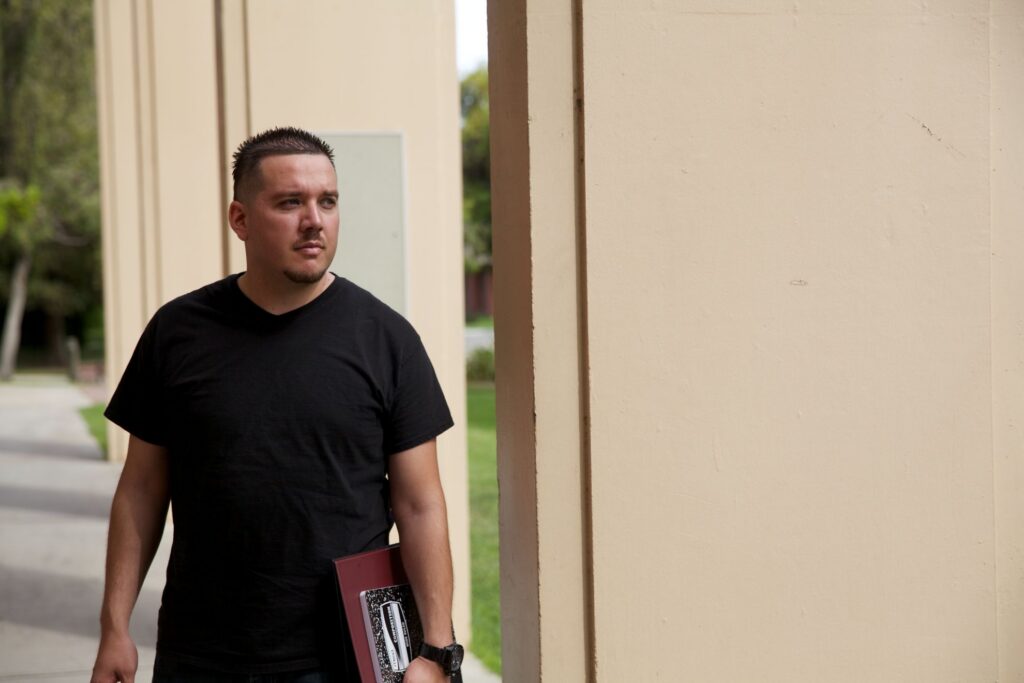
In the fall of 2008, Jonathan was enrolled in a speech class at LACC. During this time, California voters passed Proposition 8, which amended the state’s constitution to define marriage as a legal union between one man and one woman.
The day after the vote, Jonathan’s speech professor came to class, called anyone who voted for Proposition 8 a derogatory name, and dismissed class.
A few weeks later, Jonathan gave an informative speech about his Christian faith.
“I wasn’t saying this is the way. I wasn’t trying to tell people to come to church with me. I wanted to keep it simple.”
But Jonathan also wanted to address, indirectly, the professor’s derogatory comment about students, including Jonathan, who voted for Proposition 8.
“I decided to put the definition of marriage from the dictionary into my speech. I felt like it was my responsibility to speak up for those that didn’t speak up that day—including myself.”
“[The professor] started mumbling, in the back of the room,” Jonathan said. “I actually asked him if he would mind lowering his voice, because he was being disrespectful—this was my time to speak.”
At that, the professor called Jonathan the same derogatory name he used weeks prior and said anyone who was offended by the speech was free to leave. No one moved. The professor then dismissed the class.
The professor had left an evaluation form on Jonathan’s backpack that told Jonathan to “Ask God what your grade is” and included a note that proselytizing “is inappropriate in public school.”
The professor continued to single him out. “He would always have remarks in class,” Jonathan said. “It was like he made it his mission to the end of the semester to keep attacking me. I didn’t know whether I should keep going to class or not, because I didn’t want to go through that embarrassment anymore … But if I didn’t go, I would get an incomplete … I had to finish.”
LACC did not respect Jonathan’s free speech
Jonathan told the college dean what was happening. To his surprise, she did not seem particularly concerned. She told him to document his complaint with signatures from other students and made no offer to investigate or confront the professor.
Even worse, the dean’s office was directly across the hall from the professor’s classroom. The professor saw them talking and confronted Jonathan in the hallway shortly afterward.
“He got in my face,” Jonathan said. “I thought he was going to put his hands on me. He said he was going to make it his mission to expel me from school.”
For Jonathan, that was the last straw.
When a friend contacted Alliance Defending Freedom on his behalf and told him they might be able to help, Jonathan made the call. While he dreaded the thought of a lawsuit, “Something needs to be done,” he decided. “Instructors can’t just do things like this. It’s not right.”
After conferring with his family and considerable prayer, “I decided to go that road,” Jonathan said.
An ADF attorney sent demand letters to LACC detailing what had happened and urging administrators to correct the problem.
In response, the dean said other students had been offended by what Jonathan said. One called his speech “hateful propaganda,” and another said he should “pay some price” for what he said.
So ADF filed a lawsuit against the college, its administrators, and the professor.
The college also had a policy telling students not to say anything they thought might be offensive. In effect, students were told to censor themselves at a place that should have promoted robust discussion.
The district court temporarily blocked the college from enforcing or publicizing the anti-speech policy and ordered the policy to be removed from the district and college websites. The college appealed, and the U.S. Court of Appeals for the 9th Circuit reversed, ruling that Jonathan could not challenge the policy. ADF asked the U.S. Supreme Court to review that decision, but the Court declined in May 2011.
Jonathan’s professor was held accountable
ADF then went back to the district court, which ruled against the professor and ordered him to pay damages and attorneys’ fees.
“I was pleased with that,” Jonathan said, “even though it was never about the money. It was more about defending my faith. I was really glad that there was acknowledgment that the instructor did do wrong, that he did violate my rights … and that other believers can speak up now, and feel comfortable about speaking up.”
Jonathan’s case was covered in the national media and caught the attention of college students nationwide. Many contacted ADF with their own experiences of persecution for their faith and denial of their free speech and religious freedom.
Despite the attention, Jonathan declined all interviews.
“I didn’t want my face out there,” he said, “because it wasn’t about me. I wasn’t trying to get attention or anything like that. I just needed to speak up for my faith.
“Everyone has the right to say, ‘I don’t believe in God,’ so why don’t I have the right to say, ‘I believe in God?’ I was fulfilling what He had planted in my heart to do, and I was really glad that I had the courage to do it for Him. If it’s something you believe and you know it’s the truth, then be open about it. Because in the end, God’s going to have your back, and that’s all you need.”
Lopez v. Candaele
- February 2009: ADF filed a complaint against college officials on behalf of Jonathan.
- July 2009: The district court granted a preliminary injunction, prohibiting the college from enforcing or publicizing the anti-speech policy and ordering the policy to be removed from the district and college websites.
- September 2009: The district court denied the college district’s request to reconsider the preliminary injunction.
- September 2010: The U.S. Court of Appeals for the 9th Circuit reversed the preliminary injunction order and sent the case back to the district court. ADF filed a petition for the full 9th Circuit to rehear the case.
- December 2010: The 9th Circuit declined to rehear the case.
- March 2011: ADF asked the U.S. Supreme Court to hear the case.
- May 2011: The Supreme Court declined to hear the case. The district court ordered the professor to pay $5,000 in damages.
- July 2011: ADF’s motion for attorneys fees against the professor was granted.
Related Articles