Good afternoon, Co-Chairman Smith and Co-Chairman McGovern, thank you for inviting me to participate here today.
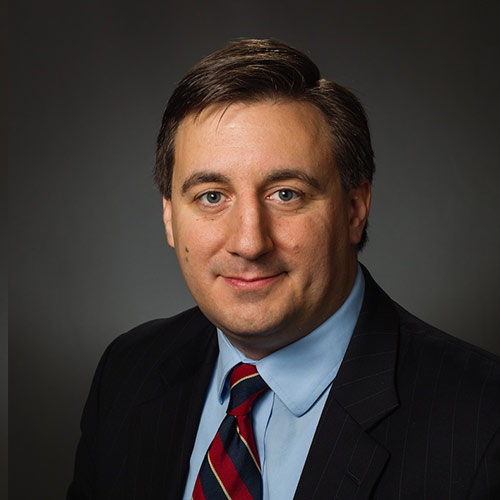
My name is Jeremy Tedesco, and I serve as Senior Counsel and Senior Vice President of Global Free Speech at Alliance Defending Freedom.
I am here with two warnings.
First, Christian persecution is on the rise in Europe, where governments are increasingly treating foundational Christian beliefs as crimes.
Second, Europe is using the Digital Services Act to impose its speech restrictions—including those targeting Christian belief—worldwide, and right here in America as well.
My written statement documents the scope and scale of this crisis.
Consider just a few examples from Europe.
In Finland, ADF client Päivi Räsänen, a member of parliament and a Christian grandmother, endured seven years of criminal prosecution and three trials after tweeting a Bible passage that challenged her church’s decision to participate in a pride parade.
She was ultimately acquitted of the tweet-related charges in two lower courts. But prosecutors also pursued charges over a booklet she had published in 2004 expressing her Christian views on marriage. In March 2026, the Finnish Supreme Court upheld the tweet acquittals but found her guilty of violating Finland’s War Crimes and Crimes against Humanity Act for publishing the booklet.
In the UK, two ADF clients, Isabel Vaughan-Spruce and Adam Smith-Connor, were arrested for silently praying near an abortion facility. Another ADF client, Rose Docherty, was prosecuted in Scotland for holding a sign that said “here to talk, if you want,” outside a hospital.
It’s hard to believe, but in Europe, expressing foundational Christian beliefs, holding a sign offering to talk, and even silently praying, have become targets of criminal enforcement.
A government that can police your prayers will have little hesitation policing your posts, which brings me to the Digital Services Act.
The DSA is a European Union law that regulates online platforms and gives European officials sweeping powers over how those platforms handle speech. It pressures companies to enforce European speech restrictions through their moderation policies and algorithms, backed by potentially ruinous fines.
European officials sold this law with a simple promise. What is illegal offline should also be illegal online.
But what happens when governments treat biblical teaching as criminal? The DSA draws its definition of “illegal content” from existing EU and Member State laws. This means the very laws being used against Christian expression—like the War Crimes law in Finland used to punish Päivi Räsänen—become the foundation for platform enforcement worldwide.
The DSA was built for global speech control. EU representatives have said so themselves, and the House Judiciary Committee has documented more than one hundred meetings in which the European Commission pressured platforms to change their globally applicable moderation rules.
And the speech the DSA controls is ours—on the platforms we use every day.
Under the DSA, government-certified “trusted flaggers” receive priority for their reports of allegedly illegal content. Their choices help determine whose speech gets scrutinized.
The DSA also requires large platforms to assess and mitigate vague categories of speech—like “hate speech,” “disinformation,” and “negative effects on civic discourse”—creating pressure to change their moderation policies and algorithms.
Platforms face fines of up to six percent of annual worldwide revenue for violating DSA obligations. That creates a powerful incentive to censor first and ask questions later.
For covered platforms, protecting one sermon brings little financial reward. But leaving disputed speech online invites massive regulatory and financial risk.
This has real-world consequences for churches and ministries. It means a sermon can be silenced, a testimony buried, and biblical teaching suppressed without a charge ever being filed or a court ever hearing the case.
Americans use X, Google, and Meta to share their faith, debate politics, and challenge those in power. Europe is using the DSA to control that public square. That puts foreign officials in charge of a freedom our Constitution guarantees.
Religious freedom and free speech are precious because they protect our deepest convictions and our ability to share them with others. They are essential to a free society. When governments claim the power to punish peaceful expressions of faith, everyone’s freedom is endangered.
Congress must stand firmly for these freedoms, defend Christians facing persecution in Europe, and protect Americans from foreign censorship. Our right to speak and live according to our faith must never depend on whether those in power approve of what we believe.
Thank you.
Related Articles