Key Takeaways
- Angela and her fellow pro-lifers stood up for the unborn by holding signs on a public highway.
- For their advocacy, police were called. Angela and several others were arrested, strip-searched, and prevented from calling home or speaking to attorneys.
- After a lawsuit, the Maryland police agreed to protect free speech in the future and to respect the Constitution.
Angela’s day began by holding a sign that read “Jesus forgives and heals.”
Her day ended in a detention cell. She had been arrested, strip-searched, and would soon face criminal charges.
How did this happen?
She and other members of her pro-life group had been standing by public roads for several days, offering messages of hope and calling for the protection of the most vulnerable among us. They peacefully gave loving witness to the truth that all are created in God’s image. After all, every life has value, no matter how small.
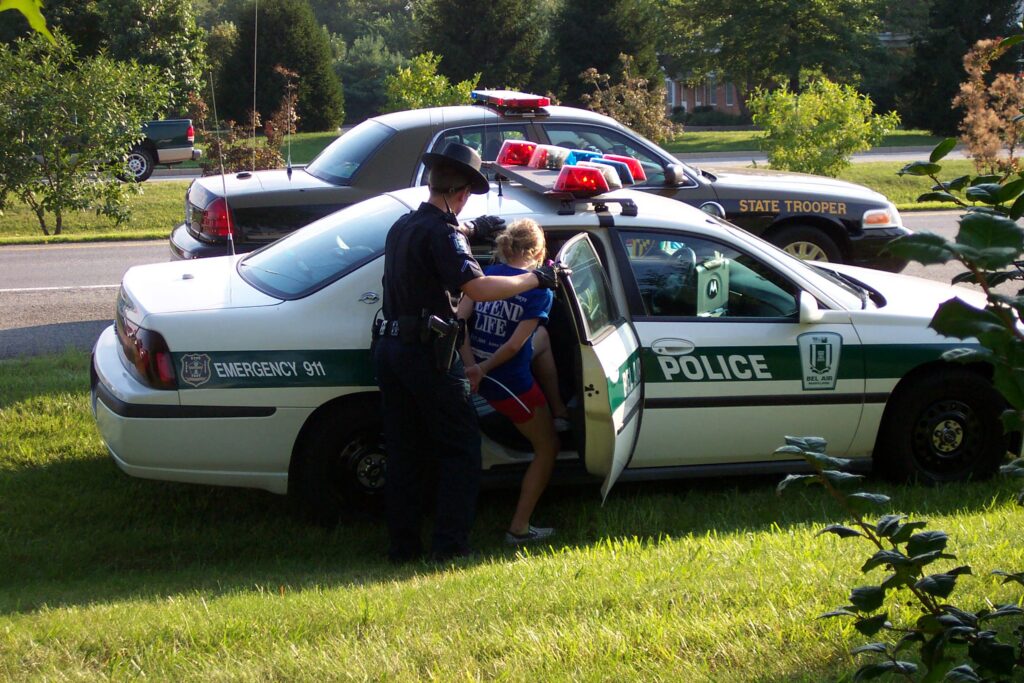
But then, the police were called. She and her fellow pro-lifers were then handcuffed by the side of the road. The picture was strange—young people donning shirts that said, “Pro Life” and “Defend Life” were loaded into the backs of police cars for merely exercising their rights under the Constitution.
Nobody should be punished and silenced for their peaceful speech. And nobody should be strip-searched when they haven’t done anything wrong.
Angela and her group stood firm for what they believed in. That stand ended with a win that protected free speech throughout Maryland.
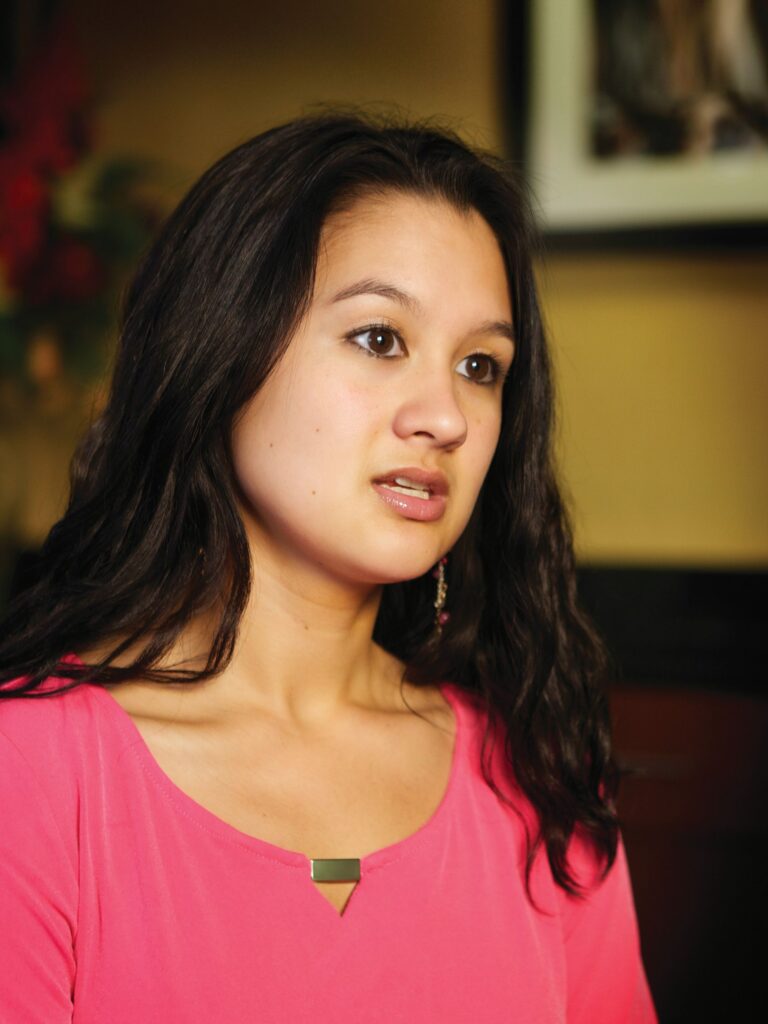
Meet Angela Swagler
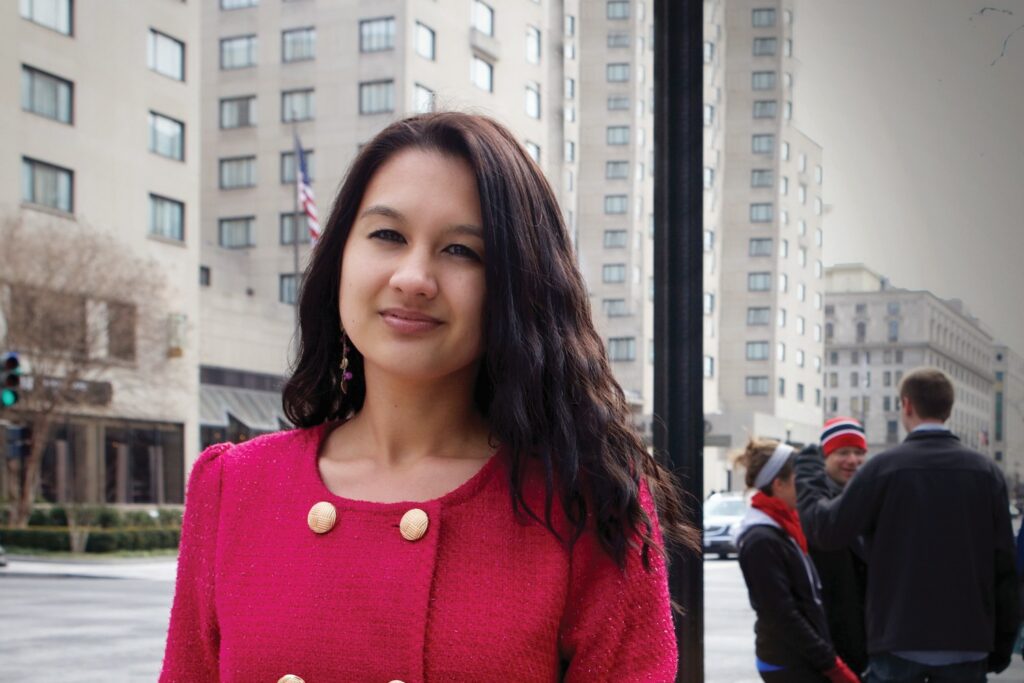
Since childhood, Angela has lived out her Christian beliefs despite pressure to turn away. As an elementary and high schooler, she was bullied by people antagonistic to her faith. Her dad remembered that “she really went through a lot of mental turmoil for being faithful to her beliefs. But she never let [it] defeat her.” Instead, she was faithful to the truth and humbly clung to Christ.
As she grew up, that faithfulness deepened. In her senior year of high school, Angela, a Pennsylvania native, went to Washington, D.C., for the March for Life. There she found her “heavenly cause” and became more involved with the pro-life movement. After an invitation from a friend, she joined the “Face the Truth” tour with an organization called Defend Life. The tour involved standing along public roadsides while holding pro-life signs, including images of babies in the womb. Additionally, they held images of aborted children. Some distance before those signs, group members held up posters warning those passing by of the images to come.
Angela acknowledged that using such imagery was controversial. But she believed that “God touches people’s hearts in many ways. The important thing is to bear witness and reach out to people, and God will work through you as His instrument to bear witness against abortion.”
Peacefully sharing the truth about life
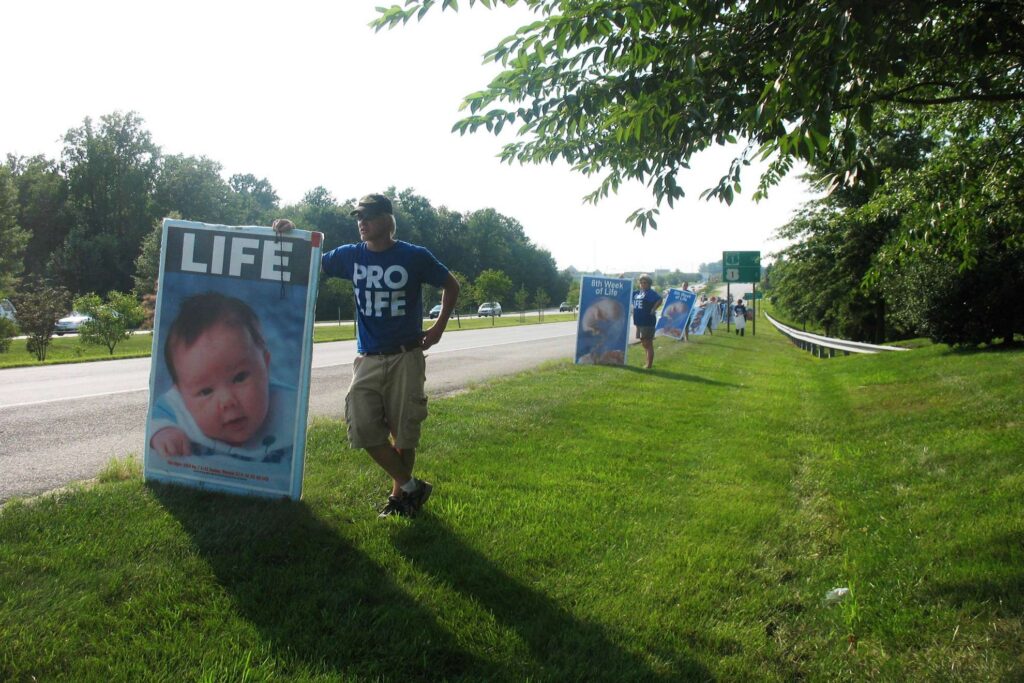
During a five-day tour, Angela and her fellow pro-lifers traveled across Maryland, Virginia, and West Virginia. With one day left, Angela and the roughly 20 other people with her (mostly fellow recent high school graduates) piled out of their vans along a Maryland road in Harford County. The grassy strip that they set up on was a popular destination for demonstrations and advertisements.
Angela’s “Face the Truth” group peacefully stood on the grassy shoulder next to the road, holding their signs calling for the protection of the unborn. But after 45 minutes, several state troopers arrived.
The officers told the group that they needed a permit for their speech and that some drivers had called to say they were offended by the content of their signs. But when the group asked the officers what law they were breaking, one of the officers only repeated that they needed a permit. In reality, no law in Harford County required them to obtain a permit for their speech, but the officer stated, “It’s not what the law is; it’s what I’m telling you the law is.” The police threatened to arrest Angela’s group if they refused to comply and ordered them to either get a permit or leave the county.
They knew this was a violation of their First Amendment rights. Nevertheless, in order to avoid arrest and comply with the officer’s orders, they traveled a couple miles down the road to an area they thought was outside the state troopers’ jurisdiction.
Angela and her group were unlawfully arrested, invasively searched, and criminally charged

Shortly after they set up, the same group of state troopers arrived, this time with several other troopers. Eighteen members of the group were immediately arrested. They weren’t blocking traffic, were not given the reason for their arrest, were handcuffed by the side of the road for over half an hour, then driven to the station.
Upon arriving, Angela and the other female members were subjected to a sexually invasive search in front of the male members and officers. A female officer felt below most of their waistlines and looked down their shirts. But the male participants were not likewise searched. After spending hours in the police station, they were all transferred to another detention center starting at midnight.
After being placed in ankle shackles, the female members underwent an even more invasive search, this time being ordered to lift their shirts and bras. Another woman in their holding cell shared that she was not searched similarly and had overheard the officers planning their arrest, trying to determine what charges they could bring. The group members were eventually charged with loitering, disorderly conduct, and failure to obey a lawful order. They were finally released and were never allowed to call family members or contact the attorneys who were attempting to help.
Throughout the whole experience, Angela and the other members of her group remained faithful and joyful. They sang hymns until they were told to stop. Angela pretended not to notice being mocked, and officers asked, “What, is God with you?” The group prayed with a woman in their cell. Angela even smiled for her mugshot, all the while asking God to “please make me faithful, passionate, and useful like St. Paul.” After being released at 3 a.m. the next day, Angela called her dad, who was relieved that she was alive.
Angela’s constitutional rights were violated
The officers who shut down Angela and her group’s speech ignored a bedrock American value—freedom of speech. Harford County didn’t have any requirements for demonstrators generally to get a permit. But a county ordinance did state that anyone who wants to hold signs on or near public property must get advance permission. But that didn’t give legal authorization for the arrest, and the ordinance itself violated the First Amendment.
Free speech law has long recognized the right to speak in public forums like sidewalks, parks, and roads. The government cannot close off or restrict speech in these areas based solely on the content of someone’s speech. By requiring people like Angela to obtain permission before speaking in public, the county ignored decades of legal precedent and the First Amendment. And when the police arrested Angela for her peaceful speech by a public road, they crossed a basic limit on government power and acted outside their authority—the government cannot punish someone for their speech that it disagrees with.
Additionally, the officers closed off the whole county to Angela and “Face the Truth.” They left no alternative way for the group to speak their message. Even if they had not targeted the group for its pro-life message, the police couldn’t ban them from speaking in the entire county.
The Fourth Amendment also ensures that people cannot be unlawfully searched. The police had no lawful reason to strip-search only the female participants. The first search was done in a public area in front of male officers and participants, and the second was done with the door left ajar. Angela and the other women gave no reason to believe that they were concealing weapons or other illegal items. But they were forced to partially undress and were invasively searched.
The county agrees to change its policies and procedures
Just a month after the lawsuit was filed, Harford County agreed not to enforce its unconstitutional permit requirement for hand-held signs. Then in June 2009, a federal district court declined to dismiss Angela’s case since there was sufficient evidence that the county enforced an unconstitutional policy and deprived Angela and her group of their First Amendment rights. Additionally, it allowed her claim against the officers who conducted the strip searches to continue.
A little over a year later, the U.S. Court of Appeals for the 4th Circuit ruled that the troopers could not yet claim immunity from the lawsuit’s claims for violations of the First and Fourth Amendments.
Parts of the lawsuit were then settled in 2011, and the county agreed to a policy change protecting peaceful protesters from such searches at its detention center. As Daniel Blomberg, a former ADF attorney who worked on the case, put it, “pro-life advocates should certainly not be strip searched for peacefully expressing their beliefs.”
After the same district court ruled in favor of Angela’s claims for violations of the First and Fourth Amendments since the police had no lawful basis to silence their demonstration or arrest them, the state settled the rest of the case. The state police agreed that it would no longer illegally arrest and silence pro-life advocates. Maryland agreed to give speakers the opportunity to move locations before threatening arrest and also agreed to pay attorneys’ fees.
Additionally, the state committed to participating in training on constitutionally protected rights. Kevin Theriot, senior counsel at ADF, explained, “The state is doing the right thing in agreeing to respect their constitutionally protected rights and to make sure officers fully understand these important freedoms. Pro-life speech cannot be censored through unwarranted arrests and illegal orders to disperse.”
One of any government’s most central purposes is to uphold the rule of law. Those in power ignore this duty and abuse their authority when they silence people like Angela. The First Amendment guarantees the right to speak freely. That freedom is all the more important when we stand up for those who cannot speak for themselves.
Swagler v. Harford County
- August 2008: Eighteen members of a pro-life demonstration were arrested and held overnight for holding signs by a public road. Nobody was read their rights or told why they were being arrested, and Angela and other women were strip-searched twice.
- September 2008: Angela and two other women who were arrested filed a lawsuit for the violations of their constitutional rights to free speech, due process, and protection from unlawful search and seizure. They also brought claims under the Maryland constitution.
- October 2008: Harford County agreed not to enforce a permit requirement for hand-held signs. The arresting officers had told the pro-life group that they needed a permit for their peaceful advocacy.
- June 2009: The federal trial court declined to dismiss many of the pro-lifers’ claims, including violations of their right to free speech and for damages against the officers who performed the strip searches.
- October 2010: The U.S. Court of Appeals for the 4th Circuit held that the state troopers could not yet claim immunity from the claims for violations of free speech and the Fourth Amendment.
- March 2011: The county defendants settled their portion of the case, agreeing to a policy change protecting peaceful protesters from strip searches at the county detention center.
- July 2011: The same federal trial court ruled in favor of the pro-lifers’ claims for violations of their First and Fourth Amendment rights since the troopers had no lawful basis to silence their pro-life demonstration or arrest them.
- March 2012: The state settled its portion of the case. The state police agreed to no longer illegally arrest and silence pro-life advocates and to participate in training on constitutionally protected rights. The state also agreed to pay attorneys’ fees.
Related Articles