

Summary
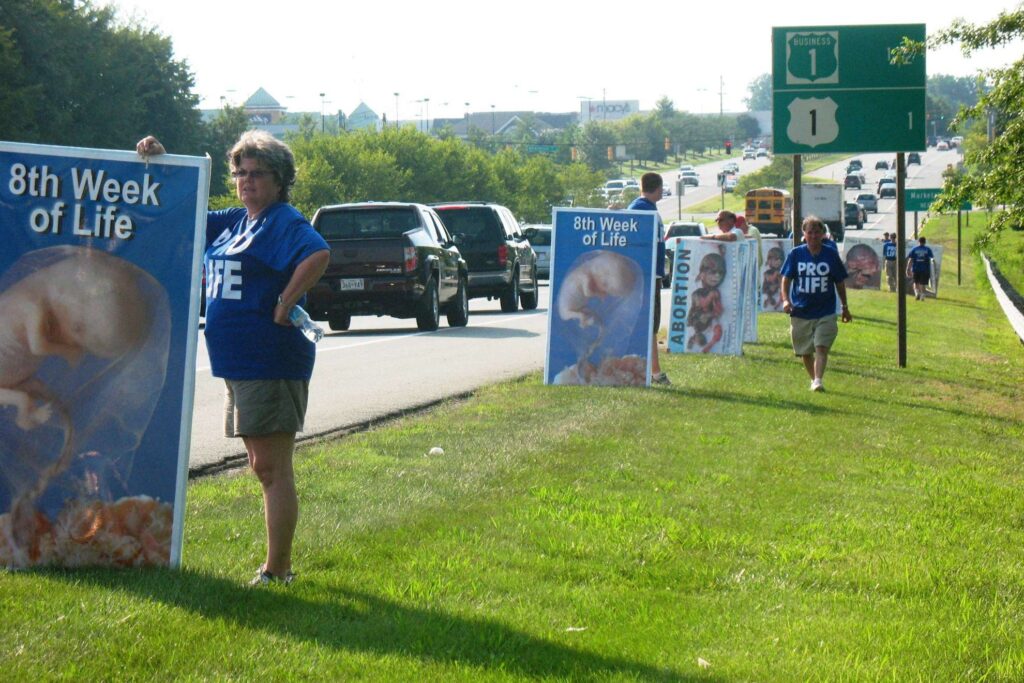
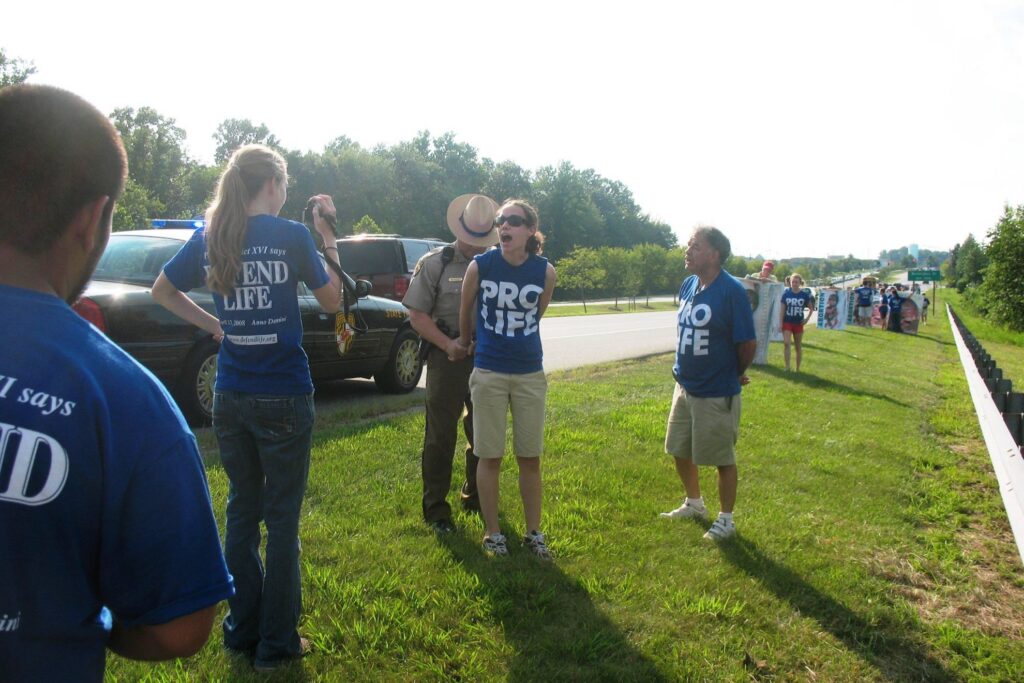
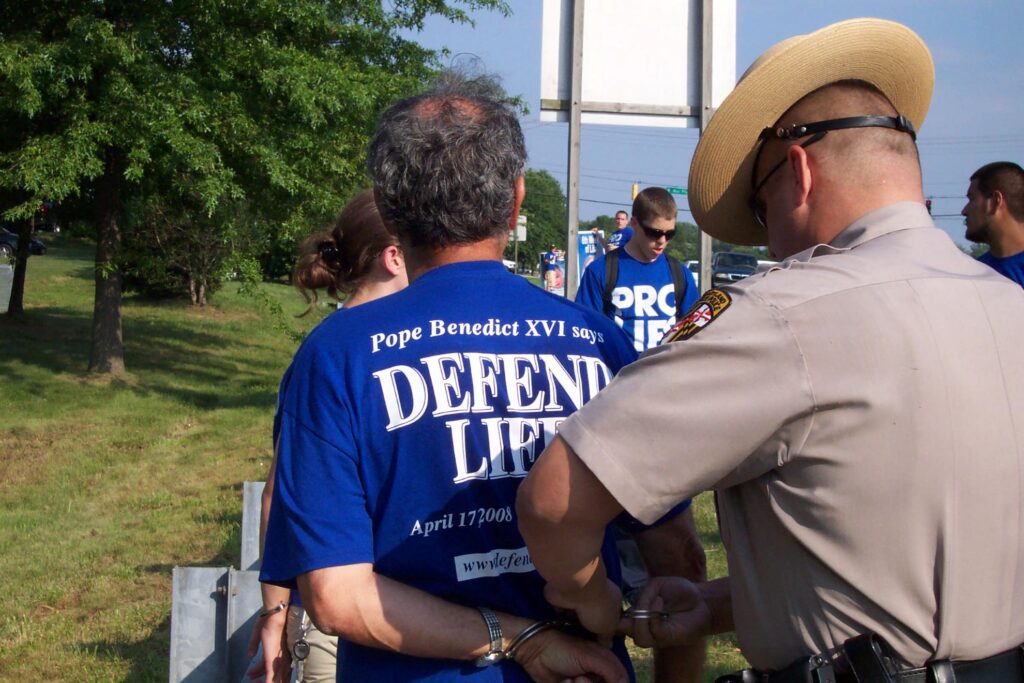
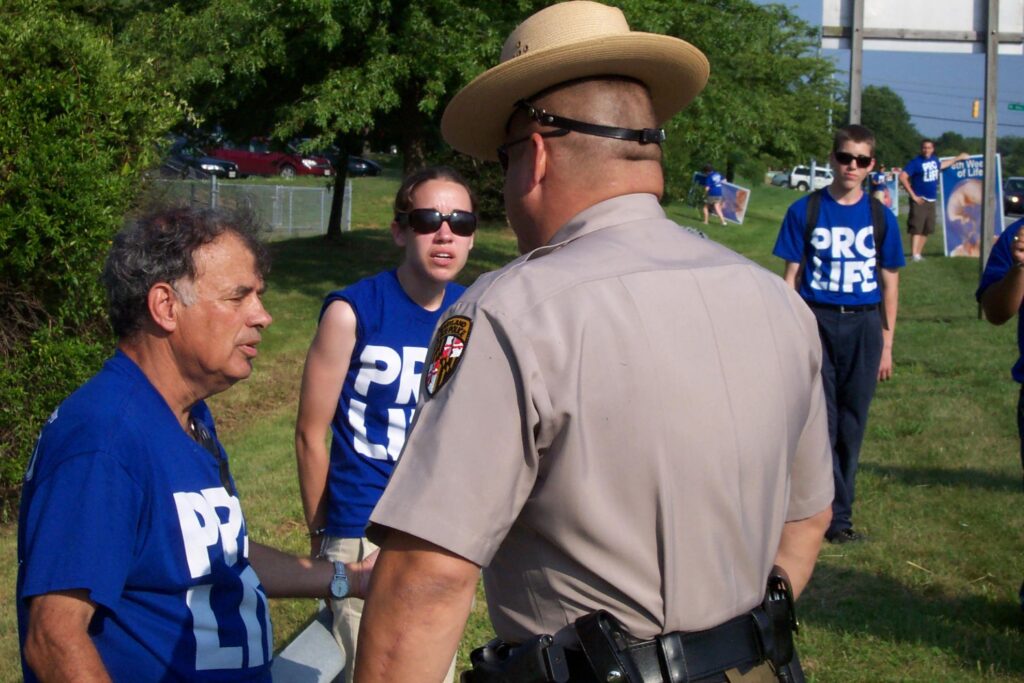
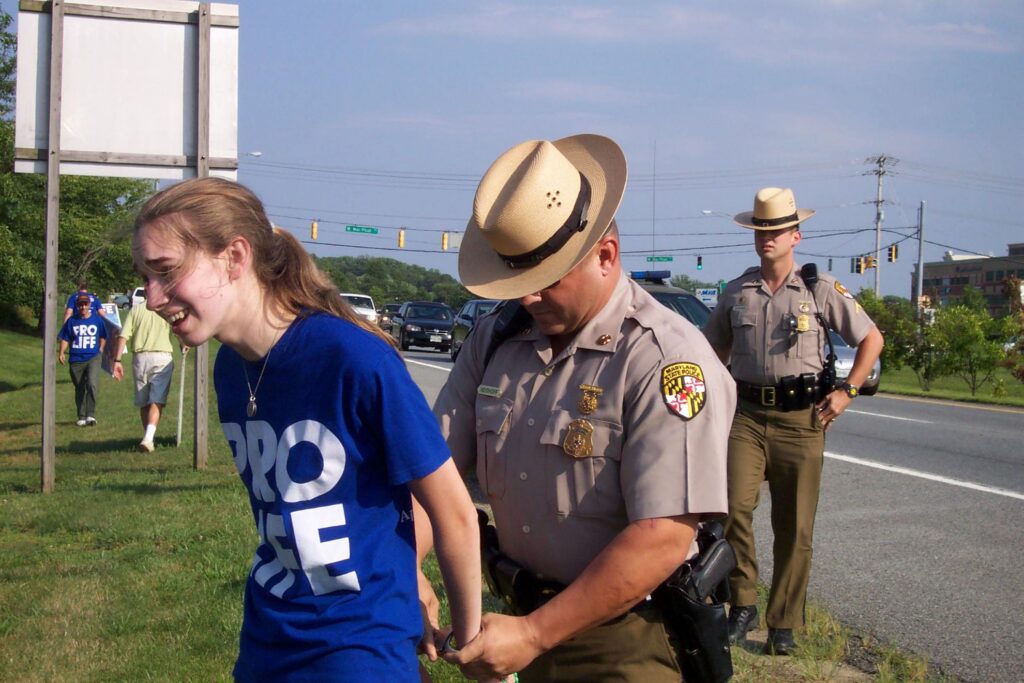
On August 1, 2008, Maryland state troopers arrested 18 pro-life advocates—including several teenagers—during a peaceful demonstration along a public road in Harford County. Among them was 18-year-old Angela Swagler, who would become one of Alliance Defending Freedom’s clients. The troopers took Angela’s sign and camera, handcuffed her and the others, and lined them up along a roadside guardrail. Some of Angela’s friends began to cry. Most came from homeschooling backgrounds and, like her, had never seen the inside of a principal’s office, much less the back of a police car.
The group was driven to the state police barrack in Bel Air and lined up in the parking lot. There, with male officers and teammates looking on, a female officer searched the young women. She pulled out their shirt collars to look down their shirts and, for all but Angela, reached inside the waistline of their pants.
Inside, officers placed the young women in one cell and the young men in another, apart from all other prisoners. No one was read their rights, told the charges, or told how long they would be held. Requests to call their parents were refused. Two attorneys came to the station that night to help, but officers kept them from the group.
After midnight, Angela and several other women were moved to the Harford County Detention Center. There they were shackled and strip-searched again—ordered to lift their shirts and bras. Angela refused twice before she was forced to comply. A court commissioner then charged them with loitering, disorderly conduct, and failure to obey a lawful order. Angela was released at 3 a.m. The last of her friends were released late the next morning.
The charges didn’t last. Less than two weeks later, the State dropped them all.
Alliance Defending Freedom filed suit on behalf of Angela and two other women in September 2008. The case lasted more than three years and brought a string of wins. In March 2011, Harford County settled and agreed to a policy change protecting peaceful protesters from strip searches at its detention center. That July, a federal court ruled that the troopers had violated the group’s First and Fourth Amendment rights by ordering them out of the county and arresting them without probable cause. In March 2012, the state settled the rest of the case. State police agreed to stop issuing countywide dispersal orders against peaceful pro-life speakers, to undergo training on First and Fourth Amendment rights, and to pay attorneys’ fees.
“You don’t have a light and bury it under a bushel—because it’s only with light that we can take out the darkness,” Angela said. “It was a blessing that I was able to bear witness to the evil of abortion, and take a stand against it.”
Case Timeline
- August 2008: Eighteen members of a pro-life demonstration were arrested and held overnight for holding signs by a public road. Nobody was read their rights or told why they were being arrested, and Angela and other women were strip-searched twice.
- September 2008: Angela and two other women who were arrested filed a lawsuit for the violations of their constitutional rights to free speech, due process, and protection from unlawful search and seizure. They also brought claims under the Maryland constitution.
- October 2008: Harford County agreed not to enforce a permit requirement for hand-held signs. The arresting officers had told the pro-life group that they needed a permit for their peaceful advocacy.
- June 2009: The federal trial court declined to dismiss many of the pro-lifers’ claims, including violations of their right to free speech and for damages against the officers who performed the strip searches.
- October 2010: The U.S. Court of Appeals for the 4th Circuit held that the state troopers could not yet claim immunity from the claims for violations of free speech and the Fourth Amendment.
- March 2011: The county defendants settled their portion of the case, agreeing to a policy change protecting peaceful protesters from strip searches at the county detention center.
- July 2011: The same federal trial court ruled in favor of the pro-lifers’ claims for violations of their First and Fourth Amendment rights since the troopers had no lawful basis to silence their pro-life demonstration or arrest them.
- March 2012: The state settled its portion of the case. The state police agreed to no longer illegally arrest and silence pro-life advocates and to participate in training on constitutionally protected rights. The state also agreed to pay attorneys’ fees.


Case Profile

Kevin Theriot
Senior Counsel
View Profile