

Key Takeaways
- In Pakistan, hundreds of girls from Christian and other religious minority families are abducted, forced to convert, and married off every year.
- Abductors rely on forged documents, coerced testimony, and slow police responses to keep girls from their families. Courts too often send girls back.
- Forced conversion reaches beyond marriage. Sufyan Masih’s employer falsely registered him as a Muslim in an attempt to enslave him, and it took a six-year legal ordeal to restore his legal Christian identity.
- These horrific practices must be addressed by local and national authorities, many of whom continue to act too slowly—or not at all—as people are victimized.
She might be 10. She might be 15. She is somebody’s daughter, perhaps a sister, but is definitely a child who should be thinking about homework and friends, not about whether she will ever see her family again.
Wherever they are taken from—be it a walk home from school or right out of a relative’s house—they are driven to a place they don’t recognize. Then a man, almost always one much older than they are, is suddenly called their “husband.” Their thumbprints are forced onto “marriage” documents they never agreed to sign.
But the theft of their freedom doesn’t stop there. They are coerced to renounce the faith they were raised in and convert to Islam.
This is no accident. Forced marriage and forced conversion often go hand in hand. Once a girl has been coerced into converting, her abductor can claim the marriage is lawful, even when she is still a child. A kidnapping becomes a “wedding” on paper.
According to UNICEF, 100 million girls worldwide are at risk of child marriage this decade.Their religious freedom and their safety could be taken from them. And because the abuse hides behind forged papers and frightened families, it often goes unnoticed and can be extraordinarily difficult to challenge.
No young girl should be subjected to this kind of exploitation and abuse. Ever.
How forced marriage and conversions happen
Alliance Defending Freedom has helped many girls victimized by forced marriages and conversions. They all tell hauntingly similar stories.
Abduction and forged papers
It starts with a kidnapping. Reeha, 16, was grabbed by her neighbor and three of his friends on her way home from school. Saba, also 16, was pushed into a car at gunpoint. Sana, 15, was abducted from her aunt’s home. Each was taken somewhere unfamiliar and held there. Reeha was told she would be burned with acid if she didn’t cooperate. Reeha’s and Saba’s thumbprints were forced onto papers they never agreed to sign.
The same sequence plays out repeatedly: abduction, fabricated marriage and conversion documents, and then reliance on those documents to keep a family from ever reaching their child. When an allied attorney examined the paperwork in Sana’s case, he found that both the conversion certificate and the marriage certificate were fabricated. In reality, she was a child who had been abducted and coerced.
Authorities who can’t—or won’t—act
A family’s first stop is the police. Too often, it’s a dead end. Sana’s father went to them again and again, begging for help. Twelve days after she was taken, officers told the family that Sana had converted and married of her own free will. Elishba, 14, vanished in June 2025, and police waited 11 days to register an abduction case despite her father’s repeated pleas.
Even a girl who escapes can find herself unprotected. Because Reeha was still formally “married” to her abuser, police refused to protect her after she fled.
Courts that send girls back
Girls who can even reach a courtroom often face another trap. Many are pressured into telling judges they went willingly. Elishba later revealed she had been threatened into testifying in favor of her abductor. Judges frequently overlook official proof of a girl’s age and send her back to her kidnapper as his supposed “legal wife.” When 14-year-old Maira sought justice, a high court initially ordered her returned to her abductor.
A magistrate’s refusal to return Elishba was a rare exception. Even then, the order stopped short of calling for criminal action against the man accused of abducting her.
Families left terrified
Even when a girl escapes, the damage doesn’t end there. After Saba got away, her parents took her back only reluctantly. They had been threatened by her abductor, and they feared the shame of a society that views victims of sexual abuse as unclean, or even complicit. Reeha’s mother and younger brother are still being threatened by the men who took her.
Thankfully, some girls have survived and seen freedom. Sana, for instance, is home today because an ADF allied attorney looked at the forged paperwork and refused to accept the lie. Some girls, unfortunately, remain trapped.
Meet Maria Shahbaz
One of the girls still trapped is Maria Shahbaz.
Maria grew up in a Christian home in Pakistan. In July 2025, when she was almost 13, a 30-year-old man named Shehryar Ahmad took her from her family, forced her to renounce her faith, and married her against her will. Since then, she has endured ongoing threats of abuse and exploitation.
Her parents did what any parents would do. They turned to the courts, hoping someone would finally bring their little girl home. Her case reached Pakistan’s Federal Constitutional Court in December 2025. Unfortunately, in February 2026, the court gave custody to her abductor.
The court did this despite never confirming Maria’s age, a step that Pakistani law requires. And the court wouldn’t have even needed to look far. An earlier investigation had already established that she was a minor and that the marriage certificate used against her was forged.
Maria’s plight continued. In March, a district court accepted a closure report in the police investigation. The family’s petition to a higher court says police withheld material evidence that Maria’s age had been falsified on the forged marriage and conversion documents.
But her family has not given up, and neither has ADF, which is supporting Maria’s case. In July, the Federal Constitutional Court agreed to hear a review petition. Then, in October, the Lahore High Court ordered police to reopen the investigation.
Those are real steps forward, but Maria is still not home. Every day she remains with her abductor exposes her to further exploitation and abuse.
In a glimmer of good news, the world is starting to take notice. The European Parliament has formally called for Maria’s return to her family. UN experts, members of the European Parliament, and UK parliamentarians have all raised concerns about Pakistan’s forced marriage crisis.
What happens next matters far beyond one family. A ruling that frees Maria and holds her abductor accountable could set a precedent for other girls in Pakistan who are targeted for abduction, forced conversion, and coerced marriage.
“The law must protect her, and the hundreds of other children like her who are targeted every year because of their religion,” said Kelsey Zorzi, Vice President of International Advocacy with ADF..
Stolen childhoods, stolen faith
Forced marriage is a terrible crime against a child. Forced conversions add a second injury, and it cuts just as deep.
Religious freedom means every person can choose what they believe and live it out without fear. International law guarantees that right. A girl who is dragged from her home, married to her abductor, and pressured to renounce her faith has none of it. Sana, abducted at 15, was cut off from practicing her Christian faith for the four months she was held. Like the other girls, she was not only losing her freedom to believe. She was losing her family, her future, and her childhood.
That’s why these two abuses can’t be separated. Under Pakistani law and international standards, a minor cannot legally consent to marriage, so abductors manufacture a consent that never existed. The paperwork covers the crime.
Pakistan has signed international treaties meant to protect human rights. On paper, the protections are there. In practice, the justice system too often fails the girls they were written for.
And sadly, young girls aren’t the only ones facing forced conversions.
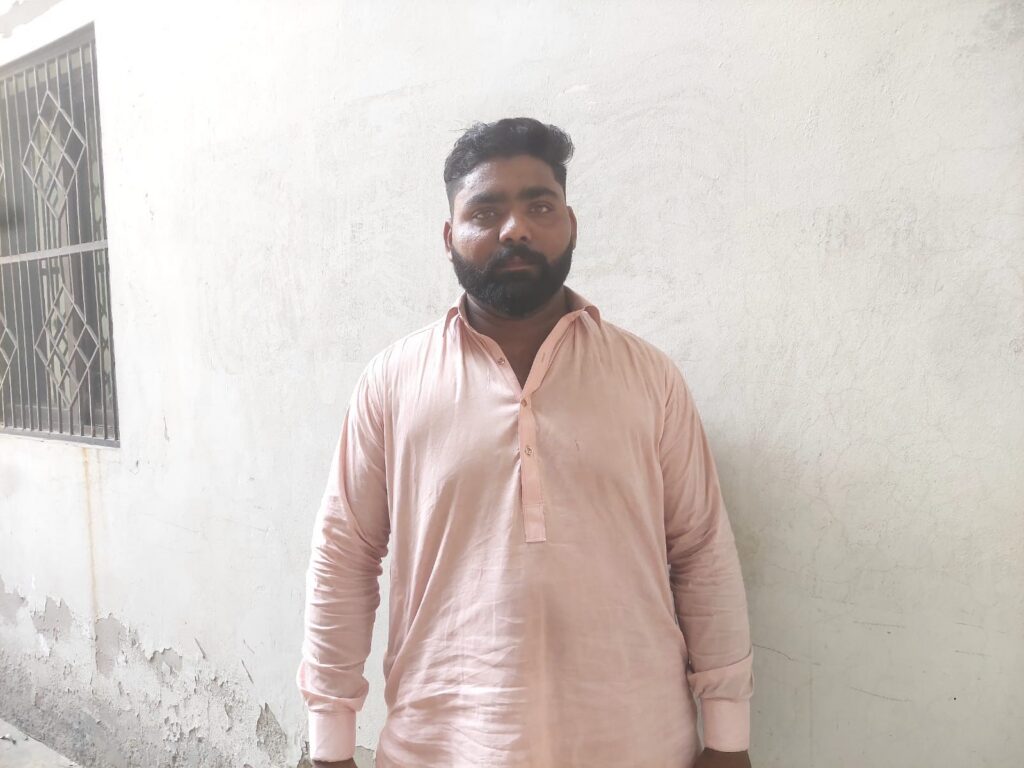
Sufyan Masih, a Christian brick kiln worker, was 24 when his six-year legal ordeal ended. His employer had fraudulently registered him as a Muslim on his National Identity Card, then claimed to have “adopted” him. The goal was to enslave him. The employer withheld his pay and kept him from returning to his family. Sufyan and his family are illiterate and could not understand the form.
A false line on an ID card may sound small. It isn’t. Pakistani authorities make it extremely difficult to change a Muslim designation once it’s entered, and Sufyan faced the risk of being branded an apostate, or of his family being accused of blasphemy. A civil judge rejected his petition in May 2024. Praise God, with ADF’s backing, an appeal succeeded that November, when a judge ruled that Sufyan was the victim of fraudulent “conversion.”
A crisis Washington has already noticed
It’s easy for Americans to feel a world away from these stories. But the U.S. government has been paying attention to these atrocities.
The U.S. Commission on International Religious Freedom is an independent, bipartisan federal body established by Congress to monitor religious freedom abroad. In its 2026 Annual Report, the commission recommended that the State Department redesignate Pakistan a “Country of Particular Concern” for severe religious freedom violations. Among the problems it cited was the forced conversion of girls from Christian and Hindu communities. It also urged Congress to raise religious freedom concerns as part of its oversight of the US-Pakistan relationship.
Small steps, real victories
ADF has been supporting many of these victims to ensure that not every story ends in captivity. Some end with a girl—finally—coming home.
Shahida was 11 when her childhood was taken from her. For years, she endured abuse, and her forced marriage and conversion were documented with forged certificates. In February 2025, a civil court in Bahawalpur, Pakistan, annulled the marriage, invalidated the conversion, and ordered her records corrected to show her faith as Christian.
Others have ruled similarly. A court in Pattoki annulled Reeha’s marriage in 2024. Elishba’s mother challenged an order placing her daughter in a women’s shelter, and the judge returned the girl to her family. Maira, 14, was freed from her coerced marriage and returned safely home. Since 2019, ADF’s team in Asia has supported 55 cases in Pakistan, including 17 Christian minor girls freed.
The law is moving, too. In April 2026, Punjab, Pakistan’s most populous province, passed the Punjab Child Marriage Restraint Act, which sets the minimum marriage age at 18 and requires courts to put the best interests of the child first. Courts are also beginning to take a second look at cases they once closed, as the Lahore High Court did for Maria.
But this much-needed reform has met some powerful resistance. When Pakistan’s National Assembly passed a bill in May 2025 to curb child marriage in the Islamabad Capital Territory, the Council of Islamic Ideology strongly opposed it.
“We have begun to see small steps to combat forced marriages and conversions of minority girls in Pakistan,” says Kelsey Zorzi.
Small steps are still steps. But laws only protect girls when police and courts enforce them, and for every girl who comes home, others are still waiting to be rescued.
No girl should ever have to face this
The girls in these stories didn’t choose any of this. But the rest of us can choose to act.
Pray. Pray for the girls still being held, for the families waiting for them, and for the judges, police officers, and officials who have the power to bring them home.
Share. One of the reasons this crisis survives is because not enough people know about it. Send this article to a friend, a pastor, or your small group, and help bring it out of hiding.
Speak up. The U.S. Commission on International Religious Freedom has urged Congress to make religious freedom part of its oversight of the US-Pakistan relationship. Contact your senators and representatives and ask them to keep the forced marriage and conversion of girls on that agenda.
Give. Your gift helps provide legal defense and advocacy for girls like Maria.
These girls depend on our voices.
Forced marriage and forced conversion go hand in hand. When girls are abducted and married off to their abductors, almost always much older men, their religious freedom is taken away, along with their safety and autonomy. No young girl should be subjected to this kind of exploitation and abuse. It’s a widespread issue, and it often goes unnoticed. Let’s make sure it doesn’t.

Tehmina Arora
Director of Advocacy, Asia