


Julea Ward was so close to finishing her master’s degree in School Counseling. She had a 3.91 GPA. She was working diligently in and out of the classroom, cared deeply about her work, and had only 4 graduation requirements left to complete. But her university expelled her.
Why? For referring a client to a different counselor, with her supervisor’s approval, because the client wanted advice on a topic that runs contrary to Julea’s deeply held religious beliefs. What Julea did was the professional, most respectful thing she could do in her situation. But her school punished her for it and violated her constitutional rights.
Who is Julea Ward?

Julea was a student in Eastern Michigan University’s graduate counseling program. She is also a sincere, Bible-believing Christian who sees the practice of counseling as an opportunity to bless others as she was blessed by her mother’s counsel growing up. Previously a high school teacher in the greater Detroit area, she often found herself advising students when they needed help. She thought, “Why not do this full time?” So, she enrolled in courses at EMU to earn her master’s degree in School Counseling.
During her time at EMU, Julea built an excellent GPA and a good overall rapport despite sometimes disagreeing with her professors. One such topic of disagreement was that of same-sex relationships.
University faculty made it clear that students were expected to affirm a client’s same-sex behavior and were “prohibited from counseling such clients that [the clients] could change.” There’s also a policy that permits the counseling department to discipline students who fail “to tolerate different points of view.”
Julea believes that God ordained marriage and sex to take place between one man and one woman, so validating a client’s same-sex relationship would violate her deeply held religious beliefs. Julea made a point to candidly and respectfully voice her religious beliefs on the topic. Her professors disagreed, some kindly and some not, and often stated that her beliefs were incompatible with the EMU counseling department’s viewpoint. One professor even expressed a goal to “do everything within her power to weed students out. . .who did not share the counseling department’s views” and later called Julea a “homophobe.”
But these events could not have prepared Julea for what came next.
Remediation, removal, or review

During a practicum course, Julea and her classmates were tasked with counseling clients under faculty supervision. A few hours before meeting with her third client, Julea reviewed the client’s files and realized that he was seeking counsel about his same-sex behavior and relationship. He had come to the clinic before and had his choices affirmed.
But Julea could not provide the same affirming counsel, though she would have been happy to counsel the same client for almost any other reason. She asked her supervisor whether she should conduct the first appointment, and then refer, if necessary, or refer the client before the first appointment. Her supervisor advised her to go ahead and refer him, so she did.
The next time Julea met with her supervisor, she was reminded that her beliefs were contrary to the department’s views, and further, that she would not be assigned any more clients. In an informal review with her supervisor and advisor, they gave her three options:
The first was to take a remediation course that would help reveal the “error of her ways,” giving her the opportunity to conform her views to those of the university.
The second was to voluntarily remove herself from the program.
And the third was to request a formal hearing where more counseling faculty would attend and make a decision about her future in the program.
The first option would violate Julea’s beliefs, and the second would concede her rights. Julea chose the third. She hoped that in this review, she would be met with some tolerance and understanding. But she was sadly mistaken.
About a month later, the formal hearing was held. One faculty member denigrated Julea’s faith by implying that, if clients were aware of her identity as a Christian, they would potentially “feel that they’re going to be judged more” as a result. Another asked whether Julea viewed her “brand of Christianity as superior” to others. Yet another barraged her with a few “theological” questions that further demeaned her views.
Two days later, she received a letter explaining that the committee had made the unanimous decision to dismiss her from the program.
Dismissed for doing the right thing
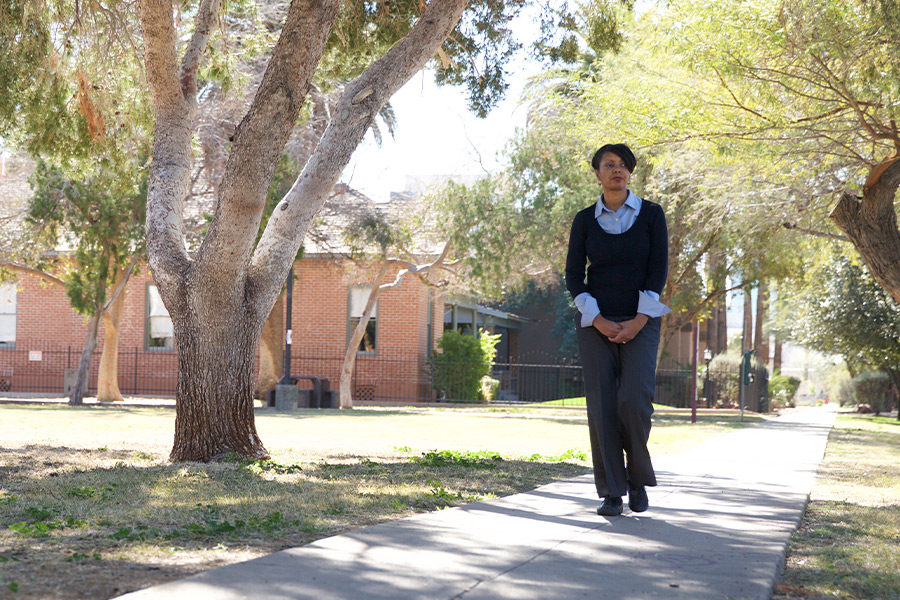
In their letter, EMU faculty expressed that they were dismissing Julea for both “imposing values” on her clients that didn’t align with counseling goals and allegedly discriminating based on sexual orientation.
Ironically, the same faculty member who accused her of imposing her values on her clients had assigned a book in her class that clearly states, “It is now generally recognized that the therapeutic endeavor is a value-laden process and that all counselors, to some degree, communicate their values to clients … the assumption that counseling is value-neutral is no longer tenable.” This book also communicated that a counselor’s fundamental values are important and should be expressed when appropriate. But when Julea expressed her deeply held convictions, she was expelled from the program.
Meanwhile, another book assigned by one of the professors explains the entirely valid, non-discriminatory practice of referring clients when “value conflicts arise.” But Julea had been dismissed for doing just that.
By expelling Julea from her counseling master’s program for respectfully referring a client because of her religious beliefs, the university violated her rights of free speech and free exercise of religion.
In seeking to enter the counseling profession, Julea did not exchange her basic First Amendment rights for a master’s degree. It was fully within Julea’s rights, both as a counselor and as a Christian, to refer a client to a fellow counselor because she would not go against her faith. The university could not take those rights from her.
Eastern Michigan University’s counseling faculty expected tolerance from Julea as a student and counselor. But that tolerance was nowhere to be found when Julea looked for it in her supervisors and advisors.
A two-way street

Julea appealed her dismissal first to the Dean of the College of Education, who upheld it.
Julea then contacted Alliance Defending Freedom, who helped her take legal action against the school. A lower court upheld the dismissal yet again. Thankfully, the U.S. Court of Appeals for the 6th Circuit reversed the lower court’s decision and reinstated Julea’s lawsuit, stating that “Ward was willing to work with all clients and to respect the school’s affirmation directives in doing so. That is why she asked to refer [some clients] if the conversation required her to affirm their sexual practices.”
The court helpfully illustrates, “[T]he ban on discrimination against clients based on their religion … does not require a Muslim counselor to tell a Jewish client that his religious beliefs are correct if the conversation takes a turn in that direction and . . . does not require an atheist counselor to tell a person of faith that there is a God if the client is wrestling with faith-based issues. Tolerance is a two-way street.” Following the decision, Eastern Michigan University paid a settlement to Julea and removed the expulsion from her record.
Support cases like Julea’s

Even though Julea’s case concluded in 2012, it still serves as a firm reminder that no university can force its students to violate their beliefs and that no counselor can be forced to affirm relationships that run contrary to their religious convictions.
With the help of people like you, Alliance Defending Freedom is continuing to support the basic rights of counselors across the country. Will you give today to help fuel more cases like Julea’s to stand up for truth and freedom?
Related Articles