
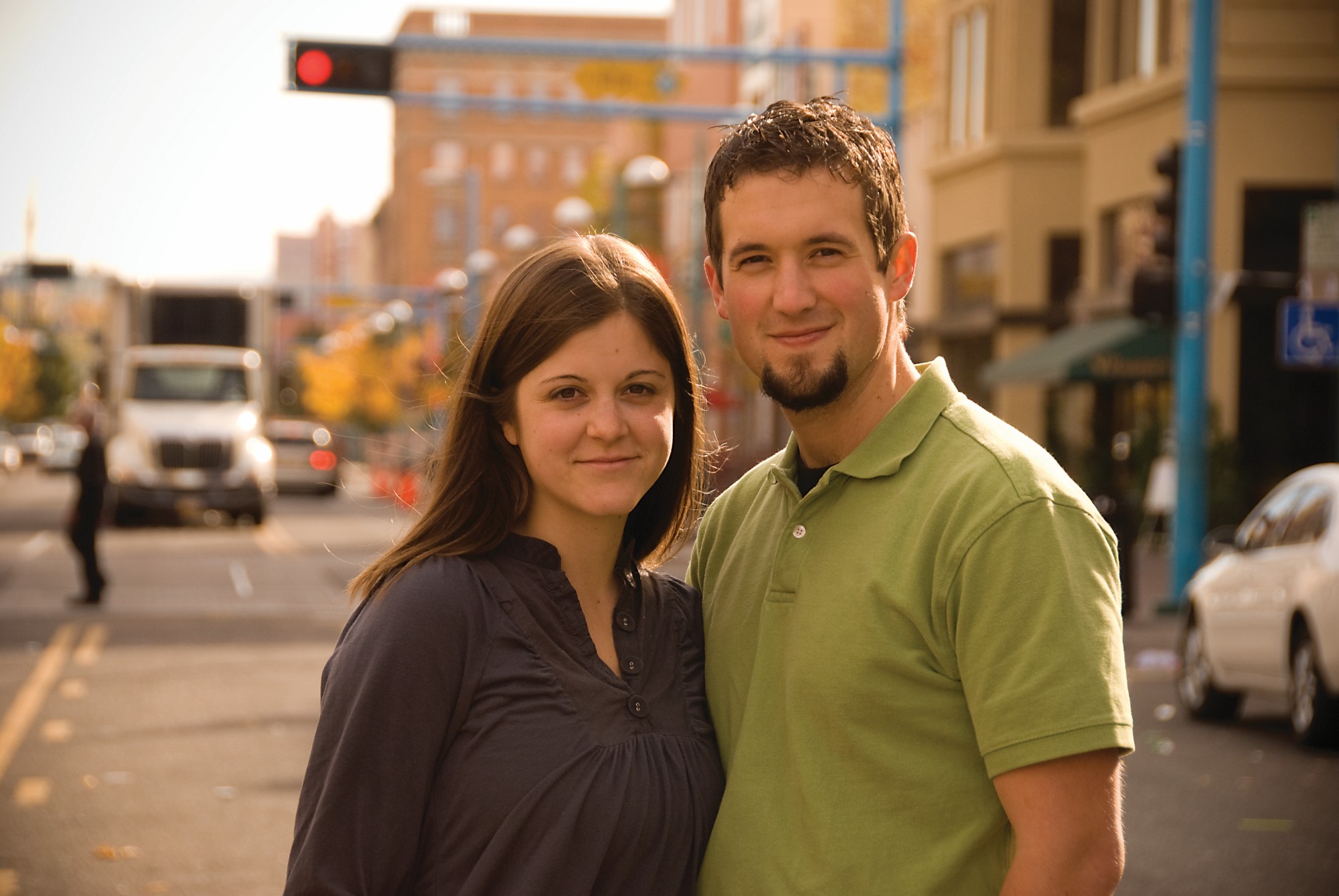
If a picture is worth a thousand words, do photographers have the right to choose the words and messages they communicate with their pictures?
Most people would intuitively say, “yes.” Besides, who would want to make a photographer express a message with pictures that he or she wouldn’t want to say with words?
Yet, in a case that spanned eight years, New Mexico photographer Elaine Huguenin and her husband, Jonathan, were forced to defend that very right.
The Huguenins’ brave stand paved the way for other Alliance Defending Freedom clients, such as Jack Phillips, Barronelle Stutzman, and Lorie Smith, to defend their free speech rights. The Huguenins’ courage was one building block in what helped lead to the U.S. Supreme Court’s historic ruling in 303 Creative v. Elenis, a landmark victory for free speech.
Who are Jonathan and Elaine Huguenin?

Husband and wife Jonathan and Elaine Huguenin co-owned a small business called Elane Photography. Jonathan handled the finances, while Elaine was the artist.
Elaine loved creating photographs and felt most alive when she was in her element. She used a photojournalistic style to tell stories with her photos, especially stories of weddings. In many photos, she took the approach of a silent observer, capturing candid shots. In others, her creativity and artistic judgment permeate her work as Elaine arranged and staged many details of the photographs to make them look just right.
As with any artist, the messages that Elaine expressed with her photography mattered to her. For example, Elaine did not create images that conveyed support for abortion or pornography, that portrayed nudity of any kind, or that depicted graphic scenes of blood and violence. Thus, the Huguenins declined requests to create nude maternity pictures and photographs portraying the filming of a horror movie.
Naturally, since wedding photography constituted a large part of Elane Photography’s portfolio, this principle extended to the messages conveyed about marriage. As Christians, Jonathan and Elaine believe that marriage is the union of a man and a woman and that speaking a contrary message about marriage would be disobedient to God. They served everyone regardless of who the customer was or how they identified. But they couldn’t express every message that was requested of them.
Celebrating a same-sex ‘commitment ceremony’?
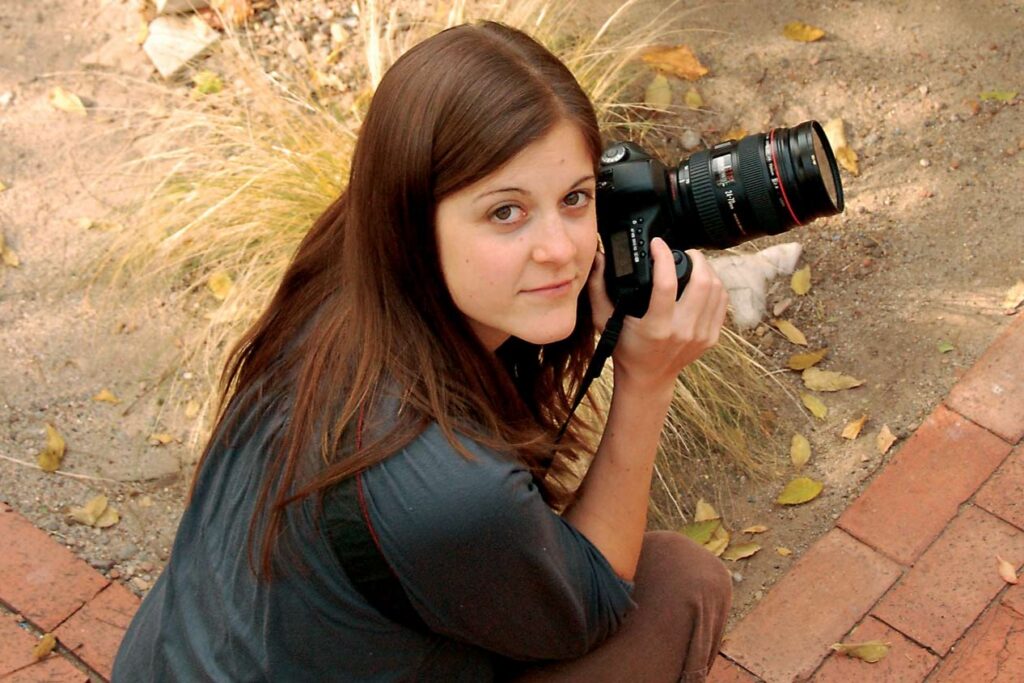
In 2006, Elaine received an email from a potential customer asking whether Elaine would be willing to help “celebrate” a same-sex “commitment ceremony.” Elaine politely declined, explaining that she does “not photograph same-sex weddings,” and thanked the requester for her interest.
Jon and Elaine thought this was the end of the matter until they received papers from the state of New Mexico explaining that a complaint of “sexual orientation discrimination” had been filed against their company by the potential customer. This, despite the fact that New Mexico law did not, at the time, recognize either marriage or civil unions between persons of the same sex and that the potential customer had easily found another photographer.
These charges could not have been further from the truth. For Jonathan and Elaine, it wasn’t about the person making the request. The Huguenins could not, in good conscience, create photographs that promote messages they disagreed with—that it is a good thing to redefine marriage to celebrate same-sex commitment ceremonies.
Compromising your beliefs is ‘the price of citizenship’

ADF attorneys readily agreed to represent Elaine before the New Mexico Human Rights Commission. In April 2008, after a one-day trial, the Commission found Elaine guilty of violating the New Mexico Human Rights Act and ordered her to pay over $6,000 in attorneys’ fees and costs. ADF appealed to a state trial court and then to a state appeals court, both of which upheld the Commission’s ruling. This led to an appeal before the New Mexico Supreme Court, which heard Elane Photography’s case in March 2013.
Unfortunately, in August 2013, the New Mexico Supreme Court also upheld the Commission’s decision. In a chilling concurring opinion, one of the justices admitted that the Huguenins “now are compelled by law to compromise the very religious beliefs that inspire their lives.” That compromise, the justice bluntly said, is “the price of citizenship” in America.
In 2014, the U.S. Supreme Court declined to review the case, leaving the state supreme court’s decision in place.
Beauty from ashes

With the New Mexico Supreme Court’s tragic ruling, the Huguenins’ case came to a close. But this wasn’t the end of the story.
The Huguenins’ case marked the early days of a trend of similar cases for other Christian artists across the country, like floral artist Barronelle Stutzman, cake artist Jack Phillips, and graphic artist Lorie Smith. Despite many years of litigation, Barronelle’s case also did not end with a positive Supreme Court decision on the merits, but Jack’s and Lorie’s cases did—and they both won.
In Masterpiece Cakeshop v. Colorado Civil Rights Commission, the Supreme Court ruled in 2018 that the state of Colorado had acted with impermissible hostility toward Jack and his faith, violating his free exercise rights. (Colorado had tried to use a public-accommodation law to compel Jack to create a custom wedding cake that would celebrate a same-sex wedding.)
Though the Masterpiece ruling left open the question of whether Colorado’s law could compel Jack’s expression, his case helped lay the groundwork for the landmark 303 Creative v. Elenis decision, in which Lorie Smith challenged the same Colorado law. In 2023, the Supreme Court ruled that public-accommodation laws like Colorado’s cannot be used to force Americans to create speech that violates their beliefs.
It is a good lesson that a loss or setback today doesn’t always mean a loss forever. The victories in the Masterpiece and 303 Creative cases serve as a testament to God’s faithfulness. He is a master artist in bringing beauty from ashes.
Related Articles