

Key Takeaways:
- Faith-based organizations have several key legal protections that enable them to make employment decisions based on their religious convictions.
- These protections apply to every faith-based institution, including churches, religious ministries, pro-life centers, and religious schools.
- The freedom to hire people who share and live an organization’s faith is crucial for the flourishing and viability of every religious organization. If left unprotected, ministries can be driven out of the public square and extinguished from American life.
No organization can thrive without the right people. As the saying goes, personnel is policy. A steakhouse couldn’t function if its chefs were all vegetarian and refused to cook meat. An IT company couldn’t serve its customers if its technicians objected to using technology. A congressman couldn’t fulfill his goals if his entire staff sought to combat his agenda. As such, employers are generally free to hire (or not hire) staff based on the organization’s identity and mission.
While this concept is uncontroversial in secular spheres, it is too often contested when applied to religious groups. For instance, Catholic schools have been sued for expecting their employees to follow Catholic beliefs and teachings. Pro-life pregnancy centers have been told to hire abortion supporters. And Christian daycares have faced the loss of state funding for hiring those who share their beliefs about human sexuality.
However, under the church (or religious) autonomy doctrine, U.S. courts have made clear that the First Amendment protects the freedom of religious organizations to make personnel decisions in accordance with their faiths. Several opportunities exist today to reaffirm that protection for future generations.
What is the church autonomy doctrine?
The First Amendment protects the right to the free exercise of religion and prohibits government interference with ecclesiastical decisions. This has long been understood to include the freedom of religious organizations to make internal religious decisions free from undue government interference. Just after the Civil War, the U.S. Supreme Court affirmed that principle, saying if civil courts were to second-guess ecclesiastical decisions, it would “lead to the total subversion of such religious bodies” (Watson v. Jones, 1871).
This principle was again affirmed by the Supreme Court in the 1950s when it stated that religious institutions have the right “to decide for themselves, free from state interference, matters of church government as well as those of faith and doctrine” (Kedroff v. Saint Nicholas Cathedral, 1952). In other words, such organizations have autonomy on internal religious matters and can act without government interference. For example, a faith-based nonprofit should be free to hire only those who share the same core beliefs (often called co-religionists). While the precise scope of these protections is debated, this general principle has developed into what is known today as the church (or religious) autonomy doctrine.
Modern applications of the church autonomy doctrine apply to a wide range of activities but often center around employment disputes. While the broader church autonomy doctrine enables religious organizations to build teams of like-minded believers, some roles bring unique needs. In such instances, a key component of the doctrine comes into play: the ministerial exception.
What is the ministerial exception?
Churches need pastors to preach the Gospel. Religious schools need teachers. Those special “ministerial” roles are covered by the ministerial exception.
Since at least 2012, the U.S. Supreme Court has held that the church autonomy doctrine protects the freedom of religious organizations to make employment decisions for “ministerial” roles. In Hosanna-Tabor v. EEOC, the Court heard a lawsuit brought by a former teacher at a Lutheran school who taught a religion class and led chapel services. The teacher claimed she had been fired in violation of federal law. However, since the teacher qualified as a “minister,” the Court decided that it could not rule in her favor without violating the First Amendment. The school’s decision to fire the teacher was an “ecclesiastical decision” that cut to the core of its religious identity. As such, if the government were to involve itself in the internal governance of a church or religious organization like this, it would “depriv[e] the church of control over the selection of those who will personify its beliefs.”
In Hosanna-Tabor, the Court did not set a hard-and-fast rule for defining a minister. Instead, it relied on several key factors. These include the fact that the school saw the teacher as a minister and that her role required religious training and a formal call and commission to religious service. The Supreme Court clarified its definition of a minister in Our Lady of Guadalupe v. Morrissey-Berru (2020). Rather than being tied to simply a job title, a role is covered by the ministerial exception if it performs “vital religious duties.”
These rulings haven’t stopped religious organizations from continually being challenged in their employment decisions.
Who is protected by the church autonomy doctrine?
The church autonomy doctrine and the ministerial exception provide essential protections for every religious organization. Alliance Defending Freedom has stood with several of them in their efforts to hire individuals who will advance its religious mission and identity.
Churches
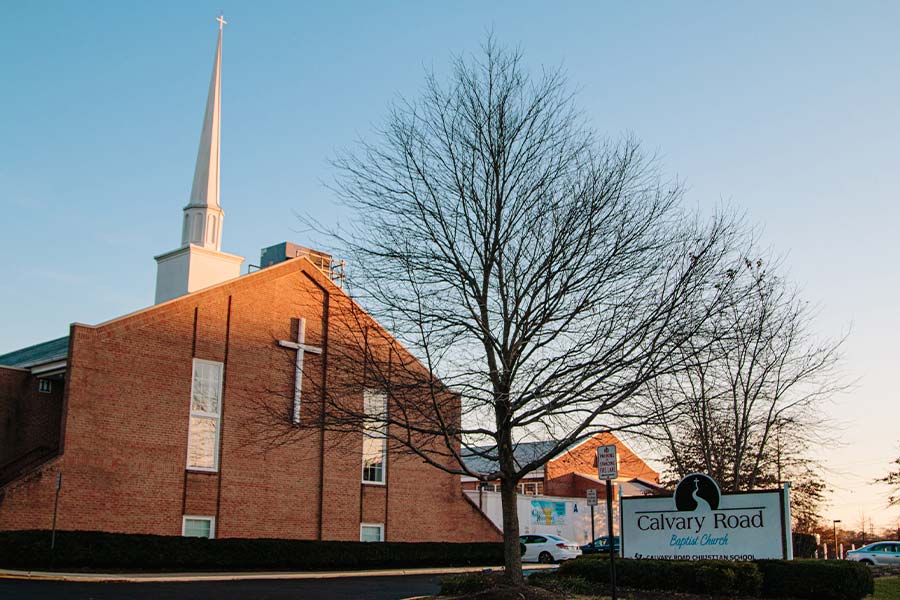
The Virginia Values Act, enacted in July 2020, compelled churches, religious schools, and Christian ministries to hire employees who do not share their stated beliefs on marriage, sexuality, and gender identity. While written under the guise of preventing discrimination, in reality, it would have forced the ministries to carry out their day-to-day work in ways that directly contradict their beliefs. The groups could face fines of up to $100,000 for each violation of the Act.
In response, a group of Virginia churches, schools, and a pregnancy center network challenged the law as a violation of their religious freedom and speech rights under Virginia’s constitution and RFRA statute in a case that was ultimately settled. As part of the agreement, Virginia officials conceded that all of the ministries, as religious organizations, are free to hire only “individuals who profess and live according to religious beliefs held by [the ministries], including beliefs on abortion, marriage, sexuality, sex, and gender.”
Virginia law protects religious organizations’ foundational right to operate consistent with their faiths.
Christian Ministries

Government officials may threaten a ministry’s right to hire only individuals who share and live out its religious beliefs. For example, despite desperately needing teachers to fill hundreds of vacancies, Chicago Public Schools excluded Moody Bible Institute from the city’s student teaching program because Moody hires only employees who agree with its statement of faith. After being sued, Chicago Public Schools eventually agreed to allow Moody students into the program as part of a settlement and recognized Moody’s right to hire only coreligionists. Yakima Union Gospel Mission, a Christian homeless ministry in Yakima, Washington, is currently facing a similar situation.
In 2021, the Washington Supreme Court reinterpreted the state’s Law Against Discrimination (WLAD) and gutted its religious exemption. As a result, the Mission could face penalties for requiring all of its staff, not only those who legally qualify as ministers, to share the same core beliefs. Notably, Justice Alito remarked a few years ago in a similar case that the Washington court’s decision, by threatening to “extinguish [religious nonprofits] from participation in public life,” conflicted with the Constitution.
In January 2026, a panel of judges at the U.S. Court of Appeals for the 9th Circuit ruled in the Mission’s favor. They acknowledged that a religious institution may find that its mission of faith “is best served by hiring only employees who adhere to and follow its religious beliefs.” In other words, when every member of the team has the same core beliefs, the organization as a whole is more effective.
Such a decision is a matter of faith and internal governance. As such, the Mission was exempted from state “nondiscrimination” laws when hiring non-ministers for religious purposes. The Mission must be able to live out its faith-based identity at every level. This understanding of the church autonomy doctrine went beyond the ministerial exception by permitting the Mission to hire all staff, not just those who perform “vital religious duties,” with its religious values in mind.
In June 2026, the entire 9th Circuit voted to rehear the case en banc—which, in the 9th Circuit, means that a panel of 11 judges will consider the case instead of the usual three. As a result, the January decision is no longer in effect. However, the Mission’s case is still active and will be argued the week of September 28, 2026.
Pro-Life Organizations
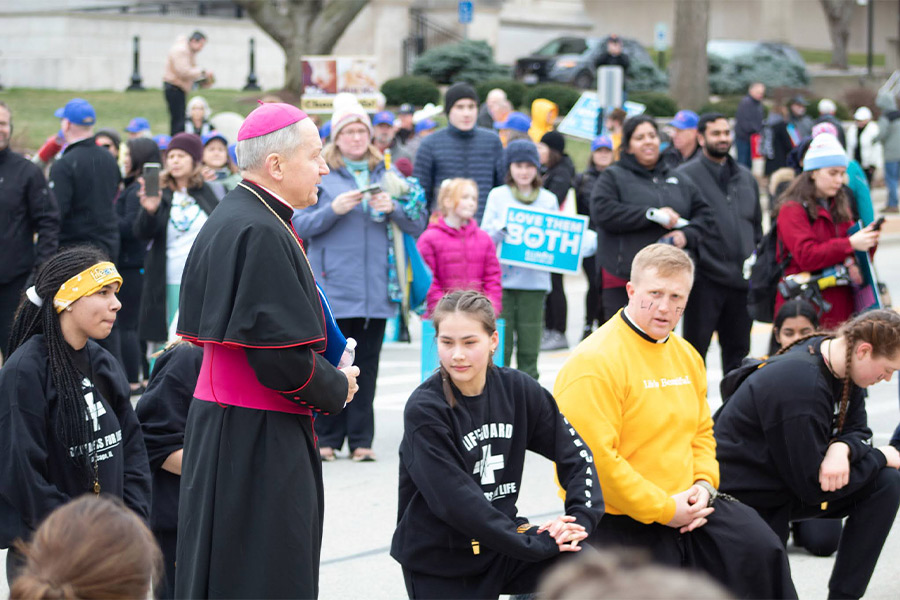
The Right to Life of Michigan and Pregnancy Care Center offer life-affirming education and care to women across the state. In order to do so, they need to hire people committed to their pro-life identity. However, the state’s nondiscrimination law was amended to redefine “sex” to include “the termination of a pregnancy.” Under this law, it would be illegal for Right to Life of Michigan and Pregnancy Resource Center to recruit and hire only those employees who share these organizations’ pro-life views and who agree to refrain from engaging in conduct contrary to those views. In July 2026, a federal district court issued an opinion that blocks the law while the case proceeds.
The Pregnancy Care Center of Rockford is facing a similar threat to its religious liberty. An Illinois law forces religious organizations to hire employees who violate their religious beliefs on reproductive issues like abortion. The Center, along with the Roman Catholic Diocese of Springfield, IL, is challenging that law. While a district court dismissed their claim, the groups have appealed to the 7th Circuit.
Religious Schools
The Supreme Court’s most recent case addressing the contours of the church autonomy doctrine and the ministerial exception involved a religious school. However, challenges to schools’ freedom to hire staff that align with their religious values have persisted.
In July 2022, Michigan’s Supreme Court reinterpreted the state’s Civil Rights Act to cover sexual orientation and gender identity. As a result, groups like the Sacred Heart of Jesus Parish and its school would be forced to hire employees who live in direct opposition to their religious beliefs. And parents of the Catholic school would be unable to obtain an education for their children that aligns with their faith. The school and a group of parents sued state officials to prevent enforcement of the law against Sacred Heart Parish. In 2024, the 6th Circuit ruled that the case could proceed, and it is now being litigated.
The stakes of getting this right
The First Amendment protects one of the most basic truths about what it means to be human—that mankind is free to search for and discover God. In line with this principle, it safeguards the right of religious groups to preserve their faith-based identity.
But that freedom means little if religious organizations cannot form teams united by shared convictions. A ministry without staff who embrace its mission and values isn’t a ministry—it’s just an office.
This freedom is under threat today. It deserves to be defended—not as an abstract concept, but as the very foundation that allows faith-based organizations to remain, at their core, faithful.
Related Articles