
Key Takeaways:
- Seattle’s Union Gospel Mission, a Christian ministry that serves thousands of Seattle’s homeless neighbors, requires every employee to share and live out its Christian faith.
- That hiring standard came under threat from a Washington state law.
- A nearly identical case (also in Washington) is now before the U.S. Court of Appeals for the 9th Circuit, as the question of whether religious organizations can prefer co-religionists remains unclear.
Richard remembers lying on a piece of cardboard and praying.
He was homeless and addicted to drugs. He had cut his friends and family out of his life and felt completely alone.
“I remember wishing I could just go to sleep and never wake up,” Richard said. “I prayed to God for some kind of change.”
God answered Richard’s prayer: half an hour later, a search and rescue team from Seattle’s Union Gospel Mission found him.
Richard has been drug-free for many years now, and he now works for the same ministry that changed his life. He said, “I would describe my life today as blessed and hopeful. I’m able to be there for people. To be God’s hands and make sure that people know they matter.”
Seattle’s Union Gospel Mission cares for over a thousand homeless people every day and shows them the love of Jesus that they so desperately need to see.
But Washington law threatened the Mission’s ability to employ co-religionists, those who share the same core beliefs as the Mission. Those shared beliefs are essential to its mission of serving Seattle’s homeless according to its Christian beliefs.
What is Seattle’s Union Gospel Mission?
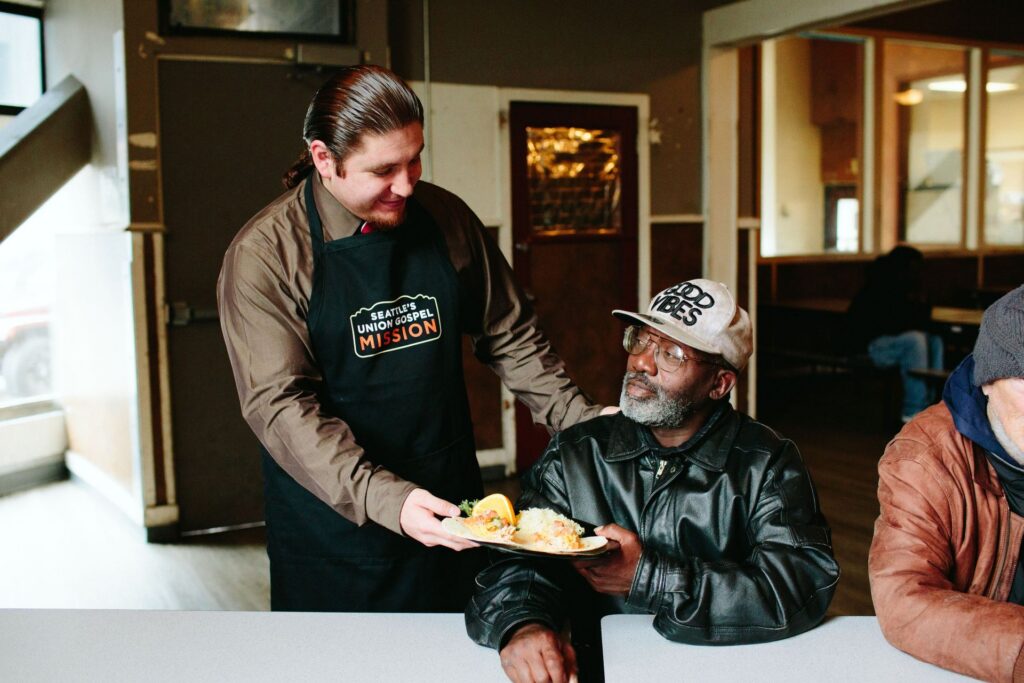
Seattle’s Union Gospel Mission is a nonprofit ministry that began in 1932 as a soup kitchen to feed and care for those suffering from the Great Depression. Today, the Mission lives out its Christian faith by bringing the love of Jesus Christ to over a thousand homeless and hurting people in Seattle every day. Through services like its soup kitchen, mobile showers, and recovery programs, the Mission seeks to restore dignity and help people move on to healthy and thriving lives.
“The Mission seeks nothing less than to see every homeless neighbor beloved, redeemed, and restored,” Chin says.
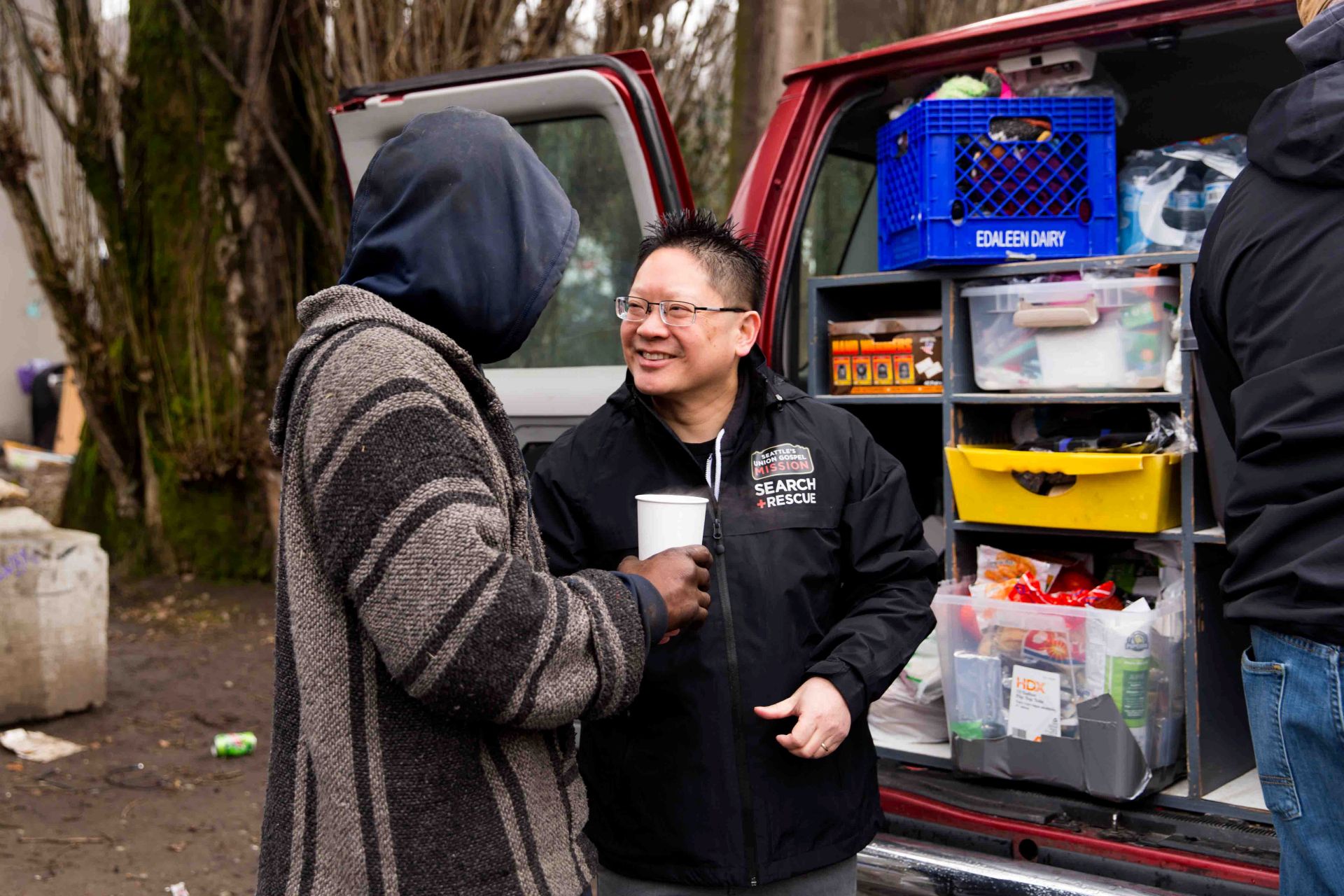
Unlike many organizations that wait for people to come to them, the Mission goes looking—into homeless encampments, under overpasses, in dark alleys. “We know the names, stories, and how to reach over 3,000 homeless individuals,” Chin said. “That’s how we’re able to engage these men and women and offer them what they so desperately need in both body and soul.”
And the Mission has seen success. At one time, about 70 percent of clients were either working or in school two years after graduating from one of the Mission’s recovery programs. And about 25 percent of the Mission’s staff were former clients.
“That success is a byproduct of our most important priority: bringing others into relationship with Jesus Christ,” Chin says. “Of course, a philosophy only works if everyone involved buys into it.”
That’s why the Mission has required every employee to share and live out its Christian beliefs, be active in a local church, and be willing to share the Gospel with those it serves.
Seattle’s Union Gospel Mission is changing lives
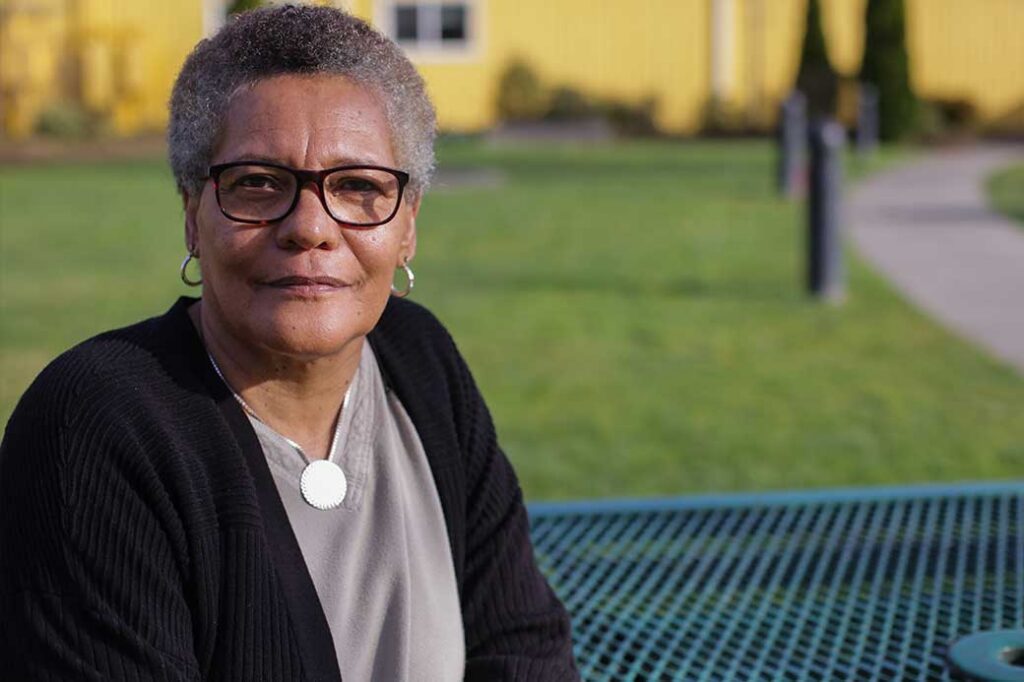
Darryl Ann never felt like she measured up to her parents’ expectations. She found herself drawn to others who were struggling too—clubs, drugs, alcohol. Eventually, she became a mother of four. Then her life fell apart. She left her children. She left her marriage. She lost everything to addiction and ended up homeless, living under a bridge in Seattle.
Her life changed when she was jailed for shoplifting. “When they took me to my cell, there happened to be a Bible in there,” she said. “I opened it up and the words I read spoke to me.” Not long after, she started a new life with Seattle’s Union Gospel Mission.
“I felt so much love and support at the Mission,” Darryl Ann said. “I found a role model there who is my guardian angel. With her help and the grace of God, I’ve been sober for 10 years.” She eventually began to work for the Mission, using her own story to counsel men and women on the street who are struggling just like she once did.
Darryl Ann and Richard are two people out of thousands—proof that the Mission’s model works when co-religionists live out the same faith it asks clients to consider.
That principle was put to the test in 2016, when the Mission declined to hire an attorney for its legal-aid clinic. The applicant did not share the Mission’s religious beliefs, was not active in a local church, and could not provide the pastoral reference the position required. He later said he’d applied for the job hoping to change the Mission’s beliefs, not live by them.
“You can understand why we had to choose another candidate,” Chin said. The Mission hired someone else who met its religious criteria—and the attorney sued.
Religious freedom at the courts
The attorney argued that the Mission had no right to decline hiring him under state law. In March 2021, the Washington Supreme Court ruled that the Mission must decide: change who it believes it should employ to serve the homeless, or violate its Christian faith. Rather than settling that question outright, the court narrowed the state’s religious-nonprofit exemption that would have protected the Mission and sent the case back to the trial court to decide whether the attorney’s role fell under the ministerial exception.
The Mission asked the U.S. Supreme Court to step in first. In August 2021, ADF and attorneys from Ellis, LI & McKinstry petitioned the Court to review the case before that trial-court fight played out.
In March 2022, the Court declined. Justice Samuel Alito, joined by Justice Clarence Thomas, wrote separately to note the Washington Supreme Court’s decision “may warrant our review in the future,” but agreed with denying review for now since the Mission could still return to the Court after further proceedings.
That return never happened. On August 2022, the attorney moved to dismiss his own lawsuit, and the court granted it—without prejudice, meaning the claim could theoretically resurface later. Whether the Mission had a constitutional right to employ only coreligionists for all positions was not decided. The Mission never received a ruling in its favor. The Washington Supreme Court’s narrowed reading of the state’s religious-nonprofit exemption remained on the books.
But in March 2023, a similar situation surfaced when Union Gospel Mission of Yakima filed its own lawsuit challenging that same legal change. A federal district court initially dismissed the case, but the U.S. Court of Appeals for the 9th Circuit reversed that ruling in August 2024, allowing the ministry to proceed. That November, the district court found it likely unconstitutional for the state to enforce the law against the ministry while the case continued and let it continue hiring according to its faith in the meantime.
The case has only grown more consequential since. In January 2026, a three-judge 9th Circuit panel unanimously ruled in the Yakima ministry’s favor. But six months later, the full 9th Circuit vacated that decision and agreed to rehear the case en banc.
The right to hire on mission
“Under the First Amendment, the government doesn’t get to interfere when a church or religious organization chooses to hire only those who share the organization’s faith,” Chin said. Washington’s narrowed exemption stands apart from that understanding.
That protection exists because a religious ministry’s mission depends on everyone living it out, not just some employees. If one staff member points a struggling neighbor toward new life in Jesus Christ and a coworker undercuts that message, the ministry can’t do what it does—a lesson the Mission has learned firsthand through Richard, Darryl Ann, and thousands like them.
The gap in Washington’s law outlasted this one case. But one thing should be clear: Churches and religious organizations should have the freedom to hire those who share their beliefs without being punished by the government.
Seattle’s Union Gospel Mission v. Woods
- November 2017: The attorney filed a lawsuit against Seattle’s Union Gospel Mission.
- March 2021: The Washington Supreme Court ruled that the Mission must decide: change the way it serves the homeless, or violate its Christian faith. Neither option is acceptable.
- August 2021: The Mission asked the United States Supreme Court to reverse the Washington Supreme Court’s decision.
- March 2022: The U.S. Supreme Court denied the Mission’s request to hear its case. But two justices made clear that the issue is still very much in question.
- August 2022: The attorney opts to dismiss his lawsuit, and the court grants this, leaving the ministerial-exception question unanswered.
Related Articles