Key Takeaways
- When Emily studied social work at MSU, one professor tried to force her to sign a letter addressed to the state legislature in favor of same-sex adoption.
- After Emily asked for an alternative assignment, the professor filed the highest form of disciplinary action against Emily.
- ADF filed a lawsuit on Emily’s behalf, and the university quickly settled the case and paid Emily damages.
Emily Brooker expected college would provide her with the opportunity to engage in rigorous academic discourse and pursue a greater understanding of life’s deepest questions.
But instead of encouraging debate and discussion, Missouri State University (MSU) officials stifled and silenced Emily’s speech and religious exercise when it did not follow the university’s preferred views. When she said she could not sign a letter to the state legislature supporting same-sex adoption, one of her professors filed the highest level of grievance against her, putting her degree at risk. MSU provided indoctrination, not education.
Students at a public university should be free to speak and live out their faith without punishment or being forced to subscribe to and promote the university’s preferred view.
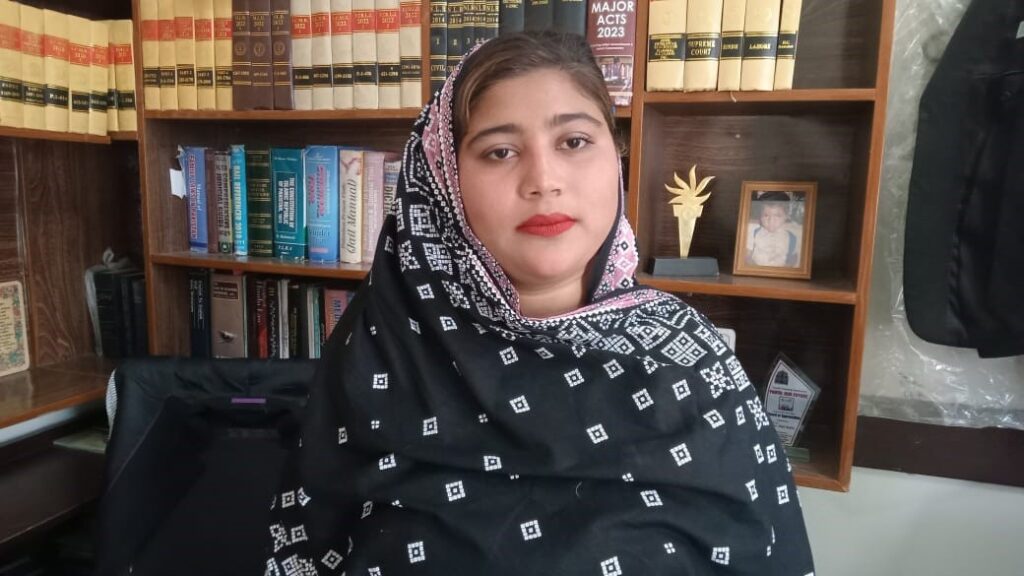
Meet Emily Brooker

In 2005, Emily Brooker was a student in the School of Social Work at Missouri State University. Her Christian faith is a defining characteristic of her life, and this was evident during her time at MSU.
Emily helped found a Christian sorority at the university, and she spent time volunteering at a local Christian outreach in the form of a coffee shop.
These were ways Emily lived out the Gospel’s call to love and serve others. Emily tried to do the same in the classroom as well.
But she never anticipated she would be punished for practicing her faith on campus.
An assignment that would force her to speak against her faith

Emily enrolled in Social Welfare Policy and Services II, a required course for her degree. The course was taught by a professor who had given her a “C” in a previous class because she voiced her disagreement with him.
Emily faced another run-in with this professor during the second course on the subject. She recalled, “I walked into my Policy II class fall semester of my senior year, and I get handed an assignment to be an advocate, and I was really excited about getting to do that.
“But then came the point of what we were going to advocate for, and we were asked to be advocates for homosexual foster and adoption. And my heart just sunk because I was like, ‘Oh my gosh. I can’t do this. How am I going to get through this class without compromising my beliefs?’”
During this second course, the professor brought a guest speaker from an organization of advocates for homosexuality and changed the group projects the class would work on.
Instead of the projects in which student groups could choose their own topic of social work advocacy, he suggested the whole class should work on a project advocating for same-sex foster homes and adoption. This project would include writing a letter to the Missouri legislature that all students were expected to sign.
When the time came to sign the letter, Emily informed the professor that she did not wish to sign it because it violated her Christian beliefs.
She said to him, “I can’t advocate for this on a political level. It is against my beliefs.”
“And he kept engaging me and kept engaging me, ‘Well, is it because you’re a Christian?’ and I said, ‘Well, my Christian beliefs do guide where my life goes,’ but I said, ‘this is a right and wrong thing. You can’t tell me how to be on a political avenue.’”
She asked to write and sign a letter on a different issue to complete the assignment. The professor initially said no, but he later agreed.
Where many students would have simply signed the letter and moved on, Emily knew doing so would conflict with everything she believed. She would have betrayed herself and her faith. She could not be compelled to advocate for a message that contradicted her religious beliefs.
“It wasn’t just ‘Look at this population and write about it,’” Emily said. “… it was, ‘You are going to put your name on something.’ It was like endorsing it, and I said, ‘No, I can’t do this. I do not want my name on any document [like this].’”
A process that tainted her experience and reputation

On the Friday before finals, Emily received a notification by phone that she violated the School of Social Work’s Standards of Essential Functioning in Social Work Education (SEF). A Level 3 Grievance had been filed against her, the most serious charge an individual can bring against a student. It is usually reserved for circumstances in which a lower-level charge was ineffective. But in Emily’s case, MSU went straight to a Level 3 Grievance. A hearing was then scheduled.
Faculty refused to allow Emily to have her parents with her in the hearing, record it, or have a non-faculty advocate with her.
Emily remembered, “… I walked in there, and seven professors [were] sitting at the table in front of me and went through about two and a half hours of questioning about my faith, questions like ‘Do you think homosexuals are sinners? Are you a sinner? What about us? And what’s the difference?’… tough questions. Very intimidating. And this went on for hours.”
Two and a half hours, in fact.
“And there were times that I cried in the meeting and just wiped my tears away and kept going because I didn’t want to leave. I wanted them to know that I wasn’t going to change my mind,” Emily said.
Outside of the room, Emily’s parents waited for her and prayed. “That’s the best thing we could have done, because I think it helped give her the strength to answer the questions that she was being interrogated with…” Emily’s mom said.
During the hearing, university officials continued to ask Emily personal and invasive questions, criticizing her beliefs. When she refused to back down, they insisted that she write a paper vowing to “lessen the gap” between her faith and the social work program, or else not graduate.
Faculty also instructed her that the paper should state she would not discriminate against people engaged in homosexual behavior, that she would be willing to place children in same-sex adoptive homes, and that she would abide by the National Association of Social Workers Code of Ethics and the School of Social Work’s SEF.
That wasn’t enough. After Emily presented her paper in January 2006, faculty required her to sign a contract acknowledging her responsibility to conform to the NASW Code of Ethics and the school’s standards. Without it, she couldn’t continue in the program. Emily signed the contract, even though she objected to it, so she could earn her degree.
Emily graduated from MSU in May 2006, but she was required to abandon her faith as a condition of getting a social work degree at MSU.
Once she had graduated, Emily turned to a local attorney, who happened to also be an Alliance Defending Freedom Allied Attorney. ADF filed a lawsuit in October 2006 against the school on Emily’s behalf for violating her First Amendment rights to free speech and religious freedom.
A win for Emily

Within two weeks, the university settled. As part of the settlement, the university paid $9,000 in damages to Emily and cleared her academic record. In December 2006, the case was dismissed.
Every person has the God-given right to live and speak the truth, including on public university campuses. Thankfully, ADF was able to advocate for her and, by God’s grace, won.
Emily’s story shows the importance of faithfulness, even during hardship. MSU may have pushed indoctrination, but God—working all things together for good—showed Emily how to hold fast during trial. Her story is a reminder that no student should have to choose between their convictions and their degree.
Brooker v. The Governors of Missouri State University
- Fall 2005: A professor at Missouri State University tried to require Emily to sign a letter to the state legislature advocating for same-sex adoption. Emily asked for an alternate assignment, and after initially refusing, the professor agreed.
- December 2005: Emily was informed that she was being charged with the highest level of complaint in the School of Social Work. She was forced to meet with faculty and staff, who told her she must compromise her religious beliefs to continue pursuing her degree.
- October 2006: ADF attorneys filed a lawsuit on Emily’s behalf.
- November 2006: MSU officials agreed to a settlement, paid Emily $9,000 in damages, and cleared her record.
- December 2006: The court dismissed the case.
Related Articles