


Key Takeaways:
- Parental rights are fundamental rights given by God to parents to care for and direct the upbringing of their children.
- The connection between parent and child is one of the most basic human relationships. Parents love their children the most and know them the best.
- The U.S. Supreme Court has repeatedly affirmed the fundamental nature of parental rights for over 100 years.
Shocked. Betrayed.
These were the words of Michigan mother Jennifer Mead after she and her husband, Dan, discovered that their daughter’s middle school had been using a masculine name and male pronouns to refer to their daughter for months—without their knowledge or consent.
How did this happen?
The Meads were involved in their daughter’s life and her education. Their daughter was struggling, so the Meads were working closely with school officials to support her. But when their daughter expressed a desire to be referred to by a masculine name and male pronouns, those same school officials socially transitioned the girl behind her parents’ backs while actively concealing it from them. The school counselor went so far as to alter school records, changing the male name and pronouns back to their daughter’s given name and female pronouns.
The reason? A district policy designed to keep parents in the dark. And sadly, policies like these are becoming more common as parents are being shut out of decisions made at school about their children. Such policies are one example of how parental rights are being violated. Although the law recognizes the fundamental right of parents to direct their children’s upbringing, education, and healthcare, parental rights are under increasing attack today. Alliance Defending Freedom is taking on precedent-setting legal cases to protect parents’ rights and enshrine them as fundamental in every state.
But you may be asking, what are parental rights? What’s the history behind them? And why should they matter to every American?
What are parental rights?
Parental rights are fundamental rights given by God to parents to care for and direct the upbringing of their children. Parental rights include, but are not limited to, making decisions regarding children’s education and healthcare in a manner consistent with their family’s beliefs.
Parental rights are inextricably connected with parental responsibilities. Every parent has not only the right but the duty to care for their children. Parents must promote their children’s well-being and ensure their children receive the education—including the moral and religious education—that they need to prepare them for adulthood.
Parental rights are “pre-political,” meaning that they exist prior to the formation of the government. They are fundamental and universal, and they cannot be given or taken away by any government.
Like all fundamental rights, parental rights must be vigilantly defended.
Why are parental rights important?
The connection between parent and child is one of the most basic human relationships. Parents love their children the most and know them the best. Parents care for their children before they can care for themselves, teaching them to walk, talk, and love.
While other relationships like those with coaches, teachers, neighbors, friends, and other family members can all play profound and meaningful roles in a child’s life, those people are not that child’s parents. No influence is as profound and enduring as that of the child’s parents, and in most cases, parents are best positioned to care for their children’s welfare. Protecting parental rights protects the well-being of the children in whom parents invest their love, time, and resources.
Parents are also the leaders of their families, and the family is the basic unit of society. Parents prepare and raise children to enter society, live as upstanding citizens, and become leaders in their communities. For these reasons, when the government protects the fundamental role of parents in a child’s life, it is helping secure the future well-being of society.
Conversely, when the government undermines parental rights and responsibilities or seeks to replace the important role that parents play in their children’s lives, it is sowing the seeds of its own destruction.
What has the Supreme Court said about parental rights?
For over 100 years, the U.S. Supreme Court has repeatedly affirmed the fundamental nature of parental rights.
Meyer v. Nebraska (1923)
In Meyer v. Nebraska, a teacher challenged a law that made it a crime to teach young children modern foreign languages. The Supreme Court ruled in favor of the teacher, recognizing that parents have a liberty interest protected by the Due Process Clause of the Fourteenth Amendment and that their liberty includes the right “to marry, establish a home and bring up children.” The Court recognized that it’s parents who decide what their children are taught, parents who direct their children’s education, and parents who raise their children within the family.
Interpreting the Due Process Clause, the Court wrote, “Without doubt, it denotes not merely freedom from bodily restraint but also the right of the individual to … establish a home and bring up children, to worship God according to the dictates of his own conscience, and generally to enjoy those privileges long recognized at common law as essential to the orderly pursuit of happiness by free men.”
Pierce v. Society of Sisters (1925)
In Pierce v. Society of Sisters, two private schools challenged an Oregon law that effectively outlawed private education by requiring that children ages 8-16 attend public school. The Supreme Court held that the law was unconstitutional because it “unreasonably interfered with the liberty of parents and guardians to direct the upbringing and education of children.”
The Court famously declared, “The child is not the mere creature of the State; those who nurture him and direct his destiny have the right, coupled with the high duty, to recognize and prepare him for additional obligations.” Together with Meyer v. Nebraska, the Court in Pierce recognized parents’ fundamental right to raise and educate their children free from unreasonable government interference.
Wisconsin v. Yoder (1972)
Wisconsin v. Yoder extended and reinforced the constitutional rights of religious parents by holding that they have a constitutional right under the First and Fourteenth Amendments to educate their children in accordance with their faith. The law at issue in Yoder required children to attend school through age 16. Wisconsin prosecuted Amish parents who withdrew their children after eighth grade to educate them at home in the Amish way of life.
In Yoder, the Court declared, “The history and culture of Western civilization reflect a strong tradition of parental concern for the nurture and upbringing of their children. This primary role of the parents in the upbringing of their children is now established beyond debate as an enduring American tradition.”
Parham v. J.R. (1979)
In Parham v. J.R., the Supreme Court recognized parents’ authority to make medical decisions for their children. The Court stated that American jurisprudence “historically has reflected Western civilization concepts of the family as a unit with broad parental authority over minor children [because] the law’s concept of the family rests on a presumption that parents possess what a child lacks in maturity, experience, and capacity for judgment required for making life’s difficult decisions.”
This landmark decision made clear that parents are presumed fit because our laws have long recognized that “natural bonds of affection lead parents to act in the best interests of their children.”
Troxel v. Granville (2000)
At the turn of the 21st century, the Court issued a plurality decision affirming parents’ fundamental rights in a grandparent visitation case called Troxel v. Granville. The Court came to the correct result in finding that parents’ rights include the right to determine their child’s visitation schedule with grandparents. But the fractured opinions did not clearly define the legal standard for protecting the fundamental nature of parental rights under the Constitution.
For the next two decades, Troxel led to widespread confusion in lower courts and to decisions that failed to recognize and respect parental rights, especially in public school curriculum cases.
Mahmoud v. Taylor (2025)
In 2025, the tide began to turn again in favor of parents’ rights with a pivotal Supreme Court ruling in Mahmoud v. Taylor. The case was brought by a diverse group of religious parents after the Montgomery County, Maryland Board of Education refused to allow them to opt their elementary-age children out of books that promoted radical gender ideology to children as young as three and four years old.
At first, the school board said it would notify parents when the books would be taught and allow them to opt their children out. But the board abruptly reversed course. It announced it would no longer inform parents when the books were taught, let alone allow parents to opt out.
Mahmoud affirmed that schools must provide parents notice and a chance to opt their children out of instruction that “substantially interferes” with their children’s religious upbringing. According to the high court, “A classroom environment that is welcoming to all students is something to be commended, but such an environment cannot be achieved through hostility toward the religious beliefs of students and their parents.”
The decision was a monumental religious liberty victory benefiting public school parents. It rightly recognized that parental rights do not end at the schoolhouse gate and even extend into the public-school classroom.
Mirabelli v. Bonta (2026)
Mahmoud was only the beginning of the revitalization of sound parental rights doctrine in the law. In March 2026, the Supreme Court issued another key decision in Mirabelli v. Bonta. There, parents challenged a California policy that facilitated the secret social transition of minor children in its public schools without parental knowledge or consent, requiring teachers to use new names and wrong pronouns for a child and then hide this critical information from the parents.
Citing Parham v. J.R., the Mirabelli Court held that parents’ fundamental rights include “the right not to be shut out of participating in decisions regarding their children’s mental health.” The Court also held that the state’s policy was an “intrusion” on parents’ free-exercise rights and applied Mahmoud to the secret social transition policy. Fairly read, the decision requires school officials to disclose a child’s social transition at school and not lie to parents about their child’s mental health.
Once again, the Supreme Court was clear that parents—not the state—have primary authority over the upbringing and education of their children.
What is the state of parental rights today?
The fractured legal landscape of parental rights, combined with the attacks on those rights in education and healthcare, has sparked a growing movement of parents dedicated to doing what’s best for their children.
As we consider the state of parents’ rights today, let’s consider the main threats facing them.
Politicized public education
More and more school boards across the nation are adopting policies that endanger children’s minds, bodies, and family relationships. Gender ideology is permeating school curricula, leading children to become confused about who they are and how they are to treat one another.
In Colorado, Jefferson County Public Schools, in accordance with district policy, assigned an 11-year-old girl to share a room with a boy who identified as a girl on a school-sponsored trip. Her parents, Joe and Serena Wailes, were kept in the dark about the district policy until their daughter called from her hotel bathroom, distressed about what to do when she realized she was supposed to share a bed with a boy. ADF, working alongside the Wailes family and three others, is challenging this harmful policy.
Parents’ right to direct their children’s upbringing, education, and healthcare doesn’t end at the schoolhouse gate.
Gender identity politics, hidden ‘healthcare,’ and secret social transitions
Parents have the right and responsibility to make medical decisions for their children. And this makes practical sense because parents are in the best position to know their children’s medical history and needs.
Schools, especially, have a responsibility to keep parents informed about their child’s physical or mental well-being. They should never hide that information from parents.
Unfortunately, though, some public schools are socially transitioning students at school without telling parents, maintaining “secret files” about gender-confused students and forcing school employees to address students in ways that are inconsistent with their sex. Practices like these not only violate the rights of teachers and force them to lie to parents; they also harm students and clearly ignore parents’ fundamental rights.
Just consider what happened to a family in the Kettle Moraine School District in Wisconsin.
School officials said they would use a male name and male pronouns to address the parents’ 12-year-old daughter without their consent—and even over their objections—if she requested that they do so. The parents had to withdraw their daughter from the school to protect her mental health and preserve their parental responsibilities. Thankfully, the Waukesha County Circuit Court found that the school policy violated parental rights. Even better, the daughter is now thriving after being taken out of that school environment and given the time to work through her struggles with the love and support of her family.
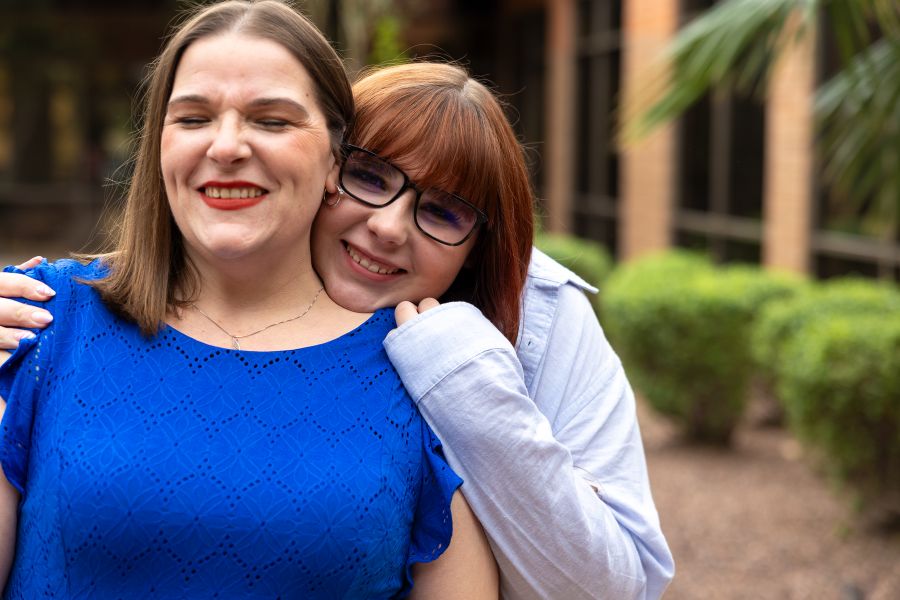
In another case in New York, school officials concealed that Jennifer Vitsaxaki’s middle-school daughter was being bullied and feeling confused about her gender. Jennifer began noticing distressing changes about her daughter at home and brought her concerns to school officials, but they deceived her for months about her daughter’s condition. They created a “Gender Support Plan” to socially transition her daughter, invited her to join an LGBTQ club, and provided her with resources on medical transition—all behind Jennifer’s back. ADF is representing Jennifer in a lawsuit challenging this violation of her parental rights.
The government is not a co-parent with mothers and fathers. All parents have the right—and duty—to choose what’s best for their children, especially when it comes to healthcare and decisions that could affect the rest of their lives. Policies that ignore biological reality threaten student health and safety and undermine the fundamental right of parents to direct the upbringing, education, and healthcare of their children.
Religious discrimination in adoption and foster care
A closely related and important legal issue to highlight is the religious discrimination occurring in adoption and foster care. In the United States, approximately 329,000 children are in foster care in the United States. Of those, over 70,000 are waiting to be adopted. In other words, more families are needed to find children loving homes, not fewer.
Yet, states across the country are imposing ideological litmus tests on foster parents, keeping people of faith from adopting and fostering children because of their beliefs about gender and sexuality.
Take Vermont, for instance. The Green Mountain State saw fit to revoke the licenses of the Wuotis and Gannts, two quality foster families, all because they wouldn’t conform to the state’s views on gender ideology, such as being willing to take any child they would foster to an LGBT-pride parade or using pronouns inconsistent with their biological sex. Thankfully, Vermont changed that discriminatory policy after it was challenged by ADF.
Other families have faced similar situations, such as the DeGrosses in Washington, Jessica Bates in Oregon, and the Joneses in Massachusetts.
People of faith should not be forced to compromise their moral or religious beliefs just to become foster or adoptive parents. Children deserve loving homes. Excluding loving parents of faith from adoption and foster care because of their religious beliefs is wrong.
If the state can disqualify otherwise qualified foster parents from being able to adopt and foster children, how much further would it be to say that natural parents are unfit to parent their own children because of their religious beliefs?
How you can protect parental rights
The protection of parental rights and the health and well-being of children across the country depend on the everyday choices of concerned citizens like you.
Now is the time for parents, educators, and school board members to support laws and policies that provide accountability, choice, and transparency (ACT).
- Accountability: Teachers and school administrators should not betray parents’ trust by hiding information about their children or indoctrinating them with ideas directly contrary to their family’s sincere beliefs.
- Choice: Parents should know what their children are taught and have the freedom to opt out of controversial curricula. Parents should also be able to choose the schooling solution that best fits their family.
- Transparency: Public schools should recognize that parents are ultimately responsible for their children. Public schools have a responsibility to be transparent about what they are teaching children and to respect parents’ wishes when it comes to divisive and potentially harmful issues.
We must protect parents’ fundamental right and duty to direct the upbringing, education, and healthcare of their children. Parental rights deserve the highest level of protection under the law.
Learn more about how ADF is defending parental rights and how you can get involved.

Related Articles