
Key Takeaways:
- Liberty is not self-sustaining; it requires constant vigilance against government overreach and evolving threats.
- Core freedoms—especially religious liberty, free speech, and the right to life—remain central battlegrounds in preserving America’s founding ideals.
- Legal advocacy plays a critical role in ensuring that these freedoms are not just theoretical but actively upheld for all Americans.
- Prayer is vital as we seek to keep these freedoms upheld.
Two and a half centuries is a long time for any nation to endure—long enough to stumble, to self-correct, and to rediscover the principles that first gave it life. Yet, through war, division, and sweeping social change, America has remained anchored to a simple yet exceptional idea: that liberty is not granted by government but comes from God and rests with the people.
As the nation approaches its 250th birthday, that idea is worth more than a passing nod—it demands reflection, renewal, and, above all, to be defended.
Because liberty, as history makes plain, is never a settled matter. And nowhere is that more evident than in the ongoing effort to preserve one of America’s most foundational freedoms: the right to live out one’s faith openly, without fear of government interference. Religious liberty is not merely one freedom among many—it is the freedom that protects the deepest convictions of the human heart, allowing individuals and communities alike to pursue truth, live with integrity, and proclaim their beliefs freely.
From the earliest days of the republic, that freedom has helped shape the character of the nation. It has allowed the Gospel to freely take root, to spread, and to transform lives across generations. In a country where individuals are free to worship, to speak, and to live according to their beliefs, the good news of Jesus Christ has gone forth with a boldness that continues to impact countless lives today. That reality alone is something worth celebrating as America turns 250.
As Scripture reminds us:
“The LORD is my light and my salvation—whom shall I fear? The LORD is the stronghold of my life—of whom shall I be afraid?” — Psalm 27:1
At a time like this, that truth should move us to action. Americans who cherish liberty would do well to pray for our nation to seek God’s wisdom, stand firm in truth, and remain courageous in the defense of religious freedom.
This confidence is not rooted in any nation or institution, but in God alone. And it is precisely that kind of freedom—freedom anchored in truth—that religious liberty helps make possible in the public square.
Religious liberty is a bedrock of freedom
Perhaps no constitutional right is as important to the birth of American society as the right to speak and live according to your beliefs. Religious freedom ensures that every person has the right to explore life’s most profound questions and to live out their convictions peaceably and publicly.
Yet even this bedrock freedom has faced mounting challenges. Time and again, individuals and ministries have been told—sometimes subtly, sometimes not so subtly—that their beliefs must yield to shifting cultural or political demands.
- 2014 – The Hahn family, devout Mennonite Christians who run Conestoga Wood Specialties in Pennsylvania, challenged a federal mandate requiring them to provide insurance coverage for abortion-inducing drugs in violation of their pro-life convictions. In a 5–4 decision, the Supreme Court ruled in the favor of both Conestoga and Hobby Lobby, affirming that families do not have to violate their religious convictions to operate their businesses.
- 2017 – In Missouri, Trinity Lutheran Church—which runs a learning center for children—was denied access to a state program that helped refurbish and improve its playground. The state denied Trinity Lutheran a grant solely because it was a church. Thankfully, with support from ADF, the Supreme Court ruled 7-2 in Trinity Lutheran’s favor, and those children enjoyed a safe, new playground surface.
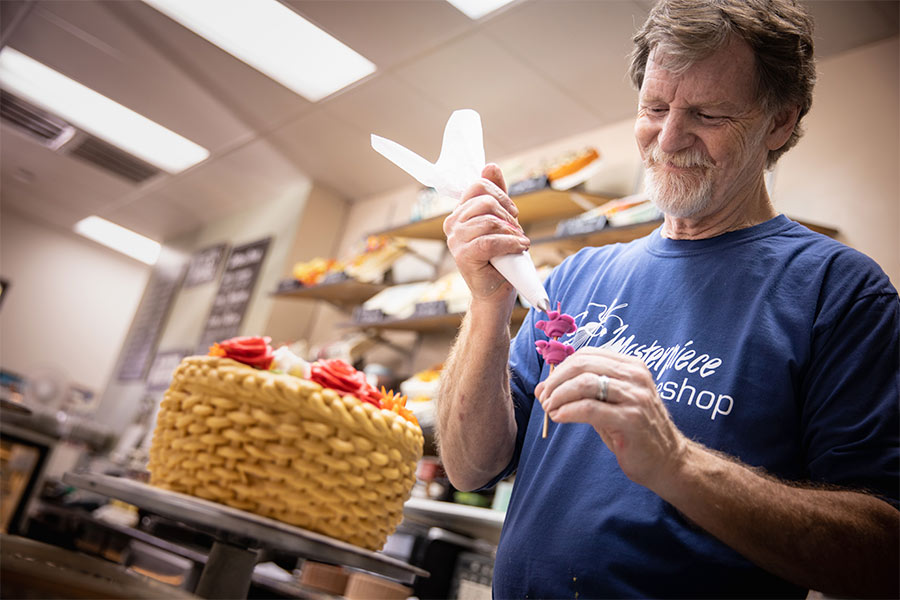
- 2018 – Colorado cake artist Jack Phillips was subjected to not one, not two, but three separate lawsuits that went through the legal system as various entities tried to force him to express a message that goes against his Christian beliefs. In all three cases, Jack secured a victory.
- 2025 – State officials in Vermont banned Mid Vermont Christian School and its students from participating in the state’s sports association because of their religious beliefs. The Vermont Principal’s Association expelled Mid Vermont from the league because the school refused to violate its religious convictions by forcing its girls’ basketball team to play against a girls’ team with a male player. Thankfully, the U.S. Court of Appeals for the 2nd Circuit ruled that Vermont must allow Christian schools to participate in sports as the case proceeds.
- 2026 – In Washington state, Yakima Union Gospel Mission, a Christian ministry that helps the homeless, was threatened by a Washington state law that prohibited it from hiring only those who share and live out its religious beliefs. Praise God, in January 2026, the U.S. Court of Appeals for the 9th Circuit ruled in favor of the Yakima Union Gospel Mission, protecting its right to hire only people who share its faith.
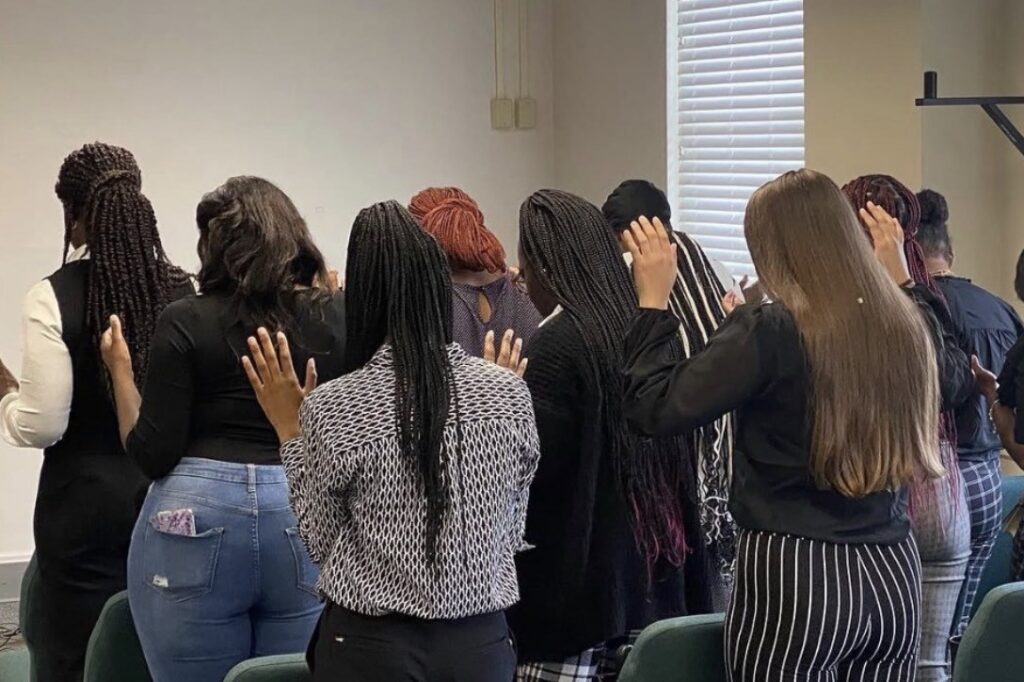
These victories are worth celebrating—but they are also a reminder that the work is far from over. Now more than ever, this is a moment for prayer: for the clients, attorneys, judges, and leaders navigating these battles and for a nation that must decide whether it will continue to protect the freedom to live out one’s faith.
These cases are not isolated—they are part of a broader story unfolding across the country. A story in which the freedom to live out one’s faith is tested, challenged, and, thanks to principled advocacy, defended. And through it all, the Gospel continues to go forth—unchained, unshaken, and as transformative as ever.
Even beyond the courtroom, there are moments that force a nation to confront the value of life in a more immediate, sobering way. The assassination of Charlie Kirk in 2025 was one of those moments—a shocking act of political violence that underscored just how fragile life can be, even for those who seem firmly planted in the public square.
But what followed was not only grief. In its wake came a quiet but unmistakable shift: conversations deepened, distractions fell away, and for many, questions of faith moved from the margins to the center of their lives. People who had never seriously considered matters of eternity found themselves wrestling with them. Others returned to truths they had long set aside.
Even in the darkest moments, God is still at work. Loss, as painful as it is, can stir hearts toward what is lasting and true. And the message at the center of the Gospel—that life is sacred, that truth endures, and that hope is found in Christ—cannot be silenced, even in the face of tragedy.
Celebrating America’s birthday means celebrating freedom
As America marks 250 years, the celebration is about more than fireworks and familiar traditions—it is a recognition of the enduring freedom that has made moments like these possible: the freedom to seek God, to proclaim truth, and to live according to conscience.
Religious liberty is not a relic of the founding era; it is a living, essential right that continues to shape the nation’s present and future.
Celebrating America’s birthday, then, means renewing a commitment to that first freedom. It means recognizing that a nation strong enough to protect the conscience of its people is a nation positioned to flourish—not just politically, but spiritually.
And it means giving thanks that, even amid challenges, the Gospel continues to go forth across this land, changing lives and pointing a searching nation back to the source of true and lasting freedom.
Join us in praying for the Gospel to continue going forth across our land.

Related Articles