
Key Takeaways:
- Missouri denied Trinity Lutheran Church a generally available playground-safety grant solely because it is a church.
- At its core, the case asked whether the government can treat people of faith worse than everyone else simply because they are religious.
- In June 2017, the U.S. Supreme Court ruled 7-2 that excluding a church from a neutral public benefit because of its religious identity violates the Constitution.
- The Trinity Lutheran decision became a landmark precedent for religious freedom and has helped shape several Supreme Court wins for religious freedom.
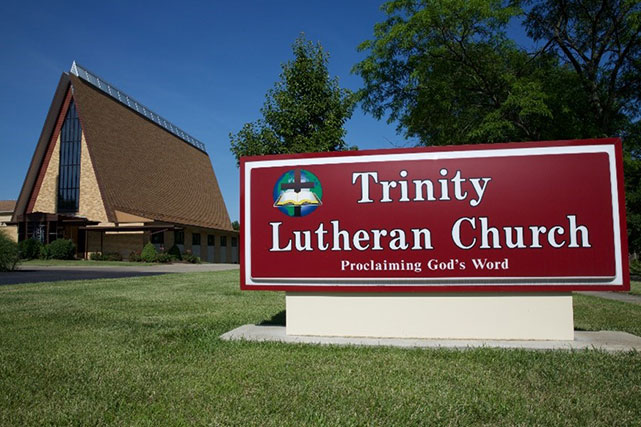
When Trinity Lutheran Church applied for a Missouri playground resurfacing grant for its preschool, it had no reason to think its application would be denied.
In 2012, the church sought to refurbish its well-trafficked playground by applying to participate in the Playground Scrap Tire Surface Materials Grant Program, offered by the State of Missouri. The grant program, open to all nonprofits in the state, recycles scrap tires into rubber, pour-in-place playground surfaces.
But the state pointed to a provision in its state constitution that forbids government aid to religion. Because Trinity Lutheran Child Learning Center is run by a church, it was disqualified by the state.
But the government cannot treat people of faith worse than everyone else simply because they are religious. That’s unconstitutional.
Trinity Lutheran Church sued the state and took the case all the way to the U.S. Supreme Court.
Who is Trinity Lutheran Church of Columbia?

Trinity Lutheran Church has faithfully served the people of small-town Columbia, Missouri, for over 90 years.
Whether providing support for foster children, donating labor, food, and funds to a local county food bank, or helping with Habitat for Humanity building projects all over the community, Trinity Lutheran Church lives its mission to make disciples.
Part of Trinity Lutheran’s ministry includes running a child learning center, which is open to all members of the community for children ages two to kindergarten.
Between that, and children from the surrounding neighborhoods who use the playground after school and on the weekends, Trinity Lutheran’s playground is well-trafficked and well-loved. About 90% of children who were a part of the preschool did not attend Trinity Lutheran Church’s regular church services.
Yet, the state of Missouri denied this generally available benefit to Trinity Lutheran Church—simply because it was a church.
Why did Trinity Lutheran sue?
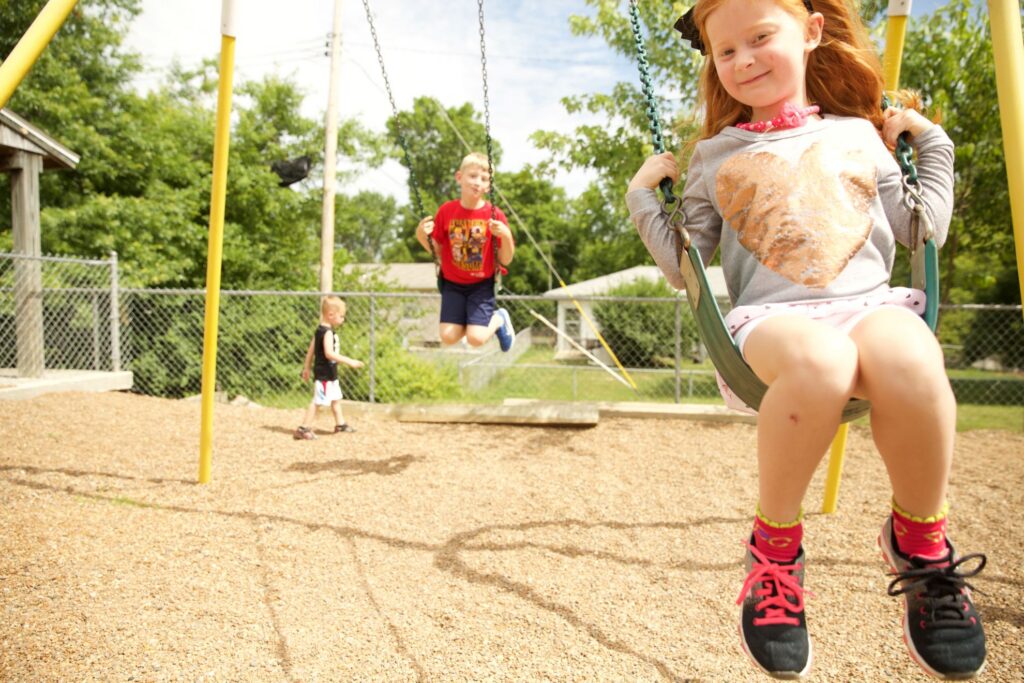
As with any preschool or daycare, the safety of the children was one of Trinity Lutheran’s highest priorities. They were particularly concerned with the safety of their playground surface.
Gail Schuster, Director of Trinity Lutheran Child Learning Center, told Alliance Defending Freedom, “One of our safety concerns and issues at the Learning Center is getting the right—the strongest, the safest, the longest-lasting—ground cover for our preschool. And when we rebuilt our playground, we looked for that very surface. And the one that stood out most was a rubberized-type surface. It seemed to be the most safe and giving.”
Shortly thereafter, they thought they had found a perfect solution. In 2012, Trinity Lutheran Church Child Learning Center sought to participate in the Playground Scrap Tire Surface Materials Grant Program, administered by the Missouri Department of Natural Resources (DNR).
The grant program recycles scrap tires into rubber playground surfaces to reduce the amount of tires in landfills and to foster children’s safety. The state pays for this program through fees imposed on the sale of new tires—fees which everyone pays, including members of Trinity Lutheran and their neighbors.
Trinity Lutheran wanted to remove and replace the pea gravel surface of its playgrounds with a pour-in-place rubberized product made from these recycled tires. Replacing the surface would provide a higher level of safety for the children at the center and all the children in the community who use the playground after school hours and on weekends.
Because Trinity Lutheran wanted to provide those children with a safe playing environment, the church applied for the grant to help resurface its playground.
After Trinity Lutheran submitted its grant application, the DNR ranked it fifth out of 44 applicants due to numerous factors, including the poverty level of the surrounding area. But, instead of awarding one of 14 grants to Trinity Lutheran, the DNR pointed to a section of the state constitution that prohibits government aid to religion and promptly disqualified the learning center solely because it was operated by a church.
The church contacted ADF, requesting our intervention in the matter.
ADF took Trinity Lutheran’s case all the way to the Supreme Court
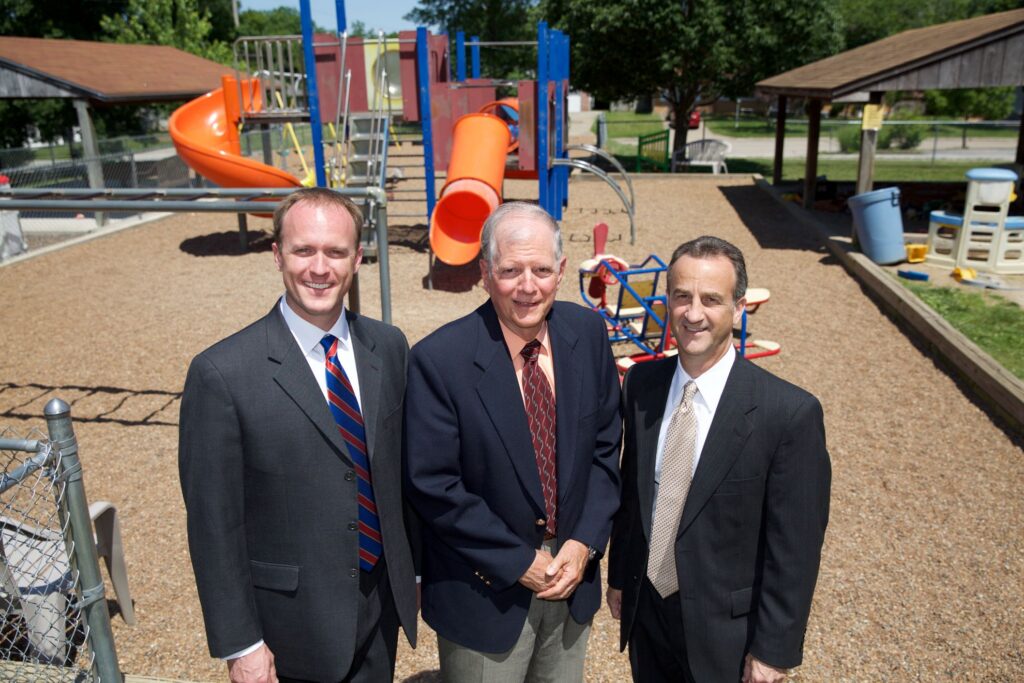
In January 2013, ADF filed a lawsuit on behalf of Trinity Lutheran Church against the director of the DNR. The district judge ruled for the state and dismissed the case. ADF appealed the decision to the U.S. Court of Appeals for the 8th Circuit, which ruled to uphold the district court’s decision.
Committed to preserving the rights of the church, ADF petitioned the U.S. Supreme Court in November 2015 to take the case.
“Seeking to protect children from harm while they play tag and go down the slide is about as far from an ‘essentially religious endeavor’ as one can get,” explained the ADF petition. “The DNR’s religious exclusion sends a message that Trinity’s children are less worthy of protection simply because they play on a playground owned by a church. This is not a mild disapproval of religion.”
The United States Supreme Court accepted the petition to hear the case, and oral arguments were heard on April 19, 2017.
Trinity Lutheran’s victory at the Supreme Court was a generational win
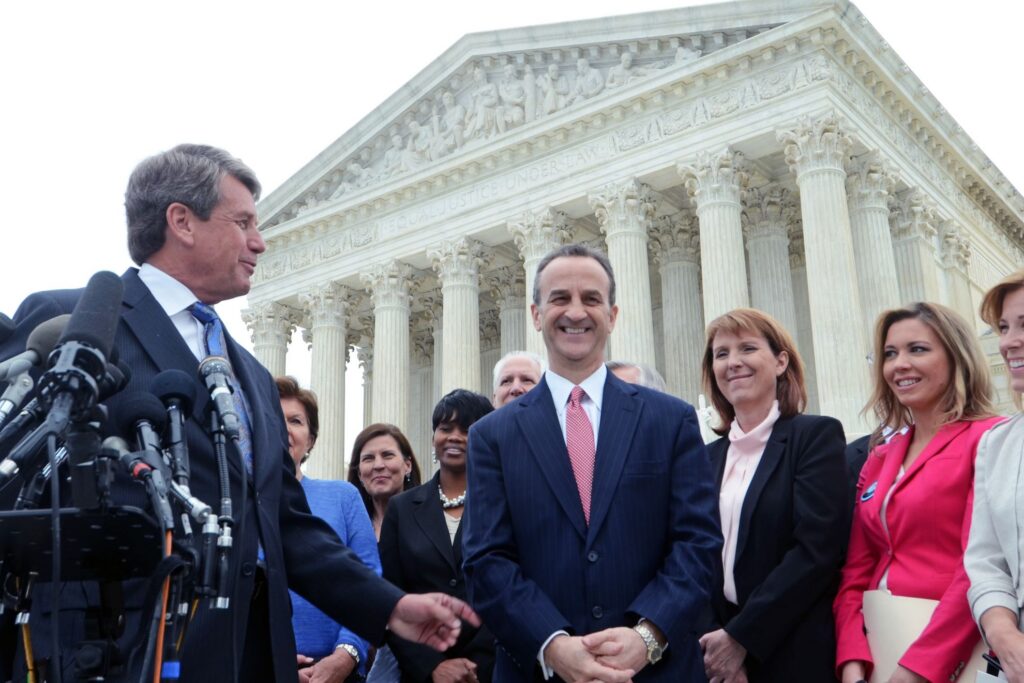
Thankfully, on June 26, 2017, Trinity Lutheran Church won its case at the Supreme Court.
The Court ruled 7-2 that the government cannot exclude churches and other faith-based organizations from a government program simply because of their religious identity, setting a powerful precedent for religious freedom.
In the majority opinion, Chief Justice Roberts wrote, “The State has pursued its preferred policy to the point of expressly denying a qualified religious entity a public benefit solely because of its religious character. Under our precedents, that goes too far.”
A skinned knee hurts just as much on the playground of a religious school as it does on the playground of a non-religious school.
Just because a playground is owned by a religious organization, this doesn’t mean that the kids that play on it are less deserving of a safe surface. And refusing to award a grant to a deserving preschool simply because it is religious is not treating religion neutrally. It’s treating people of faith worse than everyone else.
Although it took six years and a Supreme Court decision, in October 2018, children at the Learning Center were finally able to enjoy a new, safe playground surface.
The decision in Trinity Lutheran continues to have ripple effects to this day.
For example, in 2020, the Supreme Court, in Espinoza v. Montana Department of Revenue, reversed a Montana Supreme Court decision invalidating a tax credit program because parents and children might use that money for tuition at a private religious school.
And again, in 2022, the Supreme Court ruled in Carson v. Makin that the state of Maine cannot exclude private religious schools from a generally available government program for which they otherwise qualify. The majority opinion not only reemphasized that religious schools can’t be discriminated against based on their religious status, but it also held that the state can’t challenge the religious use of the funds it provides.
These decisions heavily relied on the precedent set in the Trinity Lutheran decision.
While the victory that ADF secured in Trinity Lutheran is an invaluable precedent, our work is far from over.
ADF continues to fight on behalf of churches and religious organizations to preserve the right to religious freedom. And we’re winning. But, as a nonprofit, we rely on the generous support of people like you to do so.
Would you consider making a donation today? Your gift will go directly towards protecting your First Amendment freedoms.
Related Articles