
Music is a major way in which people express themselves and their views about life. Just flip through the radio for a few minutes, and you will likely hear songs about loving money, loving a partner, loving Jesus, and everything in between.
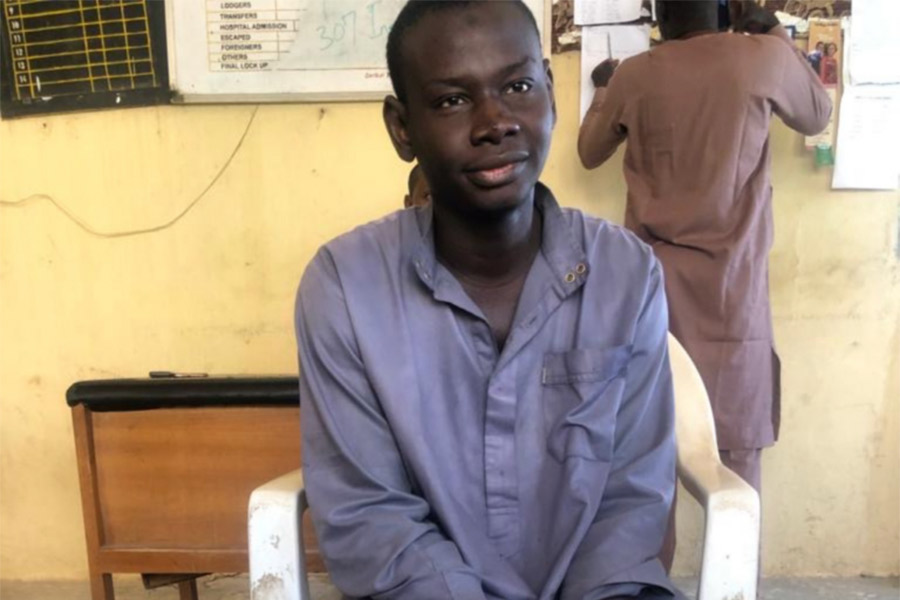
But imagine if expressing yourself and the things you love had the potential to get you sentenced to death. What would it be like to live in that world? Nigerian musician and Sufi Muslim Yahaya Sharif-Aminu doesn’t have to imagine, because he’s living in it right now.
When Yahaya shared lyrics to a song he had written, he was quickly accused of violating a blasphemy law in northern Nigeria. A violent mob assembled, burned down his house, and he was quickly sentenced to death by a Sharia Court—all because he peacefully expressed his views.
What are blasphemy laws?
Blasphemy laws punish individuals for speech that others find offensive towards their own beliefs or sacred symbols. While most of the Western world eliminated these harmful laws decades ago, many countries that live under Islamic Sharia law still enforce them today.
Blasphemy laws are used to persecute religious minorities, often particularly threatening Christians. This blatant violation of religious freedom exacerbates social tensions and an overall climate of violence.
For example, in Nigeria, an average of 10 Christians are killed every day because of their beliefs, in addition to threatening minority Muslims like Yahaya who face severe persecution under northern Nigeria’s blasphemy regime.
Kano State in northern Nigeria has a Sharia-based blasphemy law that is used to punish people who are deemed to have disrespected Islam. The law directly contradicts Nigeria’s constitution, which guarantees religious freedom.
Court sentences Yahaya to death
In March 2020, Yahaya shared an audio message on WhatsApp. The message contained song lyrics he composed about a nineteenth-century Imam revered in his particular tradition of Sufi Islam.
But others in the WhatsApp chat quickly turned on Yahaya. They accused him of blasphemy for allegedly placing the Imam above the prophet Muhammad.
As the news of Yahaya’s message spread, his situation got significantly worse. A dangerous mob burned down his house, and the Hisbah religious police, an official authority in charge of enforcing Sharia law, arrested him.
In August 2020, the Hausawa Filin Hockey upper-Sharia court in Kano convicted Yahaya of violating the blasphemy law and sentenced him to death by hanging. The conviction was eventually overturned because Yahaya was not given legal counsel during his trial, but Yahaya was ordered to face a new trial in January 2021.
Yahaya appealed the retrial order and argued that the blasphemy law should be ruled unconstitutional in Nigeria. Unfortunately, a Court of Appeal upheld the law and affirmed the retrial order.
An opportunity to protect religious freedom

Currently, Yahaya remains in jail without bail. What’s worse, he is still facing a potential death penalty. But there was a bit of good news in September 2025, when the Supreme Court of Nigeria said it would hear Yahaya’s case, with ADF International coordinating his legal defense.
That hope was tested again in June 2026, however. The Supreme Court of Nigeria had scheduled a hearing for June 25 to set a date for oral arguments, following months of revised legal briefing submitted after the September 2025 hearing.
But just days before the hearing, the court suddenly canceled it, even though capital punishment cases are supposed to receive priority, and Yahaya’s case presents major Constitutional issues of international concern. No new hearing date has been set. Yahaya has now spent more than six years in prison without bail, still waiting for Nigeria’s highest court to decide his fate.
No one should be sentenced to death for a text message that did nothing more than express a religious view.
When Nigeria’s highest court decides this case, it will also be doing more than deciding the fate of one young man. It has the chance to protect religious freedom across the entire country.
“Yahaya’s case is incredibly important as it has the potential to overturn blasphemy laws that threaten the rights and lives of everyone in Nigeria, especially religious minorities in Northern Nigeria,” said Kelsey Zorzi, Director of Advocacy for Global Religious Freedom for ADF International.
“We are hopeful that the Supreme Court will finally declare these blasphemy laws to be unconstitutional and in direct violation of international human rights law.”
Even outside of Nigeria, Yahaya’s case has drawn much attention. The European Parliament has adopted urgency resolutions calling for Yahaya’s release on two different occasions.
“It is rare for the European Parliament to pass a second urgency resolution on the same case, but the gravity of the situation facing Yahaya Sharif-Aminu and other individuals detained for years on blasphemy allegations in Nigeria warrants this important step,” said European Parliament member Miriam Lexmann.
Most recently, the United Nations Special Rapporteur on freedom of religion or belief highlighted Kano State’s blasphemy law as a departure from the rights guaranteed under Nigeria’s constitution, following a June 2026 visit to the country.
Since Nigeria has immense influence throughout Africa and the Muslim world, this case very well may represent a tipping point. If the Supreme Court overturns this draconian blasphemy law, other countries could follow suit.
“This case goes beyond one young man. It is about whether millions of Nigerians can live free from fear under unjust blasphemy laws,” said Sean Nelson, Senior Counsel for Global Religious Freedom at ADF International. “We pray that out of Yahaya’s case, we will ultimately see an end to these draconian blasphemy laws and improved protections for religious minorities, including Christians and others, in Nigeria.”
Yahaya has waited more than six years for justice. Every delay is another day he spends behind bars—and another day northern Nigeria’s death penalty blasphemy law stays on the books. ADF continues to press Nigeria’s Supreme Court to schedule a new hearing—or toss out the conviction and blasphemy laws—without further delay, and the ADF team is praying that day finally comes soon for Yahaya.
Related Articles