
There’s falling in love, and there’s … falling in love.
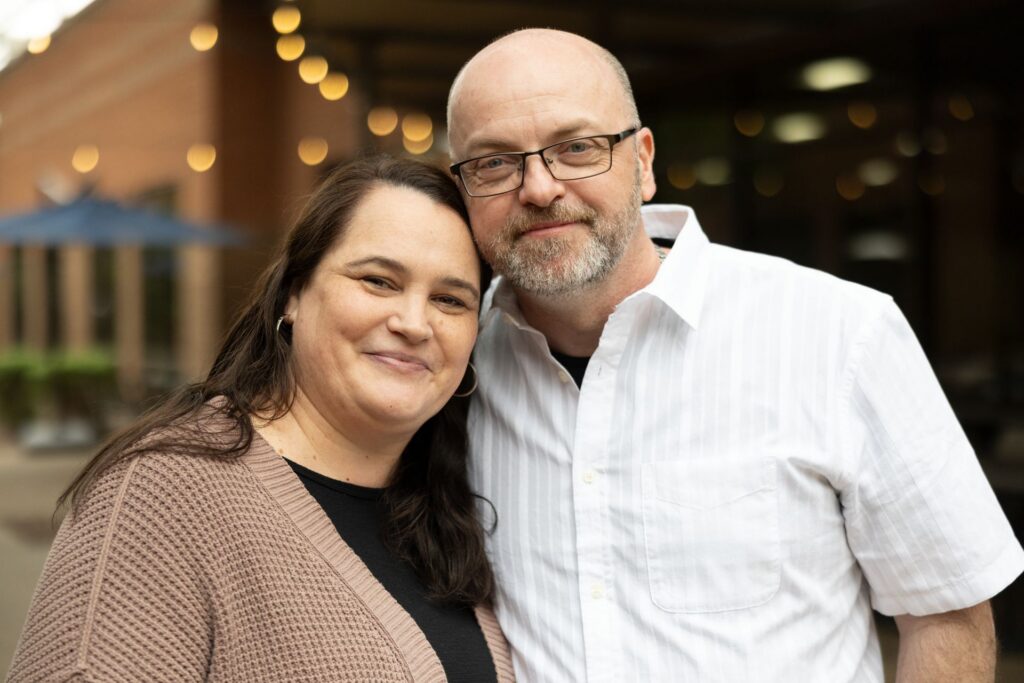
The first time Katy caught Brian Wuoti’s attention, the two 25-year-olds were both driving 45 minutes, from opposite directions, to take part in the same young adults Bible study. Katy walked in, and Brian remembers doing a bit of a double take. “Wow — who’s this?” he thought.
“The moment registered in my mind,” he says, smiling.
Weeks later, Katy came in late — and made an even stronger impression. The face that had turned Brian’s head was covered with scrapes and bruises. Out hiking on Mount Monadnock that afternoon, she’d taken a spill face-first on the rocks. Climbing back down, she patched herself up as best she could and hurried over to the Bible study.
Brian found himself more taken by the bandaged face than he had been by the pretty one.
“This time,” he says, “I saw what I identified — correctly — as godly character. So many young women would’ve said, ‘If my face is this messed up, I’m not going out in public.’ I thought, ‘Wow, there’s something unique about this woman’ … and I could see falling in love with her.”
Out of a face plant, the interest grew — though a little slower, on Katy’s side of the garden.
The two began hiking and kayaking together, strictly as friends. “Just hanging out,” Katy remembers. But while she liked Brian well enough — “His integrity and character were just so evident” — nothing definitively clicked until she heard him preach his first sermon, a kind of try-out given by his congregation to a young layman feeling a strong call to ministry.
Listening to that fledgling homily, she remembers thinking, “I love this man.”
“He has such an incredible ability to make everything understandable when it comes to the Word of God,” Katy says. “It’s an application that’s really rare in a preacher … this gift that God has given him.”
The romance was confirmed (Brian eventually proposed up on Mount Monadnock), but full-time ministry was still a ways away. In the meantime, Brian became a high school math teacher. Fifteen years later, he’s the lead pastor in his church — and still teaching high school math.
The combination has come in pretty handy, actually, especially in recent years, as a state hostile to their faith has tried to force them to divide their biblical beliefs from their parenting goals … for reasons that don’t add up.
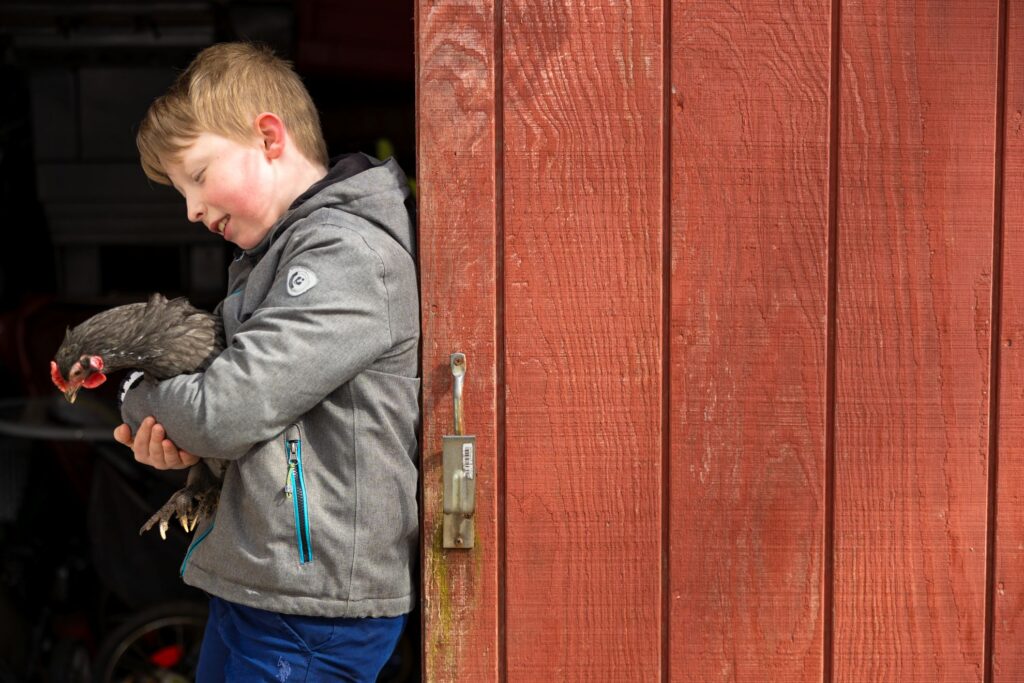
The Wuotis were married and expecting their first child when they moved to Wilmington, Vermont, one late summer’s day in 2011; Brian had accepted a teaching position there. The day after they unpacked, Hurricane Irene fairly drowned the town. Amid the destruction, the Wuotis saw their new community come together in remarkable ways, and forged bonds with neighbors they might never have, otherwise.
“We saw that this town was really special,” Katy says, “and we’ve loved it ever since.”
They found it a near-perfect place to raise children, reminiscent of the idyllic life each of them had treasured, growing up on small farms in rural Massachusetts — Brian, the middle of three boys in Westminster; Katy, the fourth of five girls in Concord.
Each was blessed with fields to roam, animals to care for, siblings close enough in age to share adventures, and loving parents who made sacrifices of work, time, and income to be around when their children came home from school.
“That impacted me greatly,” Katy says. “I had so many friends who came home every day to an empty house. They’d be almost like adopted children — my parents were always collecting extras. And when they came over, they’d feel that family presence that was so … palpable.”
In fact, if Katy had any frustrations as a child, they came from being a girl.
“We don’t force our beliefs on our children … but we want to live our beliefs as genuinely as we can.”
Katy Wuoti
“I was quite the tomboy,” she says. “I went through that phase of gender dysphoria. I loved boy things — they were so much cooler than girl things.” Her parents let her cut her hair very short, “then I was mistaken everywhere we went for a boy.” But that was as far as her folks let it go. “My parents never let anyone call me a boy. ‘Nope,’ they’d say, ‘she’s a girl.’
“It was calm and reaffirming,” she remembers. “I didn’t ever take those comments as hateful. Nobody was pitting me against my parents, as happens so much today, where random adults will say, ‘Your parents hate you if they don’t affirm you.’ I never had those voices in my ears.
“I knew how much my parents loved me, and that bond that I had — that truth being spoken over me — helped me come out of it, eventually.” Her experience might have made her a valuable resource, later on, to Vermont’s foster family program. Unfortunately, the state had its own agenda when it came to gender dysphoria.
Brian, too, saw the increasing sexual confusion among youth, through his experiences in high school classrooms. Across 20 years, “I’ve had students of different faiths, different orientations,” he says. “Even though I wouldn’t encourage a kid into or toward homosexuality, I never allowed or tolerated kids bullying one another over those things.
“I’ve been able to build really positive connections with my students. Not every kid likes me — I’m still a math teacher. But I’ve been able to connect with students who’ve been transgender in their identity, or homosexual or lesbian, and just be a friendly, safe teacher who holds kids to appropriately high standards and offers them support. Who believes in them and wants to equip them for their future.
“Sometimes, through the years, kids would find out, ‘Oh, he’s a pastor.’ But they’d still feel cared for by me, so that never was an issue.” Nor did fellow teachers who identified as LGBT express any qualms about his other profession, Brian says — even as that other profession was becoming a larger part of the Wuotis’ lives.
The two helped plant a church when they settled in Wilmington — something of a pioneer undertaking, in a small town in the least-churched state in America. When the church Brian was leading joined with another nearby church, three years ago, both congregations asked him to become their lead pastor.
“It’s such a privilege,” Brian says. “I grew up in a church of, like, 300, back when everything seemed to idealize mega-congregations.” But, coming home from a family vacation one day, a teenage Brian’s eyes fell on a small church their car was passing. “Wow,” he thought, “what if God lets me be shepherd of a little flock?
“It was the complete opposite of what I was experiencing, but now, I’m so grateful. We have such amazing people to grow with and love God together.”
“Random adults will say, ‘Your parents hate you if they don’t affirm you.’ I never had those voices in my ears.”
Katy Wuoti
For all its beautiful mountains and trees, Vermont is something of a spiritual desert, relative to the rest of the U.S. Sixty-four percent of the population says neither personal faith nor the Bible is important — in both cases, that number is more than 20% higher than the rest of the country. Only 8% identify as evangelical Christians.
The state also has the nation’s lowest marriage rate, lowest fertility rate, and one of the highest rates of opioid use in the Northeast … the latter contributing to an overflow of children up for foster care and adoption. A few years ago, those numbers began to nag at Katy’s conscience.
“Most arrests that are on the news, there are families behind that,” she says. “Unseen kids who bear this cost of their parents’ decisions. That was so heartbreaking to me.”
She began looking into foster care after her second child was born. “‘We could do this,’ I thought.” Brian, she sensed, might not be so eager, but “the Lord teaches me how to pray about things, instead of nag. If it’s His will, He’s going to let Brian know.”
He let him know. “Even the call to pastoring wasn’t as clear as the call to fostering and adopting,” Brian says. One Sunday, during a sermon he wasn’t preaching, the speaker mentioned how the Bible describes believers as being “adopted” into the kingdom of God.
“That one word,” Brian says. “I felt a weightiness — a heaviness — of just, ‘You need to adopt.’ I said, ‘No.’ We were good: a full family with two kids. Done. But the weight didn’t stop. I felt compelled by God: ‘No, you need to adopt.’ ” Eventually … “the best I could describe it is like crying ‘uncle.’ I said, ‘OK.’”
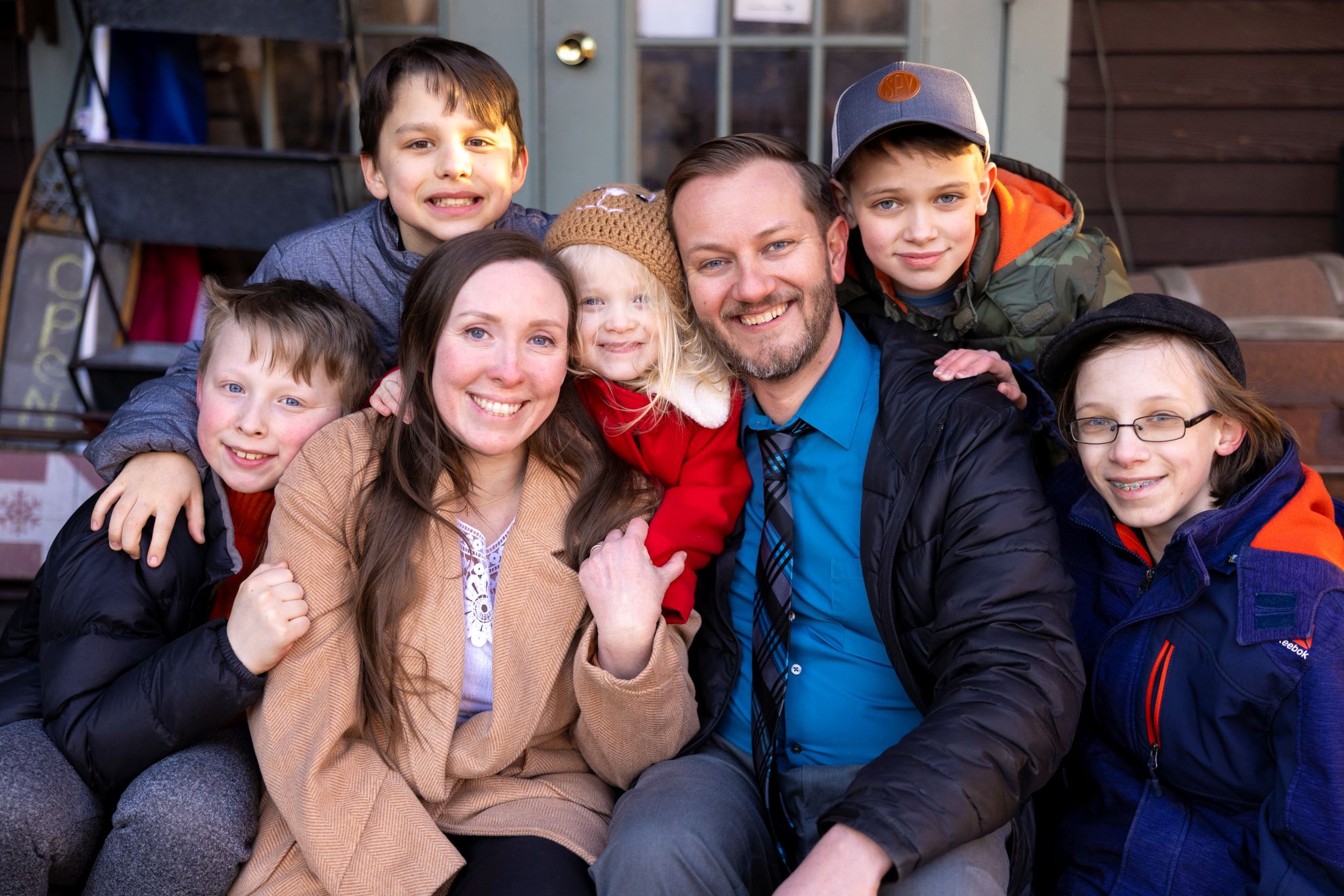
The Wuotis hadn’t even finished foster parenting classes when the state placed a newborn in their arms. Another boy, to join the two they already had. Soon after, the adopted boy’s half-brother came into the family. Then, years later, Katy gave birth to a surprise little girl to round out their brood.
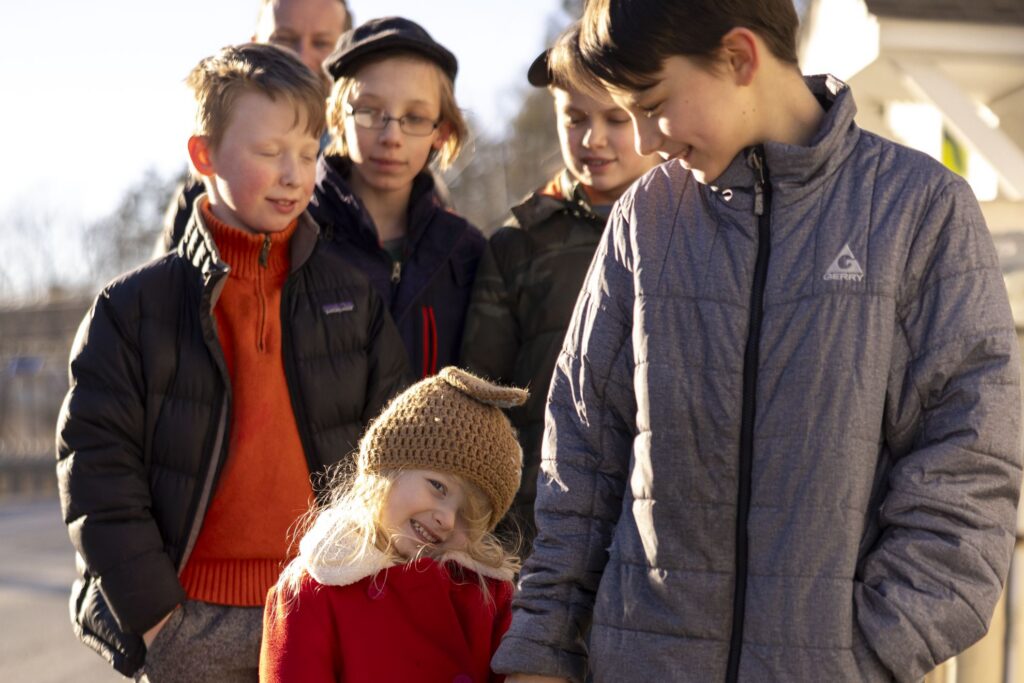
“They have a really good bond,” Katy says of her children. “Most people don’t even realize that two of them have been adopted — they all kind of resemble each other.”
Everett, 14, is the logical one, who nurtures a strong sense of justice, his parents say. Griffin, now 13, was 6 when he told his parents, “I decided to trust in Jesus last night.” A week or two later, he added, “God told me He wants me to be a missionary.” Everett told his parents he’d seen a real change in his brother. “This is real,” he said. “I want to do this, too.”
Rook, 11, “tends to be the leader.” One day, he came in from the backyard to announce, “I learned to ride a bike.” All by himself. By day’s end, all three of his brothers had followed suit.
Rowan, 10, is “the super-fast talker — and thinker.” At 4, he drew a card of himself shielding someone smaller and wrote that, when he was older, he wanted to “protect people.” And Sylvia, 4, holds her own with her brothers. “She lights up a room,” her parents say, “and she knows it.”
The family loves their backyard, nearby woods and lakes, and especially walking around their little town together, competing for “How many neighbors in the village can we say ‘Hi’ to?” Katy says. “They’re just really friendly, outgoing kids.”
“There’s something really special about this little pack of boys, how tight-knit they are,” Brian says. “They’ve grown up together, knowing each other as brothers all along. We used to have this song, ‘The Wise Wuoti Boys,’ and they’d sing it, walking down the street, and at the lake.”
Inspired by their good experiences, the Wuotis took part in foster awareness dinners hosted by several nearby churches to introduce local families to Department of Children and Families (DCF) workers. To the DCF’s delight, many later signed up for foster parenting themselves.
“Those workers loved those dinners,” Katy says. Many were fond of the Wuotis, as well.
“I could not hand-pick a better foster family than [the Wuotis]!” one DCF employee wrote in a report. “They always have the child’s best interest at heart.”
Unfortunately, not all Vermont officials seemed to share that priority.
“We can’t go around our house teaching our biological kids one thing and having to say completely opposite things things to a foster child, just because the state makes us.”
Katy Wuoti
When it came time to renew their foster license, four years ago, the Wuotis filled out a new DCF questionnaire, clarifying their parenting attitudes and intentions. They were astonished when a letter came back saying their license had been revoked.
“One question had asked, ‘How would you feel about accepting an LGBT child?’ ” says Johannes Widmalm-Delphonse, senior counsel with ADF’s Center for Conscience Initiatives, who’d soon be representing the Wuotis. “They were just honest and said, ‘We would love and accept any child, but we want to be clear about what our religious beliefs are.’”
Not good enough, the licenser told them. While DCF was confident the family would welcome any child placed in their care, state policy required that they affirm and encourage any child wanting to identify as a gender different from their sex. “While the Wuotis’ faith might preclude their agreeing with that choice,” their attorney says, “the state’s view, essentially, was ‘if you can’t lie to a child about what their identity is, then you can’t qualify.’”
The decision was based on Policy 76, a new requirement setting Vermont’s guidelines for unconditionally going along with a child’s claimed gender identity. DCF personnel — and by extension, foster parents — were required to use chosen pronouns, take children to pride parades, provide access to physical binders, and in general, do anything to support their LGBT identities.
“Vermont is one of several states where we’ve seen a lot of religious hostility toward foster parents because of their religious faith,” Widmalm-Delphonse says, “penalizing them just because they have different beliefs when it comes to sexual orientation and gender identity topics.”
Ironies abound, he points out. Infants up for foster care are too young to fathom sexual matters. What’s more, Muslim parents are not expected to promote, say, a Hindu child’s faith, nor are vegan families required to provide meat at their meals. Only traditional religious beliefs about sexual ethics seem singled out for exclusion.
“It’s only on this one topic where the state insists, ‘No, this is too far — you’re not allowed to practice your religion in your own home,’” Widmalm-Delphonse says, “when really it’s just about these families wanting to stay true to their conscience, the same as any other family does.”
Worst of all, he says, the policy excludes many of the parents who, historically, have been most willing to be foster parents, especially for children with serious disabilities and special needs.
“The state’s policy,” he says, “harms children by putting politics and ideology above children’s needs for love and permanency. It harms the entire state by violating the constitutional rights of foster parents, excluding them because of their religious beliefs and blocking their exercise of their right to free speech. And it’s pernicious, because a benefit that’s otherwise generally available — anyone can apply to become foster parents — is now conditioned on someone giving up their First Amendment rights.”
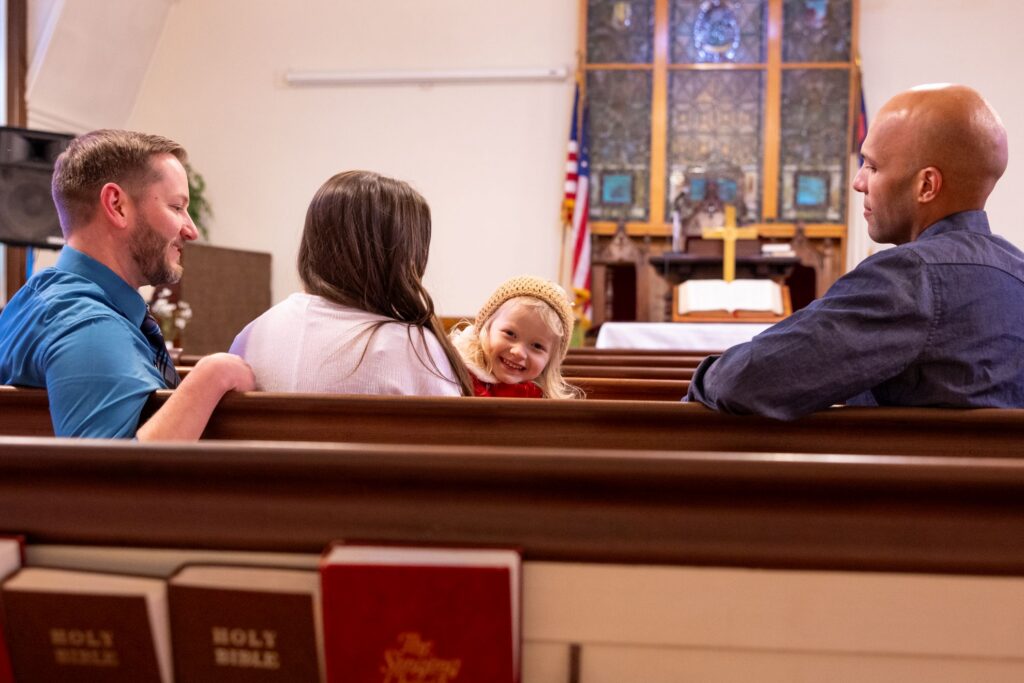
“The state actually asked us to back away,” Katy says. “‘Just withdraw your application, and we’ll leave it at that.’ And I thought, ‘No. We’re the same family we’ve always been. The same family we were when you let us adopt two kids.’”
“We’re not hateful toward anyone,” she later told DCF officials, reminding them of her own childhood struggle with gender dysphoria. “We love people. We want to follow God and the morality He’s given us. We can’t go around our house teaching our biological kids one thing and having to say completely opposite things to a foster child, just because the state makes us. We don’t force our beliefs on our children … but we want to live our beliefs as genuinely as we can.”
To secure that right — for themselves and others — the Wuotis decided to challenge the state’s enforcement of Policy 76.
“Adoption has been a key factor of our family,” Brian says. “We want to preserve that possibility for other families. This is a fight worth fighting. Even if our family is full at five [children], we still think this is worth doing. We want Christians to be able to love and adopt kids in Vermont.”
The Wuotis knew they were taking some enormous risks. If they lost in court, they might never again receive their license and no longer be able to accept foster children. And, while less likely, Brian says, “It’s not a big logical leap for DCF — who separates families all the time for very difficult and legitimate reasons — to say if we’re not safe for foster kids … well, at what point might they have taken all our kids?”
The possibilities were nightmarish, but — win or lose — Brian says they were determined to follow the biblical example of Shadrach, Meshach, and Abednego. Our God can deliver us, but even if He doesn’t … we will not bow.
“It’s only on this one topic where the state insists, ‘No, this is too far — you’re not allowed to practice your religion in your own home.’”
Johannes Widmalm-Delphonse, ADF Senior Counsel
Alliance Defending Freedom attorneys representing the Wuotis and two other foster parents, Bryan and Becca Gantt, filed a lawsuit in federal district court, contesting the constitutionality of Policy 76 and requesting a preliminary injunction that would allow both couples to continue foster parenting while the case proceeded. The injunction was denied, and ADF appealed to the U. S. Court of Appeals for the 2nd Circuit.
But before that appeal could be argued, “Vermont reached out to say they were going to rescind their policy,” Widmalm-Delphonse says. “We ended up mutually agreeing to withdraw the appeal, send the case back down to the lower court—and to enter a permanent injunction against Vermont.”
Widmalm-Delphonse says several things may have contributed in part to Vermont’s decision. For one, an amicus brief filed in support of the Wuotis and Gantts by a 22-state coalition, attesting to the fact that many states don’t exclude religious families from foster parenting just because of their beliefs. “That just goes to show that this policy is as unnecessary as it is unconstitutional.”
Secondly, while the Wuotis’ case was one of the first of its kind in the nation, a similar case was filed in Oregon shortly before theirs by another ADF client, Jessica Bates. Her case worked its way through the courts a little earlier, was decided in her favor, and the precedent, Widmalm-Delphonse suspects, nudged Vermont’s decision to settle.
In the end, Vermont officials agreed that the state could not exclude the Wuotis or the Gantts from fostering or adopting because of their religious beliefs. Both families have the option to reapply for their licenses.
Vermont’s new policy is a roadmap for other states that have discriminatory policies, Widmalm-Delphonse says, “to understand how they can safeguard children—even amid differences of opinion as to how—while still respecting religious liberty. Their new policy shows that you don’t have to agree with the Wuotis’ beliefs to recognize the value of a ‘big tent’ strategy that welcomes as many religious foster parents as possible into the system.”
“Adoption has been a key factor of our family, and we want to preserve that possibility for other families. This is a fight worth fighting.”
Brian Wuoti
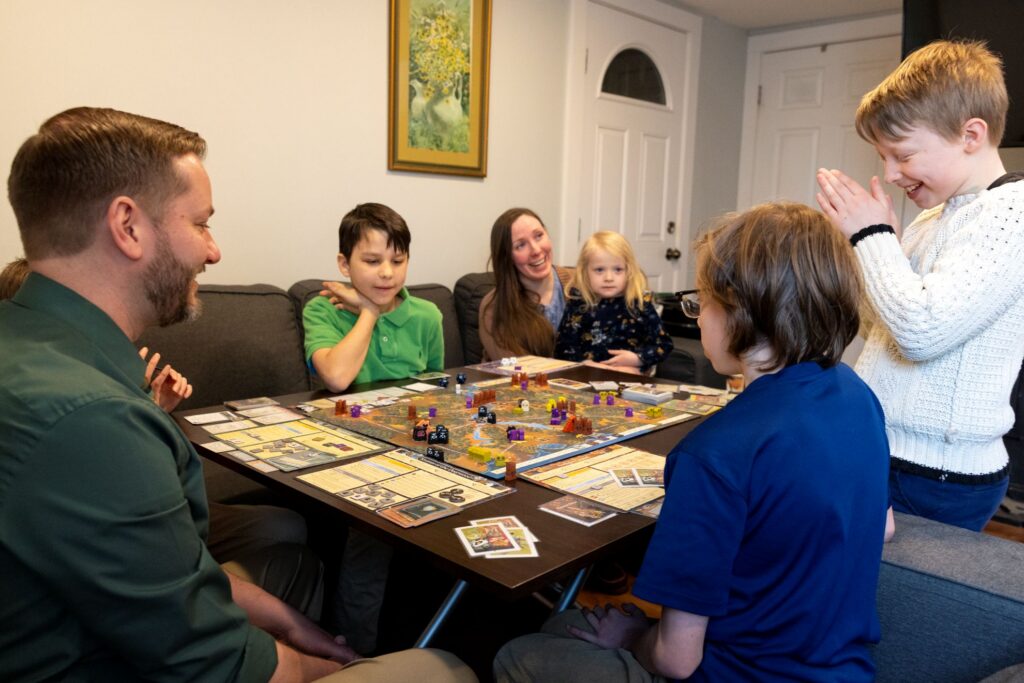
The Wuotis say winning a major lawsuit has changed some things. They’ve found unexpected support from some teachers at Brian’s work. They have an even greater appreciation for the privilege of raising such special children. But Katy says she’s lost something, too.
“I have no fear of the opinion of man anymore.” Even before the lawsuit, she says, she waited every day for Brian to come home jobless — fired for something he’d said in the pulpit, perhaps, that had been misconstrued online, or by a student in his class. “I’ve been afraid of people’s opinions, but God has cleared me of that. I care about His opinion, now — and that’s it. For me, that’s a beautiful thing.”
“Vermont is a beautiful place,” Brian says, “and we’re thankful we get to raise our kids here. But it’s also kind of like being missionaries, in a community where there aren’t many believers. Our children’s faith will be tested and tried here, as ours has been, but that’s a good thing for them to experience.”
“Our children’s faith will be tested and tried here, as ours has been, but that’s a good thing for them to experience.”
Brian Wuoti
Little Sylvia came in the other day, frustrated at not being allowed to do something she wanted to do. “Mom,” she asked Katy, “do you get to do whatever you want?”
“No, I don’t,” Katy told her. “Because what I want is to do what God wants me to do. So, I think about what He wants before I think about what I want.”
Sylvia mulled the idea for a moment.
“Well, I want to do that, too.”
She’s probably too young to understand all that a decision like that has meant for Mom and Dad, and her brothers. But they’re all persuaded that she meant it, with all her 4-year-old heart.
Some things just run in the family.
Bryan and Becca Gantt
Bryan Gantt knew, when he walked in, that something was up. His wife and three daughters were sitting around the kitchen table, all quietly looking at him with the same odd expression.
“What’s going on?” he asked.
“What do you think about fostering,” his wife, Becca, asked, “with the idea of adopting?”
Bryan — busy raising the couple’s own four children — had never considered the possibility. Now, he did.
“Yes,” he said. “Let’s do it.”
The decision wasn’t hard, he says, because “a) we’d always wanted more kids, and b) there was such a need in our community for foster parents.” But nearly 10 years and three adoptions later, Becca — who “growing up, only wanted to be a mother” — has accumulated some perspective on the issue.
“It’s insane,” she says. “Exhausting. Not what I was expecting.” She smiles. “And a dream come true. God’s hand, with these kids coming into our family, is amazing. Yes, I’m tired. But it’s the most rewarding thing ever.”
“If we don’t stand up for what we believe in, who is going to?”
Bryan Gantt
Becca was raised on Cape Cod; she and Bryan, a native of their Brattleboro, Vermont, community, met at a youth camp when she was 16. He was a pastor’s son who eventually joined the staff of his dad’s downtown church and became its lead pastor 10 years ago. The church is known for its community service, including support for a nearby pregnancy center run by ADF client Jean Marie Davis.
Though only 30 minutes away, Brattleboro is a far cry from Wilmington, the Wuotis’ charming tourist town. From his office, Bryan can see the addicts and gangs walking the city streets. One unexpected blessing of participating in the state’s foster program, he says, has been the opportunities it’s afforded him “to connect with more people out there in the world who are not part of the church, and minister to them in different ways.
“We just never would’ve imagined that God could do that through this process,” he says.
Among those he’s been able to minister to are people he’s worked with at the Department of Children and Families (DCF), many of whom have singled out the Gantts for their compassionate adoptions. The couple has taken in children not only in need of parents, but also struggling with autism, ADHD, global delay diagnosis, and other problems.
But those social workers had little say when an email arrived announcing the DCF’s implementation of Policy 76.
“God’s hand, with these kids coming into our family, is amazing. Yes, I’m tired. But it’s the most rewarding thing ever.”
Becca Gantt
It said something like, ‘Fostering licensure depends on being willing to affirm any sexual orientation or gender identity,’” Bryan remembers. “That’s not just ‘being quiet,’” he told Becca. “They’re saying we have to affirm.” Knowing they couldn’t do that and honor their faith, he thought, “We’re done.”
To the Gantts, the policy made no sense: any infant they took in would either be reunited with its parents or adopted long before sexual issues became relevant. “But the state wants to know what your conduct is going to be after you adopt,” a DCF worker explained. “They don’t want to give you a child if they know, at some point, you’re going to have a different viewpoint than they do.”
Joining a lawsuit took Becca a long way out of her comfort zone. But, Bryan said, “If we don’t stand up for what we believe in, who is going to?” In 2024, they joined the Wuotis to bring a successful legal action against the state.
“God has brought us through this whole thing,” says Becca, who, like Bryan, has been touched by the response of many would-be foster parents. “We’ve had so many contact us,” he says, “to say, ‘Thank you, because I can foster now.’ It’s a joyful, but very humbling, experience.”

Chris Potts
Sr. Creative Writer & Editor
Related Articles