

Key Takeaways:
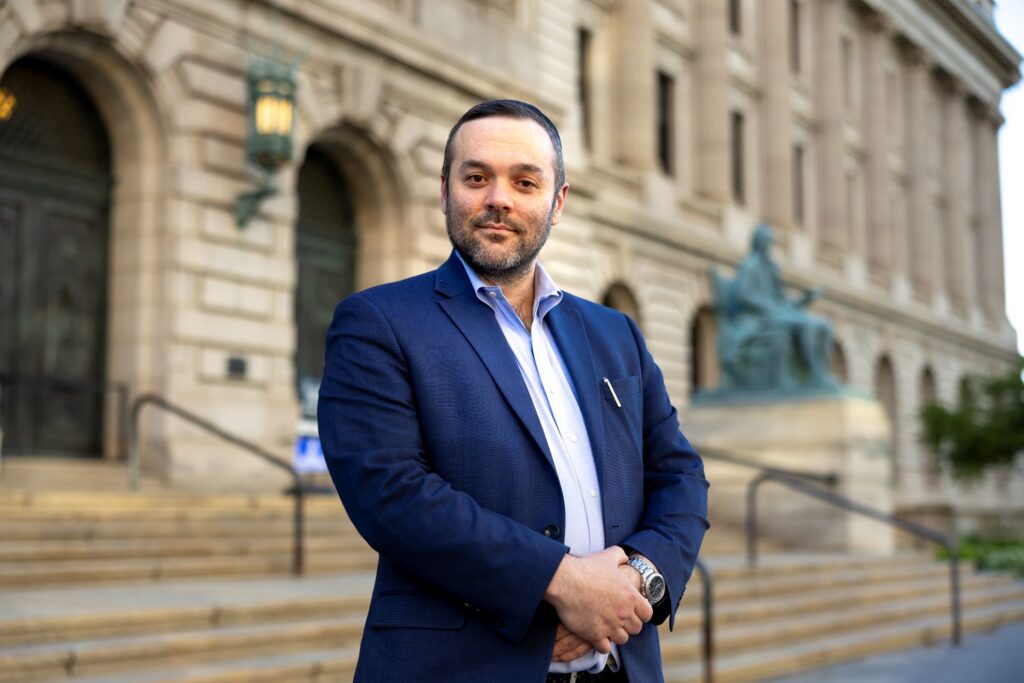
- Three students—Cameron Johnson, Luke Thomas, and Trace Stevens— were (or will be) denied tuition grants for their college studies because their majors were deemed too religious.
- Religious students aren’t second-class citizens. No one should be denied generally available public funds simply because they want to major in a particular religious program.
- ADF and the National Legal Foundation are now asking the Supreme Court to settle this matter and affirm the religious freedoms of these students.
Since the founding of the United States, religious education has been a part of our country’s fabric. And to some people’s surprise, the Founding Fathers were not afraid of using public funding to support religious schools.
But as time has gone on, more and more government officials have wrongly interpreted the First Amendment. As three students in Virginia are now experiencing, discriminating against religious students does nothing but harm religious Americans.
Pursuing religious callings
Alliance Defending Freedom is representing three clients in this case:
Cameron Johnson

Cameron Johnson graduated from Wilson Memorial High School in Virginia in 2025. He played on the varsity baseball team and excelled academically during his time in high school. But most importantly, he prioritizes his Christian faith.
Cameron is actively involved in his local church, and he participated in his county’s Fellowship of Christian Athletes program. Cameron wants to continue growing in his faith, which is partly why he started attending Liberty University in the fall of 2025, majoring in Pastoral Leadership. But Cameron also has an interest in secular careers, including real estate or leading a community-building nonprofit. So he plans to minor in business.
To help pay for his education, he applied for a Tuition Assistance Grant from the State Council of Higher Education for Virginia.
Luke Thomas
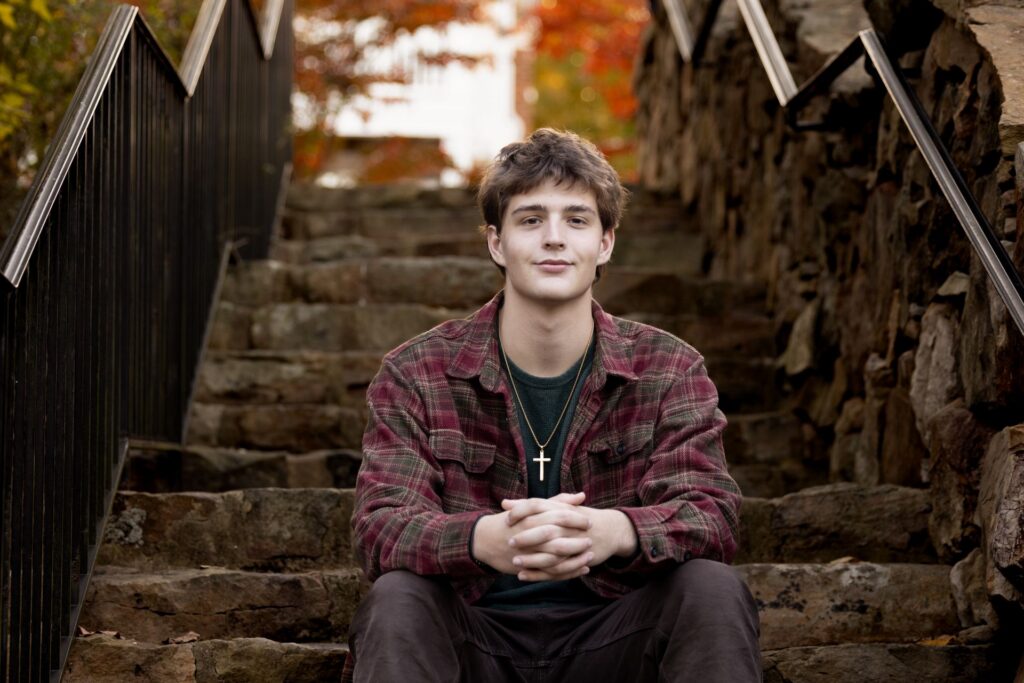
Similarly, Luke Thomas graduated from Cosby High School in Midlothian, Virginia, in 2025. He was a member of the men’s choir, chamber choir, and spotlight show choir. Like Cameron, he is deeply committed to his Christian faith.
Luke originally planned to enter a trade or start a small business, but later decided to pursue music. He believes that God gifted him musical talent to minister to people but doesn’t know whether that means becoming a worship pastor or pursuing a commercial music career as a singer/songwriter. Either way, he plans to start his own business someday.
Luke also began attending Liberty in fall 2025, and he plans to major in Music and Worship because it is a program where he can follow both of his passions. He, too, wants to get a Tuition Assistance Grant while pursuing his desired program. But the Music and Worship major is also ineligible for VTAG.
Trace Stevens
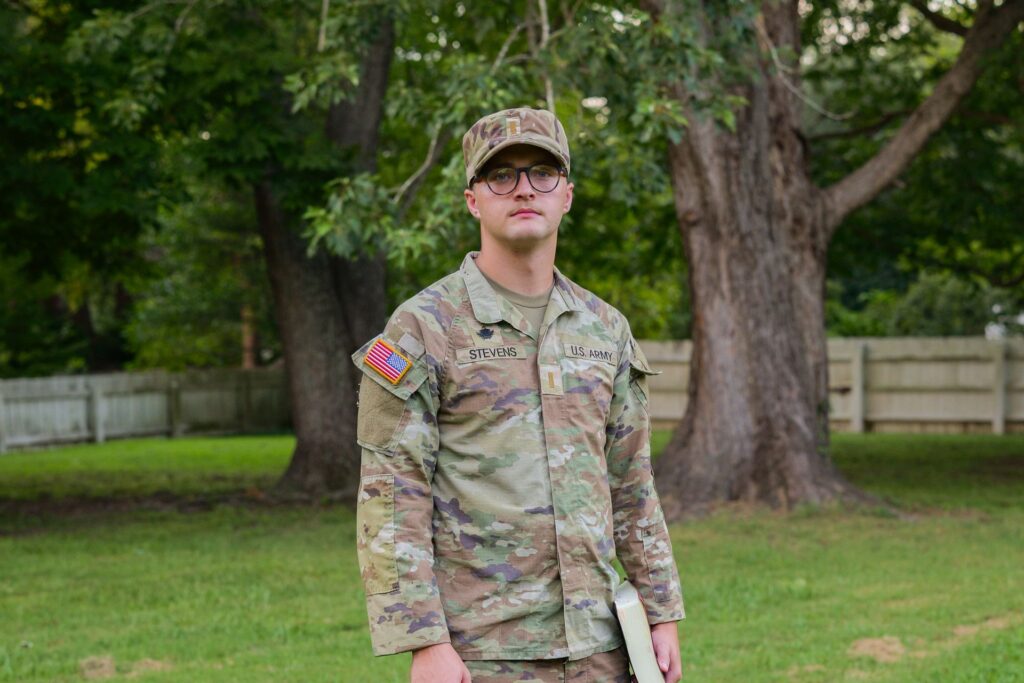
Finally, Trace Stevens is a 2nd Lieutenant in the Virginia Army National Guard. Like Cameron and Luke, he is a Christian who wants to follow God’s command to share the Gospel of Jesus Christ.
In 2023, Trace graduated from Bruton High School in Williamsburg, Virginia. While he initially planned to enlist in the active-duty Air Force after graduation, he felt God calling him to pursue a college education to help prepare him for a future career, potentially as a chaplain.
Trace met a Virginia Army National Guard recruiter at his high school, who told him that the Virginia National Guard Grant Program could assist him with paying for college if he joined the National Guard. He decided to join, and in the fall of 2024, he enrolled at Liberty to pursue a Bachelor of Science in Religion. He graduated in 2025 and is now in Liberty’s Master of Divinity program.
Unfortunately, state officials have determined that Cameron, Luke, and Trace cannot receive the grants they are seeking because government officials have determined that their programs constitute religious training or theological education and are thus excluded.
Virginia policies discriminate against religious students
Two Virginia policies are at issue here:
Virginia Tuition Assistance Grant (VTAG)
The Virginia Tuition Assistance Grant Program (VTAG) provides non-need-based grants to Virginia residents who attend private, non-profit colleges or universities. The State Council determines the amount of the VTAG award annually based on the number of eligible students and available funds. For the 2025-26 school year, the award amount for an in-person undergraduate student is $5,250.
But the program excludes educational tracks that “provid[e] religious training or theological education.” Even though Liberty University students are eligible for the grant program, Cameron and Luke’s chosen majors are classified as such and categorically excluded from it.
Cameron applied for a VTAG award and was denied.
Luke is currently a Music Vocal major (which is eligible for a VTAG Grant), but still plans to major in Music and Worship, which is not eligible. Because of the State Council’s religious exclusion, Luke will also be denied a Tuition Assistance Grant once he declares his desired major.
Despite excluding Cameron’s and Luke’s majors, the state council continues to award VTAG for various other religious programs. For example, students can major in “Religious Studies” programs or music programs that prepare students for vocational music ministry elsewhere and still get VTAG. There’s no functional difference between the programs, yet the state council awards VTAG for some but not for Cameron’s and Luke’s.
Virginia National Guard State Tuition Assistance Program (VANGSTAP)
For Trace, the Virginia Department of Military Affairs oversees the Tuition Assistance Grant Program for members of the Virginia National Guard (VANGSTAP). This program is available to any Virginia National Guard member who has at least two years of service remaining, has completed basic training, is satisfactorily performing his or her duty in the National Guard, and is enrolled at an eligible institution.
The program defines an eligible institution as “any public institution of higher education or accredited nonprofit private institution of higher education whose primary purpose is to provide collegiate or graduate education and not to provide religious training or theological education.”
The Department of Military Affairs determined that Liberty is an eligible institution. But Virginia officials unilaterally determined that Trace’s undergraduate religion major was ineligible for the program because of its religious nature and denied him the grant. Similarly, his master’s program is ineligible because it is also religious.
Religious Americans are not second-class citizens
By excluding Cameron, Luke, and Trace from grants that they are otherwise qualified for simply because they have chosen certain religious majors, Virginia officials violate the First Amendment. The U.S. Supreme Court has repeatedly held that religious Americans cannot be treated worse than other Americans and that the government can’t discriminate among religions.
These three students should not have to abandon their chosen religious studies—something that they believe God has called them to pursue—simply to be treated equally to other students.
In May 2025, Alliance Defending Freedom filed a lawsuit challenging the unconstitutional policies of the State Council of Higher Education for Virginia and the Virginia Department of Military Affairs that deny tuition grants for programs that state officials deem too religious.
However, in March 2026, a federal district court dismissed the students’ claims related to VTAG. Thus, Cameron and Luke were dismissed as plaintiffs while Trace is allowed to proceed with his claims. The court also denied Cameron’s, Luke’s, and Trace’s request for an injunction. ADF has filed an emergency request for an injunction pending the appeal with the U.S. Court of Appeals for the 4th Circuit to halt this religious discrimination.
In August 2026, since the 4th Circuit has yet to stop Virginia’s religious discrimination, ADF attorneys and the National Legal Foundation asked the U.S. Supreme Court to take up the case. Virginia’s policies wrongly treat religious students as second-class citizens and the petition asks the justices to revisit Locke v. Davey, a 2004 decision that lower courts have used to justify the state’s exclusion of religious majors from otherwise available grants and other discrimination against religion.
“The government can’t deny publicly available benefits because a student’s major is too religious. That’s religious discrimination. It’s wrong, and it’s unconstitutional,” said ADF Chief Legal Counsel Jim Campbell.
The bottom line
Religious freedom is a hallmark of American society, and students shouldn’t have to fear that living out their beliefs will cause them to be treated as second-class.
Johnson v. Fleming
- May 2025: ADF attorneys filed a lawsuit challenging Virginia policies that deny tuition grants to students in programs deemed as “religious training or theological education.”
- March 2026: A federal district court dismissed the students’ claims related to VTAG, allowed certain claims related to VANGSTAP to proceed, and denied an injunction request as to both programs
- April 2026: ADF attorneys appealed the decision and also filed an emergency motion with the U.S. Court of Appeals for the 4th Circuit to halt this religious discrimination. That motion was denied.
- August 2026: Since the 4th Circuit had yet to stop Virginia’s religious discrimination, ADF attorneys and the National Legal Foundation asked the U.S. Supreme Court to hear the case.
Related Articles