Vermont has a foster care problem—on multiple levels.
The Green Mountain State is overflowing with foster children in need of families. In fact, there are more foster children than there are families to take them in.
The need is so great that in the past, Vermont has even “boarded” children in places like police stations and hotels, and it continues to place children in facilities for lack of loving homes.
By the Vermont Department of Children and Families’ (DCF) own metrics, there are nearly 1,000 children in DCF care right now. The agency acknowledged that the figure is unusually high for a state of Vermont’s size.
To stress the need, Vermont DCF even sent out emails to foster families in 2023 and 2024 stating they have a “desperate need for Emergency Foster Homes” as well as saying they are in “a crisis beyond what we have seen before.”
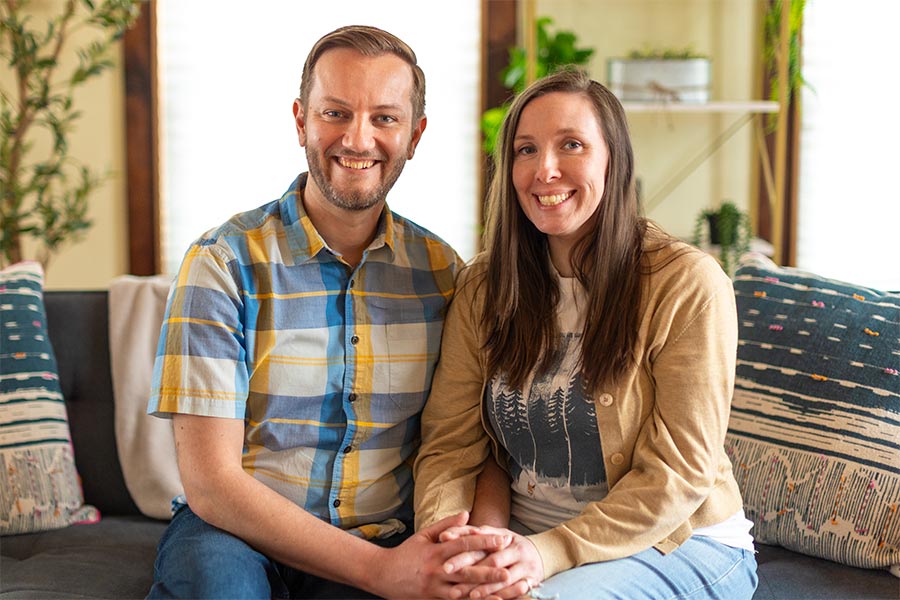
Driven to open their homes to children in need, the Wuoti and Gantt families nobly stepped up to assist those children and swiftly established a reputation as quality foster families.
Unfortunately for them (and Vermont’s foster children), the state abruptly decided that it would rather not have these families’ help because of their religious beliefs about gender and sexuality. In other words, Vermont was disqualifying people who have proven they can provide a loving home for children simply because they hold religious beliefs that the state disliked. Thankfully, after an Alliance Defending Freedom lawsuit, the state revised its policy to no longer discriminate against qualified foster parents because of their religious beliefs.
Who are Brian and Katy Wuoti?
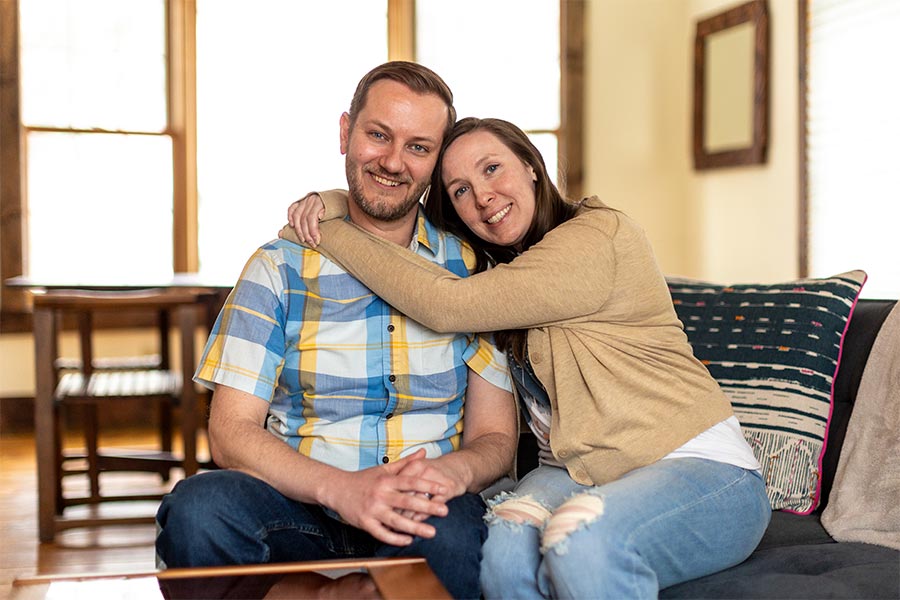
Pastor Brian Wuoti and his wife Katy first became licensed foster parents through the Vermont DCF in 2014. The two did such incredible work that one supervisor in the department even said she “probably could not hand pick a more wonderful foster family.”
For the Wuotis, it felt like a calling.
“I knew for a long time that God was calling me to adopt children, and I felt further convicted after hearing about Vermont’s dire need for families due to the opioid problem in our community and throughout the state,” Katy said.
Working with the DCF to help foster children also helped grow the Wuotis’ own family. The parents adopted two brothers in 2016 and 2019, bringing the total number of children they have to five.
For years, the Wuotis and the DCF worked well together. For that matter, not once in the years-long relationship did the DCF ever raise a single concern about the Wuotis’ ability to lovingly foster children.
That relationship, however, was flipped upside down when the Wuotis sought to renew their foster license in 2022.
When Brian and Katy went to get those renewals, they were asked to rate on a scale from 1 to 5 how “accepting and supportive” they would be of a child who identified as LGBT. The Wuotis explained that they would love and accept any child into their home but could not encourage any ideas or behaviors that went against their faith.
“It is particularly important for us to model our faith to our children,” Katy explains. “We aim to represent Christ’s love and pass on our religious beliefs to them.”
Despite their stellar track record, the Wuotis had their foster license revoked in April 2022 due to their beliefs.
Who are Bryan and Rebecca Gantt?

Pastor Bryan Gantt and his wife, Rebecca, decided to foster children in 2016 after their four biological children got older. Bryan and Rebecca have a heart for children exposed to opioids or alcohol while they were still in the womb. They have adopted three beautiful children. And that decision didn’t come lightly.
“After our fourth biological child was born, we had difficulty having more children,” Bryan explains. “As our children were growing up, we still desired to grow our family.
“One day, Rebecca asked if I would be open to fostering and possibly adopting a child. Rebecca was scared to grow to love a child and then have to say goodbye, but she felt called to care for children in need.
“I’m blessed to have a wife who wanted to take a step of faith despite her fears, and I immediately said ‘yes.’”
The Gantts were such an exemplary foster family that the DCF picked them to appear on the Today Show to discuss the 2022 baby formula shortage.
In 2023, the DCF reached out to the Gantts to see if they would be willing to foster yet another child, one who was about to be born to a woman with a drug addiction. Around that time, the Gantts also learned of these new DCF regulations, which would require all parents to be “holistically affirming and supporting” of gender ideology, even if parents hold different beliefs.
Like the Wuotis, the Gantts made it clear that they would unconditionally love and cherish any child that they’re fostering. But also like the Wuotis, the Gantts made clear that they could not forsake their sincerely held beliefs.
“Our faith provides the foundation for our lives,” Bryan said.
The DCF responded by refusing to let them foster the newborn child and subsequently revoked the family’s foster license in 2023.
Vermont tells the Wuotis and Gantts to go against their beliefs
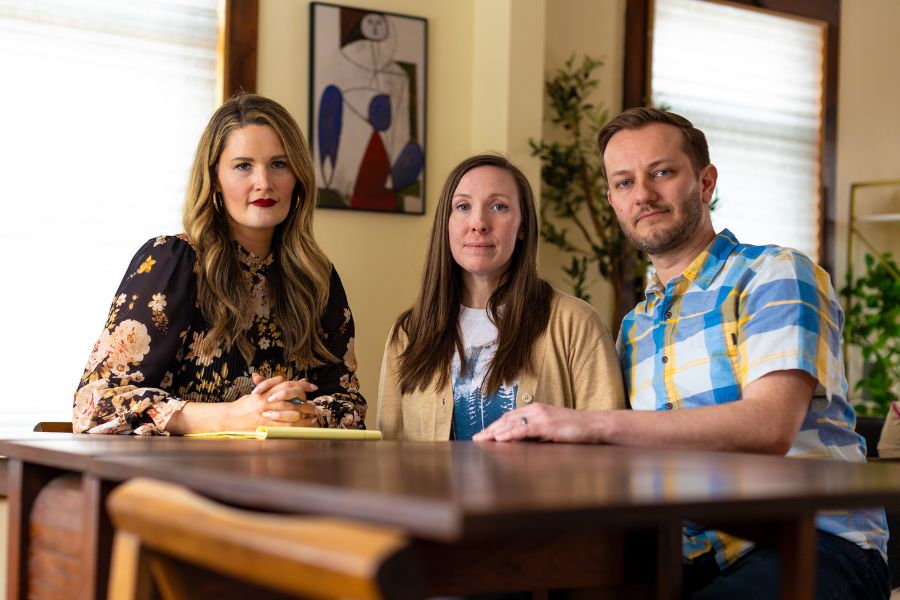
Although the Wuotis and Gantts have lovingly and successfully adopted five children between them, the Department had determined they were unfit to foster or adopt any child solely due to their religiously inspired and widely held belief that girls cannot become boys or vice versa. And Vermont applied this policy categorically—whether applicants wanted to adopt their grandchild, provide respite care for an infant for just a few hours, or foster a child who shares all of their religious views.
Vermont would have preferred children to have no home than to place them with families of faith with these views.
It required parents to parrot the State’s viewpoint, while restricting parents’ ability to politely share their common-sense beliefs with any foster child placed with them—categorically excluding their views from the foster-parent pool entirely.
Vermont’s regulations also targeted particular religious views for unequal treatment through an exemption-riddled system of individualized assessments.
Far from protecting children, such actions only harmed children who just need a loving home.
“Vermont’s foster-care system is in crisis: There aren’t enough families to care for vulnerable kids,” said ADF Senior Counsel Johannes Widmalm-Delphonse. “As numerous states have attested, religious families play a critical role in the foster-care system.
“Yet instead of inviting families from diverse backgrounds to help care for vulnerable kids, Vermont was shutting the door on them, putting its ideological agenda ahead of the needs of suffering kids.”
The Wuotis and Gantts simply want to help children in need—no more, no less
It would’ve been easy for the Wuoti and Gantt families to just walk away when Vermont revoked their licenses.
But both families understand how important it is to provide a caring home for foster children. They also know how much more important it is for the children themselves, who desperately need love, care, and guidance.
But Vermont’s actions also posed a constitutional issue. By denying people the chance to be foster and adoptive parents because of their religious beliefs and compelling them to speak the government’s preferred message about sexual orientation and gender identity, Vermont was violating the First Amendment.
In June 2024, Alliance Defending Freedom attorneys filed a lawsuit on behalf of the Wuotis and the Gantts.
Wuoti v. Winters
Learn more about the case.
Following an unfavorable ruling from a federal district court, the two families then appealed to the U.S. Court of Appeals for the 2nd Circuit. Praise God, in February 2026, Vermont officials finalized a new policy clarifying that foster families don’t need to abandon their religious beliefs or promote gender ideology to qualify as foster parents.
“This is an incredible victory for children in Vermont’s foster-care system,” said ADF Senior Counsel Johannes Widmalm-Delphonse. “No parent should be forced to lie to a vulnerable child about who they are, much less promote irreversible and life-altering procedures that don’t have any proven health benefits. And, unfortunately, other loving families have been unable to open their homes to children in need just because of their Christian worldview. We commend Vermont for respecting the religious diversity of foster parents and ending its exclusionary policy that deprived children of opportunities to find loving homes.”
This policy change is not only a victory for religious foster families like the Wuotis and Gantts, but more importantly, for Vermont’s children in foster care. Every child deserves a loving home. Children suffer when the government excludes people of faith from adoption and foster care. That is why ADF continues to stand with families like the Wuotis and Gantts. Will you stand with them, too?
Related Articles