
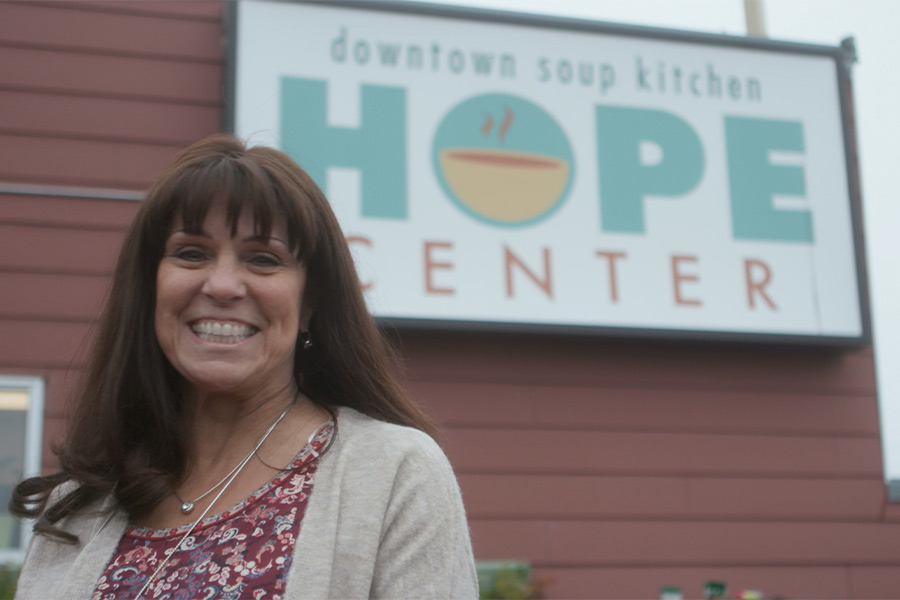
Alone in the cold, homeless women in Anchorage, Alaska, need somewhere to turn—somewhere to feel safe. Sherrie Laurie understands this very basic need.
Many of these women are victims of unspeakable trauma, including domestic violence, sexual assault, and even sex trafficking. But often, the only refuge from the cold is a co-ed shelter where these women feel unsafe spending the night due to the presence of men. Some of them would rather sleep in the woods in the frigid Alaskan temperatures than next to a male stranger.
As you might imagine, it can be easy for someone in this situation to feel like an outcast—like they don’t matter and are not loved. This is why Sherrie runs the Downtown Hope Center.
Written on the windows are the words, “You matter. You are loved.” So the Hope Center only allows women in its overnight quarters to ensure that these women feel safe.
But—rather persistently—Anchorage officials tried to force the Hope Center to house men alongside women. Thankfully, Sherrie was willing to push back, leading to victory against the city.
Who is Sherrie Laurie?
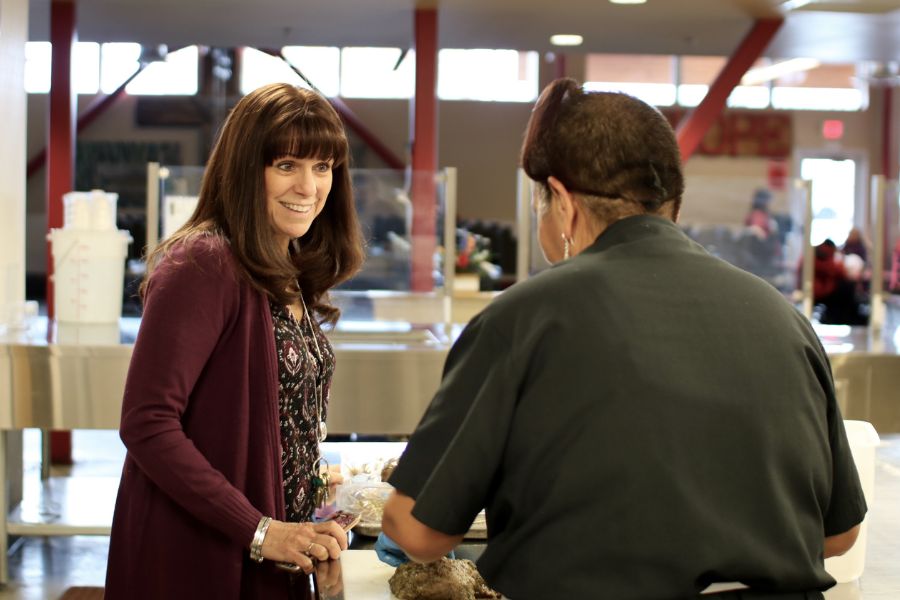
Sherrie was a FedEx pilot for two decades before she opted to retire, primarily to spend more time with her family. Along with those family commitments, however, Sherrie felt the unshakeable sense that God was calling her to something new.
“I thought I’d conquer some of my fears,” Sherrie said. And one such fear? The negatives she had previously associated with homeless individuals, due in part to a homeless uncle scaring her as a child.
From those memories, Sherrie admitted that she had developed a judgmental attitude towards drug addicts, alcoholics, and the ways of those living on the streets. Equipped with her faith, however, Sherrie decided to face those fears head-on by volunteering at the Downtown Soup Kitchen (which eventually became the Downtown Hope Center).
From the outset, Sherrie was beyond impressed with her fellow volunteers at the Soup Kitchen. Seeing another volunteer minister to people coming off the streets stirred something deep inside of her.
“She was so kind to them,” Sherrie recalled. “She’d just do anything. She’d wash their feet. I was scared, sometimes, to even hug these people. And I remember thinking, ‘I’m not a very compassionate person.’”
That humbling thought led to something amazing, though.
“I actually got down on the floor—it was a dirty floor—and said, ‘God, I need compassion. I can’t do this without compassion.’
“And that started a journey of learning what His compassion is. By the end of the day, I absolutely loved what I was doing and I was thanking God all the way home, like ‘Thank You that I can do this!’ I mean, it just did something inside of me.”
That “something” grew day by day, and eventually—and unexpectedly—she found herself taking on the job of executive director at what would soon become the Downtown Hope Center.
What Sherrie Laurie and the Downtown Hope Center provide for women in need
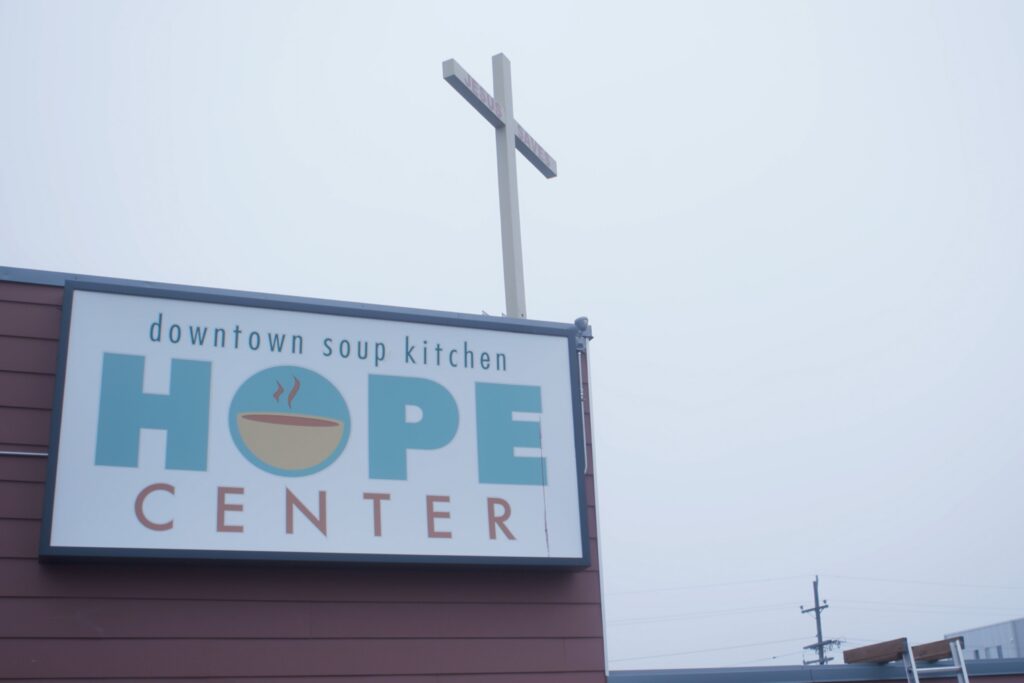
When Sherrie first volunteered at the Downtown Hope Center, the center provided a soup kitchen, laundry, and showers for women in need. It did not, however, provide shelter for these women.
Sherrie realized the importance of offering shelter when she and some friends sponsored an evangelistic event aimed at reaching women living on the streets. They put up a giant tent where women could spend a few nights. What Sherrie saw during that time was eye-opening.
“At night, I would stay in the tent, and the ladies would come in there, and they’d be so scared,” Sherrie recalls. “People would try to drag them out of the tent. I didn’t realize life was like that—that bad—at night. I was even a little scared.”
During one of those nights, an idea struck Sherrie to establish a shelter where women with nowhere else to go could find a safe place to sleep. Once she became the executive director, she was able to start working to make this idea a reality.
Sherrie and her team were soon approached by a nearby shelter about opening an overnight facility for women. They did so, and in the first year, they took in 30 women. That number soon grew to 50 women.
“When they come in here,” Sherrie says, “if you can imagine what it’s like, being beaten to the point of death, being told you’re nothing. Held captive. Drugged, till you have no idea even who you are.” Just as concerningly, Sherrie noted that in other local shelters, open to both men and women, sometimes “their predators are there.”
Sherrie had learned about some of the worst stories imaginable. Women would be taken from those man-and-woman shelters and murdered—or set on fire, raped, or forced to sell drugs or themselves.
“The women became victims so often. Alaska’s the number one state for domestic violence in the whole nation. Four times the national average, here.”
The Anchorage government targets Sherrie Laurie and the Downtown Hope Center
“Here, at night, we can give women temporary reprieve,” Sherrie explained about Downtown Hope Center’s overnight shelter. “Because of this sisterhood and sense of safety, some women have experienced friendship, laughter, and hope for the first time in decades. We offer around 50 beds with about three feet between each mattress. It may not seem like much, but for some it’s a lifeline.”
Sherrie also noted that so many women who show up at the shelter eventually want to become baptized and be closer to Jesus. That also aligned with the Downtown Hope Center’s broader mission. “Inspired by the love of Jesus,” the center’s mission is to “offer those in need support, shelter, sustenance, and skills to transform their lives.”
Yet despite all the obvious good that Downtown Hope Center provided to these women, Alaskan government officials went after Sherrie and the ministry not once—but twice.
The conflict began in January 2018, when a man who identified as a woman sought access to the Hope Center’s women’s shelter. He was injured and intoxicated, so Sherrie sent him to a local hospital to receive proper medical care. She even covered the cost of a taxi.
Despite these facts, a discrimination complaint was brought against the shelter, ignoring the fact that the Hope Center had acted compassionately.
The Hope Center serves men and women alike. But it limits its overnight accommodations to women to 1) protect survivors of sex trafficking and domestic abuse and 2) uphold its biblically-rooted beliefs that God created men and women differently. But rather than respecting that mission, Anchorage officials twisted local law in an effort to force the faith-based shelter to abandon its women-only overnight policy, prioritizing politics over people.
Alliance Defending Freedom stepped in and sued the Anchorage Equal Rights Commission and the city, arguing officials were misapplying the ordinance. A federal court agreed, ruling in favor of the Hope Center and issuing an order that halted the city’s enforcement efforts. Faced with that defeat, Anchorage dropped its complaint.
But the city didn’t stop there. In 2021, officials again attempted to force the Hope Center to allow males to sleep in its women’s shelter. Once again, ADF sued—and once again, the federal court found the shelter was not a “public accommodation” and therefore not subject to the city ordinance.
Sherrie Laurie and Downtown Hope Center are driven by faith

“Driven by an unflinching commitment to radical gender ideology, the city has tried once and now twice to force the Hope Center to ignore the differences between men and women,” Sherrie explained. “That not only forces us to violate our religious convictions; it puts women in real danger.”
Simply put, all Americans should be free to live and serve others according to their faith without fear of unjust government punishment. Sherrie and the Downtown Hope Center absolutely fall under that umbrella and should not have ever had to face targeted government harassment for helping others, especially when they’re following their faith to do so.
Faith-based shelters have a duty to protect the privacy, safety, and dignity of the vulnerable women they serve. For those reasons, and many others, Alliance Defending Freedom will stand with them. Will you stand with them, too?
Related Articles