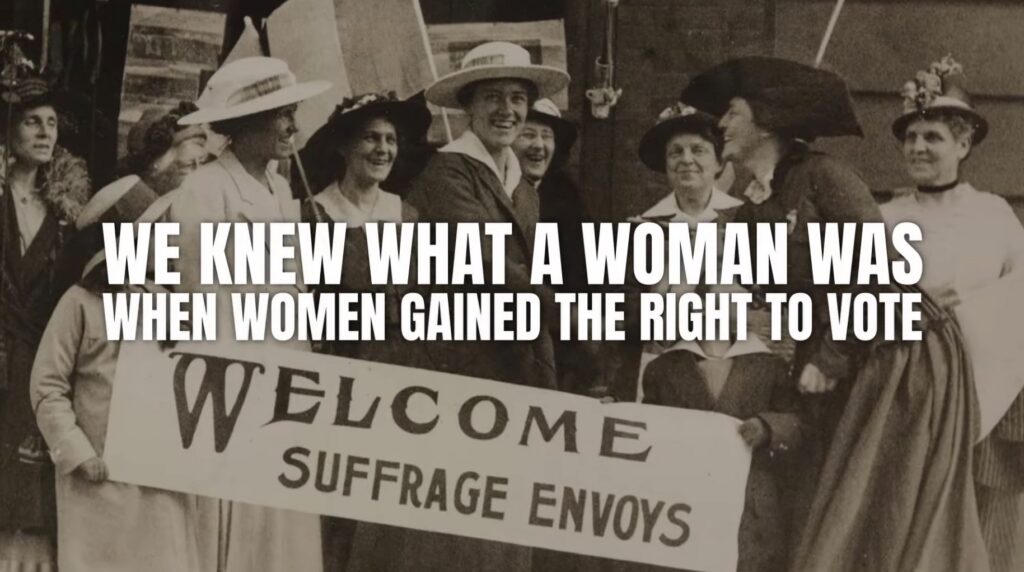
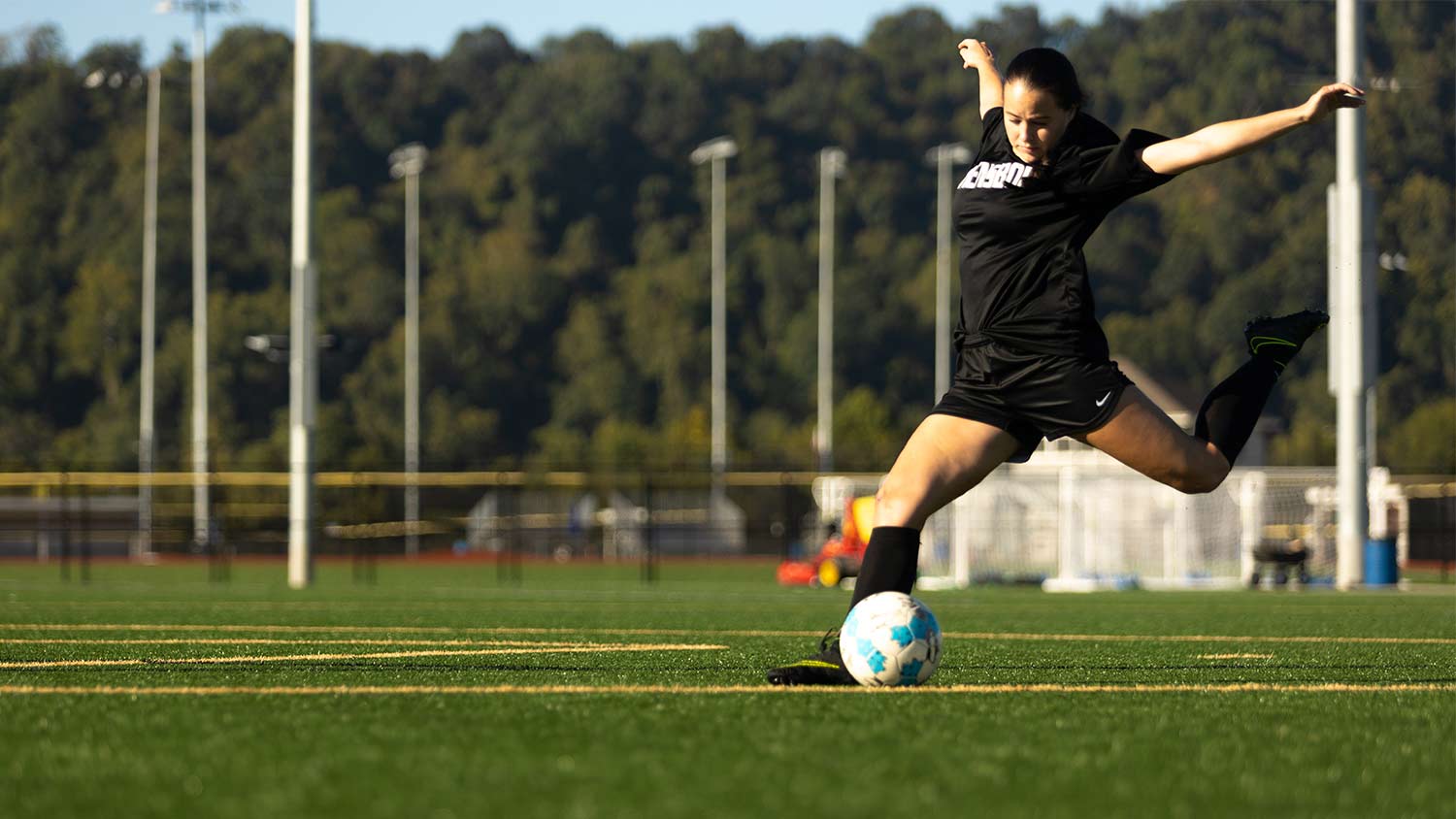
Men and women are physically different. This fact can be easily proven not only by biblical truth, but also by scientific evidence. And this evidence is especially clear in the world of sports.
Male athletes have unfairly taken opportunities to win championships, medals, and more from women. The false claim that men can change their sex and somehow become women has a real human cost, and we cannot allow this destruction of women’s sports to continue.
That’s why many states like West Virginia and Idaho have passed laws protecting women’s sports, and Alliance Defending Freedom has now asked the U.S. Supreme Court to protect the equal opportunities of female athletes.
What does the science say?
An expert report on male athletic advantages authored by Dr. Gregory A. Brown, an exercise science professor at the University of Nebraska, shows some of the many reasons why male athletes shouldn’t compete against females.
Brown found that male athletes have many inherent advantages over females, including greater average height and weight, larger and stronger bones, larger muscles, and higher rates of metabolizing and releasing energy. And the report shows that advantages exist before puberty and even after testosterone suppression.
Male athletic advantages result in large discrepancies between the performance of men and women. In 2017, for example, thousands of males ran 400-meter times that were faster than the personal bests of female Olympic gold medalists Sanya Richards-Ross and Allyson Felix.
A basic understanding of the differences between men and women led to the creation of women’s sports in the first place. That same understanding has led more than half of the states to pass laws protecting female athletes from having to compete against males.
West Virginia seeks to protect female athletes
In 2021, West Virginia passed a law to protect women’s sports—and it was one of the most comprehensive women’s sports laws in the country.
The law designates women’s teams for female athletes from middle school through college and provides a legal remedy for female athletes who have been unfairly pushed down the rankings by males. Laws like West Virginia’s affirm why we have women’s and girls’ sports: equal opportunity.
But the American Civil Liberties Union challenged the law in court.
Initially, a federal district judge agreed to temporarily block West Virginia from enforcing the law against the ACLU’s client, a male athlete seeking to compete against females. ADF filed a motion to intervene in the case, West Virginia v. B.P.J., on behalf of Lainey Armistead, who was playing collegiate soccer at West Virginia State University. The judge granted Lainey’s request to intervene.
In January 2023, the judge reversed course and ruled in favor of the West Virginia law. He lifted the pause he had put in place, allowing the law to go fully into effect. The district court found the law to be constitutional and consistent with Title IX, and it made the correct decision to protect female athletes like Lainey.
But the ACLU filed an appeal with the U.S. Court of Appeals for the 4th Circuit, asking the court to let its client try out for a girls’ spring track team.
The 4th Circuit reversed and paused enforcement of West Virginia’s law protecting female athletes as it applied to the ACLU’s client. As a result, numerous girls in West Virginia continued to be displaced by this athlete.
In March 2023, ADF asked the Supreme Court to reverse the 4th Circuit’s decision and make it clear that the West Virginia law should be enforced, but the Supreme Court declined to do so before the 4th Circuit issued its final decision. About a year later, the 4th Circuit ruled to reverse part of the district court’s decision, hindering West Virginia’s ability to protect fairness in women’s sports.
In July 2024, ADF once again asked the Supreme Court to affirm West Virginia’s right to enforce its law protecting female athletes. Finally, in July 2025, the Supreme Court agreed to hear the case. Oral arguments were heard on January 13, 2026.
Idaho female athletes stand up to gender ideology
Similar to West Virginia, the state of Idaho passed the Fairness in Women’s Sports Act in 2020 to ensure that only females competed in women’s and girls’ sports. Unfortunately, the ACLU challenged this law in court, too.
ADF helped draft Idaho’s law, and our attorneys represented Madison Kenyon and Mary Kate Marshall in intervening in this case. Madison and Mary Kate are female athletes who competed on the women’s cross-country and track teams at Idaho State University.
Madison and Mary Kate witnessed a male athlete taking first place in the women’s mile at the 2020 NCAA Division I Big Sky Conference Championships, knocking one of their teammates out of a podium spot in the process. And they themselves were forced on multiple occasions to compete against and lose to this male athlete who had posted times on the men’s team in the previous three years that were faster than the women’s national records.
Through these experiences, as well as a knowledge of basic biology, Madison and Mary Kate understand the importance of reserving women’s and girls’ sports for females. That’s why they intervened in the case to defend Idaho’s law.
After a federal district court and the 9th Circuit Court of Appeals both issued unfavorable rulings preventing Idaho from enforcing its law, ADF attorneys asked the Supreme Court to review the case.
On the same day that the Supreme Court agreed to hear West Virginia v. B.P.J., it agreed to hear Madison and Mary Kate’s case, too. Oral arguments for both cases were heard on January 13, 2026.
Through these two cases in West Virginia and Idaho, the Supreme Court has an opportunity to protect fairness in women’s sports from today’s threats. It’s time for the Court to follow biological reality and ensure equal opportunities for female athletes.

Related Articles