
Key Takeaways
- Female athletes should never be forced to compete against male opponents.
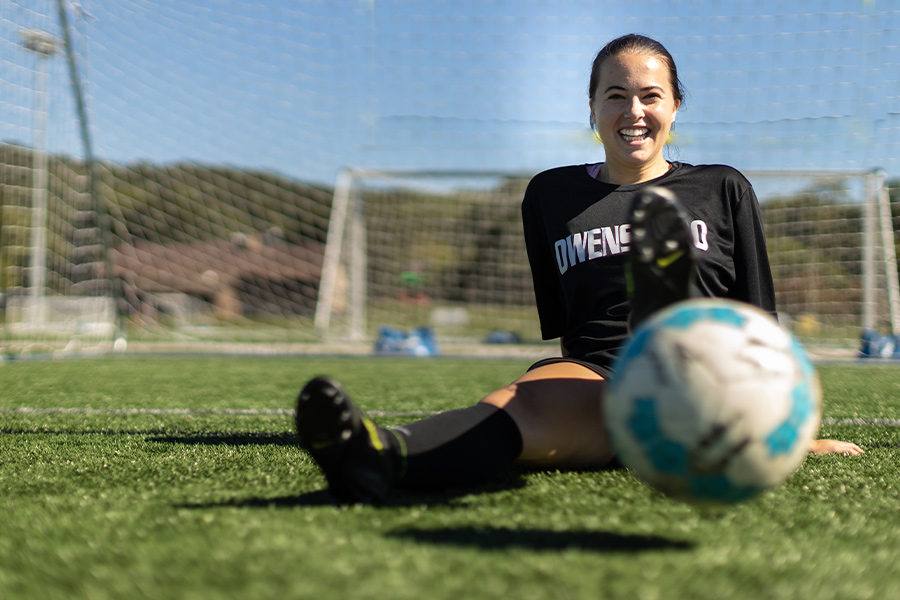
- Lainey Armistead, a standout collegiate athlete, kept seeing more and more male athletes encroaching on female athletics—and decided to do something about it.
- Lainey stood with West Virginia in protecting female athletes, and the Supreme Court affirmed that right.
Athletes must give countless hours to train, compete, and excel in their sport.
The goal is to win. Setbacks are expected, inevitable, and can even be catalysts for an athlete’s personal growth in their sport.
But not all setbacks are created equal—like when a female athlete is forced to compete against a bigger, stronger, and faster male athlete. That kind of setback is nearly impossible to overcome.
And that’s the sort of unfair competition Lainey Armistead began to hear about while playing on West Virginia State University’s women’s soccer team.
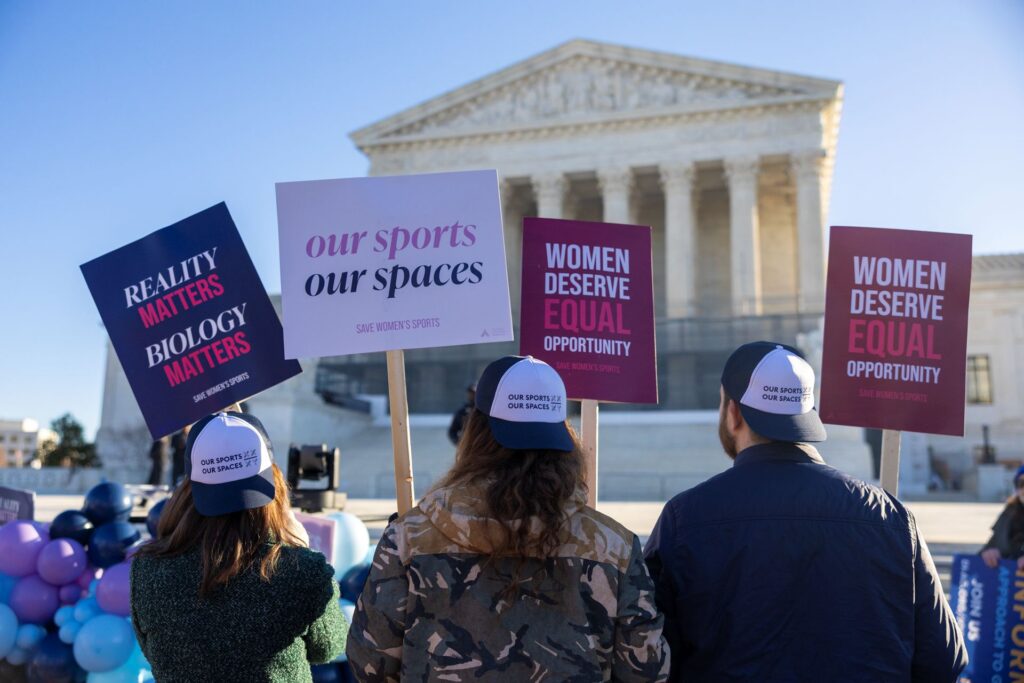
Because of those stories, Lainey stood with the state of West Virginia at the U.S. Supreme Court in support of its law that will protect women’s sports. Even better, she—and female athletes across the country—won.
Who is Lainey Armistead?
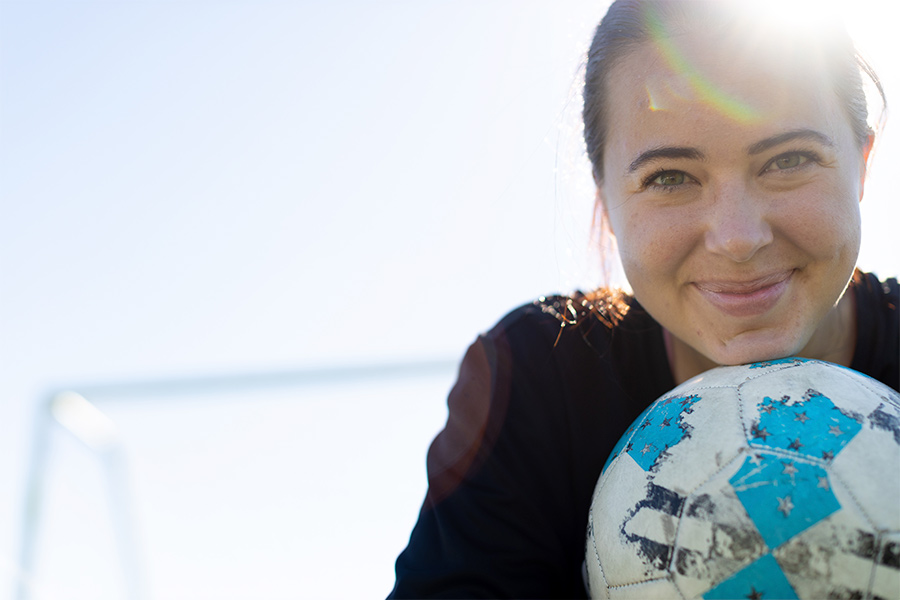
Lainey comes from a family of athletes. She was kicking soccer balls almost as soon as she could walk.
Between getting coached by her dad (an All-American college soccer athlete), attending soccer matches with her family, and playing pick-up games with her brothers, Lainey couldn’t help but develop a passion for the “beautiful sport.”
As she describes it, soccer “was like the air I breathed.”
Lainey started competing at age seven. When she was just nine years old, her club team won the U.S. Youth Futsal National Championship, the most prestigious indoor youth soccer competition in the country.
She and her club team won the state championship during both her freshman and sophomore years of high school, as well.
But to play this much and this well, Lainey had to miss out on other opportunities. She had to skip events like school dances, birthday parties, and family gatherings, and she trained hard in her free time on both weekends and weekdays.
But it was worth it. “It’s exhilarating to see all the training and hard work that we put in at practice pay off on the field,” she says.
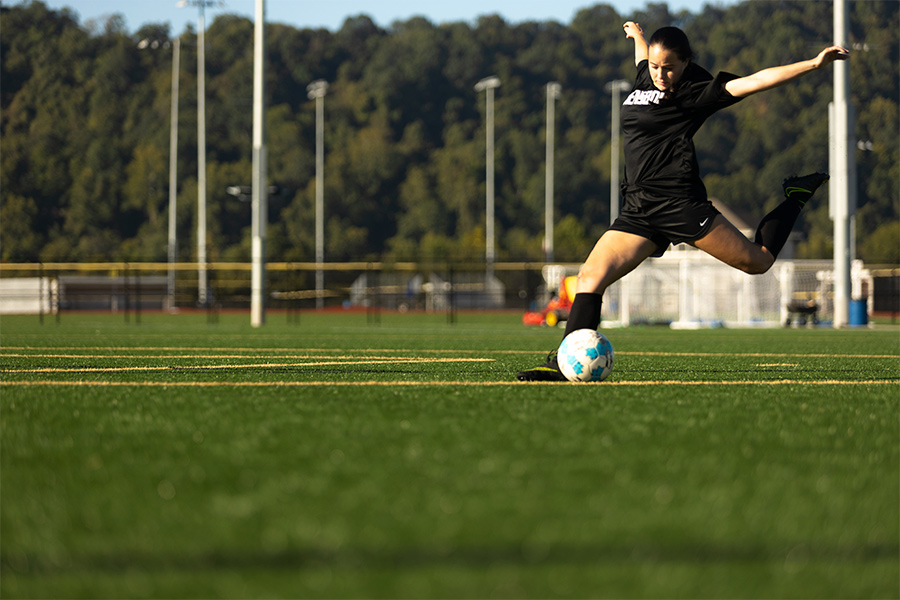
And thanks to that hard work, Lainey was able to earn a soccer scholarship at West Virginia State University. The scholarship helped to pay for her education. She was also privileged to serve as team captain for her college team, the Yellow Jackets.
A bit of common sense
In 2021, West Virginia joined many other states in passing legislation that keeps males from competing in women’s sports. ADF helped draft the law, and West Virginia State Senator Patricia Rucker sponsored the bill in the state legislature. West Virginia Attorney General JB McCuskey has backed the legislation—and fought for it. Today, the majority of states have laws on the books protecting women’s sports.
West Virginia’s commonsense law, often called the “Save Women’s Sports” law, helps ensure equal opportunities for women and girls in sports and protects their safety by making sure they are not forced to compete against males. But the American Civil Liberties Union challenged that law in federal court.
Lainey had heard about female track athletes in Connecticut who were being displaced in their sports by biological males. “I was appalled and heartbroken for those girls. It felt so unfair,” Lainey said. She also recognized, at the time, that she could be directly affected by the ACLU’s challenge to West Virginia’s law.
With the help of Alliance Defending Freedom, she intervened in the case to defend not only her own interests, but also to stand for the fairness and safety of female athletes across the state of West Virginia.
Ignoring biological reality hurts real people

After Lainey intervened in the lawsuit, a federal district court ruled that West Virginia could enforce its law. But the U.S. Court of Appeals for the 4th Circuit reversed part of that decision and stripped West Virginia of its ability to protect fairness in women’s sports.
As a result of the 4th Circuit’s ruling, the male student-athlete in the case then displaced over 300 female athletes in track and field events, which prevented some girls from competing in conference championship meets.
The fact is that a male athlete’s perception of his “gender identity” doesn’t erase his clear, undisputable physical advantages over female athletes. Girls need and deserve to compete on a level playing field.
As Lainey well knows, soccer is a rough contact sport: concussions, knee injuries, and ankle injuries are common among female players. Add into the mix a male who races down the field at a faster pace, kicks the ball harder, and knocks into other players with a larger physical frame, and the risk of injury to girls and women increases dramatically.
Allowing males to compete in girls’ sports destroys fair competition, safety on the field, and women’s athletic opportunities. When biological differences between men and women are ignored, people get hurt.
Women’s sports at the Supreme Court

After the loss at the 4th Circuit, the state of West Virginia and ADF attorneys representing Lainey appealed to the U.S. Supreme Court. In July 2025, it agreed to hear the case, and oral arguments were heard on January 13, 2026.
At the same time, the Court also agreed to hear Little v Hecox. In this case, the ACLU challenged Idaho’s Fairness in Women’s Sports Act. Similar to West Virginia’s law, Idaho’s law ensures that only females can compete in sports designated for girls and women.
Track athletes Madison Kenyon and Mary Kate Marshall both intervened in Idaho’s case. They know how it feels to compete against and lose to male athletes in their sports, and they want to see fairness restored.
Praise God, the Supreme Court ruled in favor of fairness, affirming the rights of states like West Virginia and Idaho to protect their female athletes. The Court ruled 9-0 that Title IX affirms the rights of states to protect women’s sports. The Court also ruled 6-3 that the Equal Protection Clause of the 14th Amendment allows states to protect female athletes through sex-specific sports.
“This is a monumental victory for every female athlete who has ever competed, or dreamed of competing, on a fair and safe playing field,” AG McCuskey explained. “Today’s decision affirms what common sense and the law have long made clear: States have the right to designate sports teams based on biological sex, not gender identity.”
“This is a victory for every girl who refused to stay quiet in the face of injustice,” said ADF CEO, President, and Chief Counsel Kristen Waggoner.
This is a major win for truth, and women like Lainey, Madison, and Mary Kate deserve praise for their bravery.
Support Cases like Lainey’s
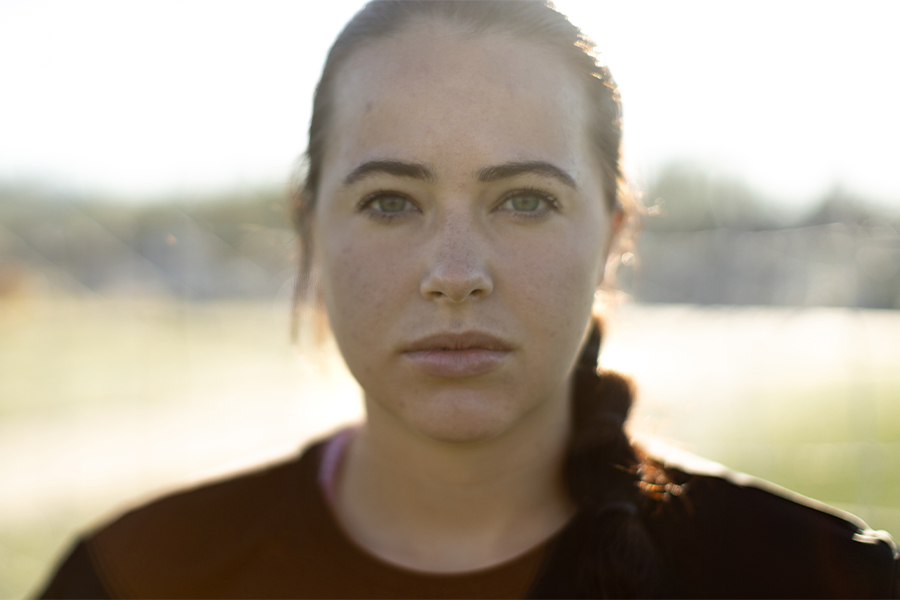
In her declaration, Lainey acknowledged that “[g]etting involved in this lawsuit was a weighty decision. I sought a lot of counsel … before deciding to become involved…”
And rightly so. This case took years to even reach the Supreme Court and came with intense public scrutiny.
But thanks to the generous support of people like you, Lainey stood with confidence, and without financial burden, for the truth that men and women are different. Even better, she won.
Your gift today will help support other ADF clients, like Lainey, who are standing up for the truth. Will you give today and stand with them?
Related Articles