
Key Takeaways:
- The Protect College Sports Act (S. 4668) sets national rules for college athletics—NIL deals, player transfers, and more. Its sponsors have strengthened it to ensure that the women’s sports laws on the books in 27 states will remain protected.
- This was a team effort between ADF, our female athlete clients, state attorneys general, senators, allied organizations, and citizens who share one common goal to protect women’s sports.
- Americans shouldn’t have to choose between fixing college sports and protecting women’s sports.
This is how it should work.
The Protect College Sports Act (PCSA) set out to address several challenges facing college sports. It was not intended to upend existing state laws keeping men out of women’s sports.
Now, the bill’s sponsors have made that intent explicit. ADF, allied individuals and organizations, and lawmakers across the Senate worked alongside the sponsors to put beyond doubt that the PCSA does not preempt the women’s sports laws on the books in the 27 states that have them.
It’s a small change with a big impact, and we’re grateful to Sens. Ted Cruz and Eric Schmitt for securing those protections for state women’s sports laws.
A small change with a big impact
The Protect College Sports Act sets new national rules for college athletics, taking on current issues like student athletes being paid for the use of their name, image, and likeness (NIL), the size of athletic conferences, player transfers between colleges, and athlete eligibility rules. But buried in those eligibility rules was vague language that could have been misused by activists to challenge recent gains to protect women’s sports, including laws now on the books in 27 states.
Most state women’s sports laws work through eligibility rules declaring that men are not eligible for women’s teams. But in an effort to set nationwide eligibility standards, the bill limited states’ ability to enact their own sports eligibility rules. And because the bill’s language on this point was vague, activists determined to put men back in women’s sports could have seized on that ambiguity to argue that the state women’s sports laws were preempted by the PCSA. Courts enforce the text Congress enacts, and thankfully, the sponsors adopted ADF’s proposed solution to this problem, ensuring that the Act does not jeopardize state women’s sports laws.
With this fix, Congress can still set national rules for athlete compensation and transfers; states can still keep their teams for women. Those goals were never in conflict. And with the amended language, the sponsors reaffirmed their commitment to preserve state-level protections for women’s sports.
What was at stake
These protections weren’t won easily. On June 30, the U.S. Supreme Court upheld Idaho’s and West Virginia’s laws in Little v. Hecox and West Virginia v. B.P.J., confirming that states may keep women’s sports for women. Alongside Idaho Attorney General Raúl Labrador and West Virginia Attorney General JB McCuskey, ADF represented three female athletes defending those laws.
That victory came only after years of hard losses. In West Virginia, a single male athlete displaced more than 470 girls over 1,400 times and took a state championship—even threatening another ADF client with sexual harassment in a locker room. Those cases, together with over two dozen state women’s sports laws and President Trump’s executive order keeping men out of women’s sports, are the foundation of the protections now in place.
With so much at stake, the last thing anyone wanted was a lingering ambiguity that activists could exploit. Thankfully, the sponsors have provided much needed clarity that the bill does not upend state laws preserving fairness in women’s sports.
Protecting women’s sports together
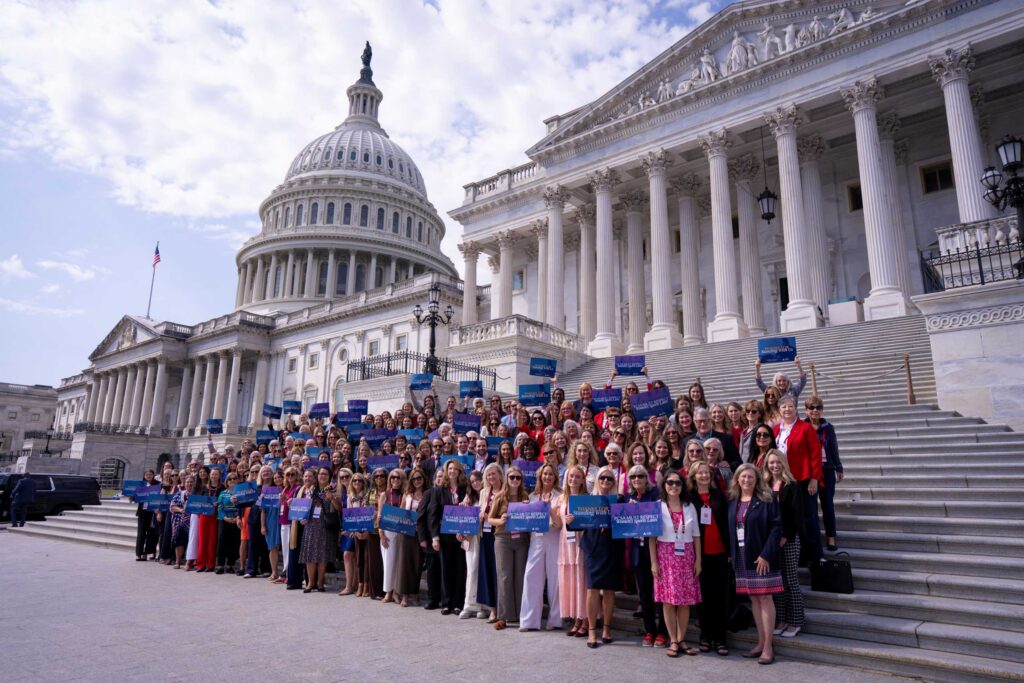
This win belongs to a coalition united behind a single goal. We again thank Sens. Ted Cruz and Eric Schmitt for their leadership. We’re grateful to several state attorneys general who lent their voices—led by Indiana Attorney General Todd Rokita—and to Sens. Josh Hawley, Jim Banks, Tommy Tuberville, Mike Lee, and Roger Marshall for championing women’s sports throughout. And we thank the many allies who stood with us to call for a fix to the bill.
This was a team effort. Alongside bold voices online, our courageous female athlete clients, and allied organizations, we respectfully raised our concerns, and our leaders took action. We are united in our desire to protect women’s sports. Our girls are worth it.
Preserving a decade of gains
Getting this right also honors President Trump’s legacy on women’s sports. He has been a powerful champion, taking bold action to ensure that our daughters and granddaughters get the fairness they deserve. The sponsors’ work to strengthen the bill safeguards the progress the president fought for, preserving a hard-won gain at the very moment the momentum is ours.
This is how it should work. Concerned citizens spoke up, advocates made the case, and lawmakers delivered. And as a result, the hard-won gains to protect fairness and safety in women’s sports are secured for the next generation of women and girls stepping onto the playing field.

Related Articles