
When parents begin the wondrous journey of raising a child, they must grapple with several preconceived notions.
They will soon come to find out: No, your child won’t always go to bed on time or sleep through the night. And no, there’s no real way to avoid the “Why?” question. And yes, kids will break your heart occasionally.
But one expectation that should not be in question is that parents will have the greatest say in how their child is raised and—perhaps just as importantly—how to best help their child when they are in need. Whether it’s deciding which doctor to take their children to, what food they eat for dinner, or which school they attend, parents have the fundamental right and responsibility to direct the upbringing, education, and healthcare of their children.
It goes without saying that this right also extends to which counseling a child may seek out to help with mental health concerns.
Yet several states are, in effect, limiting the counseling options available to families by censoring the counselor’s speech on issues of gender and sexuality. Instead, counselors may only encourage children to undergo irreparable surgeries or take harmful drugs, rather than helping children regain comfort with their sex.
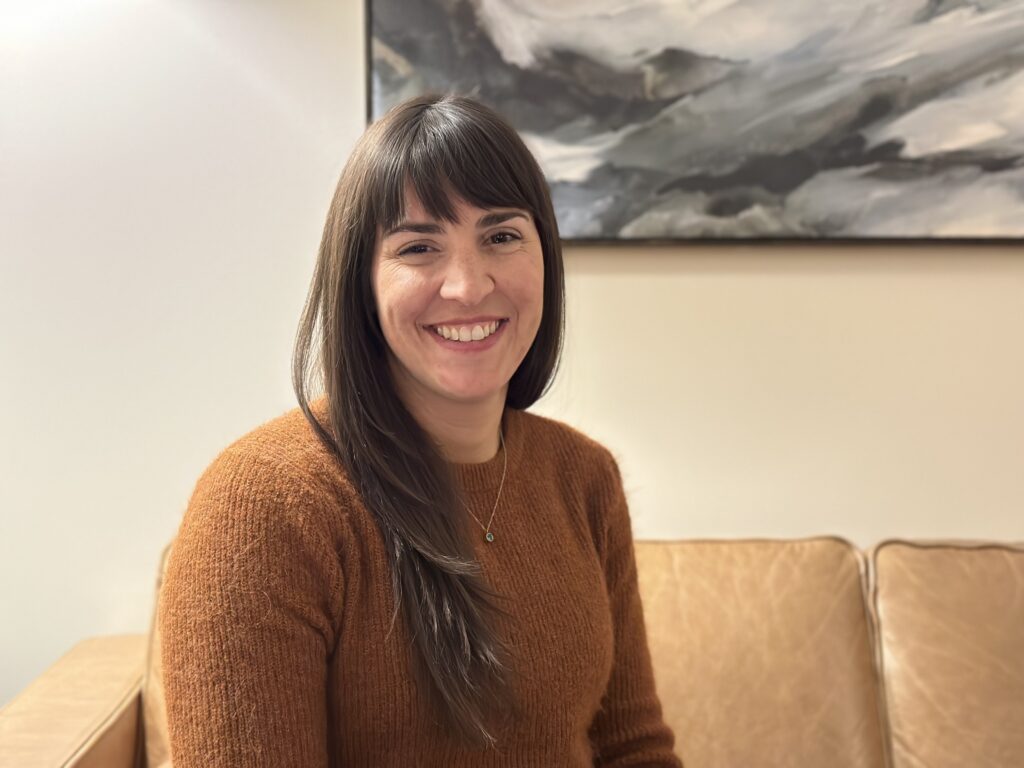
On October 7, the Supreme Court heard oral arguments in Chiles v. Salazar, the case of Alliance Defending Freedom client Kaley Chiles, who is challenging such a law in Colorado. The results will not only impact the free speech rights of counselors but also whether parents and kids can get the help they need.
Thankfully, Kaley won.
What happened to Kaley?
Kaley is a licensed professional counselor in Colorado. She is a committed Christian who seeks to live out her faith in every aspect of her life, including her work.
But that’s the problem, at least for Colorado.
The Centennial State had crafted a policy that effectively silences faith-based counselors like Kaley from counseling patients on certain topics consistent with their faith, a law similar to those adopted by more than 20 other states.
Enacted in 2019, HB19-1129 puts all manners of restrictions on counseling. Among other things, it bans counselors from helping children regain comfort with their sex, even when their client wants that, and only allows counselors to push the government’s pre-approved talking points.
Because of the Christ-centered counseling that Kaley provides—especially when it comes to children struggling with gender identity—she is threatened by this law.
It’s even worse when you realize that these restrictions only work one-way. If you’re a secular counselor pushing gender ideology on children? That has the government’s golden seal of approval. But helping clients who genuinely want to regain peace with their biological sex? That’s forbidden.
The government repercussions for breaking this law are not some mere slap on the wrist. Kaley faces thousands of dollars’ worth of fines, as well as threats to revoke her counseling license, all because she wants to help her clients regain peace with their bodies.
That’s why ADF supported Kaley and her case all the way to the Supreme Court. Thankfully, in March 2026, the Supreme Court ruled 8-1 in favor of Kaley, affirming that counseling conversations are protected speech. This is a monumental win for parents, children, and free speech.
How does Chiles v. Salazar impact parents and children?
To be crystal clear, the biggest victims of Colorado’s counseling censorship laws are the suffering children. Those kids need help, and the government is prioritizing its own one-size-fits-all “solution” over the child seeking the individualized help he or she needs.
But it would also be naïve to ever suggest that a child’s struggles have no impact on the parents. As much as Chiles v. Salazar is about the kids, it also needs to be said that these anti-free speech laws undermine parental rights.
As any parent can tell you, nothing is more important when it comes to your kids than their well-being, which includes their mental peace. Struggles with identity can be an incredibly sensitive issue for both parent and child, and they should both be given the time and space to work through it as a family.
Nowhere in that equation does big government fit in, especially if that “help” means taking away desired counseling options from your child.
Parents must remain vigilant
As mentioned above, Colorado is hardly the only state to adopt similar laws, where the government has enacted counseling censorship. Thankfully, Kaley’s win at the Supreme Court has established a critical precedent that will help parents and counselors in these other localities.
Censorship laws like Colorado’s have no place in telling parents which conversations their children can have. And they have no role in superseding the goals of a child who is willing, wants counseling, and wants to regain comfort with their sex.
Kids need real support from their family and professionals, not pre-approved government talking points.
And parents deserve to have a say in that.
Related Articles