
Key Takeaways:
- Finland’s Supreme Court split 3-2 in March 2026, clearing Päivi Räsänen on a 2019 tweet but convicting her over a 2004 church booklet—despite two lower courts unanimously acquitting her on all charges.
- The UK approved Räsänen’s travel authorization in June 2026, then canceled it in July without explanation, effectively barring a sitting Finnish parliamentarian from entering the country over a conviction tied solely to her religious beliefs.
- A democracy that only tolerates speech it agrees with isn’t practicing free speech at all; the UK still has a chance to reverse course before Räsänen’s case becomes a lasting symbol of that failure.
Imagine being told you cannot enter an allied democracy—not because of anything you’ve done there, but because of what you once said at home. That is the reality facing Päivi Räsänen, a sitting member of Finland’s Parliament, who was set to travel to the United Kingdom this week to speak at a religious liberty conference on, of all subjects, free speech. Instead, she has been left explaining to the world why a democratic government would rather silence her than let her in the door.
Päivi’s case is the latest sign of a censorship crisis spreading across Europe, one in which peacefully expressing a traditional Christian view on marriage and sexuality is increasingly treated as a punishable offense rather than a protected right. Christians in the UK have already been investigated, arrested, or fined for silently praying near abortion facilities and for preaching sermons in public.
Now that same climate appears to be swallowing up a foreign lawmaker, preventing her from even setting foot in the UK.
Dragged through the courts
When Päivi wrote a 2004 booklet on marriage and sexuality for her church, she couldn’t have imagined it would one day cost her entry into the United Kingdom. The booklet went unnoticed for 15 years—until a 2019 tweet drew the attention of Finland’s prosecutor general, who charged her in April 2021 with three counts of “agitation against a minority group,” under a criminal code section titled “War Crimes and Crimes against Humanity.”
Päivi beat the charges two separate times. The Helsinki District Court unanimously acquitted her in 2022; the prosecutor appealed anyway, and the Helsinki Court of Appeal agreed with the acquittal in November 2023. Undeterred, the prosecutor escalated to Finland’s Supreme Court, which split 3-2 in March 2026: Päivi was cleared on the tweet, but she, along with Bishop Juhana Pohjola and the Luther Foundation Finland (Päivi’s publisher), were convicted over the booklet—despite the court conceding it contained no incitement to violence. They are now appealing to the European Court of Human Rights.
An unjust ruling leads to an unjust travel ban
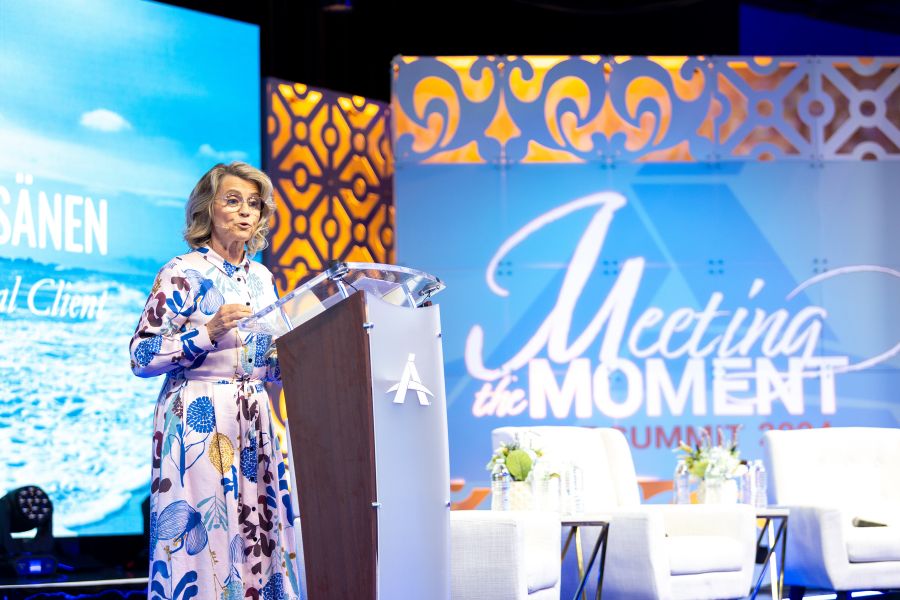
That unjust conviction for a decades-old booklet has now followed Päivi across borders. She was scheduled to speak in person this week at a religious liberty conference in Northern Ireland—fittingly, on free speech. In June, the UK approved her Electronic Travel Authorisation (ETA), but in July, without explanation, it was canceled. Bishop Juhana, convicted alongside Päivi, had already been denied his own ETA. Päivi applied for a full visa and personally wrote to Home Secretary Shabana Mahmood, but received no response—only the word that a decision wouldn’t come before the event. Barring a last-minute reversal, she’ll address the conference by video instead of in person, all while her conviction remains on appeal at the European Court of Human Rights.
Päivi remarked, “I have been invited to give the keynote speech at a religious freedom conference in Northern Ireland in August, where I intended to discuss the importance of free speech. I find it shocking and deeply ironic that in a democratic country like the UK, I am being prevented from speaking at a conference about fundamental freedoms due to my conviction for ‘hate speech’.”
This isn’t an isolated misstep. As Lorcán Price, ADF International legal counsel representing Päivi, put it: “The UK has in the last year blocked a number of mainstream conservative individuals, politicians, and now even a member of the Finnish Parliament and a Lutheran bishop, from entering the country. This trend is yet another example of the severe and escalating censorship crisis in Great Britain.”
The UK should let Päivi speak
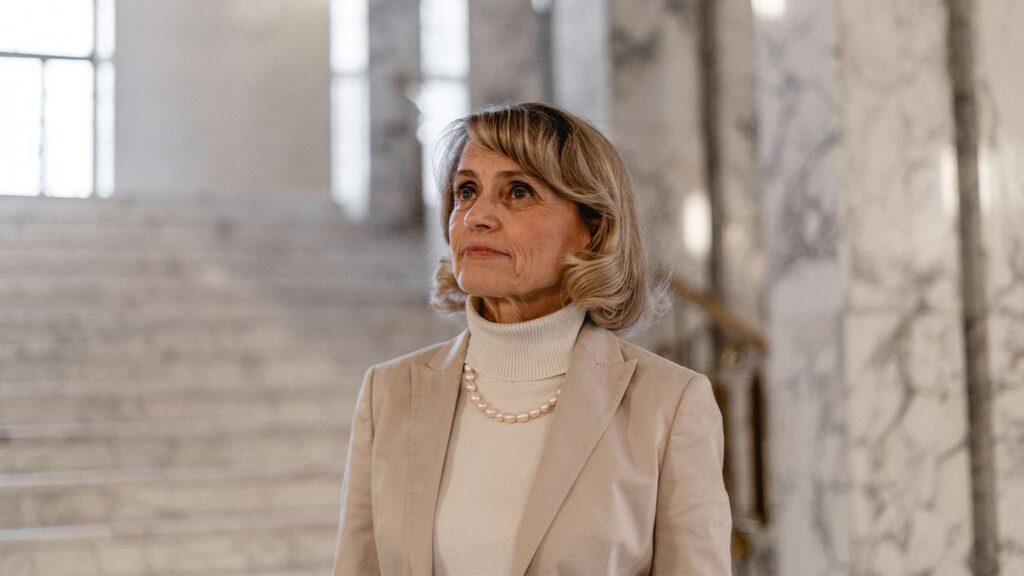
Päivi wants to stand before a room of fellow religious freedom advocates in Northern Ireland and speak for herself. Instead, barring a last-minute reversal, she will appear only as a face on a screen for a conviction still unresolved and for a booklet that merely expressed her religious beliefs.
But there is still time for this to end differently. Home Secretary Shabana Mahmood has not formally denied Päivi’s visa. “Home Secretary Shabana Mahmood should act immediately to allow my client to enter the country, to speak in person at the religious liberty event in Northern Ireland,” Lorcán Price said. “Any further silence on the Home Secretary’s part will reinforce to the British people and observers around the world that this government has a deep-seated antipathy to free speech.”
The UK still has the chance to show it takes its own tradition of free expression seriously enough to let a democratically elected lawmaker walk through its front door. That wouldn’t require the UK to agree with Päivi’s beliefs—only to treat her the way any functioning democracy should treat a visiting official: as someone entitled to speak, even when her views don’t fit the preferred narrative.
Päivi’s case, and the European Court of Human Rights appeal still ahead of her, will help determine whether that tradition survives in Europe. Until then, the least the UK can do is let her in.
Related Articles