

Key Takeaways:
- Clyde and Ann Reed are a Christian couple who felt God’s calling, leading Clyde to give up his career as an engineer and to become a full-time pastor.
- When Clyde and Ann founded a church in Gilbert, Arizona, the city restricted their signs advertising the church’s worship services with rules that it didn’t put on other signs like political campaign advertisements.
- Praise God, the Supreme Court struck down those restrictions and ruled that Gilbert’s content-based limits on signage violated the Constitution.
What happens when laws restrict a church from inviting people to its ministry? Though this might sound like something from a dystopian novel, this was the very situation Clyde and Ann Reed faced.
After starting churches across the country, the Reeds planted one in Gilbert, Arizona. While it initially struggled to take root, Clyde and his wife began to see the congregation grow after they put up signs advertising the church’s services—until a city ordinance made it nearly impossible to continue doing so.
The city allowed signs for things like political campaigns to be bigger and stay up longer, while putting much more burdensome restrictions on signs for religious events. But such laws treat churches and their leaders like second-class members of society and violate our fundamental rights like freedom of speech.
Thankfully, the Reeds took a stand against the town ordinance, leading to a unanimous victory at the U.S. Supreme Court. Read on to learn more about their story.
Meet Clyde and Ann Reed
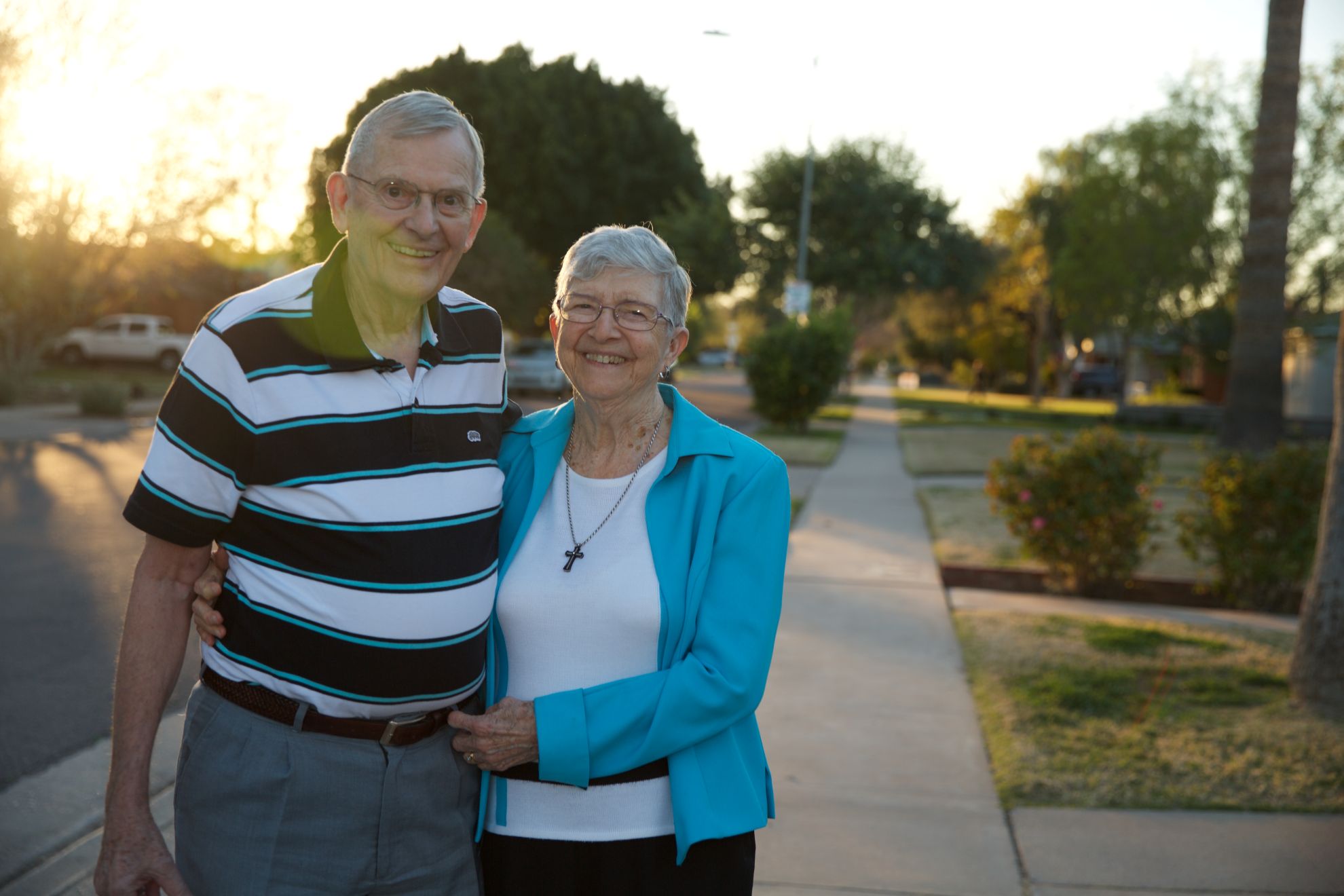
Amidst a career as an engineer, Clyde Reed felt that the Lord was calling him to something else. Answering that call led him to leave his job, train for ministry, and become a full-time pastor. Since then, Clyde and Ann have traveled across America to plant seeds of faith. After their daughter asked them to start a local church in her area, the Reeds moved to Gilbert and founded the Good News Community Church.
The fledgling church initially struggled to gain a foothold. Many in the town either already had a faith community or were not interested in finding one. Attendance ebbed and flowed, with services held at various locations, such as a someone’s home and public school classrooms. Hoping to grow the community, Clyde put up small signs in busy areas of town advertising Sunday services.
That turned out to be the best way to bring people in. Reflecting on the experience and the church becoming more established, Clyde recalled, “That was our main way to reach people, and the growth there was the best we’d had anywhere, mainly because of the signs.”
But those signs soon caught the attention of town officials. And as Ann put it: “We got in trouble.”
Town ordinance leads to battle for free speech
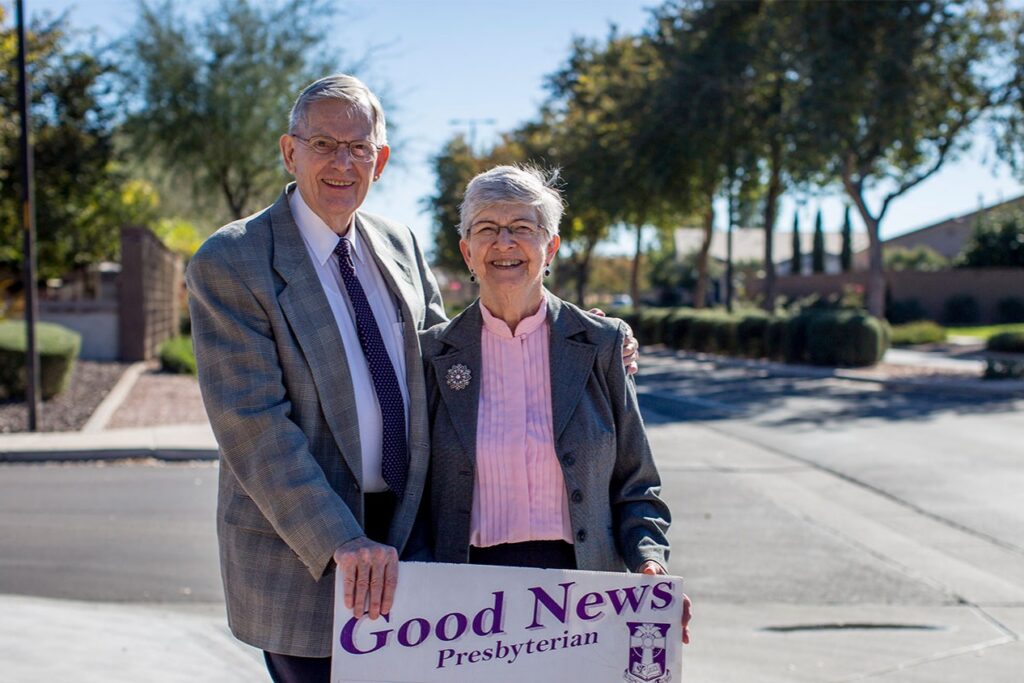
One Sunday, Clyde was collecting the signs that he had previously put up that Saturday. But one of them had a citation from the town, and another was missing entirely. As it turned out, the town had confiscated it. Clyde went to the town hall to see what the problem was. He learned that Gilbert had very detailed restrictions on the kinds of signs he was posting.
The Town of Gilbert’s Sign Code restricted the display of outdoor signs based on the type of information that the signs conveyed. For example, “ideological” signs could be up to 20 square feet in size and had no limits on how long they could be left up. “Political” signs, those supporting candidates for office, could be posted during election season. Signs that advertised religious events, however, faced strict limitations. Among other restrictions, they could be no larger than six square feet and could be up for only 12 hours before services started and 1 hour after they ended.
This posed a serious problem for Clyde, Ann, and the Good News Community Church. Sunday worship was at 9 in the morning. Putting the signs up 12 hours beforehand would mean that few people, if any, would actually see them. Additionally, Clyde and Ann served many people in the area. Not long after the 9 am service concluded, they would travel to a nearby senior living center for a second, late-morning service. Shortly afterward, they went to an Alzheimer’s facility for their third full service of the day. Having to take all their signs down immediately would interfere with their ability to lead other community members in prayer and worship.
The Reeds wondered why church signs faced such severe limitations. Wanting to follow the rules, Clyde sought to reach an agreement with the town that would allow him to effectively advertise church services. But he was told that there would be “no leniency under the code.” If he continued to put up his signs in violation of the code, he could be subject to fines and even jail time.
Reflecting on his thoughts at the time, Clyde stated, “We view ourselves, as good Christians, as making good citizens.” By trying to bring the Gospel to neighbors, church leaders “are out there helping these cities and towns, and we don’t understand why they want to make it difficult.”
Clyde and Ann reached out to Alliance Defending Freedom after a friend suggested doing so. With ADF’s help, they sued the city in 2007 for violating the Free Speech Clause of the First Amendment, and after eight years, their case was eventually heard at the U.S. Supreme Court.
U.S. Supreme Court rules unanimously to protect free speech
The First Amendment protects the right to speak the truth, even when the government disagrees with the message expressed. If the government has the power to restrict speech based on its message, that power could be used to silence disfavored beliefs. In the words of the late Justice Scalia, “The vice of content-based legislation… is not that it is always used for invidious, thought-control purposes, but that it lends itself to use for those purposes.” Even if the government has a benign motive in content-based speech restrictions, such efforts open the door for unjust censorship.
In Reed v. Town of Gilbert, the Supreme Court unanimously agreed that, since signs were treated differently based on what they said, the town’s Sign Code was a content-based law that infringed upon freedom of speech. Under the town’s laws, a sign promoting a candidate for city office could be much larger and stay up far longer than Clyde’s signs telling people where to go for the local church’s morning service. The only difference between signs that could stay up indefinitely and those that could be up for less than a day was their subject matter. And the signs that received poor treatment were those advertising religious, charitable, and other community events.
The Court explained that, regardless of whether the town was attempting to target religion, such different treatment violates the First Amendment. In Clyde’s own words, his signs “inviting people to church are very important, yet are treated as second-class speech. We aren’t asking for special treatment; we just want our town to stop favoring the speech of others over ours.”
How one local church protected the rights of all
Clyde and Ann dedicated their lives to spreading their faith. Their efforts, while focused on communities of faith at the local level, led to a court ruling that keeps the door open for the Gospel across the country. Throughout the whole process, the Reeds were amazed at God’s loving providence. After winning at the highest court in America, Ann marveled at “the greatness of God, that He would take a wee little church like ours, and maybe make a change for the whole country.” Because they stood firm for their beliefs, “churches all across our country… can put out signs that will not be stomped on, inviting people to come to church and meet the Lord.”
Since we are made in God’s image, by our nature we all have the freedom to seek the truth and share our beliefs. But in a society that often refuses to acknowledge God and His care, free speech comes at a cost.
While ADF never charges our clients a dime to represent them in court, we’re only able to fight for freedom because of God’s grace and the help of friends like you. Will you consider giving to support ADF’s mission—that all might be free?
Related Articles