

Key Takeaways
- Tessa Bulzan is an accomplished mother who felt called to homeschool her children and instill her faith through her Christian homeschooling materials.
- Despite being told by a program administrator that her academically focused materials would likely qualify, Hillsboro School District refused to reimburse Tessa—because the curricula were premised on a religious worldview.
- The district funds materials carrying all kinds of worldviews, including ones that conflict with Christian beliefs, yet singles out Christian curricula for exclusion.
- It’s unconstitutional to deny a family benefits available to everyone else simply because the curriculum teaches from a Christian worldview.
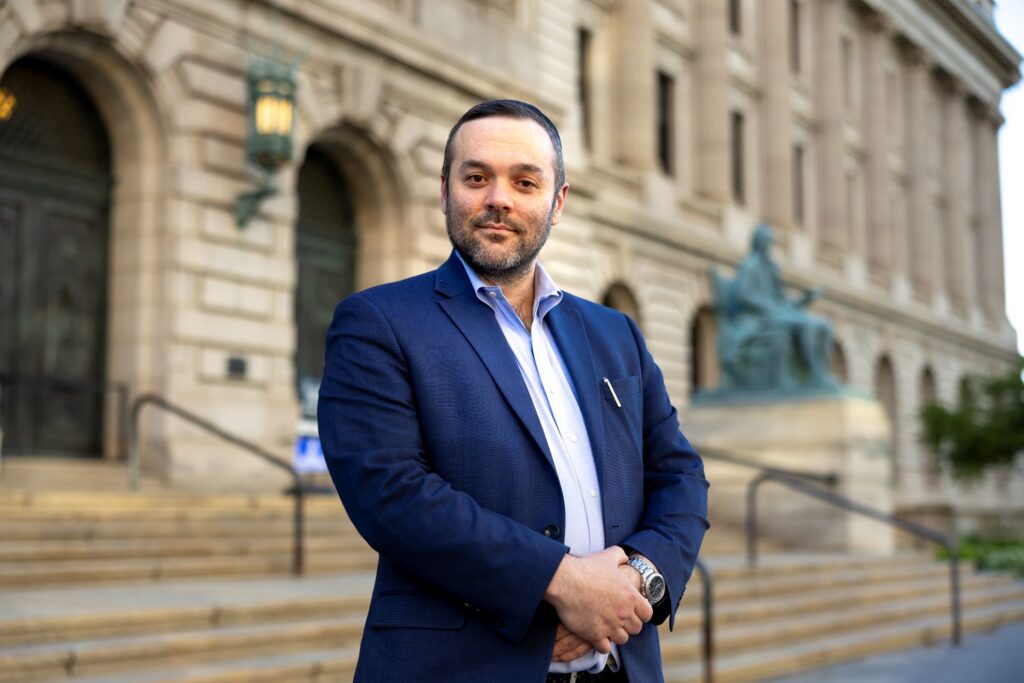
Tessa Bulzan homeschools her children because she believes God calls her to do it. When her local school district offered to help cover the cost—reimbursing homeschooling families for curriculum and supplies through its Homeschool Partnership program—she signed up, glad for the support. A district representative even assured her that religious curriculum was welcome—and that her academically focused materials should qualify for reimbursement.
Then, when Tessa submitted her religiously grounded curricula for reimbursement, the district refused to pay for any of it. Why? It wasn’t because her curricula fell short of Oregon’s academic standards—it actually exceeded them—but because it reflected a Christian and biblical worldview. Tessa appealed the denial four times through the district’s own complaint process. Each time, the district refused to reverse course.
Now she’s challenging that denial in court.
A Marine, a mother, a homeschooler
Before she was homeschooling her children, Tessa was a Marine. She didn’t learn to read until she was ten, the result of dyslexia that went undiagnosed until her time in the Marine Corps, where she finally received treatment. From there, she earned an MBA from Duke University, specializing in data science, and went on to manage Asia-Pacific and Latin America marketplace orders for Nike.
Now a mother of five, her oldest child started school in 2022 at a private Christian school. But even there, Tessa noticed her daughter being taught values that didn’t align with her family’s faith. She felt called to homeschool instead—though she worried, given her own history with dyslexia, whether she was equipped to teach her children herself.
Leaving her corporate career was a real financial sacrifice. But she believed God would provide and that He was calling her to raise her children in the truth. So after she left her job, she began homeschooling.
She built her homeschool around that conviction, choosing curricula that treated God as central to every subject rather than an afterthought: Abeka and Classical Conversations, both explicitly Christian curricula, along with a Christian homeschool co-op, Firmly Planted Hillsboro.
Denied for her faith
In July 2025, Tessa enrolled two of her children in Hillsboro School District’s Homeschool Partnership (HSDHP), a public program that reimburses homeschooling families for curriculum, supplies, and select classes. Before the school year began, the program’s administrator told Tessa she could use any curriculum she wanted, including a religious one. The administrator did note that material must be “non-religious to qualify for reimbursement,” but when Tessa inquired further about what that means for her chosen curricula, which are academic in focus but reference faith at times, she was told that predominantly academic material would likely still qualify for reimbursement.
So Tessa built her homeschool around Abeka, Classical Conversations, and the Firmly Planted Hillsboro co-op, all explicitly Christian and primarily academic. Throughout the semester, the district had almost no involvement in her homeschooling—next-to-no oversight, no approval of her materials, no say in what she taught.
But when she asked to be reimbursed, the district denied every dollar for Abeka, Classical Conversations, and Firmly Planted Hillsboro, citing “the Christian and biblical worldview that is taught” and the “Christian beliefs and themes” woven through the curricula. The reason had nothing to do with academics. It was entirely about religion.
Exhausting every option
Tessa challenged the denial through Hillsboro’s four-step discrimination-complaint process, even citing U.S. Supreme Court precedent along the way. The district repeatedly upheld the denial, pointing back to guidance from the Oregon Department of Education. When Tessa’s final appeal fell outside a five-day window, the district declared its denial final.
The district’s position has only hardened since. For the 2026–27 school year, HSDHP doubled down and added a new written agreement barring reimbursement for any curriculum that was “religious in nature”—and named Tessa’s own curricula, Abeka and Classical Conversations, as disqualifying examples. Neither Tessa nor her family has signed it.
With no options left inside the district, Tessa filed suit in federal court in September 2026.
More than a reimbursement
Tessa’s case isn’t only about her own money. Hillsboro’s Homeschool Partnership reimburses curricula reflecting all kinds of worldviews—including ones that conflict with Christian beliefs, such as a children’s book in which a boy dresses in drag as a mermaid and another centered on the sacredness of “Mother Earth.” But a Christian and biblical worldview is disqualified.
That double standard doesn’t just affect one family. It threatens every homeschooling parent in the program, and it could set a precedent other school districts and states are watching. If a public benefit can be conditioned on stripping faith out of a family’s curriculum, the same logic could justify excluding religious viewpoints from any generally available government program.
Tessa’s lawsuit asks the court to make clear that parents don’t forfeit a public benefit simply because they choose to raise their children in their faith.
The bottom line
When a school district penalizes a mother for how she chooses to raise and educate her children, it strikes at the fundamental right—and duty—every parent has to direct their child’s upbringing and education. Since Hillsboro helps homeschooling families with reimbursement, it’s wrong, and unconstitutional, to deny that help to families who choose to teach from a Christian and biblical worldview.
Bulzan v. Hillsboro School District
- July 2025: Tessa Bulzan enrolls two children in Hillsboro’s Homeschool Partnership. She is told that religious curriculum is allowed and would likely get reimbursed as long as the material is primarily academic.
- January 2026: The district denies all reimbursement for Abeka, Classical Conversations, and Firmly Planted Hillsboro, citing their “Christian and biblical worldview.”
- May 2026: The district declares that its decision is final after having rejected Tessa’s numerous appeals.
- September 2026: Representing Tessa, ADF attorneys file suit against the Hillsboro School District in federal court.
Related Articles