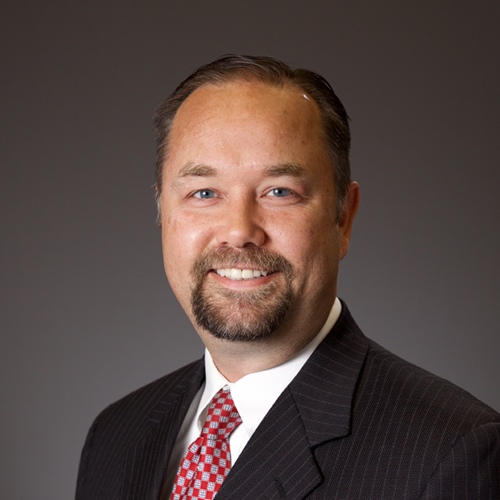
Chairman Owens, Ranking Member Adams, and Members of the Subcommittee: my name is Tyson Langhofer, and I’m Senior Counsel with Alliance Defending Freedom’s Center for Free Speech. Alliance Defending Freedom is the world’s largest legal organization committed to protecting free speech, religious freedom, parental rights, and the sanctity of life and the family. Among other things, my team works to protect the constitutional rights of students and faculty at America’s public schools and universities. We’ve secured more than 435 victories for free speech and religious freedom on America’s public K-12 and college campuses.
As one recent example, we represented Maggie DeJong in a lawsuit against officials at Southern Illinois University-Edwardsville. School officials issued three no-contact orders against Maggie simply for sharing her conservative political views and religious beliefs on social media and during discussions with other students. These orders were issued without any due process and without even informing Maggie of the allegations against her.
We also recently represented Ratio Christi, a Christian apologetics organization, in a lawsuit against officials at the University of Houston-Clear Lake. The university denied the group official recognition because Ratio Christi requires its leaders to agree with its values and mission. Other organizations have leadership requirements, but are still granted recognition.
These violations didn’t occur because the law is unclear. The Supreme Court has made clear, time and again, that “the vigilant protection of constitutional freedoms is nowhere more vital than in the community of American schools.” The Court explained that this is true because “the core principles of the First Amendment ‘acquire a special significance in the university setting, where the free and unfettered interplay of competing views is essential to the institution’s educational mission.’”
Unfortunately, most public universities are actively violating these freedoms in at least two different ways. First, they adopt policies that unconstitutionally censor student speech. Some common examples are:
- Policies that restrict student speech in the outdoor areas of campus to very small areas called speech zones,
- Policies that censor or punish speech that the school or other students subjectively say is demeaning or uncivil,
- Policies that allocate student activity fees in a viewpoint-discriminatory manner by denying requests from certain student groups to access those funds to host events, and
- Policies that deny official recognition to religious student groups because they require their leaders to agree to the group’s statement of faith.
These policies are most commonly enforced against conservative and religious students to shut down speech that others disagree with.
Another common way that universities violate students’ speech rights is by refusing to enforce university policies and instead allowing other students and faculty to violently disrupt or shout down student events. We’ve also seen a rise in universities issuing no-contact orders against students for simply expressing orthodox conservative or religious views.
The widespread nature of these policies demonstrates that today’s colleges have failed to educate their students about the rights afforded by the First Amendment and about their duties as citizens of this great country. Instead, they’ve enacted policies to punish speech they deem contrary to the majoritarian view on campus. That’s the essence of fear, the opposite of freedom, and contrary to the purpose of the university and the First Amendment.
I commend the members of this Committee for recognizing the importance of protecting college students’ First Amendment rights. And I look forward to participating in today’s discussion.
Related Articles