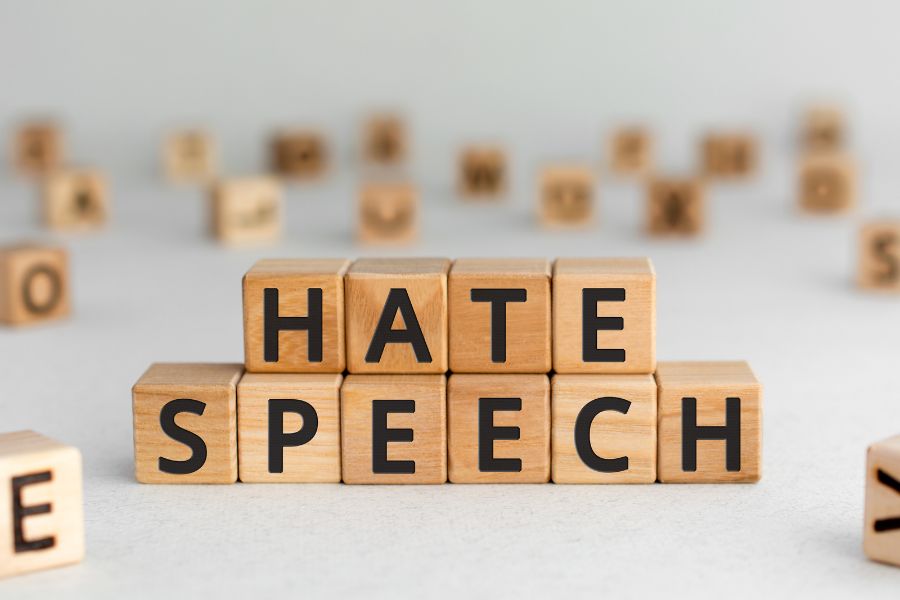
The term “hate speech” certainly sounds ominous enough. After all, few words in the English language carry the negative connotations that “hate” does. Pair it with “speech,” and you’ve created a phrase that describes a concept so inherently dangerous and toxic that decent people should instinctively recoil from it.
Why shouldn’t the government work to restrict such a dangerous trend?
But that emotional punch that makes the term so powerful is precisely what makes it so perilous. “Hate speech” is invoked constantly in modern political discourse, yet it remains maddeningly vague, lacking a single, settled definition in American law. What qualifies as “hate”? Who decides? And at what point does offensive or unpopular speech cross the line into something punishable?
Those questions are not academic. In a democratic society built on the primacy of free expression, ambiguity in this realm is not a minor flaw—it is a Sword of Damocles hanging over the head of our republic. When a term like “hate speech” can be stretched to fit whatever those in power deem unacceptable, the line between protecting citizens and policing dissent begins to blur, and the health of self-government withers.
What is “hate speech”—and why is it so problematic?
While most people are familiar with the term “hate speech,” it has no agreed-upon definition. It appears nowhere in the major international human rights treaties. Even institutions that frequently reference the concept have struggled to pin it down.
The European Court of Human Rights, for instance, has never produced a single, clear definition. Nor has any other international court. Instead, governments, international agencies, and technology companies use the phrase in different ways across different documents, often relying on broad and vague descriptions.
That ambiguity creates serious problems in practice. Laws and policies targeting “hate speech” often hinge on subjective terms like “insult,” “belittle,” or “offend,” making enforcement inconsistent and unpredictable.
In many cases, speech is deemed hateful not because of its meaning or intent, but because of how a listener interprets it. When the standard depends largely on the feelings of the hearer, the line between protected expression and punishable speech becomes deeply unstable.
For example, is saying, “No child is born in the wrong body,” hateful? According to some, it would be because it would contradict claims by some people about their own identity. But for others, it is simply a statement of biological fact and/or religious belief and saying so is a matter of truth and love, not hate.
And the scrutiny is not limited to spoken words. Major technology companies—including Meta, X, Google, and Microsoft—are coerced under the European Union Commission’s Digital Services Act to remove content labeled as “hate speech” online, typically with no transparency about how those decisions are made or how users can effectively appeal them.
Complicating matters further, the definition of “hate speech” is constantly shifting. Social and political attitudes evolve over time, and with them, ideas about what counts as unacceptable or “hateful” expression.
The perils of policing “hate speech”
Policing so-called “hate speech” inevitably chills lawful expression. When the boundaries of prohibited speech are vague and constantly shifting, people censor themselves long before any authority steps in. The result is a culture of hesitation, where individuals avoid raising controversial viewpoints, asking difficult questions, or engaging in honest debate out of fear that they could lose their platform, their job, their bank account, or even their freedom. In a society that depends on open dialogue, that chilling effect is no small matter.
History has shown that once governments are given the power to punish “hate speech,” that power is often turned against disfavored voices. Because the term is so subjective, it becomes a convenient tool for officials to sideline critics, unpopular viewpoints, or minority perspectives that challenge prevailing orthodoxies. What begins as a purported effort to protect vulnerable groups can quickly morph into a mechanism for suppressing dissent.
Ultimately, that kind of censorship cuts at the heart of self-government. A free society depends on the ability of citizens to speak openly, even when their views are controversial or uncomfortable. When authorities position themselves as the arbiters of which opinions are acceptable, freedom shrinks, and democratic accountability suffers. These consequences are not theoretical. They play out in the lives of ordinary citizens whose rights are curtailed simply for speaking their minds.
Real people are being targeted by “hate speech” laws
While not every case is identical—or even in the same country—the theme is the same: under the guise of protecting people from “hate speech,” the government is trampling on the rights of others.
Dr. Päivi Räsänen
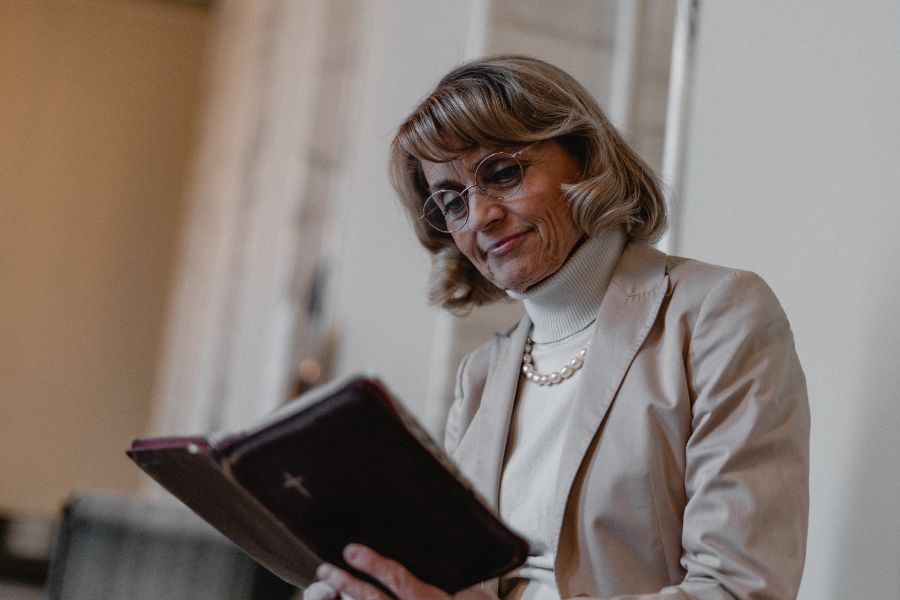
In 2019, Finnish authorities opened a criminal investigation into Päivi Räsänen, a medical doctor, member of parliament, and former interior minister, after she posted a tweet questioning why her church supported the Helsinki pride event that year. The post, which included a picture of a Bible verse, cited her biblical beliefs about sexuality and prompted police to examine whether it violated Finland’s law prohibiting “agitation against a minority group.” Despite the fact that the original tweet remained online and did not violate the platform’s policies, Finland’s prosecutor general brought three criminal charges against Räsänen in 2021.
With legal support coordinated by ADF International, Päivi fought the charges in court. In 2022, a district court in Helsinki unanimously acquitted her, ruling that it was not the court’s role to interpret biblical teachings and ordering the prosecution to pay tens of thousands of euros in legal costs. The government appealed, but in 2023 the Helsinki Court of Appeal unanimously cleared her of all charges. Even after two decisive rulings, however, the prosecutor general refused to drop the case and escalated it to the Supreme Court of Finland, which heard arguments in October 2025—extending a legal battle that began with a single tweet expressing a religious viewpoint.
Billboard Chris
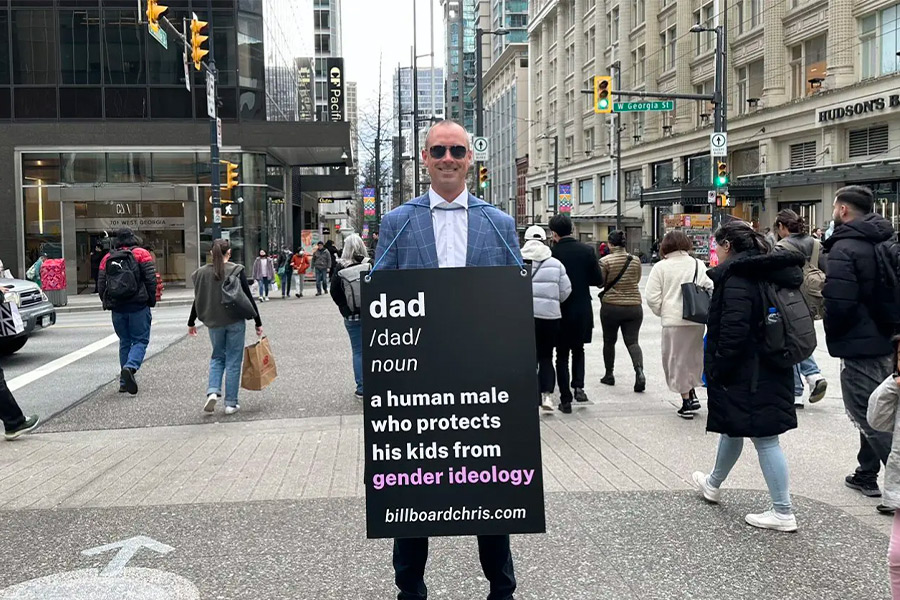
In 2024, Canadian child protection advocate Chris Elston—widely known as “Billboard Chris” for wearing a sandwich board reading “children cannot consent to puberty blockers”—became the target of an Australian censorship order after authorities treated one of his social media posts as “hate speech.” Chris had shared a news article on X criticizing the appointment of a transgender-identifying activist to a policy advisory role connected to the World Health Organization. After the activist filed a complaint, Australia’s eSafety Commissioner demanded that the platform remove the post under the country’s Online Safety Act. Although the platform initially resisted, it eventually geo-blocked the content within Australia following a formal government order.
Chris challenged the censorship with legal support from ADF International and the Australian Human Rights Law Alliance, arguing that treating his criticism as “hate speech” was an attempt to silence lawful debate about gender ideology. After a five-day hearing in Melbourne in 2025, the Administrative Review Tribunal ruled in July that the eSafety Commissioner had wrongly classified the post as “cyber abuse,” striking down the censorship order. The decision marked a significant victory for free expression, reaffirming that controversial viewpoints cannot simply be dismissed as “hate speech” to justify government suppression.
Liam Morrison
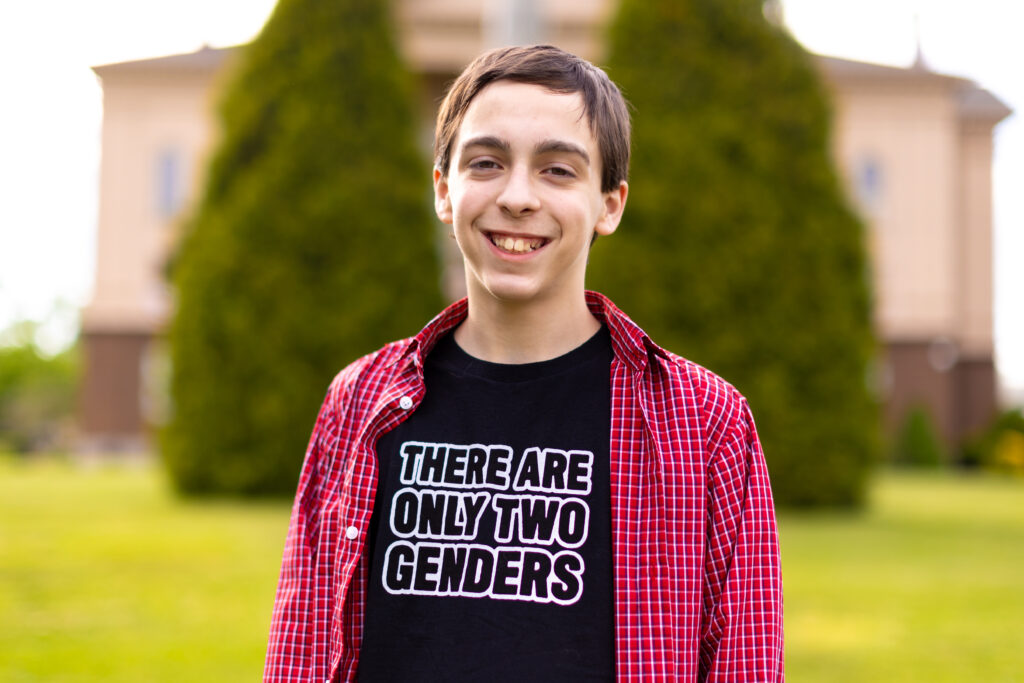
In 2023, Massachusetts middle school student Liam Morrison was removed from class at Nichols Middle School in Middleborough after wearing a T-shirt that read, “There are only two genders.” School officials told the seventh grader he had to remove the shirt, or he wouldn’t be allowed back in class, punishing him for expressing a viewpoint about gender that administrators considered unacceptable.
The school’s dress code prohibits messages on clothing that “state, imply, or depict hate speech or imagery that target groups based on race, ethnicity, gender, sexual orientation, gender identity, religious affiliation, or any other classification.” School officials even admitted that its policy allows students to express viewpoints aligning with the school’s views on gender identity. But expressing a contrary view? That’s too far, apparently.
Liam did not remove the shirt, believing he had a right to express his views, and ultimately left school for the day rather than complying. With support from the Massachusetts Family Institute and Alliance Defending Freedom, Liam later filed a lawsuit arguing that the school had violated his First Amendment rights. Although lower courts ruled against him and the Supreme Court of the United States ultimately declined to hear the case in 2025, Morrison still inspired others around the country to stand against censorship, as the young student received tons of support from strangers.
Jack Denton
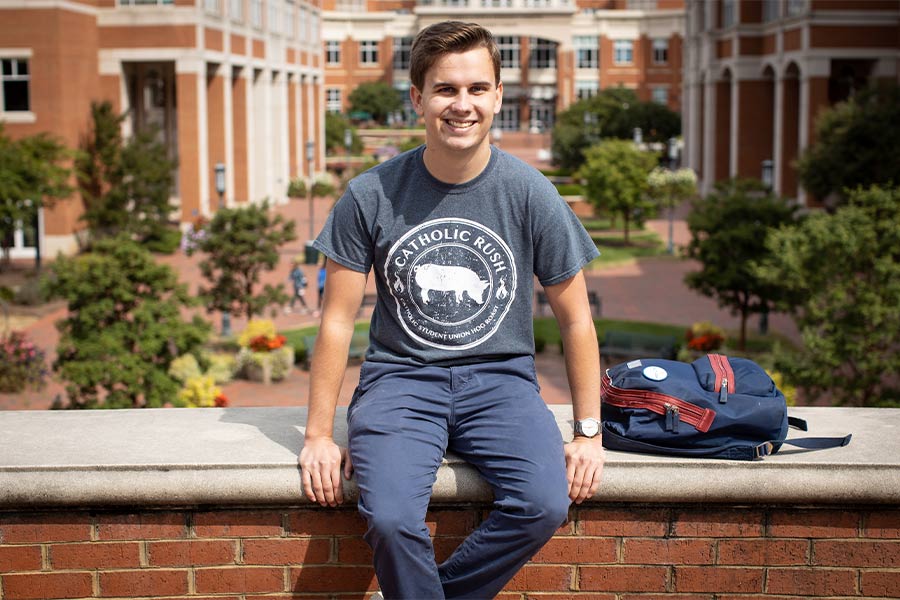
At Florida State University, student senate president Jack Denton faced intense backlash after private messages he shared in a Catholic student group chat were leaked online in 2020. In the messages, Denton lovingly encouraged fellow Catholics to be careful about financially supporting organizations connected to abortion and same-sex marriage. But students labeled his comments “hate and discrimination” and demanded his removal. A campus campaign quickly formed against him, and after a contentious meeting where students publicly denounced him and his beliefs, the student senate voted to remove him from his position.
With legal support from Alliance Defending Freedom, Jack challenged the action, arguing that a public university cannot punish a student for expressing religious beliefs, especially in private conversations. After the university failed to address the situation, ADF filed a lawsuit alleging violations of Denton’s First Amendment rights. After the court issued a preliminary ruling in Denton’s favor, the dispute settled, and the university publicly affirmed its commitment to protecting free speech, restored Denton’s lost wages, and paid damages and attorneys’ fees, underscoring that labeling speech as “hate” or “discrimination” cannot justify silencing protected expression.
Why “hate speech” crackdowns threaten free societies
Taken together, the stories above reveal a troubling pattern. When authorities claim the power to police “hate speech,” the definition rarely stays narrow or consistent. Instead, it expands, gradually but inevitably, to encompass speech that simply challenges prevailing views.
A tweet citing religious beliefs, a peaceful conversation on a sidewalk, a T-shirt expressing a biological reality, or a private message exhorting fellow believers can all suddenly become grounds for punishment.
That is the core danger of a concept as vague and elastic as “hate speech.” Once the power to decide what qualifies rests with government officials, bureaucrats, or institutional gatekeepers, the line between protecting people and suppressing ideas quickly blurs. The label “hate speech” suddenly becomes a rhetorical weapon—one capable of turning ordinary disagreement into something treated as dangerous or even criminal.
A free society cannot function that way. Democracy depends on the ability of citizens to speak openly, debate staunchly, and challenge one another’s ideas without fear that the wrong opinion will bring punishment. The examples of people like Päivi Räsänen, Chris Elston, Liam Morrison, and Jack Denton serve as a reminder that the cost of policing “hate speech” is often paid by individuals simply exercising their rights. And that’s why ADF will stand in support of those who’ve had their freedoms trampled on under the guise of stopping “hate speech.”
Related Articles