In a country that styles itself as a vibrant democracy, a Brazilian veterinary student, Isadora Borges, found herself staring down the possibility of a decade behind bars—not for violence, theft, or corruption, but for words.
At the heart of the matter were two social media posts published in 2020 that questioned prevailing claims about gender ideology. For example, Isadora said that a man who identifies as a woman is still “born male” and “retains their birth DNA.” For statements like that, prosecutors sought a sentence that could have stretched to ten years in prison.
The state is not merely condemning Isadora’s views in the court of public opinion; it is attempting to treat them as a prosecutable criminal offense. For one private citizen, the consequences could have been dramatically life-altering, with extremely high stakes for the broader fight to defend free expression.
Thankfully, that didn’t happen.
Who is Isadora Borges?

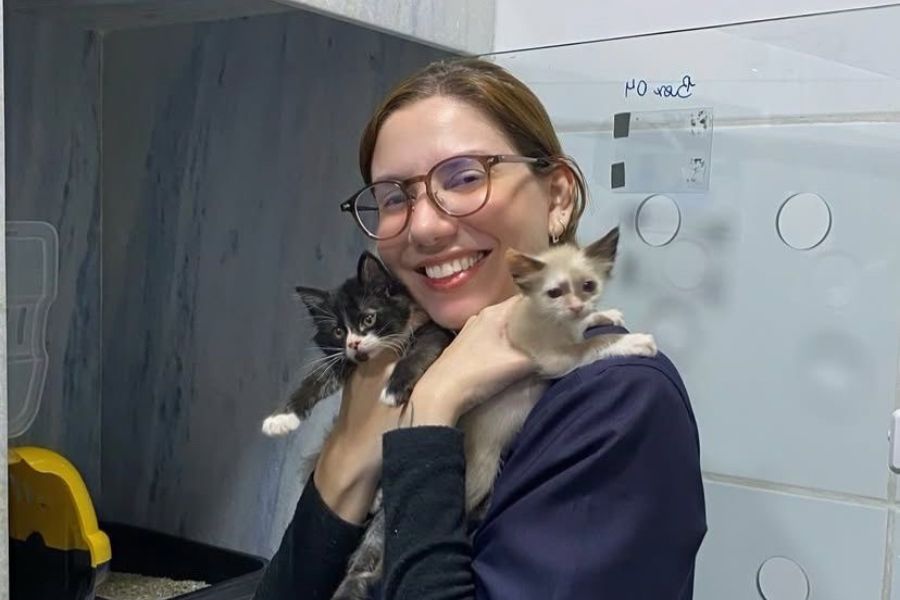
Isadora is not a public figure or a social media influencer. She is a Brazilian veterinary student who simply shared her thoughts on gender ideology on social media. Those remarks drew the ire of a government official who identifies as “transgender,” which initiated her criminal investigation.
In November 2020, Isadora took to Twitter (now X) to peacefully speak out against gender ideology. Her remarks included statements about how “transgender” women “were obviously born male.”
In another post, she stated: “A person who identifies as transgender retains their birth DNA. No surgery, synthetic hormone, or clothing change will change this fact…”
(Isadora has since deactivated her personal X account.)
“I commented on the issue because I care about the truth and protecting women. No one should ever fear going to prison for recognizing biological reality,” said Isadora. “I hope that my case can serve as a turning point in fighting censorship in Brazil.
“Brazilians deserve the freedom to speak openly without punishment.”
Given the truthfulness behind these social media posts, they quickly garnered attention, despite Isadora’s relatively low online profile.
In September 2025, nearly five full years after the remarks were posted, Isadora learned that criminal charges were being pressed against her.
The Brazilian government goes after Isadora
After Isadora’s posts began to go viral, Erika Hilton—a male Brazilian politician who identifies as “transgender”—apparently took great offense to her remarks. Hilton would go on to file a criminal complaint with federal police, alleging “transphobia.”
In March 2025, the Federal Prosecutor of Paraíba filed a criminal complaint against Isadora on two counts of “homo-transphobia,” invoking a 2019 Brazilian Supreme Court ruling, which judicially equated “homo-transphobia” with the crime of racism.
On April 29, 2025, a federal judge admitted the indictment. Isadora was formally notified of the charges on September 2, 2025, and filed her response just one week later.
Alarmingly, each count carries a potential prison sentence of 2 to 5 years, exposing Isadora to up to 10 years’ imprisonment. That’s a potential decade behind bars for posting her personal beliefs on a public social media platform.
Legally supported by ADF International, the first hearing for Isadora’s case was held on February 10, 2026.
“Today’s hearing gave me hope,” Isadora said following the initial court date. “I am grateful that the court took the time to listen carefully and consider the facts.
“I spoke out peacefully on an issue that I care about, and I remain hopeful that the court will recognize my right to express my views and speak the truth without fear of criminal punishment.”
“While we are still awaiting a final decision, today’s hearing held promising signs that the court will uphold Isadora’s right to free speech,” said Julio Pohl, Legal Counsel for ADF International.
Thankfully, in March 2026, a Brazilian Federal Regional Court ruled in favor of Isadora. The Federal Regional Court of the 5th Circuit unanimously decided to dismiss all charges and close the case. The Court reasoned that Isadora’s X comments did not contain any attack, threat, or hostility towards individuals who identify as “transgender,” nor did the remarks attempt to incite any violence.
“The court’s decision brings me great relief and hope that free speech will be protected in Brazil,” Isadora said. “The truth matters. Stating biological facts in a post should never result in prison time. All Brazilians deserve to speak freely and stand for what they believe in, even if their views differ from those in power.”
ADF International stands against the growing problem of Brazilian censorship

Despite Isadora’s favorable ruling, the growing crackdown on speech in Brazil has been a noticeable and increasingly concerning trend.
After Brazil’s Supreme Federal Tribunal handed down a 2019 decision equating “homophobia” and “transphobia” with the crime of racism—despite the absence of legislation enacted by the Brazilian Congress—the legal landscape shifted dramatically. In the years since, Brazilians have increasingly found themselves under criminal scrutiny for speech that, until recently, would have been considered protected expression.
That trend has only accelerated. In 2025, social media figure Isabella Cepa became the subject of a criminal probe over a post addressing gender ideology. Around the same time, Nine Borges—who is not related to Isadora Borges—was investigated for “transphobia” after publishing an Instagram video raising concerns about the funding and political influence of pro-LGBT organizations in Brazil, including criticism of Symmy Larrat, the country’s LGBT National Secretary. Nine is now facing a second criminal investigation for comments on a podcast.
Religious leaders have not been spared either. Assemblies of God Pastor Douglas Baptista faced criminal charges for writing a book articulating a traditional Christian understanding of sexuality. Although those charges were ultimately dismissed—following legal support from ADF International—the case underscored the broader chilling effect that such prosecutions can have on religious believers and anyone expressing Christian views online.
The legal battle extends beyond private citizens. ADF International is also representing five Brazilian lawmakers—Senator Eduardo Girao and members of the Chamber of Deputies Marcel Van Hattem, Adriana Ventura, Gilson Marques, and Ricardo Salles—before the Inter-American Commission on Human Rights. They claim violations of their rights under the American Convention, including freedom of expression, amid what they describe as escalating state censorship that culminated in last year’s nationwide ban of X during Brazil’s municipal election period. For many, the pattern of suppression has been building steadily since 2019.
These developments point to a troubling erosion of core civil liberties. Criminalizing peaceful speech, whether expressed by a student, a pastor, or an elected official, runs headlong into the foundational principles of a free society.
These infringements are gross violations of fundamental freedoms—and that is precisely why ADF International continues to stand in the gap, defending individuals like Isadora Borges and others whose only “crime” is peacefully speaking their convictions aloud.

Related Articles