
Key Takeaways:
- Universities have issued no-contact orders—designed to protect students from harassment and sexual assault—to students simply for expressing their religious or political views.
- Alliance Defending Freedom has stood multiple times with students who were silenced by no-contact orders, and we’ve won.
- Universities have no business censoring students whose views they oppose. That’s a violation of the Constitution, and it can come with a hefty price tag.
Universities are supposed to be places to learn—to step into adulthood, to find long-term friends, to think for yourself, and to soak up information and discern what is good and true. Sadly, that purpose seems to be lost on many universities around the country.
In many universities, censorship has replaced civil debate. A university-imposed orthodoxy has replaced a marketplace of ideas. Students have lost out. Universities have violated their own students’ constitutional rights.
The problem is, unfortunately, structural. University administrators have built a toolkit of bureaucratic instruments—such as so-called “free speech zones,” that, rather than encourage more speech, allow them to suppress speech while maintaining plausible deniability. The discriminatory use of no-contact orders are among the most troubling of these tools, because they arrive dressed in the language of safety and protection.
These directives are intended to protect students alleging assault or harassment, but in actuality, they have been used to censor students because they express certain views the university disfavors.
What is a no-contact order?
In the college context, a no-contact order is an administrative directive issued by college officials to a student for violating school policy. They are intended to be issued to prevent further harassment and sexual assault, prohibiting contact and communication between the accused and the accuser.
No-contact orders require the accused to remain physically away from a specific person. They also prohibit communication, including direct and indirect communication. Whether in person, online, or through other people, the person who has been issued the order cannot communicate with the other.
On paper, this sounds reasonable. Few would argue against protecting a student from a genuine harasser. Unfortunately, the same administrative machinery that shields a victim is often turned against a student whose only “offense” is voicing their opinion.
In fact, some university officials have issued no-contact orders to students for expressing their religious or political views. Rather than protecting students, they stifle speech and violate the freedom of religion of students. Rather than preparing students to come to truth through debate, university officials can censor one side of the conversation. And rather than having students resolve disagreements on their own, university officials step in, leaving a conflict unresolved, speech unsaid, and students denied the opportunity to discuss differing opinions or work through differences.
No-contact orders have been misused to violate free speech
School officials misapplying no-contact orders has happened at many different levels.
In a Graduate Program
In February 2022, Southern Illinois University Edwardsville (SIUE) issued three no-contact orders to Maggie DeJong, who expressed her religious and political views in various settings, including social media.
Maggie DeJong was a graduate student in the art therapy counseling program at the time. She is a devout Christian and shared her views on social media, in class discussions, and in conversations with her peers. Relevant to current events and subject matters of her program, Maggie would share her views on topics such as censorship, COVID-19, critical race theory, and Marxism. Her classes fostered discussion, and Maggie took the opportunity to share her views.
Some students in her program did not like what Maggie had to say. They called her speech “harmful” and said it constituted “harassment” and “microaggressions.” They reported her to the university, leading the school to issue no-contact orders against Maggie and investigate her. Maggie had not violated any policy warranting the no-contact orders. It was all because of the views Maggie expressed.
Universities are not arbiters of the truth. Rather, they are places people can go to discover truth for themselves, through research and discussion.
Alliance Defending Freedom sent a demand letter to the university on Maggie’s behalf, and SIUE rescinded the no-contact orders as a result. Then, the university disclosed the social media posts and text messages underlying the no-contact orders and the investigation. ADF filed a lawsuit to defend Maggie’s free speech.
SIUE eventually agreed to settle the lawsuit, including requiring several professors to undergo First Amendment training, revising its policies and student handbook, and paying $80,000 in damages and attorneys’ fees.
After a Campus Event
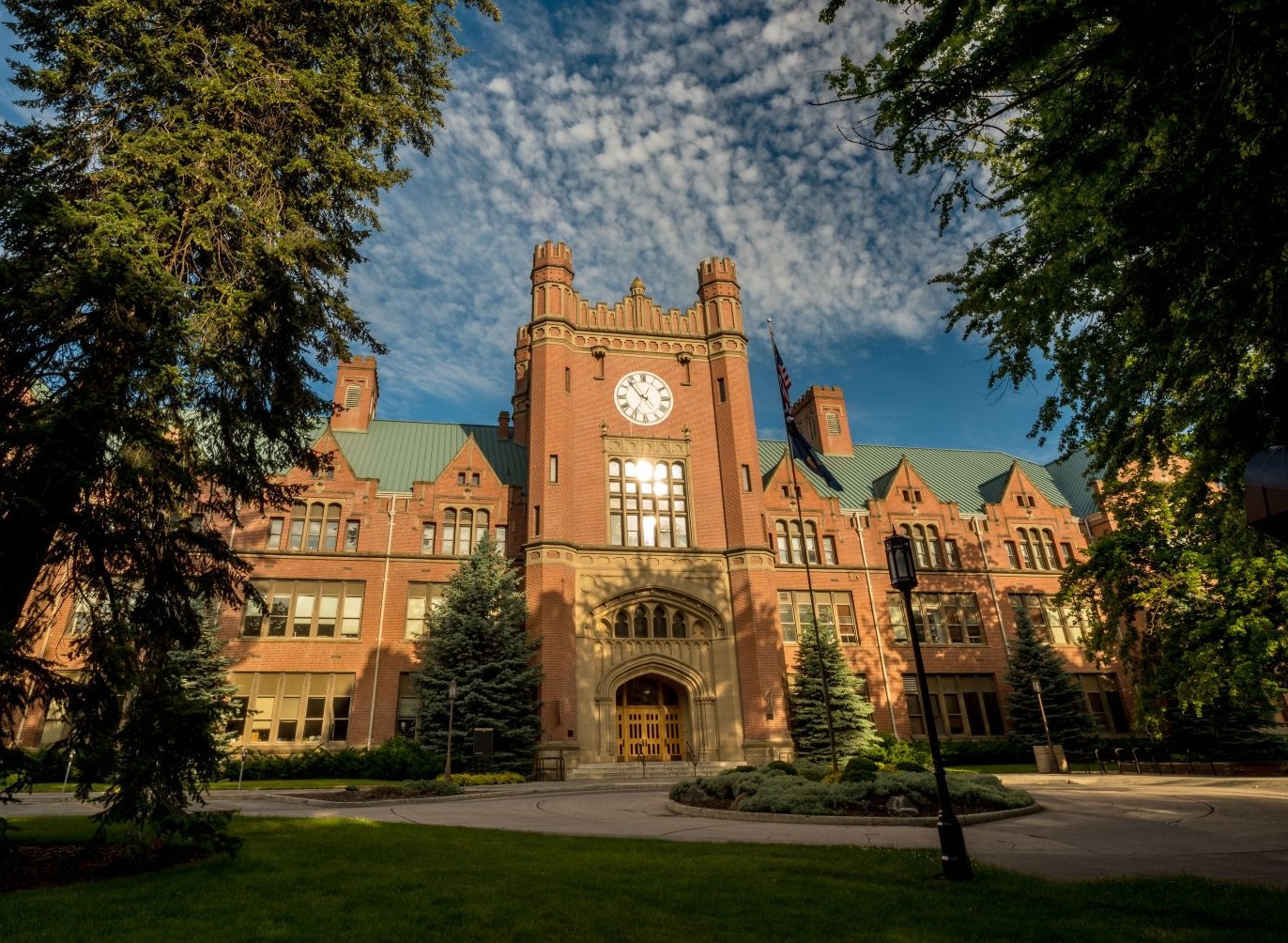
The University of Idaho College of Law issued no-contact orders to three law students in April 2022 and then another to a law professor in May 2022 after they expressed their biblical beliefs on marriage.
Law schools should cultivate an environment of debate and defending one’s ideas, but this university stifled speech instead of allowing thoughtful discussion.
After an anti-LGBT slur was written on a whiteboard at another campus of the university, Professor Richard Seamon and students of the Christian Legal Society (CLS) Peter Perlot, Mark Miller, and Ryan Alexander went to an event on their campus to denounce the slur.
“These students and I wanted to show the law school community that even though we may disagree on some important matters, we stand united against demeaning language that drives division and vitriol rather than mutual understanding and good-faith debate,” Richard Seamon said.
At the event, a student asked the CLS members why the chapter requires members to affirm that marriage is between one man and one woman.
The CLS members explained the biblical reasoning behind this requirement. One CLS student also invited her to discuss further if she wanted to.
This innocuous discussion led to the university issuing no-contact orders, first for Peter, Mark, and Ryan, and then for Professor Richard Seamon as well. The discussion was forcibly closed.
ADF filed a lawsuit in defense of their rights to free speech and religious expression. The district court ruled they were likely to prevail and rescinded the no-contact orders while the case proceeded. Ultimately, the university agreed to settle the case. It permanently rescinded the no-contact orders and paid $90,000 in damages and attorneys’ fees.
In a Law School
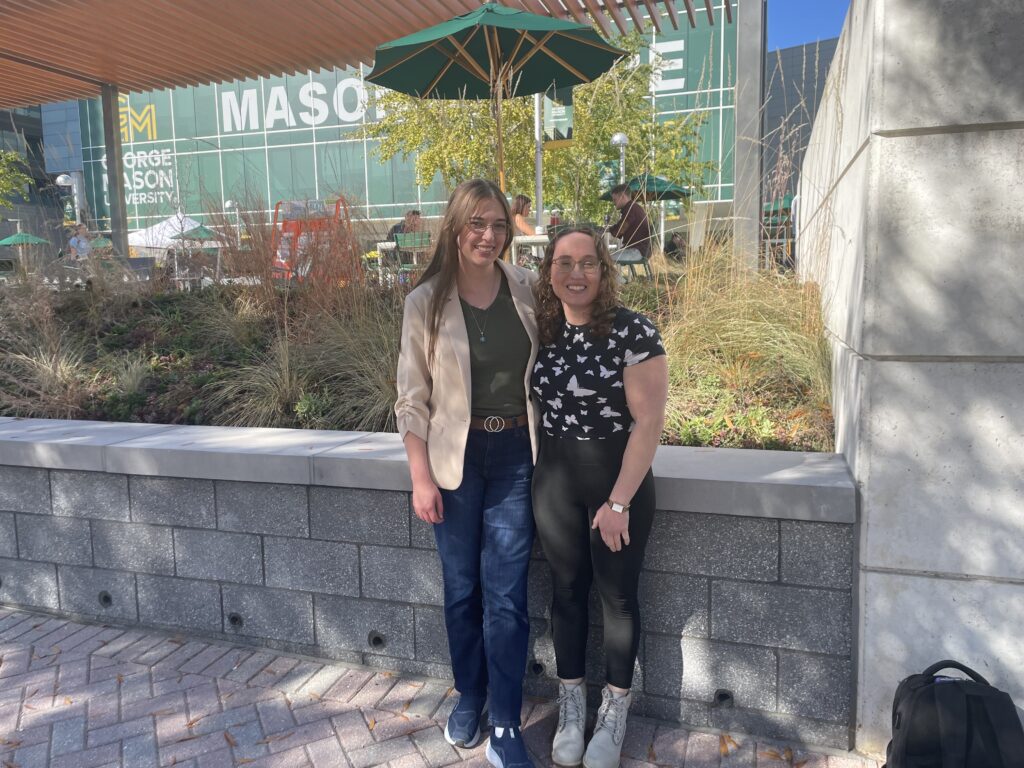
At George Mason University’s Antonin Scalia Law School, two women were issued no-contact orders after expressing discomfort with the proposition of allowing men into women’s restrooms.
Despite being named after a justice who favored free speech, this law school silenced disagreement rather than promoting respectful discussion.
In a class-wide group chat, a student proposed having tampons in the men’s restroom, explained the proposal, and asked if there were any concerns. Selene Cerankosky expressed her concern with the idea, noting that this implies that men’s restrooms would “welcome female occupants” and would also require women’s restrooms to welcome “male occupants,” which would make her “considerably uncomfortable.” Maria Arcara agreed and said that students should have the right to advocate for keeping men out of women’s restrooms and vice versa.
Selene and Maria’s concerns are grounded in their Christian beliefs that God creates everyone either male or female and that sex cannot be changed.
But the university issued no-contact orders to them for expressing these views.
ADF filed a lawsuit against this censorship, and university officials quickly agreed to a settlement. It rescinded the no-contact orders, changed its policy to ensure that no-contact orders cannot be used to suppress, coerce, or punish the exercise of First Amendment rights, and paid $15,000 in damages and attorneys’ fees.
Protecting Students’ Free Speech
Rather than protecting people from harm, these no-contact orders have been used to prevent students from expressing their views and prohibit addressing differing opinions through civil discourse. This is a violation of students’ rights to free speech and free expression.
Not only does issuing no-contact orders silence them just for sharing their views, but it also creates fear of speaking further, lest they be punished. Universities do not have the right to silence certain views just because they disagree.
The damage extends beyond any single student. When universities deploy no-contact orders as censorship tools, they send a message to every student on campus: hold the wrong view, and the institution will move against you. Students will eventually feel compelled to self-censor, to soften their convictions, and to stay quiet.
This is the opposite of how universities should teach their students to think and act.
Thankfully, Alliance Defending Freedom has successfully defended students facing this kind of censorship. We will continue to stand with students to protect their right to live and speak the truth.
Related Articles