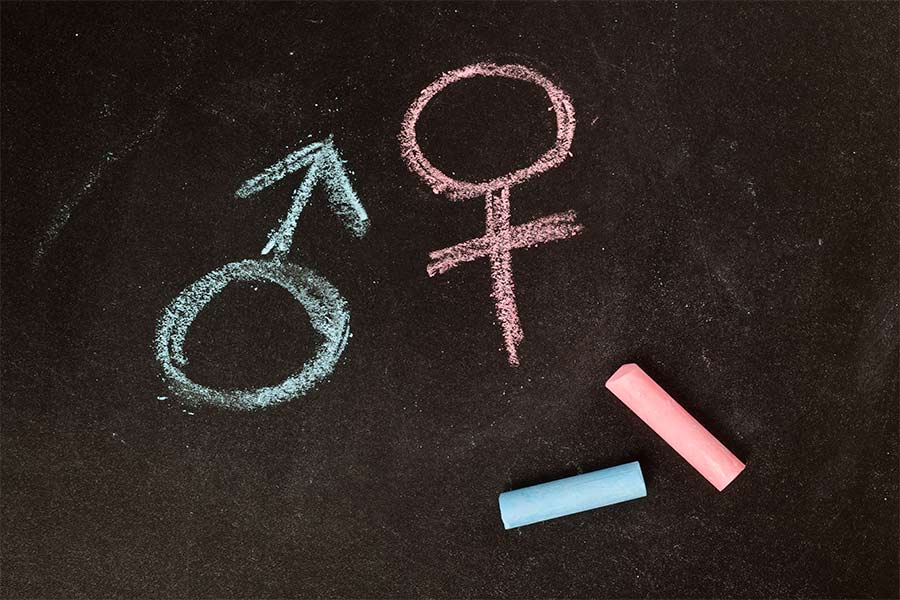

What is a woman?
That simple, yet profound, question has come to define an entire generation of discourse surrounding women’s rights, despite most people knowing very well what makes someone a woman.
Things have gotten so out of hand that legal cases throughout the world are seeking to undermine the very notion of womanhood and female-only spaces.
While these cases are being litigated in different countries and in different contexts, what they have in common is the impact that a bad decision can have on women and the legal protections created specifically for them.
One of these groundbreaking cases from Australia, Tickle v. Giggle (yes, you read that right), is testing the limits of “gender identity” and the right to female-only spaces. It has raised global concerns about truth, safety, freedom, and the rights of women.
A man demands access to women’s space
In 2022, a biological male identifying as a woman filed a discrimination lawsuit against Giggle for Girls—a networking app created exclusively for women—after being denied access. “Roxanne Tickle,” a male blogger, sued on the basis that, being “legally permitted to identify as female” and having had his birth certificate amended, he should be permitted into spaces reserved for women.
Giggle for Girls, meanwhile, argued that women have a right to single-sex spaces, both offline and online. ADF International has supported Giggle’s defense in line with the protections for women enshrined in international human rights law and on the basis that Australian law must uphold the truth of biological reality.
Sadly, the Federal Court of Australia ruled that Roxanne Tickle had suffered from “indirect discrimination.” As a result, the court ordered Giggle to pay $10,000 AUD (approximately $6,500 USD) in compensation and cover Tickle’s legal expenses.
The court dismissed Giggle’s defense, asserting that “…sex is not confined to being a biological concept referring to whether a person at birth had male or female physical traits, nor confined to being a binary concept, limited to the male or female sex…”
In other words, this ruling effectively redefines “sex” and “woman,” with implications for women and girls across Australia and beyond. In 2025, an appeal was heard from August 4th-7th, and the final judgment is now pending.
“A women’s only app isn’t about discrimination. It’s about freedom of speech, belief, and association,” stated Giggle’s CEO, Sall Grover. “We are taking a stand for the safety of all women’s only spaces, but also for basic reality and truth, which the law should reflect.”
While this case is happening in Australia, it’s clear that this ideology has leaked into the U.S. as well.
There’s perhaps no clearer example of this than the numerous cases that ADF has taken that uphold the fact that men and women are equal and yet different:
- This term, the U.S. Supreme Court will hear State of West Virginia v. B.P.J., where ADF will help defend West Virginia’s “Save Women’s Sports” Act. B.P.J. is a boy who identifies as a girl, and courts have allowed him to enter girls’ locker rooms and private spaces, leading to the harassment of ADF clients like Adaleia Cross.
- In September 2025, ADF secured a victory in Mid Vermont Christian School v. Saunders after the Vermont Principals’ Association banned Mid Vermont from participating in state-sponsored sports because the school adhered to its religious belief that God creates us male and female.
ADF recognizes how important this struggle for private spaces is for women.
Unfortunately, the same cannot be said of many ideologically-driven governing bodies, which seem intent on muddying a simple biological truth.
Court ruling undermines international law and women’s rights
The Australian court’s ruling contradicts international treaties like the Convention on the Elimination of All Forms of Discrimination Against Women (CEDAW), which protects women’s rights based on biological sex. Redefining “woman” to include biological males erodes these protections and violates fundamental principles.
Additionally, the court said that Section 5b of Australia’s Sex Discrimination Act, which prohibits discrimination based on “gender identity,” aligns with the International Covenant on Civil and Political Rights (ICCPR). However, the ICCPR makes no mention of “gender identity,” and instead explicitly protects against discrimination based on sex.
In ruling that Tickle, a biological male, was a victim of discrimination when prevented from joining a women’s app, the court has delivered an egregiously flawed judgment that undermines protections for women.
That flawed judgment is why the decision had to be appealed, with a judgment expected shortly. It is a decision that not only undermines single-sex spaces online but also sets a dangerous and wrongful precedent—one that could influence other countries that have ratified the ICCPR or CEDAW, including the UK.
“The stakes are high in this case. Women’s international human rights will be lost if ‘woman’ now includes any male who identifies as such. This decision matters not just in Australia but also to the watching world,” states one of Giggle’s legal representatives, Katherine Deves.
This case has captured the world’s attention—and for good reason. Sex is not a feeling; it is a biological fact. Even the UN’s top expert on Violence against Women and Girls chimed in, responding to the judgment, “The ruling demonstrates the concrete consequences that result when gender identity is allowed to supplant sex and override women’s rights to female-only services and spaces”.
The outcome of this appeal will be a defining moment: the Court must choose between ideology and reality.
It’s that significant.
Learn more about this case at ADF International.

Robert Clarke
Director of Advocacy, ADF International
Related Articles