

Judicial systems exist for a very simple reason: justice. Without justice, people would live in a lawless society with few safeguards.
One of the key tools in pursuing justice is the ability to file lawsuits. The law, ideally, exists as a shield for the innocent and a sword against the wrongdoer—a way to uphold truth, fairness, order, and accountability.
But across the country today, that noble principle has been warped, and the judicial process is increasingly being abused. Traditionally venues of justice, some courtrooms have become a battleground for power, where the process itself is weaponized to punish opponents before a verdict is ever reached.
Rather than correcting wrongs, these lawsuits serve different purposes—to exhaust, intimidate, or bankrupt their opponents. In this inversion of justice, the journey—the endless motions, hearings, and filings—becomes the sentence.
This phenomenon has a name: lawfare.
What do we mean by “lawfare”?
The Cambridge Dictionary has a simple, easy-to-understand definition for “lawfare”: “The use of legal action to cause problems for an opponent.” Collins Dictionary, meanwhile, defines “lawfare” as “the strategic use of legal proceedings to intimidate or hinder an opponent.” Other dictionaries generally echo those definitions.
But notice that none of these definitions signal that lawfare aims to win a case—or even achieve meaningful change that benefits society. That’s because “winning” isn’t always the main goal of lawfare.
When the damage is great enough—time lost, resources drained, reputations tarnished—the verdict itself can matter less than the process. The message has been sent, and it’s had its intended effect.
Unfortunately, this tactic has only been gaining popularity among the powerful, especially those who have an apparent ax to grind.
Pro-life pregnancy centers are the target of lawfare

The prevalence of lawfare means powerful political opponents can weaponize the legal system to target and harass groups they disagree with.
As dystopian as that scenario sounds, it’s happening right now across the globe.
One real-world example of lawfare comes from New Jersey, where a zealous pro-abortion attorney general is targeting a pro-life pregnancy center.
New Jersey Attorney General Matthew Platkin is investigating First Choice Women’s Resource Centers—a pro-life, faith-based pregnancy center with five locations in New Jersey—despite not citing a single complaint against the group. In other words, Attorney General Platkin issued an unlawful subpoena against First Choice.
The Attorney General claims that First Choice, which states repeatedly on its websites that it does not perform or refer for abortions, may have “confused” donors into giving without realizing that First Choice doesn’t perform abortions.
This subpoena is an attack on First Choice because it’s asking for sensitive and constitutionally protected information, and it is meant to disrupt and stop the good work of the center, all because of its pro-life mission.
Platkin has thus demanded that First Choice turn over troves of private data, which includes highly sensitive information like the names, phone numbers, and addresses of First Choice donors.
But Attorney General Platkin’s demand for donor information causes its donors to think twice before supporting the faith-based nonprofit. And the U.S. Supreme Court has already said that such compelled disclosure significantly impairs First Amendment rights. This probe also interferes with First Choice’s vital mission to serve women and families in its community by diverting its resources.
How is it fair for First Choice, its donors, and its clients to have to go through this punishing ordeal based on ideological differences with a state official? Not only is it unfair, but it’s also unlawful, and that’s why ADF is helping First Choice stand against this targeted government harassment at the U.S. Supreme Court.
Lawfare is a global threat

Unfortunately, lawfare is hardly unique to New Jersey. We see it all over the world.
In Finland, for instance, ADF International has supported the legal defense of Päivi Räsänen, which may be one of the more blatant examples of lawfare you’ll ever see.
In 2019, Dr. Päivi Räsänen, a member of Finland’s parliament, posted Bible verses on Twitter following her church’s decision to sponsor an LGBT “pride” event. This simple gesture sparked a tidal wave of controversy, as Päivi was charged with “hate speech” by the prosecutor general of Finland.
Päivi’s criminal prosecution has been dragged out by the Finnish prosecutor general for over six years.
Päivi has already been acquitted by two separate courts. In March 2022, a district court in Helsinki dismissed all charges against Päivi. The prosecutor persisted and took the case to the Helsinki Court of Appeal. That court also unanimously acquitted Päivi.
And yet the prosecutor general couldn’t let it go. The case was eventually taken all the way up to the Finnish Supreme Court, where Päivi’s case was heard—again—on October 30, 2025. Päivi now awaits what will hopefully be a decisive legal win.
But even a win does not erase the draining, nearly seven-year lawfare saga that Päivi endured.
Lawfare can drag on and on
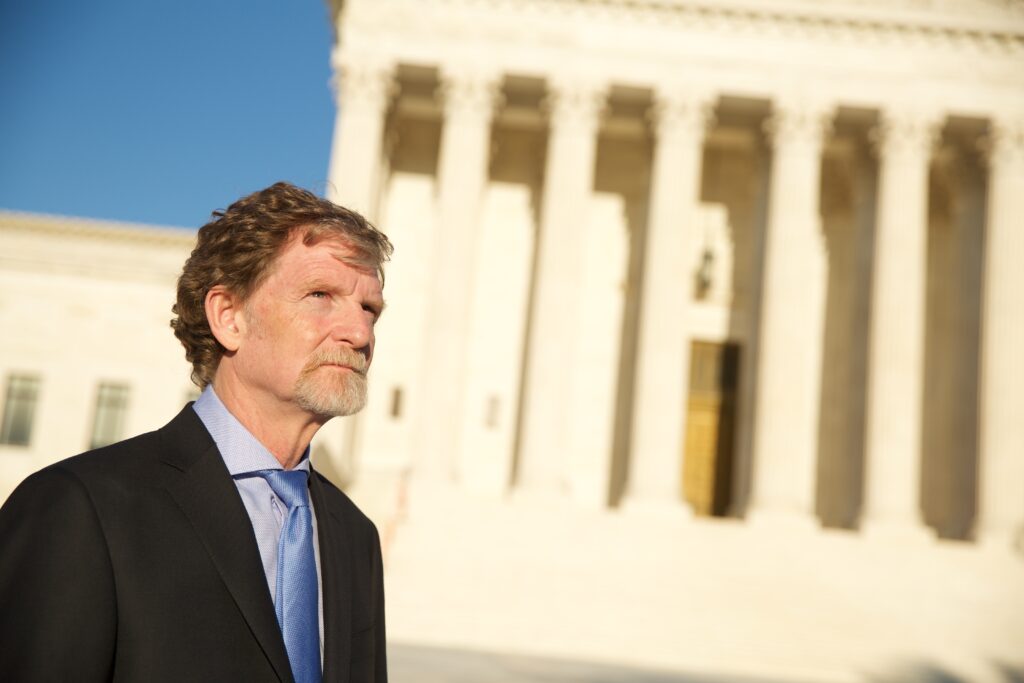
Lawfare can take a heavy toll, draining time, energy, and resources. Instead of spending time with their families and living normal lives, people find themselves tied up in court appearances, legal paperwork, and even national media attention. Just ask Jack Phillips. The humble Colorado cake artist was in court for over 12 years due to not one, not two, but three separate legal cases targeting him.
In 2012, Jack politely declined to create a custom cake that celebrated a same-sex wedding because the cake’s message violates his beliefs about marriage. That saga eventually turned into Masterpiece Cakeshop v. Colorado Civil Rights Commission.
In June 2018, Jack finally received the victory he deserved in that case. In a 7-2 ruling, the U.S. Supreme Court held that the state had acted with “clear and impermissible hostility” toward Jack’s religious beliefs, violating the First Amendment.
But just when Jack thought he could breathe a sigh of relief, the same Colorado government agency decided to pursue him a second time—mere weeks after the high court’s decision. This time around, Colorado officials came after Jack because he had declined to create a custom cake celebrating and symbolizing a so-called “gender transition,” in what eventually became Masterpiece Cakeshop v. Elenis.
After Jack filed a federal lawsuit, the State backed off. But things still weren’t over for Jack.
The individual who requested the “gender-transition” cake (and who also happens to be an attorney) decided to sue Jack in state court. Unfortunately, a Colorado trial court ruled that Jack could be forced to express things he does not believe. And a state appellate court affirmed that judgment. But Jack didn’t back down. Alliance Defending Freedom appealed the case on his behalf to the Colorado Supreme Court.
The Colorado Supreme Court eventually dismissed the lawsuit brought forth in Masterpiece Cakeshop v. Scardina in October 2024, finally bringing Jack’s legal saga to a conclusion.
But think about that for a minute: Jack Phillips, the winner in all three cases, still had to go through three cases over 12 years in a courtroom, when the man should’ve been behind his cakeshop counter.
The double-edged sword of lawfare
The thing about lawfare is that everyone—regardless of political or ideological persuasion—should be fundamentally opposed to it.
Lawfare is as slippery a two-way street as one can imagine, and it should be unacceptable to anyone who values freedom and fairness.
If the government can suddenly engage in lawfare against a cause you oppose, what’s to stop the government from targeting a cause you support?
If Päivi and Jack can be dragged through years-long legal battles for their sincerely held beliefs, what’s to stop someone with the opposite beliefs from facing similar scrutiny?
That’s why ADF is committed to combating lawfare across the globe. Lawfare should never be waged to silence, wear down, and intimidate ideological opponents. In a truly free society, the courtroom and legal process should forge justice, not silence dissent.