
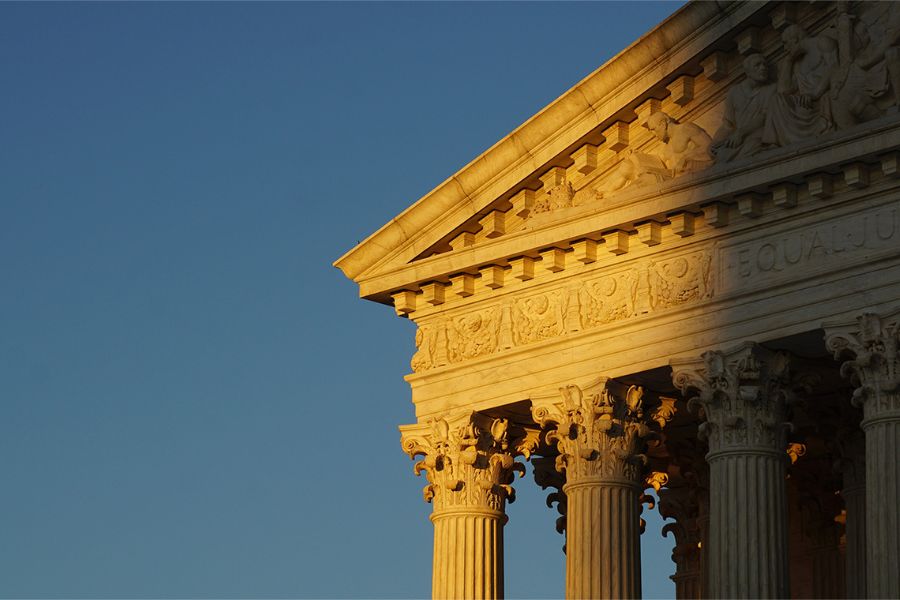
For most Americans, the Supreme Court feels distant—nine robed Justices in Washington issuing rulings that ripple into classrooms, boardrooms, churches, and living rooms across the country. But those sweeping decisions don’t materialize out of thin air. Every landmark ruling begins as a dispute somewhere else—often in a lower court, involving ordinary people who likely had no idea their case might one day shape national law.
The path to the Supreme Court—long, selective, and often unpredictable—is a reminder that constitutional law develops deliberately, case by case. But understanding how a case reaches the Supreme Court isn’t just legal trivia. It’s a window into the genius of our Constitution and how power is balanced in the American system of government.
The two main paths to the Supreme Court
There are two ways that a case can reach the Supreme Court: appellate jurisdiction and original jurisdiction.
Appellate jurisdiction
Appellate jurisdiction is the Supreme Court’s power to review decisions made by lower courts—and it’s how the overwhelming majority of cases reach the Justices. The authority comes straight from Article III, Section 2 of the Constitution, which grants the Court appellate jurisdiction “with such Exceptions, and under such Regulations as the Congress shall make.” In practical terms, that means the Supreme Court does not conduct trials, hear witnesses, or determine facts. It reviews the legal rulings of other courts to decide whether the law was interpreted and applied correctly.
Most cases arrive through one of two pipelines.
A federal case typically begins in one of the 94 U.S. district courts, proceeds to one of the 13 regional circuit courts, and can then be petitioned to the Supreme Court, which has discretion whether to hear the case.
A state case, meanwhile, follows its own ladder of trial courts, intermediate appellate courts (in most states), and ultimately the state’s Supreme Court. But for the U.S. Supreme Court to step in on a state case, there must be a federal issue at stake: a constitutional claim, a federal statute or regulation, or a question about a treaty.
Original jurisdiction
Original jurisdiction is the exception that proves the rule. Unlike appellate jurisdiction—where the Supreme Court reviews decisions made elsewhere—original jurisdiction allows a case to begin at the Supreme Court itself.
The authority comes directly from Article III, Section 2 of the Constitution, which grants the Court original jurisdiction in cases affecting ambassadors, public ministers and consuls, and in disputes “in which a State shall be Party.” In these matters, the Supreme Court functions less like a reviewing body and more like a trial court.
In practice, original jurisdiction cases are rare and highly specialized. The most common examples are disputes between states—often over borders, water rights, or other sovereign interests.
Because the Supreme Court is not designed to conduct trials, it typically appoints a “special master,” a neutral legal expert who gathers evidence, oversees proceedings, and submits recommendations to the Justices. The Court then reviews the special master’s findings, which are submitted via a report, and may accept briefing and hear oral arguments before issuing a final, binding decision.
How does the Supreme Court decide whether to take a case?

Regarding appellate jurisdiction, when a party loses in a lower court and believes a significant legal error has occurred, that party must formally ask the Supreme Court to take the case. The primary vehicle for doing so is what is called a “petition for a writ of certiorari,” often shortened to “cert petition.” A cert petition is a request for the Supreme Court to take the case.
In deciding whether to grant review, the Court looks for issues that extend beyond the immediate parties. The Supreme Court is more likely to take cases that present questions of national importance, involve lower courts misconstruing its decisions, or reveal disagreements among federal appellate courts that need uniform resolution.
Once a cert petition is submitted, the Justices will vote on whether to take the case or not. It takes the votes of at least four of the nine Justices to grant certiorari—a practice often called the “Rule of Four.” Separate votes govern emergency relief: five Justices are generally required to issue a stay, such as temporarily halting an execution, although, in limited circumstances, a single Justice may grant a temporary stay pending review by the full Court.
Should the Justices decide not to hear a case, the lower court’s ruling becomes final.
Why is it so hard for a case to reach the Supreme Court?
Out of 7,000 to 8,000 requests annually, the Court grants only around 100 to 150, and less than 80 are orally argued. So the Supreme Court declines to decide the vast majority of petitions filed. This is intentional, as the Supreme Court’s rulings are designed to have maximum legal impact.
In addition, the Rule of Four requires that a case not only raise an important legal issue but also persuade at least four Justices that it’s a good case—factually and procedurally—to resolve that issue. Many cert petitions are turned away not because they lack merit but because the Court believes the issue needs further development in lower courts, hasn’t been preserved, or simply won’t fit within the limited docket the Justices can realistically manage each term.
In other words, there are many reasons for the Supreme Court to deny a cert petition and fewer reasons for it to take one.
What happens after the Supreme Court decides to hear the case?
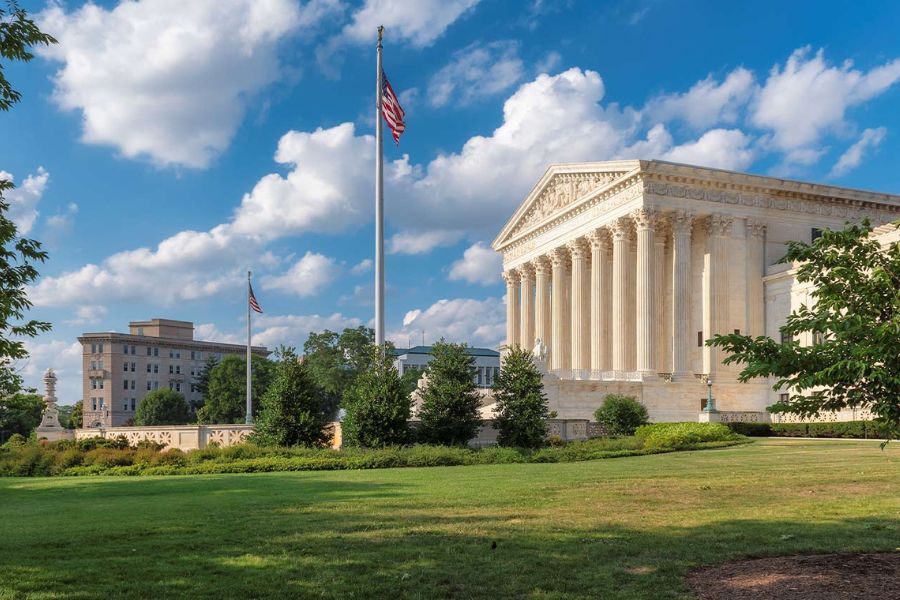
Once the Justices grant certiorari and agree to hear a case, it is formally added to the Court’s argument docket, and a structured briefing schedule begins.
The party that asked the Court to take the case—the petitioner—must file a written brief laying out the legal arguments on the specific questions the Court agreed to review. That opening brief is capped at 13,000 words. The opposing side, known as the respondent, is then given its own deadline to submit a response brief, also limited to 13,000 words.
After those primary filings, the petitioner may submit a reply brief addressing arguments raised by the respondent. These follow-up briefs are limited to 6,000 words and are designed to highlight where the parties agree and disagree.
The case can also draw input from outside voices. The U.S. government—typically through the Solicitor General—often weighs in when federal interests are implicated. Additionally, outside organizations or individuals who are not directly involved in the lawsuit but have an interest in the Supreme Court’s decision may file amicus curiae (“friend of the court”) briefs offering their own legal analysis, expert opinion, or additional facts.
Once all the briefs are filed, oral arguments can begin. During these arguments, each side has approximately 30 minutes to present its case. The petitioner’s counsel goes first, then the respondent’s counsel. But if the petitioner’s counsel reserves time for a rebuttal, they have time to counter the respondent’s argument at the end. After a few minutes of uninterrupted introduction, the Justices will intersperse these presentations with questions pertaining to the case. Then the Chief Justice will ask each Justice—in order of seniority—if he or she has additional questions before the advocate sits down.
Once oral arguments have concluded, all that remains is to wait for the Supreme Court’s decision.
The methodical nature of a case reaching the Supreme Court is by design
For all the mystique that surrounds the Supreme Court, the path to its docket is methodical, deliberate, and narrow by design. Cases do not simply “go to SCOTUS” because they are controversial or emotionally charged.
They must climb through layers of judicial review, survive procedural hurdles, and ultimately persuade at least four Justices that the legal question presented is important enough to warrant the Court’s limited time. By the time a dispute reaches 1 First Street, it has already been tested, refined, and often filtered through multiple courts.
That structure is not accidental. It reflects a system built to elevate only the most consequential legal questions that demand national clarity, uniformity, or final resolution. Understanding that process demystifies the Court and underscores just how significant it is when the Court grants review.