
Key Takeaways
- Washington voters passed Initiative 638—reserving girls’ sports for only girls—by double digits, and it’s poised to go into effect on Dec. 3, 2026.
- Less than a week after voters made their choice, the ACLU of Washington helped file a lawsuit asking to block Initiative 638.
- Alliance Defending Freedom attorneys asked the court to let Female Athletes United intervene to defend the initiative and uphold the will of the voters, who have made clear that girls’ sports are for girls.
Washington voters made their voices heard. By a 56-44 margin, they passed Initiative 638 to reserve girls’ sports for girls, so female athletes can compete on a fair and safe playing field. Now the ACLU of Washington and its allies are asking a court to undo that decision before it can even take effect.
Female Athletes United (FAU) wants to help defend it. Many of the nonprofit’s Washington members know what’s at stake because they have lined up against males in their own races. Some lost places on the podium. One gave up her shot at the postseason rather than compete. Their experiences are exactly what Initiative 638 was written to prevent.
ADF attorneys have asked the court to allow FAU to join the case as a defendant, so the girls this law protects can be heard before a judge decides their fate.
Meet the girls standing up for a level playing field
Female Athletes United is a nonprofit coalition of current, former, and prospective female athletes, along with coaches and family members, who want women’s and girls’ sports to stay reserved for women and girls. Founded in November 2023, FAU has gone to court before to protect its members’ opportunities. In New Hampshire, it intervened to defend a state law protecting girls’ sports, and the challengers later dismissed their case with prejudice, leaving the law in place.
Five of FAU’s Washington members have submitted declarations in support of its motion. Here are their stories.
Ahnaleigh Wilson
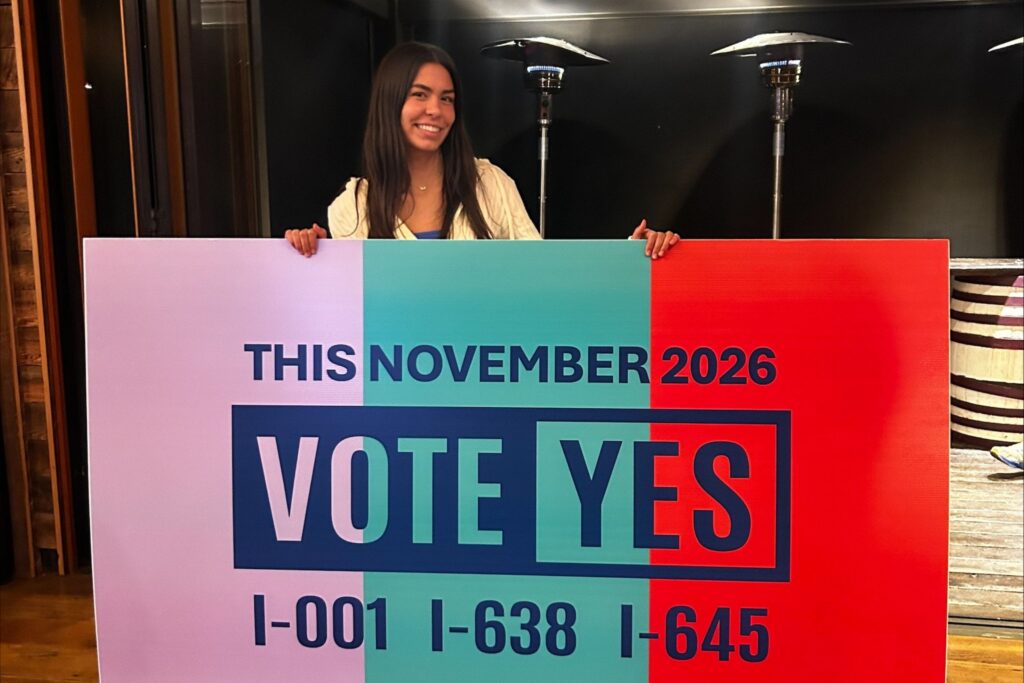
Ahnaleigh is a junior and team captain at Eastmont High School and has qualified for the state cross-country championship all three years of high school. This year, she ran it with a bone stress injury because she wanted to run and didn’t want a male athlete to overshadow her accomplishments. He would still finish ahead of her. She has long been passionate about defending fairness in women’s sports, including gathering signatures herself for Initiative 638.
Elise Bierer

Elise is a sophomore at Battle Ground High School and trained through the spring and summer to earn a varsity spot—which she made. “I was so proud,” she recalls. At a recent district meet, she walked off the starting line rather than race a male runner, the only runner to do so, because she knew it was unfair for her to have to race him. Based on her prior times, she likely would have advanced to regionals—but Elise knew there were some stances too big to ignore.
Soleil Hoefer
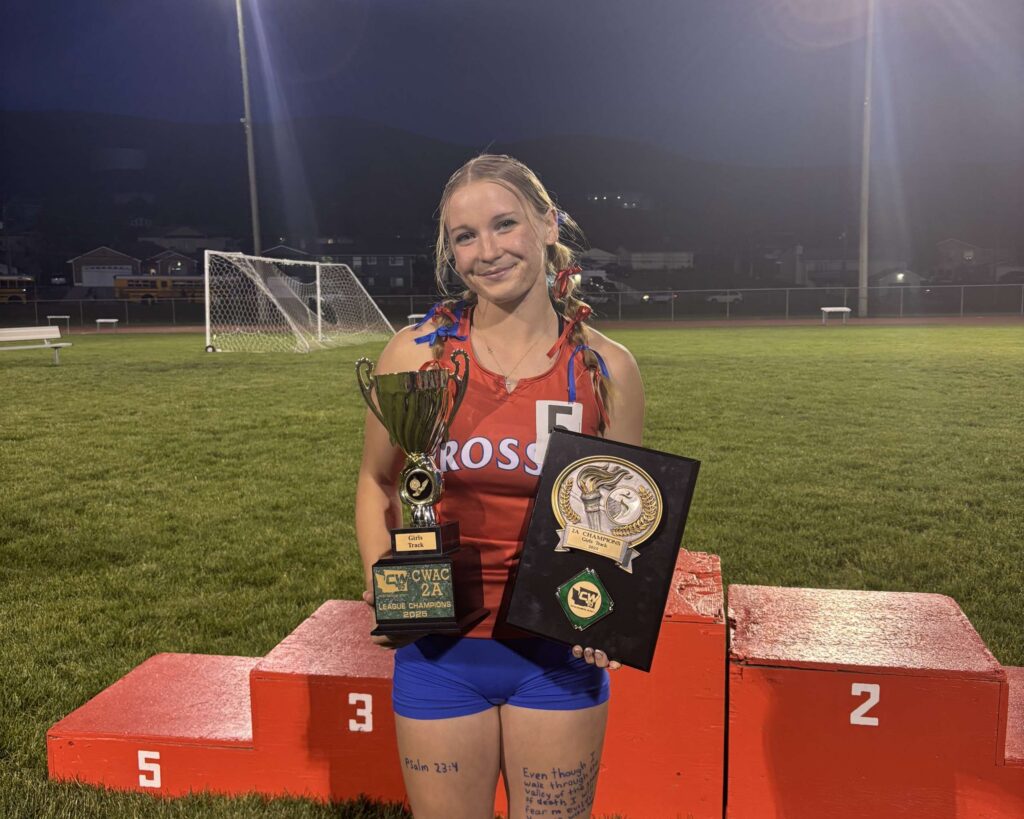
Soleil is a 2025 Prosser High School graduate and was named her team’s Female Track & Field Athlete of the Year three years in a row. At the 2025 state meet, an East Valley relay team that included a male athlete placed second in the 4×400-meter relay and bumped her team down a spot. “This specific race is very much a mental battle, and knowing you are going to lose anyway makes you not even want to compete.” The male athlete also won the girls’ 400-meter final. Soleil still loves sports and now plays soccer on a college scholarship, and she knows that blocking Initiative 638 would hurt her younger former teammates and her sister, who play girls’ high school sports.
Charlie Garrett
Charlie is a junior and team captain at Skyview High School. Charlie calls running the place where she feels calmest, and she hopes to earn a college scholarship for it. “I absolutely love running,” she said. Alas, that love soon turned to frustration. This fall, Charlie chose to step off the course in protest rather than race a male runner who joined the opposing girls’ team. She then lined up against him three more times. At districts, he passed her late in the race and took second. She was bumped to third. “I do not believe it is fair or right for a male to compete in girls’ cross country,” she explains. “Boys have more lung capacity, longer legs, and greater speed. Any runner knows this.”
Sierra Retzlaff
Sierra is a sophomore at Skyview, and teammates with Charlie. Sierra qualified for the state cross-country meet this season. Like Charlie, she also declined to race that runner the first time she faced him, then raced him three more times. “I protested to show I was not okay with him running in the girls’ race,” she said. If a court blocks the initiative, Sierra is considering running for a club team rather than her school team. She put the entire situation rather succinctly: “Girls should not have to give up opportunities to males.”
Voters listened to female athletes…
This fall, FAU’s Washington members saw firsthand what happens when girls’ sports are open to males. A male runner who identifies as female at Camas High School started the 2026 cross-country season on the boys’ junior varsity team. By mid-September, he was racing against girls. Within weeks, he was winning.
This was the same athlete who caused Charlie and Sierra to walk off the course in protest. It was the same athlete whose participation cost Elise her shot at regionals. In fact, many of the athlete’s own teammates walked off the starting line in a race rather than compete against a male.
The girls who kept racing lost places. At districts, the runner passed Charlie in the final stretch, so she finished third instead of second. The girl who placed fourth was left off the podium altogether. At regionals, he beat Charlie by one second and displaced other female athletes. His participation also kept the girl who finished 50th from advancing to state. And at state, he passed about 30 girls in the final 800 meters, including Charlie.
These stories understandably drew quite a bit of attention. Girls were being displaced in athletic competition by someone who would’ve struggled to stand out among boys. In one cross-country meet, the male athlete posted a time of 22 minutes and 18 seconds (a high school cross-country race is about three miles). Had the male athlete competed with boys that day, he would’ve finished 60th out of 96 runners. By competing against girls, the male athlete’s time was good enough for 7th place. The unfairness of it all is readily apparent.
But that doesn’t mean young female athletes can’t do anything. With Initiative 638 offering a chance to protect women’s sports in Washington, many of these FAU athletes knew they needed to take a stand ahead of the 2026 midterms. Ahnaleigh helped directly collect signatures for the initiative. Sierra and Charlie both spoke out publicly and encouraged Washington voters to help protect women’s sports.
And praise God, Washington voters did exactly that during the November midterms, passing Initiative 638 by a double-digit margin.
…And the ACLU sued anyway
Despite the people voting to protect girls’ sports, this was apparently an issue for the American Civil Liberties Union. Less than a week after the initiative passed, the ACLU of Washington, with Legal Voice and Pacifica Law Group, filed a lawsuit on Nov. 9 to block the initiative from taking effect. They represent several groups, including the Washington Education Association (WEA), the state’s largest teachers’ union.
“Washington voters did exactly what the Supreme Court said states may do: they protected girls’ sports, and by double digits. Now the ACLU is asking a court to overturn their decision, but the ACLU can’t change truth or biology,” said ADF President, CEO, and Chief Counsel Kristen Waggoner. “Girls deserve equal opportunity, fairness, and safety, and more than 1.7 million voters said so.
“It is shameful that the ACLU would sue to take that away from our daughters.”
Alliance Defending Freedom would soon thereafter file a motion to intervene in the lawsuit, to help protect girls’ sports in Washington. This issue goes far beyond just one sport. Other female athletes in the state, like Kallie Keeler, have been victims of policies allowing male athletes to compete in girls’ sports.
So, if activist groups want a fight over this, game on.
The bottom line
No girl should be sidelined in her own sport by a male. Washington voters moved to ensure that, and their will should be upheld.
Washington Education Association v. State of Washington
- September–November 2026: Over multiple meets and races in Washington, a male athlete consistently displaced female athletes, and some girls gave up races rather than compete against him.
- November 3, 2026: Washington state voters pass Initiative 638.
- November 9, 2026: The ACLU of Washington and other related organizations file suit to block Initiative 638 from taking effect on Dec. 3.
- November 13, 2026: ADF attorneys file a motion asking the court to let Female Athletes United intervene in Washington Education Association v. State of Washington.
Related Articles