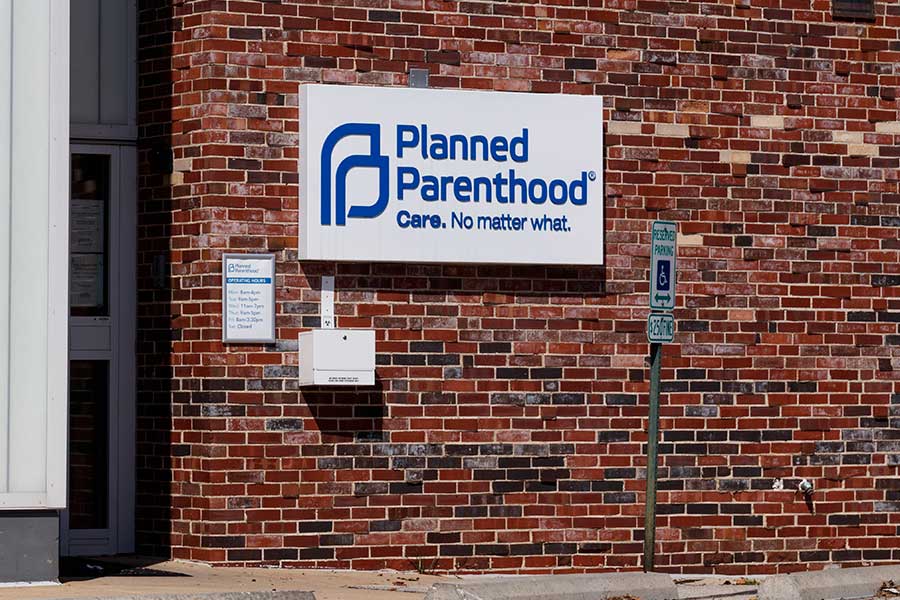
Planned Parenthood bills itself as an organization that helps women. Its website promises “trusted care, every step of the way,” and one of its stated goals is to “[ensure] that everyone in their community has high-quality, affordable care.”
But a recent article in The New York Times has once again shed light on Planned Parenthood’s true priorities—and provided a compelling case for why states should be able to direct taxpayer funding away from the abortion giant.
Planned Parenthood prioritizes ending unborn life
First, it is important to understand that Planned Parenthood’s primary goal is to maintain its position as America’s number-one abortion provider. According to Planned Parenthood’s 2022-2023 Annual Report, it performed 392,715 abortions between Oct. 1, 2021, and Sept. 30, 2022—an increase of more than 70 percent from just 20 years ago.
During the last 15 years, it has drastically reduced contraceptive services and cancer screenings, all while increasing the number of abortions it performs. A review of the 2022-23 annual report by the Charlotte Lozier Institute found that “abortions made up 97.1% of Planned Parenthood’s pregnancy resolution services, while prenatal services, miscarriage care, and adoption referrals accounted for only 1.6% (6,316), 0.9% (3,604), and 0.4% (1,721), respectively.”
These raw numbers alone should be enough to prove that Planned Parenthood exists mainly to peddle abortions, and therefore states shouldn’t be forced to give the organization taxpayer money. But The Times’ investigation reveals even deeper problems.
Mistreatment of patients and employees
Planned Parenthood has received massive donations in recent years. In 2022, for example, it capitalized on the U.S. Supreme Court’s overturning of Roe v. Wade and raised $498 million in donations, according to The Times.
But many of Planned Parenthood’s state affiliates have complained about a lack of funding. The Times revealed that at a facility in Omaha, Nebraska, a clogged toilet caused sewage to leak into an abortion recovery room for two days in 2024. Employees shoved exam table pads under the door to try to stop the leak, but some patients reportedly vomited from the smell.
Similarly, in New York, Planned Parenthood was reported to have closed four facilities due to budget problems. And Planned Parenthood of Northern California made a “hard funding choice” last year when it discontinued a prenatal program that had been serving 200 to 250 low-income women each month.
So, how does an organization raking in hundreds of millions of dollars in donations each year have such problems? As The Times put it, “the majority of the money is spent on the legal and political fight to maintain abortion rights.”
Instead of using its funds to provide vulnerable women with the “trusted care” it promises, Planned Parenthood is using them to advocate for abortion. Both patients and employees have suffered because of this decision.
The Times also recounted to story of Nakara Alston, who got an abortion at a Planned Parenthood facility in Albany, New York. Afterwards, she experienced pain and bleeding for weeks, eventually going to an emergency room, where staff found that the baby was still in her womb.
Nakara gave birth to her baby 12 weeks after Planned Parenthood allegedly botched her abortion, and the baby quickly died. She filed a malpractice suit against Upper Hudson Planned Parenthood, The Times reported.
In Nebraska, another Planned Parenthood facility inserted an IUD in a woman they failed to realize was four months pregnant. The woman was rushed to an emergency room hours later, where she gave birth to a stillborn child.
Employees told The Times they didn’t receive adequate training for patient intake, blood draws, and other important tasks, putting both the employees and patients in dangerous positions. Others have sued Planned Parenthood for refusing to pay overtime, for pushing out staff who needed time off to care for newborn babies, and for firing staff who complained about discrimination and other practices.
Meanwhile, chief executives of five New York affiliates made a combined $1.5 million one year before scarce resources forced the affiliates to merge into a single entity. After that merger, two executives left in part because they weren’t keen on taking pay cuts, The Times reported.
South Carolina’s Supreme Court case
Planned Parenthood claims that it needs Medicaid funding so it can provide holistic care for women. But as its mismanagement of funds and mistreatment of patients and employees has proven, the organization cares much more about peddling abortion and pro-abortion politicking nationwide.
In South Carolina, a statute prohibits taxpayer funds from being used for abortions. And because money is fungible, funneling taxpayer funds to abortion facilities for any purpose indirectly subsidizes abortions. This is especially true for Planned Parenthood given its prioritization of abortion over other services.
As a result, South Carolina Gov. Henry McMaster ordered the state’s Department of Health and Human Services (DHHS) to deem abortion facilities, including Planned Parenthood, unqualified to receive Medicaid funding if they continue performing abortions. Planned Parenthood and an individual plaintiff immediately sued to have that funding reinstated. And they won that lawsuit in federal court.
Alliance Defending Freedom appealed to the U.S. Supreme Court on behalf of South Carolina’s DHHS Director. The Supreme Court agreed to hear the case, Medina v. Planned Parenthood South Atlantic, and ADF Senior Counsel John Bursch presented oral argument before the High Court in April 2025.
In June 2025, the Supreme Court issued a decision allowing South Carolina to direct Medicaid funding away from Planned Parenthood and other abortion providers. The ruling frees South Carolina and other pro-life states to instead direct Medicaid funding to real, comprehensive healthcare providers. We’re grateful for South Carolina Gov. Henry McMaster and his administration for persevering through many years of legal battles to achieve this victory. Other states should follow their brave example.
Americans have repeatedly rejected taxpayer funding of abortion, and they should not be forced to fund political organizations like Planned Parenthood. The Supreme Court’s decision is a massive step in the right direction.

Related Articles