
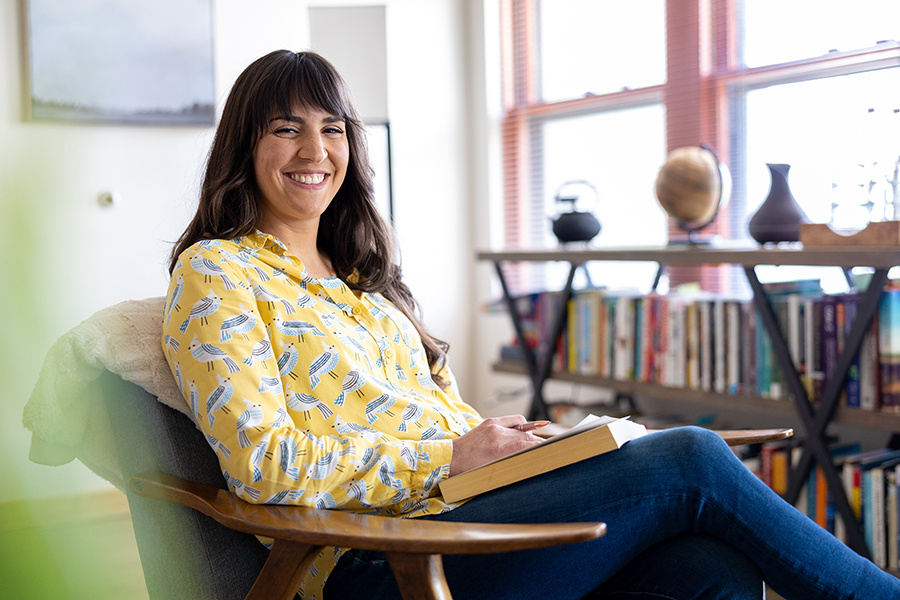
Kaley Chiles remembers the day she first knew she wasn’t cut out for sales.
“I sold Cutco for about a minute in high school,” she says. A friend learned she’d taken the job, pitching high-quality cutlery, and persuaded Kaley to make her presentation to his aunt, a former chef. Cutco offered knives in a variety of “packages,” from everyday cutting to some rather fancy stuff. To Kaley’s astonishment, the aunt zeroed in on the most expensive package.
“She was an easy sell,” Kaley recalls, but at the last minute, the woman’s enthusiasm stalled and slid into reverse. “I’m not a chef anymore,” she said. “I’m a stay-at-home mom. This is a lot of money. I don’t know if it’s wise to spend that much …”
Something in Kaley rose to the challenge.
“I could totally convince her to buy this set, right now,” she thought.
Instead, she heard herself say, “Yeah, you should just think about it.” The woman agreed, and showed Kaley to the door.
“And I remember,” Kaley says, “walking away from her house, going, ‘I should quit.’”
She was more invested in the customer, she realized, than in closing a sale. And, in a funny kind of way, the experience solidified something she’d been thinking a lot about: what to do with her life, after high school.
“Counseling,” she thought. “Now, that’s something that lets you invest yourself. The things counselors hear and talk about with people can’t be stolen … and they don’t depreciate.”
In time, she’d learn that some people even want to use counseling as a selling point. Unlike Kaley, they have no problem with applying the hard sell — and considerably less scruples about pressing their product on a vulnerable customer.
Counselors of teenagers were, of course, once teens themselves, and counselors of families come from families of their own.
Kaley’s dad was in the military, so her hopscotch childhood took her from Florida to Alabama to Texas and back again, before the family finally settled in Colorado Springs, just before she started high school. She remembers a growing-up with “‘free-range’ children in safe neighborhoods,” riding her bike with her siblings to a mile-away school and praying, on really cold days, for the temp to dip low enough for her father to give them a ride.
Adolescence brought two major changes to her life. One was epilepsy. She experienced her first seizure at 17 — a grand mal that came out of nowhere and left her feeling helpless in a way she never had before. Doctors told her she’d be living with this for the rest of her life.
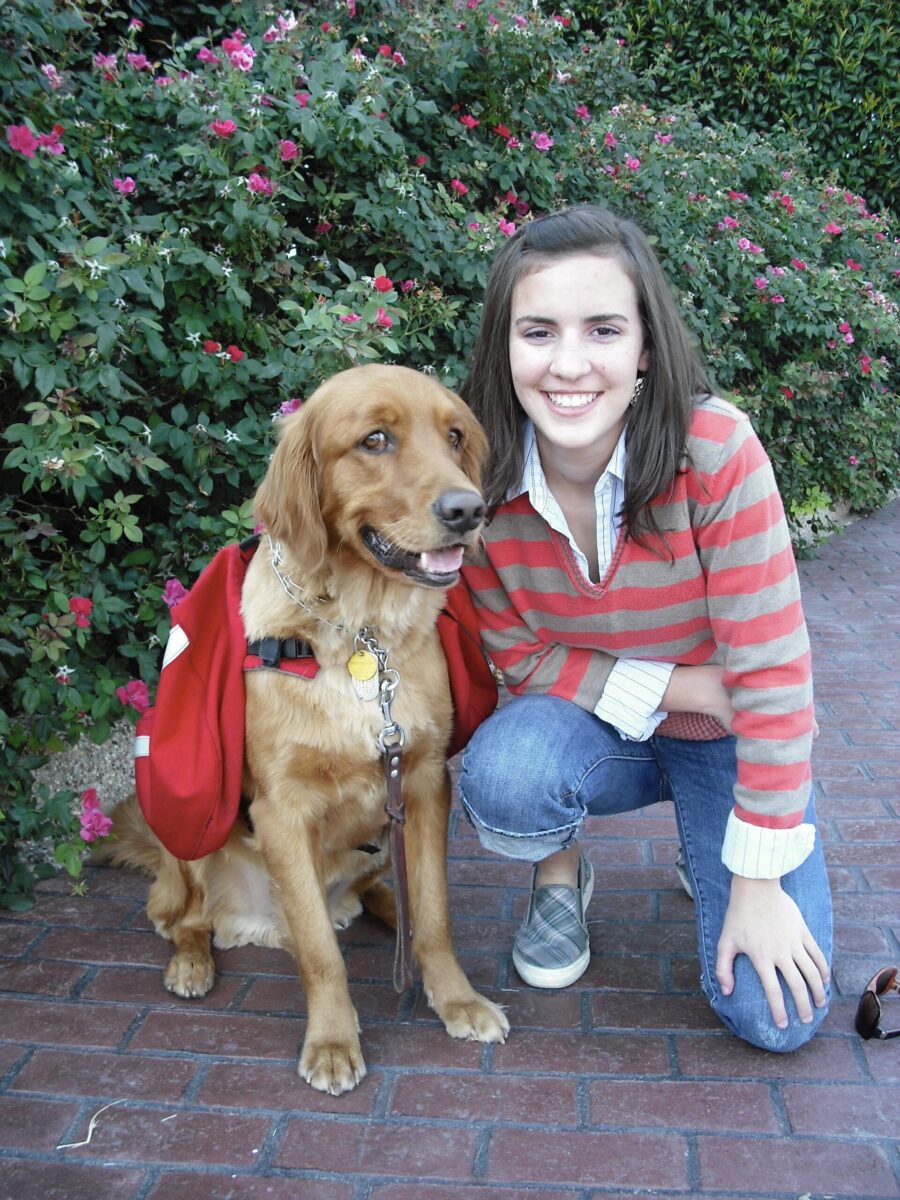
After a lot of painful trial and error, her doctors found a medication that effectively controlled the seizures, and Kaley found a dog that could sense them coming on. Between the two, she learned to deal with her affliction and live a normal life.
But some ongoing frictions between Kaley’s parents were exacerbated, in part, by disagreements on how best to deal with her new condition.
“It was really confusing,” Kaley says. “Sometimes, in relationships, it’s hard to know what’s your part and what’s their part.” But dealing with epilepsy brought a new perspective. “This is not my fault — I didn’t cause it,” she realized. So, “accept it,” she told herself, “and do what you can to be a responsible person in light of it.”
“That really just formed me, spiritually,” Kaley says. “Understanding ‘I am not in control.’ It helps me see the limits of my humanity.”
It also teed her up for God to drive home what He wanted to do with her life.
“Every counselor becomes a counselor to try to help people get along. Not a lot of getting along in my house, when I was a teenager. … I could see the wreckage of the inability to resolve conflict. I wanted to learn how to have my life not turn out that way.”
After college, Kaley took a job back home in Colorado Springs, at the cafe of the famed Garden of the Gods, where slow afternoons offered plenty of time to study for summer classes. Trouble was, she and her handsome manager kept finding so many more interesting things to talk about.
“I didn’t get any studying done,” she says. Apparently, “I was the only one in the building who didn’t know James liked me.” She smiles. “Well … I kind of knew.” It didn’t take James long to ask her out, once her summer job ended; their first date was to a local corn maze.
“I’m 6-foot-4, she’s 5-foot-3,” her now-husband, James, says. “So, when we got there … well, it was fun for her, but I could see everything coming.” It was a small preview of things to come.

They were married just 10 months later. “In hindsight, the timing might have been a little quick,” she says, “but, thankfully, the Lord helped us navigate all that.” Now, they cheerfully share the quiet pleasures of Colorado’s great outdoors: hikes, bikes, gardening, chickens, and a “ragdoll” cat named Ralph, who sticks close to home because the big horseshoe on the end of his leash requires it.
A situation not unlike that of Kaley’s first clients, once she became a licensed counselor: medium-security prison inmates whose substance abuse weighed down their fond hopes for parole. The sessions were mandatory, so she found herself counseling some people who really didn’t want to see her, and “didn’t want to get better so much as get out.”
She encountered that same attitude at her next job, as the family counselor at a residential clinic. There, she worked with some juveniles who, Kaley says, were too fixed on escaping their emotional pain to find a path to genuine healing.
“It’s this very challenging situation,” Kaley says, “to figure out, as a counselor, ‘How can I help you in ways you want to be helped? How can we cultivate the willingness, the drives, the desires that you do have? And maybe explore and understand the areas where you’re stuck — or unwilling?’”
As a family counselor, she learned a good deal about how teenagers think — and how their behavior impacts, and is impacted by, broader family dynamics. What a teen’s choices can mean for his parents, as they grapple to communicate with their hurting child.
She also learned, as she moved into private practice, how to incorporate her faith into her counseling.
“Whether I’m talking to a Christian or not, that’s me. I’m incapable of dropping that at the door — and it’ll influence any client I sit with.
“As a counselor, it is important to be ‘bilingual.’ I can give someone the Christian spiel on why not to have premarital sex … or I can give the science spiel on ‘why premarital sex and living together before marriage, statistically, is just not going to work out for you.’ But I’m always going to bring my Christian perspective into counseling.”
“It’s this very challenging situation, as a counseler, ‘How can I help you in ways you want to be helped?’”
Kaley Chiles
A few years ago, though, the Colorado legislature passed a law calculated to censor that perspective in counseling rooms. The law — like others enacted in over 20 states nationwide — effectively bans counselors from helping minors who are struggling with their gender, unless that “help” encourages them to adopt a “transgender” identity, and nudges them toward the corresponding surgeries and treatments designed to make that identity a physical reality.
On the other hand, a counselor like Kaley — who supports a young person in sifting through their conflicted feelings and voluntarily embracing their natural biology — risks a fine of up to $5,000, suspension from their practice, and loss of their license.
“When I saw the legislation, I thought, ‘One-size-fits-all is not going to work,’” Kaley says. Not only is every teen different, but allowing state officials to dictate to counselors that there’s only one way to help youngsters they’ve never met or engaged with is absurd.
Especially, she says, when a growing number of medical studies, in both Europe and the U.S., indicate that the kinds of solutions Colorado officials are encouraging for these youth do much more harm than good.
“The scientific evidence is bearing out that this is not helping,” Kaley says. “The experiment failed.” But “when the ‘experiment’ has become an ideology, it’s hard to accept the results.” So, in states like Colorado, ideology continues to push young people one step closer to these dangerous, drastic measures.
“I can’t know their intentions,” she says of the legislators, “so I assume they’re just misguided. But as a counselor, I have a right to say, ‘I do not believe forcing this ideology on kids is best. It’s not evidence-based, and it doesn’t work.’”
And young people, Kaley says, should be allowed to pursue the counseling they believe will best help them achieve their personal goals. “I get to make my choices,” she says, “and my clients should be allowed to seek theirs.”

What is driving so much of the confusion among young people today?
“During the teenage years, your brain is under construction,” Kaley says, “destabilizing, in order to reorganize” from a child’s way of looking at the world to an adult’s. “It’s a chaos of feelings; you have something going on, and you need to make sense of it.
“We all struggle to comprehend our own stories,” she says, “and teens, naturally, struggle with that, too. Especially when they have an available cultural narrative, on something like gender, that says, ‘The reason you’re feeling all these feelings is this. Just fix this problem, and everything will be better.’”
Unfortunately, “life is usually a little more complex than that,” Kaley says. “So, while, as a counselor, you can make a hypothesis and take some guesses, to help someone make such a consequential decision … you have to be really cautious and humble with your conclusions.
“If we jump to one solution too fast, then we might miss the genuine solution. And the mental health industry has been guilty of this for a long time. We medicate depression instead of seeking to understand why someone is depressed.”
That’s why talking through a teen’s symptoms — what’s really bothering them, and why — is what good counseling is all about, Kaley says. But: it’s difficult, it takes time, and grown-ups can be impatient.

“It’s hard for adults to see children in pain, and it’s really easy to conflate love with being nice.” If both therapist and client — and the government — think love is “being nice,” she says, the easiest thing is just to go along with whatever the client (and the government) want.
“But that’s what counseling is for,” she says. “Not to validate or invalidate somebody’s identity, but to say, ‘OK, I hear what you’re saying. Let me help you explore that. Help me understand why you believe that you’re a girl. What does that mean to you?’” Sometimes, these questions involve confronting the client about what she thinks, or even encouraging some kind of change: “If you’re already a girl, ‘why would you need to modify your body to prove that?’
“Those are the questions we have to think about.”
It’s exactly those kinds of conversations that Colorado officials are shutting down with their edict, which is what prompted Kaley to instigate legal action against them. Soon after the law passed, she enlisted Barry Arrington, an ADF Allied Attorney, to file a lawsuit on her behalf, challenging the constitutionality of the ordinance.
“This is not about a counselor imposing her own values on confused and hurting clients. It’s about clients not being able to receive the help they themselves want.”
Suzanne Beecher, ADF Legal Counsel
“Kaley’s case is what’s called a ‘pre-enforcement’ challenge,’” says Suzanne Beecher, legal counsel with the ADF Center for Conscience Initiatives. Like a lot of other Colorado counselors, she says, “Kaley’s been trying not to take clients who want conversations that may violate the law. Instead, she’s bringing this challenge to make sure the new law is correct before she jumps into those conversations.”
When a U.S. district court ruled against Kaley, ADF attorneys joined her case for an appeal to the U.S. Court of Appeals for the 10th District, where a divided panel of judges seconded that ruling. ADF then appealed to the U.S. Supreme Court, which agreed to hear her case later this year.
The high court’s interest was likely heightened by what’s called “a circuit split”: two U.S. circuit courts have struck down similar laws in other parts of the country, while two have produced decisions supporting them.
A growing number of studies — like the recent one from HHS — showing the serious physical and emotional damage being done by gender-related treatments was also likely a contributing factor in the Supreme Court’s decision.

“Yes, these are the costs. But it’s worth it. Because there’s also a cost to silence, and to not exercising your rights… and then losing them.”
Kaley Chiles
“There is a growing consensus around the world that adolescents experiencing gender dysphoria need love and an opportunity to talk through their struggles and feelings,” says ADF Chief Legal Counsel Jim Campbell, who will argue Kaley’s case at the high court. “Colorado’s law harms these young people by depriving them of caring and compassionate conversations with a counselor who helps them pursue the goals they desire.
“The government,” he says, “has no business censoring these private conversations between clients and counselors.”
“This is not about a counselor imposing her own values on confused and hurting clients,” Beecher says. “It’s about clients not being able to receive the help they themselves want, because the counselors might be penalized for helping them achieve goals the clients have determined are in their own best interest.
“All Kaley wants is to help her clients reach those goals,” Beecher says, “and the government is restricting her from doing that.”
“I’m proud of Kaley,” James says. “It’s rare to see somebody so passionate and driven about their job. And encouraging to see someone willing to take on the burden of being the face of a cause like this.”
In truth, he anticipated some of the hostility the case has provoked in ways his wife did not — that ability, again, to see above the maze — but Kaley, he says, smiling, is one “who embraces the hard things in life.”
Still, Kaley tries to keep some perspective on the pushback.
“Our ‘persecution’ is not losing limbs and fearing for your life and all that kind of stuff. Ours is someone thinking badly of me. But you’re allowed to think what you think, and I’m allowed to believe what I believe — I’m not going to hide it. So, if I suffer for it, it’s fine. I’ll deal with it.
“It’s encouraging to see someone willing to take on the burden of being the face of a cause like this.”
James Chiles
“Everything is a trade,” she says. “I’m sure the lawsuit has estranged me from professionals in my community — but it’s endeared me to others. I’ve lost clients. I’ve lost jobs. But, then, I’ve also had a client seek me out because they heard about the lawsuit and thought, ‘I want a counselor like that.’
“Yes, there are costs. But it’s worth it. Because there’s also a cost to silence, and to not exercising your rights … and then losing them.
“This is just … another situation that I can’t control,” she says. “And it reminds me, as so many other things remind me, that the Lord is always preparing a way.”
Which is why, while a lot of people might not choose to risk their careers, challenging their state government at the nation’s highest court … Kaley Chiles is pretty sold on the idea.
This article appears in the September 2025 edition of Faith & Justice, the quarterly magazine of Alliance Defending Freedom.

Chris Potts
Sr. Creative Writer & Editor
Related Articles