

ADF Senior Counsel Matt Sharp’s Testimony:
Chairman Kiley, Ranking Member Bonamici, and Members of the Subcommittee, thank you for inviting me to testify today.
Parents are the first and most important caregivers, protectors, and educators of their children. Long before a child enters a classroom, parents nurture their development, guide their values, and help them grow into responsible adults. Our laws and Supreme Court precedents have long reflected the fundamental right of parents to direct the upbringing and education of their children. Yet today, that foundational relationship is increasingly being undermined in America’s public schools, where some districts disregard federal law and push parents out of the equation.
Two federal statutes—the Family Educational Rights and Privacy Act and the Protection of Pupil Rights Amendment—were passed 50 years ago to ensure transparency and reinforce the role of parents in education. FERPA gives parents full access to their child’s educational records, while PPRA ensures parents can review instructional materials and shield their children from intrusive surveys and evaluations. At their core, both laws recognize that parents cannot effectively guide or protect their children unless they have accurate information and are fully involved in their child’s education.
But in recent years, a wave of “secret-transition” policies has swept the nation. These policies, found in more than 1,000 school districts, direct staff to conceal information from parents if a child expresses a desire to identify as a different gender, such as using a different name or pronoun.
These policies not only violate FERPA and PPRA; they deliberately sever the relationship between parents and children at moments when young people may be experiencing profound emotional or psychological distress.
The harms are not theoretical. At Alliance Defending Freedom, we represent families harmed by these unlawful policies. A Michigan school district treated a middle-school girl as a boy, then scrubbed the child’s educational records before sharing them with her parents. In New York, a mother who noticed her daughter was struggling with depression and anxiety repeatedly asked school officials about her daughter’s emotional struggles. The school assured the mother nothing was happening, yet was concealing that it had been treating the young girl as a boy for months. That mother’s case was argued at the Second Circuit Court of Appeals yesterday.
As FERPA’s bipartisan sponsors explained: “Parents need access to such information in order to protect the interest of their child.” But when school officials defy federal law by hiding information in “shadow files” or by conducting informal psychological evaluations of a child without a parent’s notice or consent, parents are denied the information and involvement needed to determine what support or intervention their child may need. And that jeopardizes children’s well-being.
Congress must treat these violations with the seriousness they deserve. Safeguarding parental rights by guaranteeing full transparency and involvement for parents is not a partisan issue—it is a matter of moral responsibility and constitutional principle.
ADF Client Deb Figliola’s Testimony:
Good afternoon, Chairman Kiley, Ranking Member Bonamici, and Members of the Subcommittee, it is an honor to be with you today.
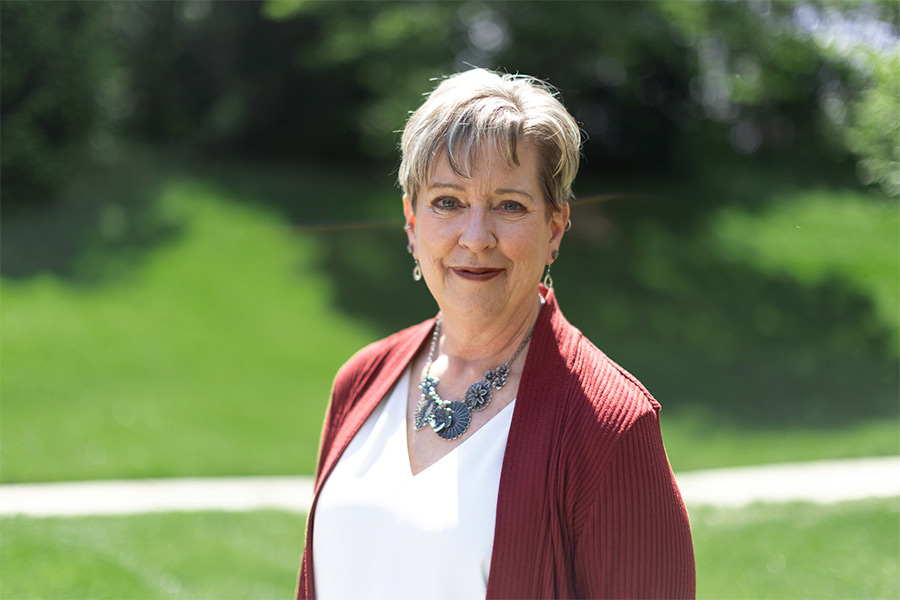
My name is Deborah Figliola. I am a wife, a mom, a grandma, and yes, a teacher. I’ve been an educator for 28 years—the last 11 years as a middle school teacher in the Harrisonburg City Public School District in Virginia as a Special Education teacher and an 8th-grade English teacher.
I loved the kids I taught. In particular, I loved teaching students to read. I also loved the parents I worked with. I enjoyed partnering with families to help students with special educational needs grow and thrive at school.
But in 2021, the partnership and trust I’ve developed with families were jeopardized by a new district policy. During a mandatory training, all faculty and staff were told that we must hide information about a student’s social transition from the parents unless we had the explicit permission of the student. And if we disclosed to parents that their child was using different names or pronouns at school, then we would be subject to disciplinary action—including termination.
I was appalled. Throughout my time teaching, I’ve known and taught many students who either identified as transgender or were questioning their identity. My experience reinforced my belief in the importance of parental involvement, which allows moms and dads to guide their children through these tumultuous years.
But I felt that this new policy forced me to betray the trust that parents placed in me. Parents are ultimately responsible for their child’s care and upbringing. They are a crucial component for a student’s educational development and success.
That’s why, as educators, we always talk to parents. We tell them when a student is in trouble or getting an award; when a student is failing and when they’re suddenly succeeding; or when we notice a major change in their demeanor or behavior.
To ensure that I could continue to maintain complete honesty and transparency with parents, I brought a legal challenge against the new policy—and won. My school district agreed that it does not support hiding or withholding information from parents.
And that’s exactly how it should be. Parents are too important to be kept in the dark about critical issues in their child’s life.
Parents know their children best. Parents know their child’s medical history, any emotional issues they’ve had, and their academic struggles. They bring a wealth of necessary information to support and help students navigate the challenges of being a child today.
Parents are the ones who’ll be there long after kids finish school. Teachers won’t, school counselors won’t.
And those parents have a right to know what their child is feeling and experiencing as they go through middle and high school. Empowered with that knowledge, parents can fully guide these young people through the many challenges that many kids face today. Kids thrive with informed and involved parents. And our laws should support them as they prepare their children for adulthood.
Matt and Deb’s reaction to the hearing:
Watch the full hearing:

Matt Sharp
Senior Counsel, Director of Center for Public Policy
View Profile
Deb Figliola
ADF Client
Related Articles