
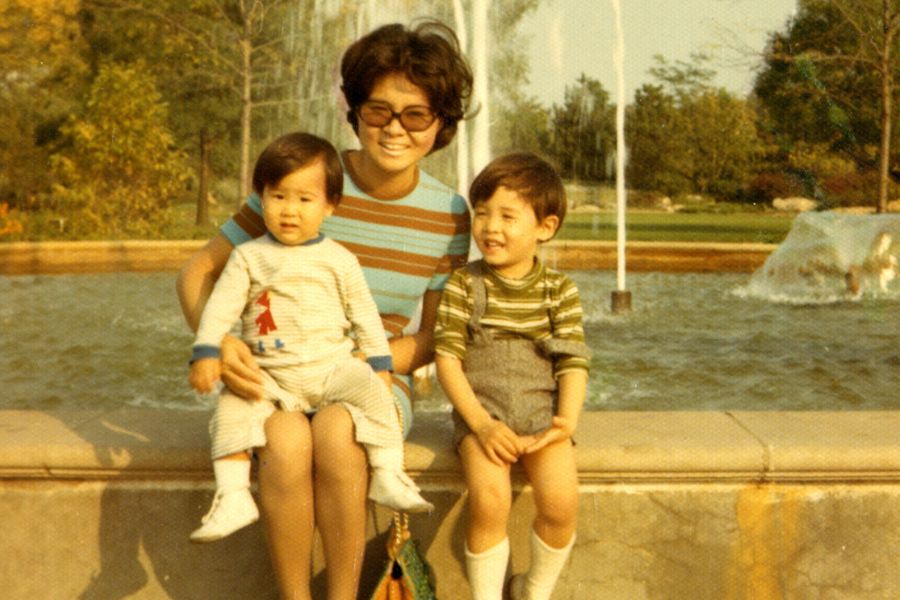
Neither Christopher Yuan nor his mother, Angela, had a lot of time for lunch back then. He was a boy in elementary school; she was managing her husband’s prospering Chicago dental office. Come noon, Angela would scurry to the school, pick up Christopher and his older brother, speed home, and whip up something quick they could gobble before zooming back to class.
One day, amid the rush, she burned the grilled cheese sandwiches. A perfectionist, she was gritting her teeth over the charcoaled cheddar, scolding herself for the waste. It was more, she remembers, than tender-hearted little Christopher could bear.
“Mom,” he said, “I like it burnt.” And promptly crunched down the whole blackened thing.
“He was sensitive,” Angela says, exchanging a fond smile, across the years, with her now middle-aged son. “Very well-behaved. A good kid.”
That would change, sooner and more dramatically than either of them could have imagined. In a few short years, their close-knit Chinese family would be a shambles, their values turned upside down … but their future filled with twists and miracles that would eventually impact countless other parents and children all over the world.
And, what’s more — one day the boy who liked burnt sandwiches would serve two major corporations each a slice of perfectly baked humble pie.

Reading always came hard for Angela. She learned to loathe it early and brought home grades that reflected her antipathy. She was still a young girl when her father, working for a shipping company, managed to smuggle his family out of Communist China to a new life in Taiwan — where Angela found English reading as tiresome as the Chinese kind.
As she grew older, and began drawing the attention of boys, she established as her primary requirement for dating their willingness to write up book reports on her behalf. One boy, Leon — whose family had also fled the mainland — distinguished himself by an exceptional willingness to take on her literary responsibilities.
As a chemistry student, he really wasn’t required to immerse himself in novels, but he obviously considered Angela worth the extra effort.
She reciprocated his affections enough that, when he traveled to the United States for graduate school, she found a way to follow, even if the only academic option afforded her was … library science. A year later, they were newlyweds, living modestly while Angela worked to pay Leon’s way through two doctorates and the launch of his fledgling dental practice. In time, they prospered.
With the coming of two boys, Angela’s great dream was realized: all she’d wanted, growing up with two busy, distant parents, was to build the perfect Chinese family — successful, socially well-set, hard-working — and to be the best wife and mother she could be. To have a home where she could belong.
When it came to reading the future, though, Angela’s skills proved no better with tea leaves than with books. While Leon’s dental practice grew, their marriage gradually crumbled. Her older son drifted away. And, one Mother’s Day, Christopher came home from dental school to announce, “I am gay.”
“I don’t even know how to describe that feeling,” she remembers. “Shock. Sadness. Shame. And betrayed, because he had always been so close to me. I just collapsed.”
“She felt like I’d rejected her,” Christopher says. “Well, guess what I felt? Rejection. It was like ‘the straw that broke the camel’s back.’ It was a big straw.” The once-devoted son left home with no real intention of coming back, now pouring his energies less and less into his studies and more and more into wild living and the homosexual subculture.
“I knew nothing about homosexuality,” Angela says — and there seemed to be no one to ask. In a shame-based Chinese culture, Angela felt she could not speak of it to her friends. Leon barely talked with her anymore. So, though she wasn’t a Christian, she sought out a chaplain.
“I didn’t like Christians,” she says. “They seemed weird. Phony. I’d had bad experiences.” Swallowing her distaste, she told her story to the priest. He listened, then handed her a pamphlet.
“Read this,” he said.
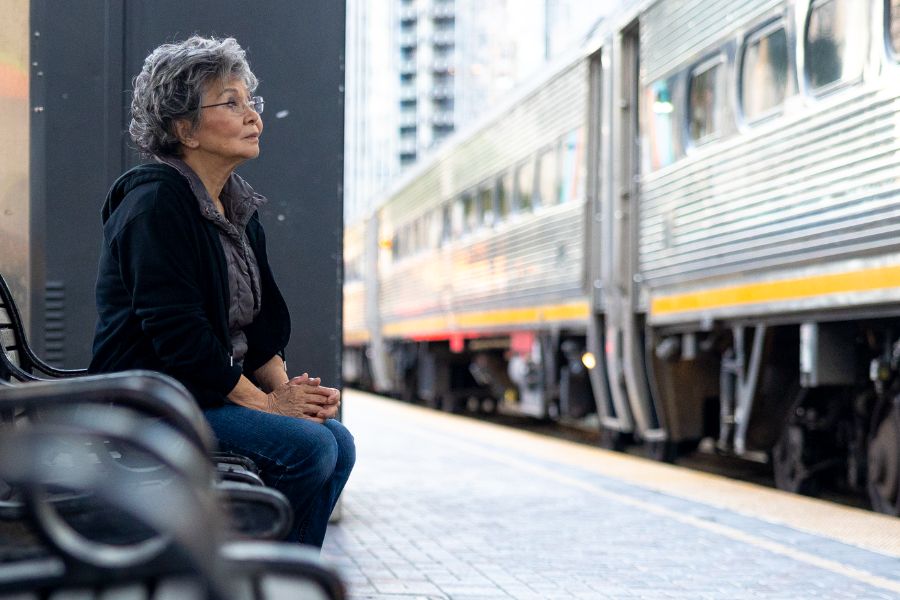
Angela stuffed the pamphlet in her purse, and, with grim resolve, headed for the train station. She bought a one-way ticket from Chicago down to Christopher’s school in Louisville, where she would tell him a final goodbye. After the visit, she’d decided, “I’ll just go and end my life.”
“For just a dollar more, you can buy a return ticket,” the station agent told her. Angela declined.
“I thought, ‘No — my life is not even worth one dollar.’” she says.
On the train, the woman who despised reading and Christians found herself perusing the Bible-based pamphlet. “Somehow,” she says, “that was the first time I was interested in reading.” And, as she did, she heard a voice in her soul: “You belong … to Me.”
“There is a God,” she thought, getting off the train. “And He has a plan.”
The plan led her to a Louisville woman who led her to Christ, then spent the next six weeks discipling her — as Angela enthusiastically read the Bible over and over again. The plan led her back to Leon, who soon found it was easier to join Angela in her newfound faith than to fight it. And the plan led both of them into Bible Study Fellowship, where they studied Scripture, grew deeply in their faith, made countless new friends, and devoted their lives to reaching Christopher for Christ.
In time, Angela says, she realized two things. “Number one, Christopher did not belong to me. He belonged to the Lord. And, number two, I could not change him. The most important thing was not that Christopher become a heterosexual. It was that he would surrender to God.
“The minute I realized that, I felt all the burdens just … drop,” she says. “From then on, every day, in everything I said, I tried to show him Christ.”
Christopher, though, had a plan of his own. And it didn’t involve Christ or his parents.
Immersed in the homosexual party scene, he gradually embraced another obsession: drugs — both taking and selling. His dental school studies drifted; soon he found himself expelled from the program. He summoned his parents, who knew the dean, to come to his defense.
To his astonishment — and the dean’s — they brought to the meeting a different agenda.
“It’s not important that Christopher become a dentist,” Angela said. “It’s more important that he become a follower of Christ.” When the dean stared back at her, slack-jawed, she offered a clarification: “We’re going to support whatever decision the school makes.”
So, Christopher was out — and furious. He moved to Atlanta, where he took up full-time drug-dealing, enjoying enormous success. What he’d learned growing up, working in his dad’s dental practice — accounting, marketing, detailed records — “I poured into drug-selling,” he says. “And business exploded.”
Soon, he was a major supplier for over 12 states — rolling in money, with plenty of homosexual friends to supplement what he’d left behind. “There’s a code word in the gay community,” he says, “for whether someone’s gay or not: ‘Is he family?’ What that subtly did was make me think, ‘My gay friends are my family, and my parents are not.’
“I just wanted to fit in, to be like everybody else,” he says. “Which is why the strength of the gay community is: you always fit in.” Besides, “as a prodigal, you rewrite history, based on what your friends are telling you. Mine were saying, ‘Your parents don’t understand. They hate you.’”
So, Christopher threw away the letters and postcards that came every day from his parents. He ignored the messages of love they left on his answering machine. When his father offered him the gift of his own personal Bible, Christopher contemptuously tossed it into the trash.
“My parents did everything correctly,” he says. “But when you have the wrong presupposition, you’re seeing the world through a totally different lens. What they intended as an action of love, I filtered through my own assumptions: ‘They want me to turn straight. They want me to change.’”
Meanwhile, his profits racked up, and the weekend parties grew wilder. His drug binges sometimes kept him up for days, even weeks at a time.
Change, when it did come, appeared from a very different direction.
“My parents did everything correctly. But when you have the wrong presupposition, you’re seeing the world through a totally different lens.”
Christopher Yuan
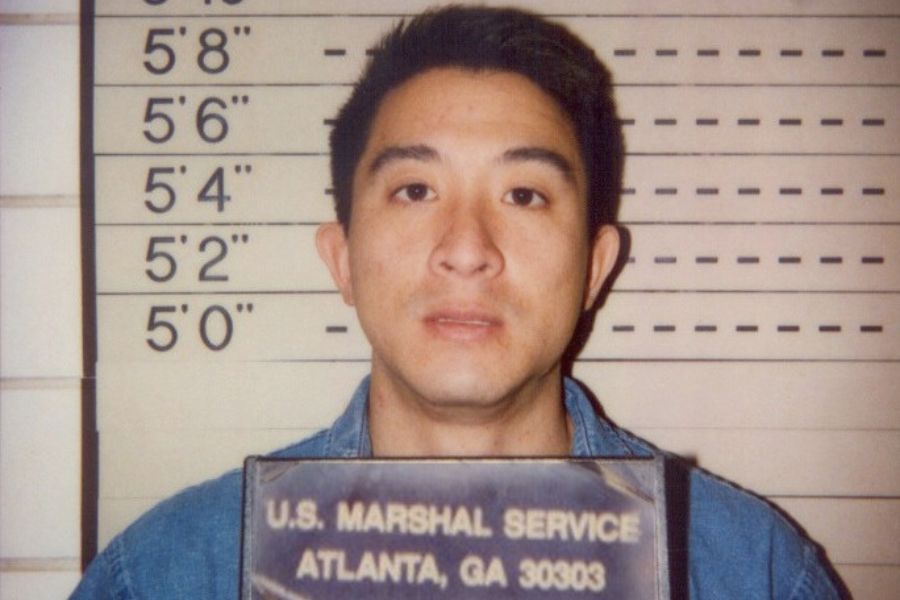
Christopher opened his front door one morning to federal drug enforcement officers. They took him to the Atlanta jail, where, he says, “I called all my friends. Those people who were like, ‘Whatever you need. We’re family.’ Not one of them answered. Not one.”
That left one awkward option. He called home and braced for an outraged earful.
“But Mom’s first words were, ‘Son, are you OK?’” he says. “That was a big change.” The next day, she was at the jail, looking at him from the other side of the visitors’ glass, with a smile, some pictures of his childhood, and a joke: “Love your new apartment.”
For years, Angela had faithfully prayed that God would get her son’s attention. She’d enlisted hundreds of others to pray, too. Often, she’d fasted — sometimes for weeks at a time. But, if her son thought his incarceration would prompt some enabling, he’d forgotten the dean’s office.
“Sentence him just long enough for him to turn to God,” she told the judge at Christopher’s hearing. “But not too long that it would break him.” Six years, the judge decided.
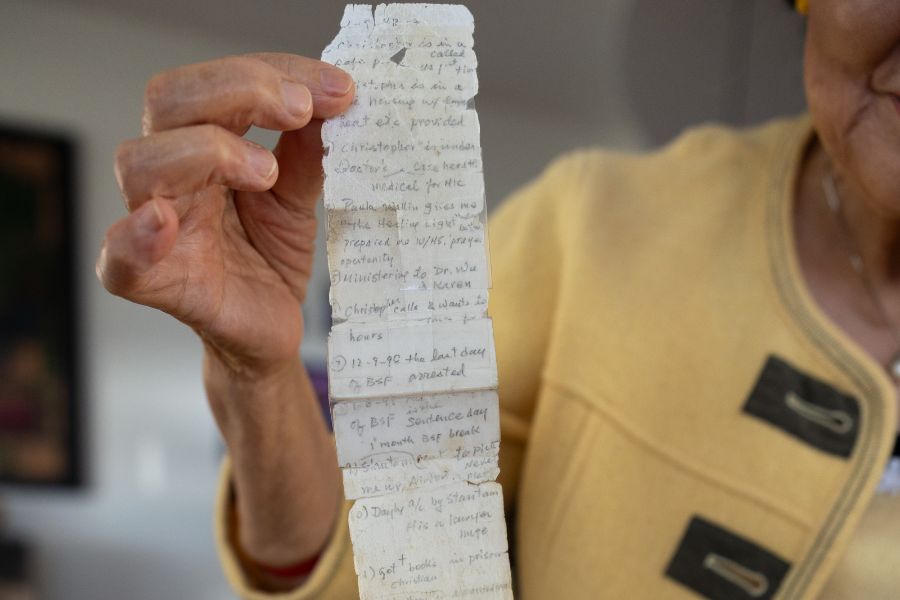
Christopher was stunned. Days later, walking around the cellblock, consumed with thoughts of how to get out of jail before his 30s, his eyes fell on an overflowing garbage can in the hallway. Perched atop the trash was a clean, new Gideon New Testament.
He took it back to his cell, thinking that reading it might pass some time. But other surprises were coming. Summoned to the jail infirmary, he learned that he’d tested positive for HIV … a virtual death sentence, at the time. Later, sobbing in his bunk, he looked up to see, amid all the graffiti and profanity scrawled on the bedframe, an odd note.
“If you’re bored, read Jeremiah 29:11.” It sounded like a Scripture verse. Looking about, he saw, remarkably, a Bible lying in a corner. He picked it up, found the chapter, and read: “‘For I know the plans I have for you,’ declares the LORD, ‘plans to prosper you and not to harm you, plans to give you hope and a future.’ ”
Curious, he read the whole chapter for context. He found that the verse was given to the people of Judah in exile. “I’m in exile,” he thought. “If God could have a plan for an entire nation in exile and rebellion … maybe He could have a plan for me.”
That, Christopher says, was the beginning. In his soul, the dominoes of doubt began to fall. Like his mother, he took to reading the Bible. Praying. Inching toward a saving faith in Christ.
Even as he grew, some questions persisted. For one, did salvation require heterosexuality? He broached that to a prison chaplain, who assured him that “the Bible doesn’t condemn homosexuality” — and loaned him a book that supported his view. Christopher started the book, comparing it with the Scriptures.
“I couldn’t even get through the second chapter,” he says. “I thought, ‘This author isn’t saying what the Bible is saying.’” He marvels at how quickly the realization came to him. “Isn’t that a miracle?”
The miracles kept coming. Salvation. Reconciliation with his parents. Early release from prison. A call to Gospel ministry. Acceptance into seminary. And the beginning of a spiritual service — and a partnership — that would touch lives all over the world.
And, eventually … pushing the buttons of some powerful corporations.
“Parents believe they cannot talk to their kids about sexuality and gender. And kids believe they can’t talk to their parents or grandparents. So, the parents are giving their jobs to the churches.”
Christopher Yuan
Christopher’s salvation came with a changing understanding of his own identity — which, for years, had been tied up in his homosexuality. “I was reading the Bible and really wrestling,” he remembers. “Even as Christians, we want the world and God, too.”
He kept searching for something in Scripture that would say “homosexuality is OK.” After all, he thought, “Love is love. And God is love, right?” What he found, he says, was that God offers — and expects — something much deeper from His own.
“God expects holiness. His love is a holy love. Scripture says God is ‘holy, holy, holy’ — not ‘love, love, love.’ What God desires for us is to ‘be holy, for I am holy.’ He loves us, but unconditional love is not unconditional acceptance of our behavior. That was the turning point for me.”
But then,” Christopher says, “what does holiness look like? What is God calling us to?” Not homosexuality, he saw in the Bible, or even heterosexuality, which offered its own sins and temptations. “I realized that my identity should not be defined by my sexuality. My identity as a child of God must be in Jesus Christ alone.”
That was freeing, Christopher says, because he realized God was simply calling him “by His grace … to Christ.” And: to “holy sexuality.”
“For me, that was just the huge light bulb. God is calling me, and all of humanity, to holiness.”
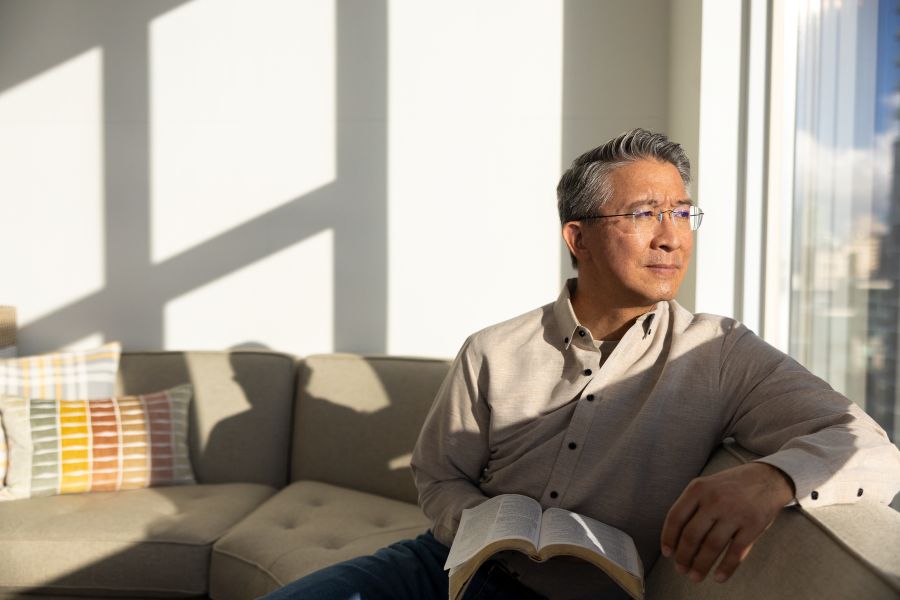
While in prison, Christopher began receiving invitations to speak to his fellow prisoners. Those opportunities to speak multiplied, during and after seminary. He found himself sharing the Bible’s teachings on sexuality in churches and on college campuses, with high school students, young adults, and parents. Someone suggested that a book could reach more people than one speaker, so he wrote one: Holy Sexuality and the Gospel.
Though the book was influential and well-received, Christopher and his parents felt a growing burden — in a culture increasingly engulfed with sexual perversion and pro-LGBT propaganda — to reach the countless teenagers that churches and parents were losing.
“The biggest reason we’re in this situation today,” Christopher says, “is that parents believe they cannot talk to their kids about sexuality and gender. And kids believe they can’t talk to their parents or grandparents. So, the parents are giving their jobs to the churches.”
Unfortunately, most churches, he says, see the solution as “a program. Once a year, ‘Let’s talk about this in youth group. Done. We checked that box.’ But once a year’s not enough when our kids are getting inundated on a daily basis.” The solution, the Yuans decided, was home discipleship — a guided discussion of the Bible’s perspective on sexual issues that parents and their children could work through together. They call it the Holy Sexuality Project.
While their first thought was to have Christopher simply revise his book for youth, they quickly encountered a problem: too many young people don’t like to read. A more likely approach for reaching families, the Yuans decided, would be a series of video lessons geared toward teens, featuring state-of-the-art animation.
A promising idea, but a huge and multi-million-dollar undertaking — one that the Yuans came to realize required extensive project management software to bring in at a remotely reasonable cost. Happily, one of the largest makers of that kind of technology, Asana, was offering a 50% discount to any nonprofit that purchases their software products. Well, almost any.

When Christopher applied for the discount, Asana almost immediately turned him down. The offer, it said, was not available to religious organizations existing solely to propagate belief in a specific faith.
About that same time, Christopher applied for a similar, sizeable nonprofit discount from OpenAI, whose massive resources would help with translating the video series into different languages. It, too, rejected his request, based on the religious nature of his nonprofit.
Shortly after the Asana response, “Christopher contacted us,” says Mathew Hoffmann, ADF legal counsel, who then was working with the ministry’s Center for Free Speech. Looking into the situation, Hoffmann found that California — where both companies are based — “has a nondiscrimination act, which prohibits discrimination based on religion in public accommodations.”
While not all states apply their public accommodations laws to online entities like Asana and OpenAI, Hoffmann says, California does. The state’s Supreme Court “has explicitly interpreted its act to apply to online entities.” Meaning that the two companies’ policies, by prohibiting the participation of religious nonprofits like the Yuans’, were demonstrably violating that law. ADF sued both companies on Holy Sexuality’s behalf.
Neither corporation wanted to go to legal battle to defend their policies. Both quickly reached out-of-court settlements with Holy Sexuality, changed their policies — and gave the nonprofit the much-needed discounts.
“These cases set important cultural precedent,” Hoffmann says. “They show powerful big tech companies that, even with all their vast financial resources, they’re not above the law… and that they should treat people fairly, no matter their religion. It sends the message that it doesn’t pay to discriminate and that big tech companies are not immune from that assertion.
“Unfortunately,” Hoffmann says, “there are a lot of these policies that discriminate against religious people and nonprofits. And unless we stand up and have courage to defend what’s right, that’s going to continue. That Asana and OpenAI changed their policies so quickly shows the power of speaking out. One voice is magnified many times over and allows other religious nonprofits to get the same benefits.”
“These cases set important cultural precedent. They show powerful big teach companies that… they’re not above the law.”
Matthew Hoffman, ADF attorney
Already, another nonprofit has benefited from the Holy Sexuality cases. Last fall, Divine Creative — a ministry made up of Christian creative professionals — successfully stood up to a software company that denied it access to an otherwise free program because it was “religious.” Working with a local attorney, the ministry referenced the precedent that was established through the Holy Sexuality cases. The result was a win for Divine Creative.
“Small ministries are using ADF’s precedent to push back on their own — and winning,” says Bailey Mullens, director of Divine Creative. “This was the third major tech company to reverse such a policy in 2025.”
“I’m a fighter,” Christopher smiles, “especially when it comes to principle. This opens the door for all other religious nonprofits and churches that are facing this discrimination. It was really awesome to be able to do that.”
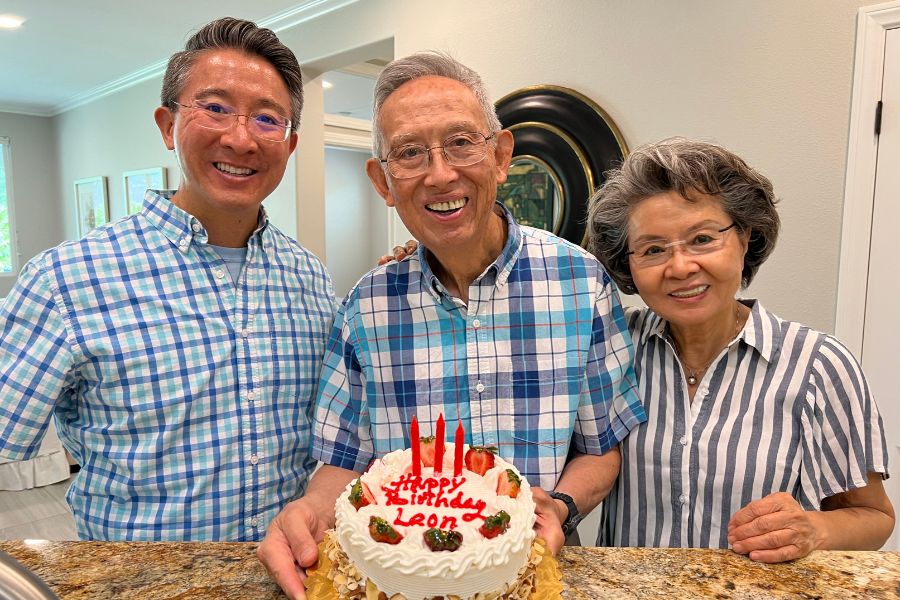
Christopher’s father, Leon, didn’t live to see the results of all that he, his wife, and his son had worked to accomplish with the Holy Sexuality Project. He passed away in 2022, just before the launch of the video series in 2023. That series continues to reach tens of thousands all over the world, each lesson combining a biblical view of sexuality with a persistent invitation to faithfully follow Christ.
Now, two more series — aimed at pre-teen and early elementary school-aged children — are in the works; both should be available later this year. Their debut can’t come soon enough for Angela, who understands all too well what struggling parents are up against.
“We need to realize our children are rebelling,” she says. “It’s not just homosexuality or alcohol or drugs. They’re rebelling against God. Our main focus is not to change them, but to show them Jesus. Our children need to see Christ in us.”
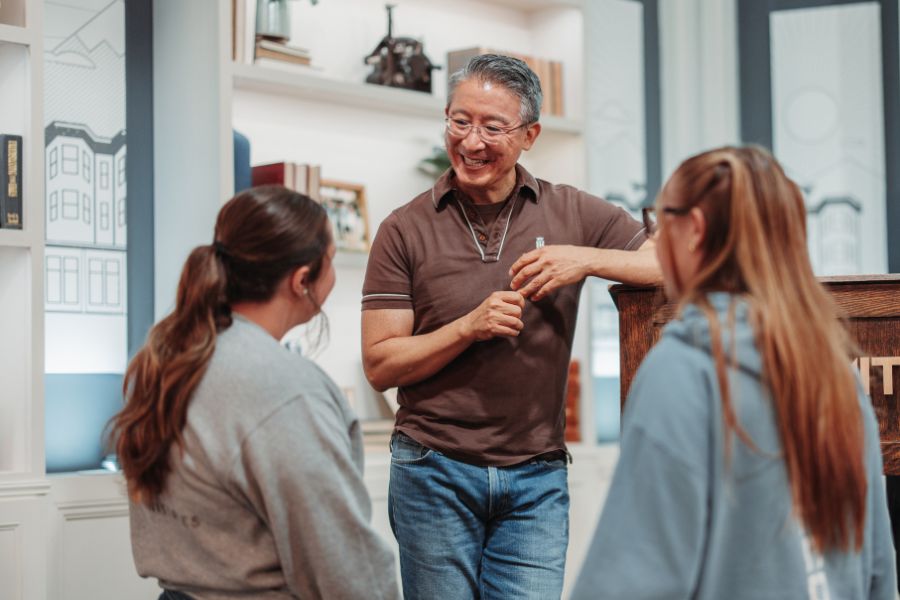
She shakes her head, looking at the son who hurt her so deeply, for so long, that he drove her to Christ.
“Sometimes, I don’t even believe that was him before,” she says. “It’s like we were both different persons. He was a sweet little boy … but now I feel like all his focus is on serving the Lord, loving the Lord, wanting more people to know Jesus.”
“It’s the Holy Spirit that moves in us,” Christopher says. “Convicts our hearts, changes our minds, opens our eyes. That’s the miracle of regeneration. What a miracle.”
He shakes his head, too … smiling at the memory, and irony, of plans changed. And a man who found freedom behind the walls of a prison.
“I wasn’t seeking,” he says. “I wasn’t looking. God just opened the door.”

Chris Potts
Sr. Creative Writer & Editor
Related Articles