
Being a good foster parent requires an exceptional level of commitment and sacrifice. Taking in a child who isn’t your own, loving them, advocating for them, and sometimes letting them go, is one of the most selfless things a person can do. While generous families have answered the call to serve in this way, there aren’t enough foster parents to meet the need.
In Washington state alone, the Department of Health and Human Services recorded 6,192 children in foster care in 2024. Officials have acknowledged they “struggle with recruiting and retaining” foster families.
So why did the state try to turn away people like Shane and Jennifer DeGross?
Who are Shane and Jenn DeGross?
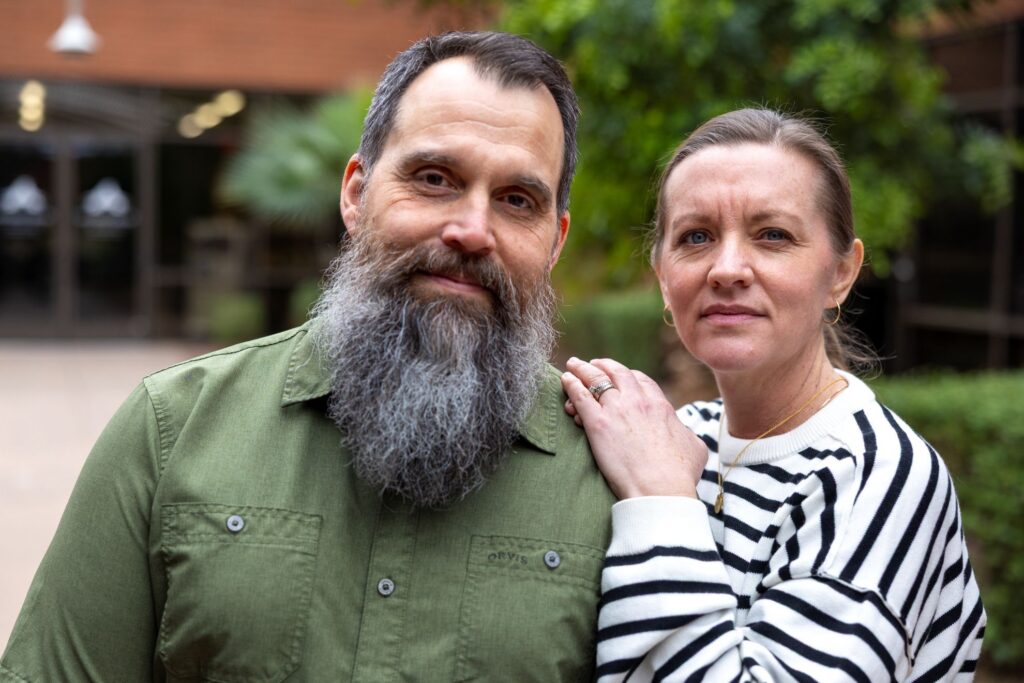
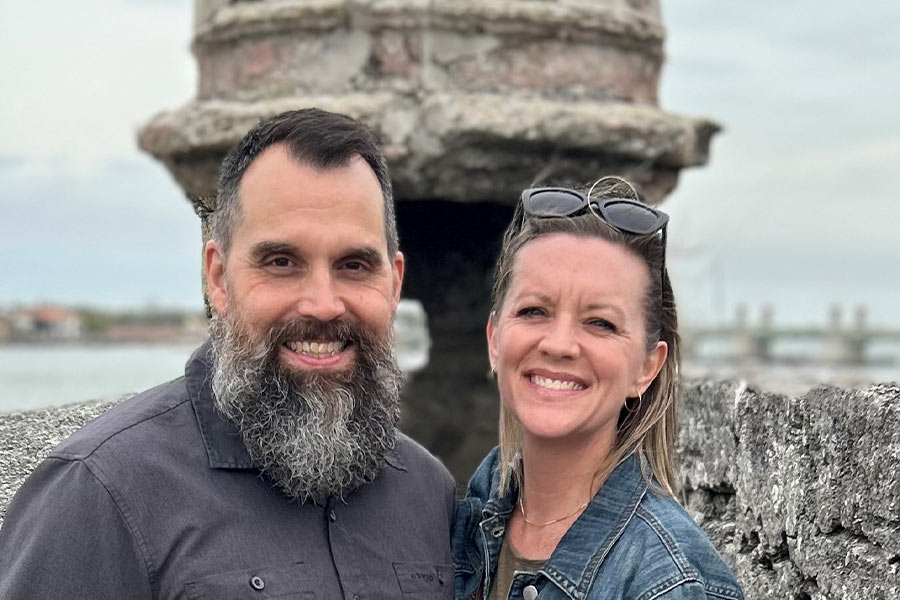
Shane and Jenn DeGross are two foster parents in Washington state with a stellar track record. They’ve served as foster parents for Washington’s Department of Children, Youth, and Families (DCYF) from 2013 to 2022.
During that time, the DeGrosses helped care for four different children, including a newborn, two 2-year-olds, and a 3-year-old. They provided care for various timeframes spanning from a couple of weeks to nearly two full years.
It was undeniable that Shane and Jenn always treated the children they cared for as if they were their own, showing them love and affection no matter where they had come from or what they had endured.
A big reason Shane and Jenn thrive as foster parents is their deep Christian faith. Both felt like they had been called to provide foster care for vulnerable children, which eventually took them to the DCYF. That led to a fruitful relationship for nearly a decade.
“The Bible instructs us to care for widows and orphans,” the parents said. “That was part of what led us in 2013 to help those in foster care.”
Shane and Jenn were well aware of just how badly their services were needed, adding: “We also knew about the state’s tremendous need: Every year, thousands of children enter the state’s foster care system. And every year, the state has a need for long-term caregivers and, particularly, for respite-care providers — parents who can provide short-term relief to families caring for children with critical needs, or who can act as stopgaps for children moving between homes.”
Given that the relationship that was built over the years, imagine the shock of Shane and Jenn when, in 2022, they learned of Washington state’s new—and discriminatory—regulations.
What did Washington state do?
In 2022, when Shane and Jenn sought to renew their foster-care license, they encountered new DCYF regulations that had fundamentally changed the terms of their once fruitful relationship.
DCYF had introduced new regulations requiring foster parents to fully adopt the state’s preferred views on gender ideology. Specifically, the regulations demanded that foster parents agree to use names and pronouns for children that conflict with their biological sex, take children to events like pride parades, and otherwise actively promote the state’s views on gender identity to children in their care.
For Shane and Jenn—whose Christian faith holds that God created each person male or female and that sex cannot be changed—these were not minor bureaucratic inconveniences. They were demands that cut directly against their sincerely held religious beliefs. DCYF eventually denied their renewal application in October 2022.
What made Washington’s conduct particularly egregious is that state officials had been down this road before—and lost. In a prior case, Blais v. Hunter, a federal court had already enjoined a similar Washington policy, ruling that “religious beliefs regarding LGBTQ+ issues cannot serve to disqualify” foster applicants. State officials even agreed in the settling of Blais that they would no longer require applicants “to express agreement with any policy on LGBTQ+ issues that conflicted with their sincerely held religious views.”
And then they turned around and did it anyway.
ADF filed a lawsuit on the DeGrosses’ behalf in March 2024. While the case was working its way through the courts, the DeGrosses requested a waiver to the policy. Washington ostensibly granted it, but with a catch. Rather than simply restoring the couple’s standard license, the state issued them a restricted one, limiting them to foster placements of children between the ages of two and five unless they agreed to abandon their beliefs.
Other foster parents got a standard license. Shane and Jenn got conditions.
That’s not an accommodation. That’s the state telling a decorated foster family that their faith makes them second-class. And that’s unacceptable.
The courts warn Washington
Washington’s disregard for its own prior settlement didn’t go unnoticed.
In April 2026, the U.S. District Court for the Western District of Washington denied the state’s motion to dismiss the DeGrosses’ case, allowing First Amendment claims to move forward. The court found that Washington’s policy does exactly what the First Amendment prohibits: it restricts what foster parents can say on the subject of gender identity while simultaneously compelling speech that aligns with the state’s preferred viewpoint. The court was blunt about it, noting that the state had forced the DeGrosses to choose between surrendering their free speech rights to obtain an unrestricted license or holding to their beliefs and accepting a lesser one.
The court’s reasoning leaned heavily on a parallel ADF case out of Oregon, Bates v. Pakseresht, in which the U.S. Court of Appeals for the 9th Circuit ruled that a nearly identical policy engaged in viewpoint discrimination and violated foster mother Jessica Bates’ free speech and free exercise of religion. This ruling in DeGross was the second time a federal court raised serious constitutional concerns about Washington’s approach to faith and foster care.
Washington ignored those warnings—and pays the price
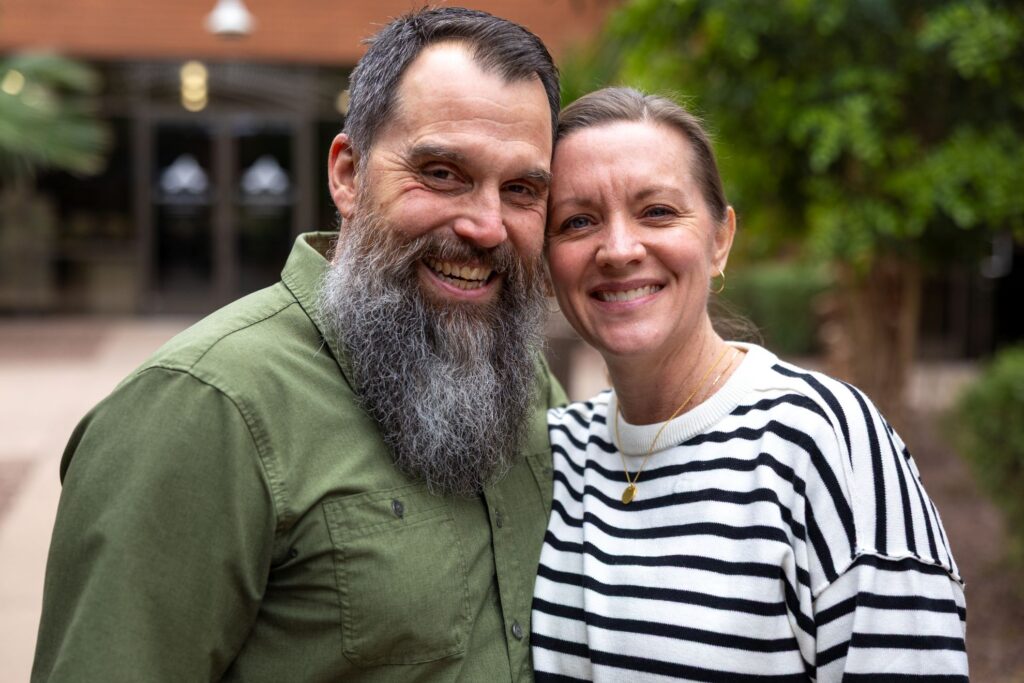
Praise God, following a favorable ruling in April, the DeGrosses’ lawsuit was able to proceed. And that would prompt Washington state officials to agree to a permanent injunction allowing religious families to serve as foster parents without promoting gender ideology, ending the lawsuit.
“Washington’s policy failed to respect religious diversity because it singled out applicants with traditional religious beliefs on the sanctity of the human body,” said ADF Senior Counsel Johannes Widmalm-Delphonse. “The DeGrosses merely asked to be treated the same as any other family—without being asked to compromise their core beliefs. This is a win-win because it will ensure more families can serve as foster parents to help meet the needs of every precious child in Washington’s foster-care system. We are thrilled to see common sense and religious liberty prevail.”
Washington was harming children in need
Every child deserves a loving home. That’s a basic human truth that virtually everyone, regardless of background or belief, can agree on.
Shane and Jenn DeGross have spent the better part of a decade proving they can provide exactly that. They’ve loved children who weren’t their own as if they were. They’ve opened their home to newborns and toddlers alike, for two weeks or two years, whatever the need demanded. They are precisely the kind of foster parents Washington claims to be looking for.
But when the state tried to force them to choose between their faith and their license, it didn’t just harm Shane and Jenn. It harmed every child who wasn’t able to be placed in a loving home like the DeGrosses’.
Washington state’s loss is a massive win for foster families and children. ADF will continue to fight and make sure that this doesn’t go unchallenged. If you believe that no government should be able to shut out qualified, loving families simply because of their faith, please support ADF today.
Related Articles