
Key Takeaways:
- Two states, West Virginia and Idaho, passed laws protecting female athletes.
- Those laws were challenged, ultimately culminating at the Supreme Court, which returned a resounding victory for female athletes.
Men and women are physically different. This fact can be easily known not only by biblical truth, but also by scientific evidence. And this evidence is especially clear in the world of sports.
Male athletes have unfairly taken opportunities from women to win female championships, medals, and more. The false claim that men can change their sex and somehow become women has a real human cost, and we cannot allow this destruction of women’s sports to continue.
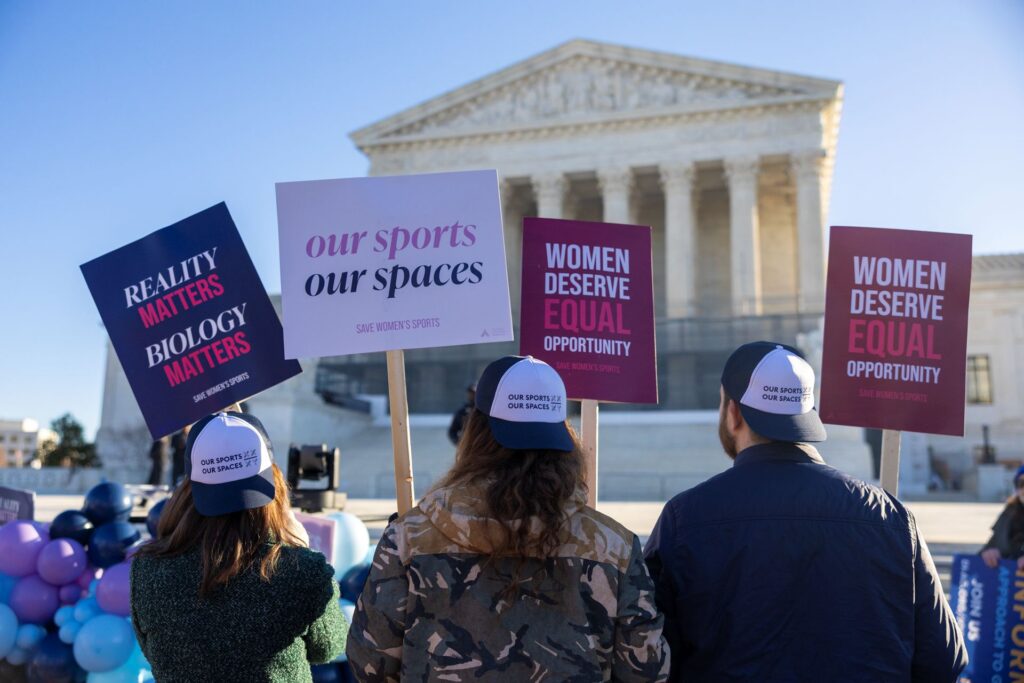
That’s why many states like West Virginia and Idaho have passed laws protecting women’s sports, and why West Virginia Attorney General JB McCuskey and Idaho Attorney General Raúl Labrador, alongside Alliance Defending Freedom, asked the U.S. Supreme Court to reaffirm the states’ ability to protect the equal opportunities of female athletes.
Praise God, that’s exactly what the Court chose to do. On June 30, 2026, the Supreme Court held that states can protect their female athletes, in a major win for truth, women, and girls.
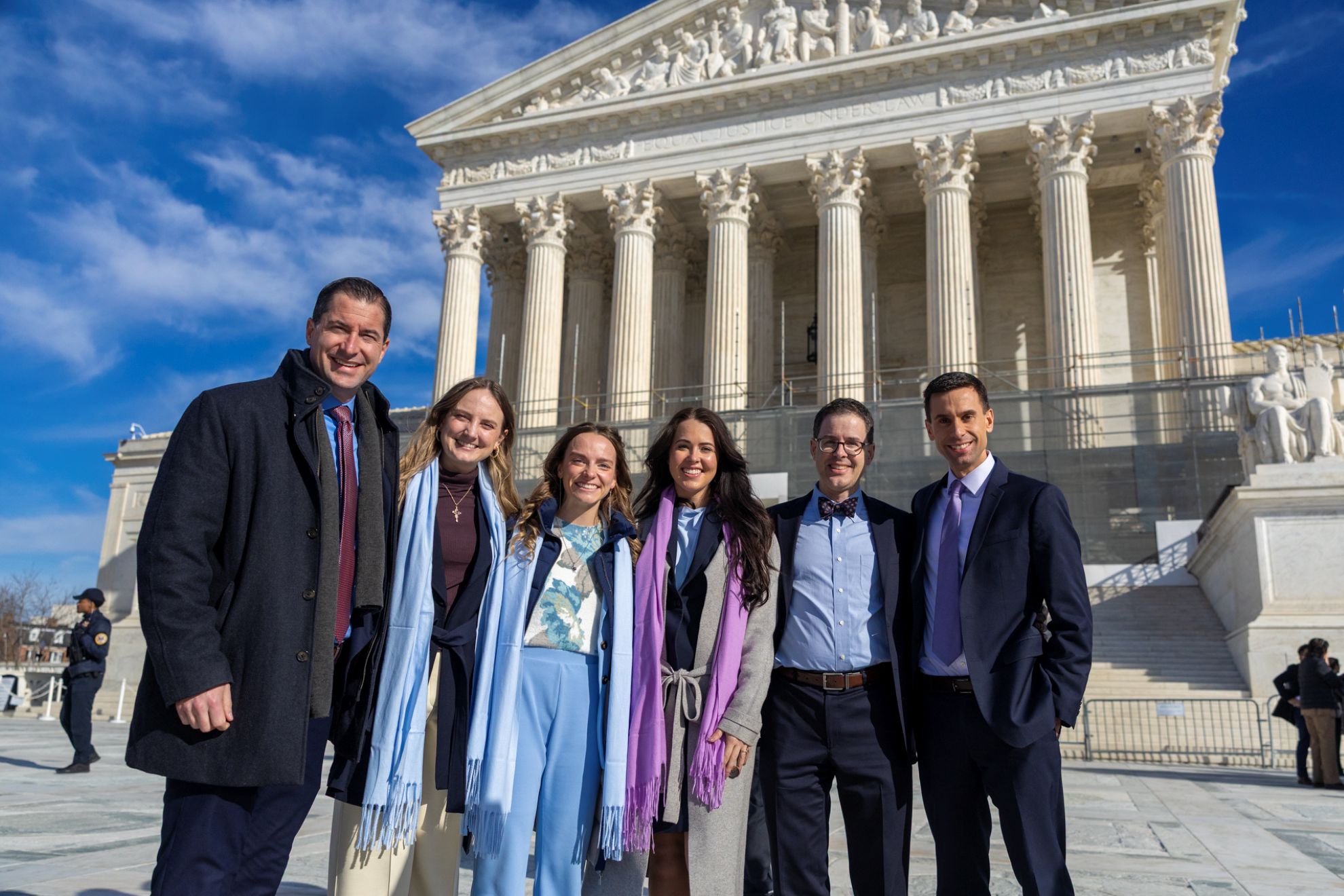
“This is a victory for every girl who refused to stay quiet in the face of injustice. Men cannot be women, and no drug erases the male athletic advantage. I’m grateful to Attorneys General Raúl Labrador and JB McCuskey and our clients for their courage,” said ADF CEO, President, and Chief Counsel Kristen Waggoner. The court ruled 9-0 that Title IX and 6-3 that the Equal Protection Clause of the 14th Amendment allow states to protect female athletes through sex-specific sports. And this ruling means that some states have some work to do.
“After today’s decision, the 23 states still on the sidelines have run out of excuses,” Kristen said. “Protect women’s sports. Our girls have waited long enough.”
Read on to learn more about these monumental cases.
Idaho female athletes stand up to gender ideology

In 2020, the state of Idaho passed the Fairness in Women’s Sports Act to ensure that only females competed in women’s and girls sports. It was the first law of its kind in the country.
ADF helped draft Idaho’s law, and our attorneys represented Madison Kenyon and Mary Kate Marshall, who intervened in this case. Madison and Mary Kate are female athletes who competed on the women’s cross-country and track teams at Idaho State University.
Madison and Mary Kate witnessed a male athlete taking first place in the women’s mile at the 2020 NCAA Division I Big Sky Conference Championships, knocking one of their teammates out of a podium spot in the process. And they themselves were forced on multiple occasions to compete against and lose to this male athlete who had posted times on the men’s team in the previous three years that were faster than the women’s national records.
When Mary Kate lost, she felt different about losing to a male than losing to another woman, and rightly so. When she lost to a man, she said, “it [felt] completely different … It’s deflating,” because no matter how hard she tried, her “hard work and effort will not matter” when competing against a male who has natural biological advantages.
Upon losing to the male athlete, Madison echoed that she felt “frustrated and defeated.”
Through these experiences, as well as a knowledge of basic biology, Madison and Mary Kate understand the importance of reserving women’s and girls sports for females. That’s why they intervened in the case to defend Idaho’s law.
West Virginia sought to protect female athletes
In 2021, West Virginia also passed a law to protect women’s sports—and it was one of the most comprehensive women’s sports laws in the country.
The law designates women’s teams for female athletes from middle school through college and provides a legal remedy for female athletes who have been unfairly pushed down the rankings by males. Laws like West Virginia’s affirm why we have women’s and girls sports: equal opportunity.
But the American Civil Liberties Union challenged the law in court, just like it had with Idaho’s law.
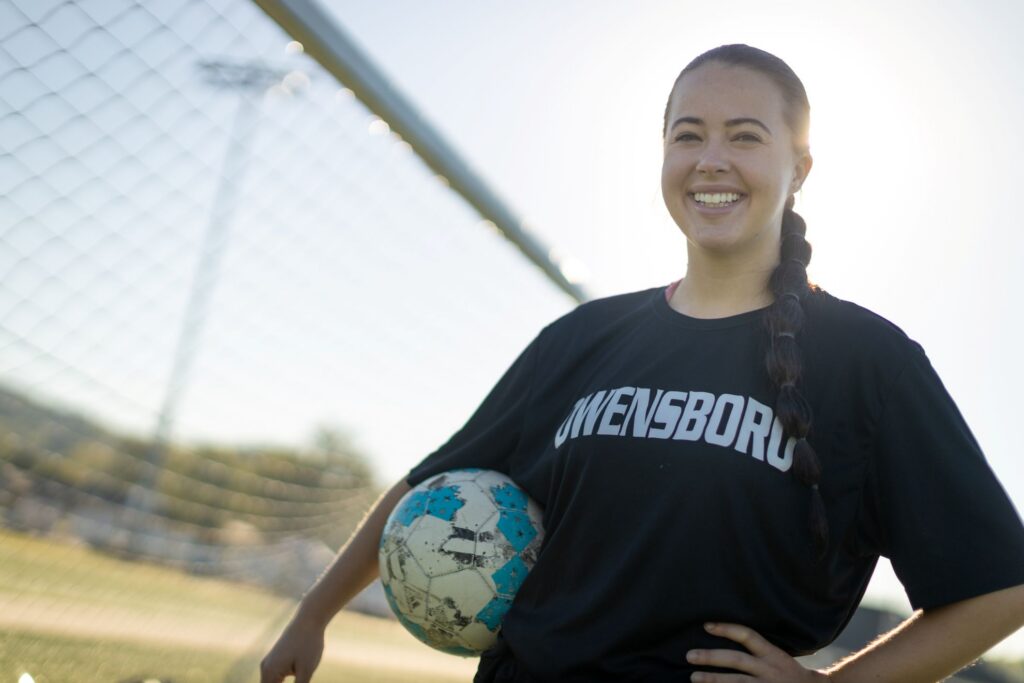
Lainey Armistead had heard about female track athletes in Connecticut who were being displaced in their sports by biological males. “I was appalled and heartbroken for those girls. It felt so unfair,” Lainey said. She also recognized, at the time, that she could be directly affected by the ACLU’s challenge to West Virginia’s law.
With the help of Alliance Defending Freedom, she intervened in the case to defend not only her own interests, but also to stand for the fairness and safety of female athletes across the state of West Virginia.
As the case has proceeded, West Virginia’s law has been blocked from being enforced against the plaintiff by court orders for most of the past five years. This has allowed the ACLU’s client, B.P.J. (a male athlete who identifies as female) to compete in female sports.
During this time, B.P.J. has defeated more than 470 girls over 1,400 times combined. Most notably, B.P.J. recently won the women’s state championship in shot put—as a sophomore—outthrowing the runner-up by two feet. And according to Athletic.net, during his sophomore year, B.P.J. never placed below top four in shot put and discus, and placed first nine times, all while on puberty blockers.
One of our other clients, Adaleia Cross, has been directly affected by this, both on and off the field. In Adaleia’s seventh-grade year, B.P.J.—one grade below her and nearly two years younger—joined the girls’ track and field team. And while Adaleia initially could beat B.P.J. in both shot put and discus events, that all changed in the next school year. By late spring that school year, B.P.J. had made tremendous advances in the sport, throwing over 16 feet farther than he did at the start of the season. That’s almost unheard of in girls’ discus. Before a big meet, Adaleia’s coach took her aside and broke the news that she had lost her spot to compete in the championship to B.P.J.
Sadly, the humiliation didn’t end there. Not only did B.P.J. take Adaleia’s spot in a championship meet, B.P.J. also sexually harassed her in the locker room, and she had to leave the sport she loved as a result.
Biology isn’t a loophole
The science was never the hard part. Boys outperform girls in virtually every athletic measure before puberty even begins—running faster, jumping higher, and throwing farther. After an average of eight years of testosterone suppression, males still retain substantially greater strength, aerobic capacity, and skeletal muscle mass than comparable females. Eight years. Still not enough. No drug erases that advantage, and West Virginia and Idaho were right to say so in law. Today, the Supreme Court agreed.
That agreement came at a cost someone else paid.
- Adaleia didn’t just lose a spot in a championship meet to B.P.J.—she was sexually harassed in the locker room and ultimately had to leave the sport she loved.
- Lainey played collegiate soccer while a legal battle raged over whether her right to a fair playing field would even be protected.
- Madison and Mary Kate ran races knowing they’d already lost before the starting gun went off.
These weren’t abstractions. They were real losses, in real seasons. Thankfully, the Supreme Court’s decision signals a decisive shift in the fight to protect women.
Credit belongs where it’s due. Attorneys General McCuskey and Labrador didn’t wait for the culture to catch up. They stood behind the laws that said female athletes deserve equal opportunity, and they defended those laws all the way to the highest court in the land. That kind of resolve matters, and today it won.
“This is a monumental victory for every female athlete who has ever competed, or dreamed of competing, on a fair and safe playing field,” McCuskey said,
Labrador added: “The Supreme Court has now confirmed that states can preserve fair competition and protect the opportunities that generations of women fought to secure.”
Twenty-seven states have passed laws protecting fairness in women’s sports. Twenty-three have not. Today’s ruling empowers every one of those remaining states with the clearest legal signal yet: you can act, and you should. Every girl still waiting for her state to stand up is watching.
Related Articles