
Key Takeaways:
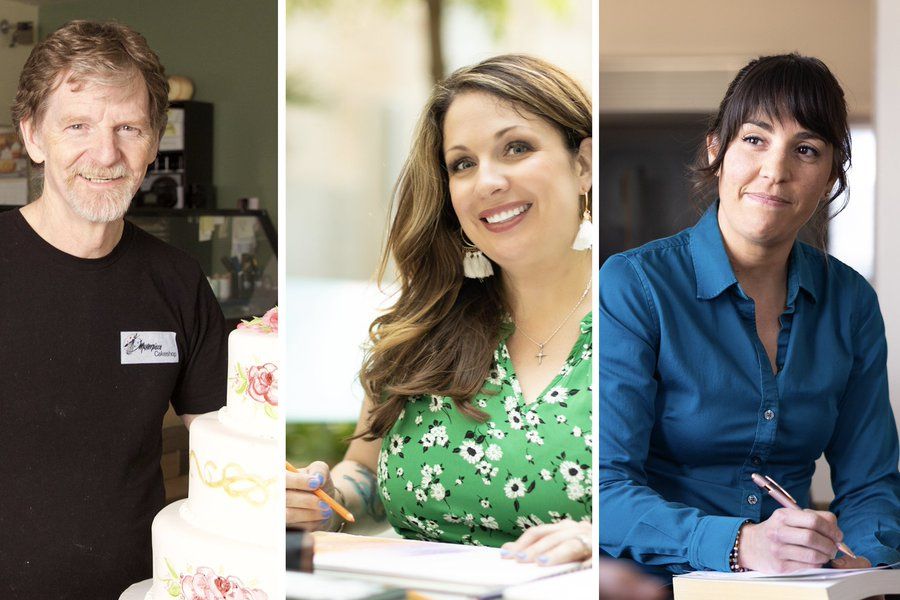
- The Supreme Court has handed three major First Amendment wins to ADF clients in Colorado: Jack Phillips, Lorie Smith, and Kaley Chiles.
- These rulings affirm broader protections for free speech and religious freedom nationwide, not just for the individuals involved.
- ADF is willing to take Colorado, or any other state, to the Supreme Court as often as needed to protect free speech.
Colorado is a beautiful state, filled with amazing Americans, and has plenty of unique features unto itself. Colorado is the only state that can boast it has the most elevated city in the U.S., the world’s largest flat-top mountain, and the world’s largest natural hot springs pool.
Colorado is also apparently one of the few states with a complete and utter disconnect from the vital importance of the First Amendment. Thankfully, with God’s help and through the support of our ministry friends, Alliance Defending Freedom has dutifully reminded Colorado why the First Amendment is so crucial.
And we’ve done so at the U.S. Supreme Court not once, not twice, but three times.
First Amendment: 3; Colorado: 0
Three landmark cases that ADF won at the Supreme Court followed Colorado officials’ attempts to impose their favored viewpoints on Christian professionals.
Jack Phillips
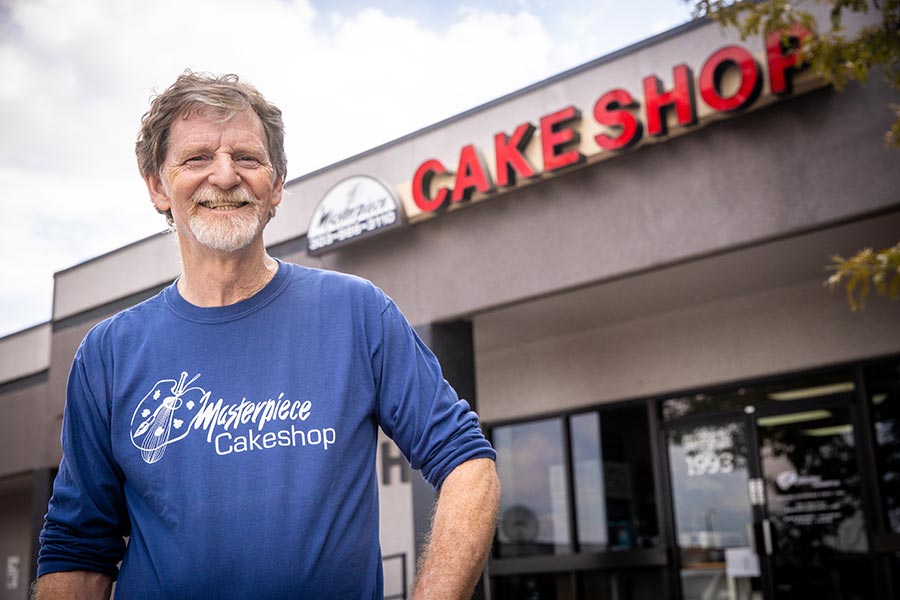
Jack Phillips spent more than a decade in and out of court defending his right to create—or decline to create—custom artistic expression consistent with his faith. As the owner of Masterpiece Cakeshop, Jack built his business around designing custom cakes as a form of artistry. That principle came under fire in 2012, when he declined to create a cake celebrating a same-sex wedding, explaining that he serves all customers but cannot express messages that conflict with his beliefs.
The state of Colorado pursued action against him, culminating in the 2018 Supreme Court case Masterpiece Cakeshop v. Colorado Civil Rights Commission. In a 7–2 decision, the Court found the state had shown clear hostility toward Jack’s religious beliefs, reaffirming that laws must be applied with neutrality. However, at that time, the Supreme Court did not address whether Jack’s free speech had been violated.
And so, the legal pressure didn’t stop. Jack faced additional complaints—including one involving a request for a cake symbolizing a gender “transition”—triggering litigation over compelled speech.
Even after one case was dropped in 2019, a third lawsuit dragged on for years. By 2024, however, the legal landscape had shifted—thanks in part to another ADF-led Supreme Court victory (more on that below). The Colorado Supreme Court ultimately dismissed the latest case, closing a 12-year-long chapter in which Jack consistently maintained a simple principle: the government cannot force artists to say what they do not believe.
Lorie Smith

That principle was squarely reinforced in the case of Lorie Smith, a graphic artist and website designer who founded 303 Creative to create work aligned with her beliefs. When she sought to expand into custom wedding websites celebrating marriage between a man and a woman, Colorado pointed to a state law that would require her to create content at odds with her views. Like Jack, Lorie works with clients of all backgrounds but draws a line at the message—not the person.
After lower courts ruled against her, Lorie appealed to the Supreme Court. The case drew national attention, raising fundamental questions about whether the government can compel creative professionals to express messages they disagree with.
In June 2023, the Court ruled in her favor in 303 Creative v. Elenis, holding that the First Amendment protects against compelled speech in public accommodation laws. The decision didn’t just vindicate Lorie—it fortified the legal terrain in ways that would directly impact other cases across the country, reinforcing that expressive work cannot be mandated by the state.
Alas, Colorado wasn’t done targeting its own citizens—but ADF wasn’t done defending them.
Kaley Chiles

The ripple effects of these aforementioned rulings extended beyond artists to professionals like Kaley Chiles, a Colorado counselor whose work centers on deeply personal conversations with clients. A Christian who often serves clients seeking faith-informed guidance, Kaley helps individuals navigate issues ranging from trauma to identity—always with the goal of helping clients pursue the outcomes they themselves desire.
That approach collided with a 2019 Colorado law restricting what counselors could say to minors about “gender identity.” The law allowed counselors to affirm a so-called “gender transition” but prohibited them from helping clients regain comfort with their biological sex—even if that was the client’s goal. Kaley argued the law violated her freedom of speech, forcing counselors to promote one viewpoint while silencing another under threat of fines and losing their license.
After losing in lower courts, Kaley appealed to the Supreme Court, which took up the case in 2025. In a decisive 8–1 ruling in March 2026, the Court held that counseling conversations are protected speech and that states cannot impose viewpoint-based restrictions in the counseling room.
The decision marked yet another high-profile loss for Colorado—and a third major First Amendment victory.
Colorado is 0-3 at the Supreme Court for a reason
Colorado ran headfirst into a constitutional wall three separate times, and each time, ADF’s clients stood in the gap. From cake artists to web designers to licensed counselors, the Supreme Court of the United States reaffirmed a consistent principle: the government cannot force Americans to say what they do not believe or censor viewpoints the government dislikes. These weren’t narrow technical rulings—they were sweeping reminders that the First Amendment “is no word game,” even when state officials would prefer otherwise.
As the Supreme Court wrote in its opinion in 303 Creative, “The First Amendment envisions the United States as a rich and complex place where all persons are free to think and speak as they wish, not as the government demands.”
Will Colorado get the message?
Even after its latest loss in Chiles v. Salazar, the state is still in court defending yet another law that violates the First Amendment. This time, Colorado passed a law requiring businesses to use inaccurate names, pronouns, and honorifics for individuals who identify as transgender. That law is already being challenged by businesses XX-XY Athletics and Born Again Used Books. Colorado is forcing them to speak a message that conflicts with their understanding of biological reality, as well as censoring the expression of their own views. In other words, after three high-profile losses on similar constitutional principles, Colorado seems ready to roll the dice on a fourth.
Taken together, these three victories set a precedent that reaches far beyond Colorado. Whether in a design studio, a cake shop, or a counseling office, the message is the same: The First Amendment isn’t conditional, and it doesn’t disappear when the government disagrees.
Colorado is more than welcome to start acknowledging this message at any time. But until it does, ADF stands ready to go to the Supreme Court again, if necessary, to defend the Constitution.
Related Articles