

Key Takeaways:
- Bethany Hall lost a Virginia tuition grant when she changed her major to a religious one, even though the same grant funds other “approved” religious studies majors.
- Bethany’s asking the Supreme Court to overturn Locke v. Davey, the 2004 case that states rely on to justify this kind of discrimination.
- Religious freedom is a hallmark of American society, and students shouldn’t have to fear that living out their beliefs will create financial barriers for their education.
State educational grant programs exist for a very simple yet important reason: Sometimes talented and capable students need financial help to best pursue their dreams. Given how dramatically such grants can sometimes change students’ lives, it makes sense to ensure fairness in the disbursement of limited resources. Or that’s the way it should be.
Now, imagine a state grant program that funds nearly any college major you could choose—engineering, art, philosophy, even some religious studies—except one type. If your chosen path is too religious, the money disappears, because the degree no longer qualifies.
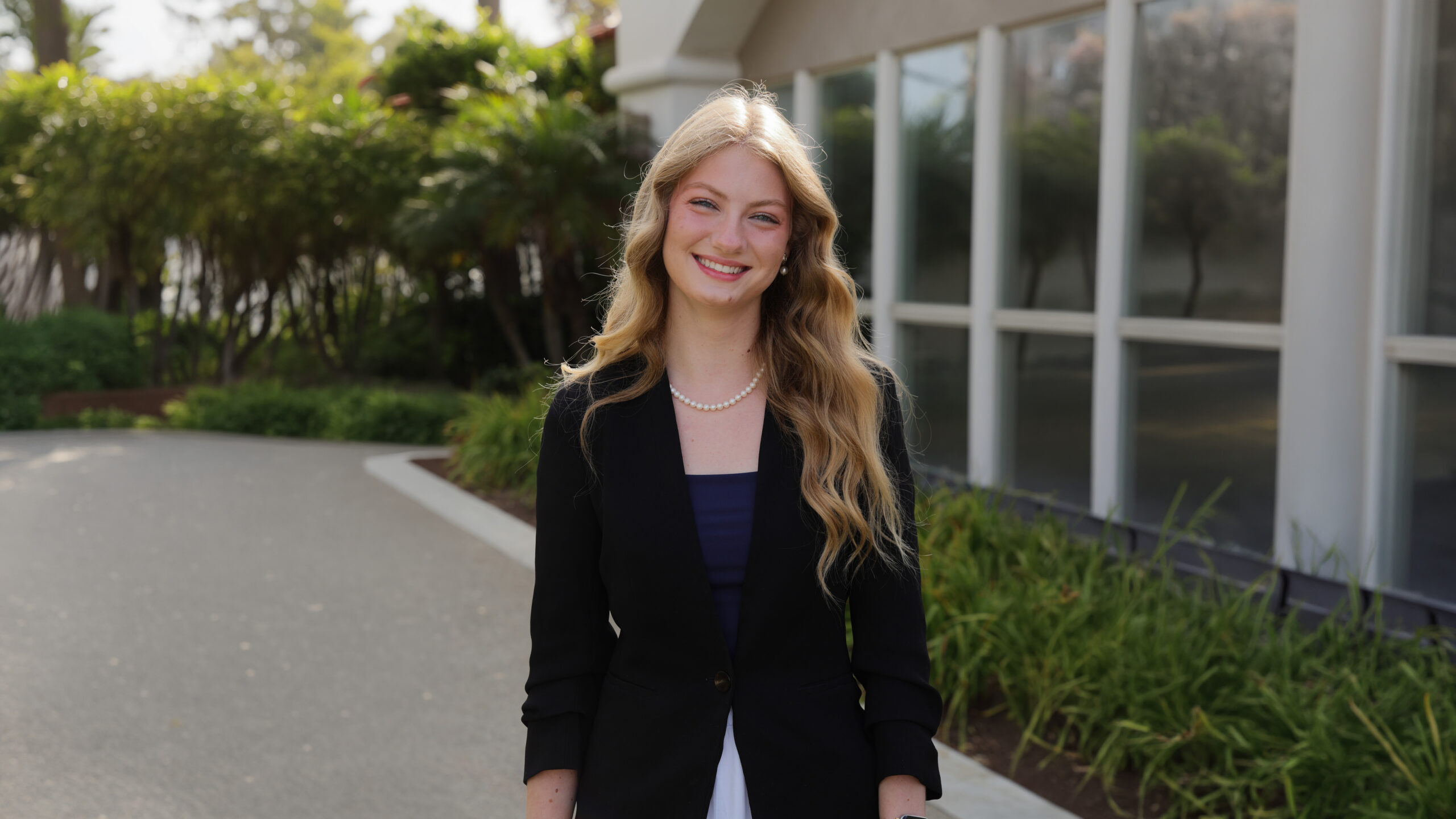
Tragically, this is not a hypothetical. It’s the reality facing Bethany Hall, a Liberty University student who lost access to a Virginia tuition grant simply because she changed her major to a religious one that the government doesn’t approve of.
Bethany’s case is now being appealed to the U.S. Supreme Court, and it centers on a question that reaches far beyond one student’s tuition bill: Can the government treat someone’s religious major as a reason to deny them a benefit everyone else can access? For two decades, a single precedent has curiously said yes.
Bethany is asking the Court to say otherwise.
Meet Bethany Hall
Bethany Hall is a full-time undergraduate student at Liberty University in Lynchburg, Virginia. When she first enrolled, she planned to major in Music Education: Choral—a program fully eligible for Virginia’s Tuition Assistance Grant (VTAG), and one that had already earned her a $5,000 award for her freshman year.
But not long into her time at Liberty, Bethany felt God calling her toward ministry. She changed her major to Youth Ministries, hoping to combine her love of music with a calling to serve young people in the church. Liberty’s financial aid office told her that her new major disqualified her from the grant she’d previously been approved to receive.
Rather than abandon what she believes is God’s calling on her life, Bethany changed her major again—this time to Music & Worship, a program that still let her pursue music while preparing for ministry. The state’s answer didn’t change. To Virginia, Bethany’s studies were still too religious to fund.
To this day, Bethany has lost the grant money she originally qualified for. Instead, she’s been paying the difference herself rather than compromise on what she believes she’s called to do.
Bethany’s lawsuit is about more than herself
Rather than accept Virginia’s decision, Bethany fought back. In March 2025, she filed a lawsuit against A. Scott Fleming, the director of Virginia’s Council of Higher Education, arguing that excluding her from VTAG based solely on her religious major violated her First Amendment right to free exercise of religion.
A federal district court dismissed her case two months later, and the U.S. Court of Appeals for the 4th Circuit affirmed that dismissal in May 2026. Both decisions were based on Locke v. Davey, a 2004 Supreme Court decision that allows states to exclude religious majors from otherwise generally available scholarship funds. Notably, one 4th Circuit judge agreed he was bound to rule against Bethany but wrote separately to call Locke “a stain” on the Court’s free exercise record.
Bethany’s attorneys petitioned the U.S. Supreme Court to take up her case and directly overturn Locke v. Davey. ADF is serving as co-counsel alongside the National Legal Foundation, First Liberty Institute, Claybrook LLC, and Troutman Pepper Locke—a coalition asking the Court to finally close the door on a precedent that has let states treat religious education as a disqualifying condition rather than a protected choice.
Bethany isn’t the only Virginia student caught in this bind. In a related case, Johnson v. Fleming, ADF represents two more students attending Liberty University who are challenging the same VTAG policy and a third student who is similarly excluded from the Virginia National Guard’s tuition assistance program. A federal district court likewise ruled against these students, leading ADF to appeal and file an emergency motion with the 4th Circuit. However, since the 4th Circuit has yet to stop Virginia’s religious discrimination and has already ruled against Bethany in her case, the Johnson plaintiffs have also asked the U.S. Supreme Court to step in, filing their own petition in August 2026. That means the Court now has two opportunities—Bethany’s case and the Johnson case—to strike down the same unconstitutional practice.
The bottom line
A grant program that funds almost any major but singles out certain religious ones is little more than rank discrimination masquerading as policy. Bethany didn’t ask for special treatment; she asked for the same treatment every other Virginia student receives. For two decades, Locke v. Davey has let states draw that unfair line anyway, punishing students for the simple act of following their faith. Bethany’s case gives the Supreme Court a chance to erase that double standard for good and to affirm that a religious education is never grounds for losing a generally available public benefit.
Hall v. Fleming
- October 2023: Bethany changes her major a third time and is again denied access to the VTAG funding she had otherwise qualified for.
- March 2025: Bethany files a lawsuit against A. Scott Fleming, the director of Virginia’s State Council of Higher Education.
- May 2026: The U.S. Court of Appeals for the 4th Circuit affirms a lower court dismissal.
- August 2026: Bethany’s attorneys petition the U.S. Supreme Court to hear her case and overturn Locke v. Davey.
Related Articles